Written by: Doug Camplejohn, CEO & Co-Founder, Coffee | Last updated: September 6, 2026
Key Takeaways
- Hubspot’s manual data entry pushes reps to spend about 25% of their week on admin instead of selling, which creates a cycle of low adoption and unreliable forecasts.
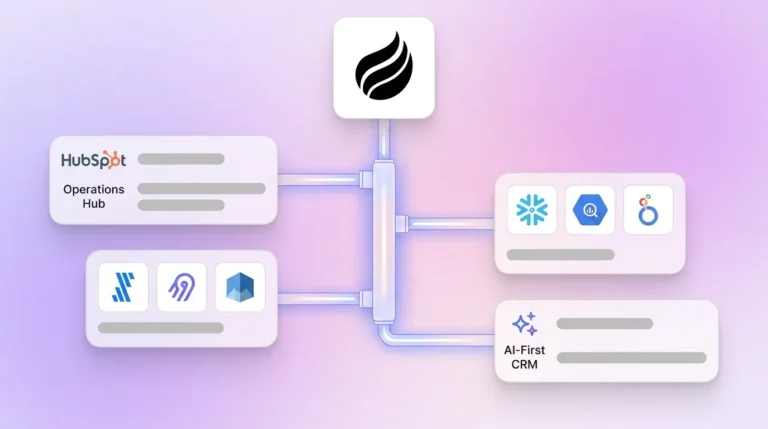
- Teams can either replace Hubspot with an AI-first CRM or keep Hubspot and add an AI agent on top.
- AI-first CRMs like Coffee capture structured and unstructured data from emails, calendars, and calls so reps do not have to type it in.
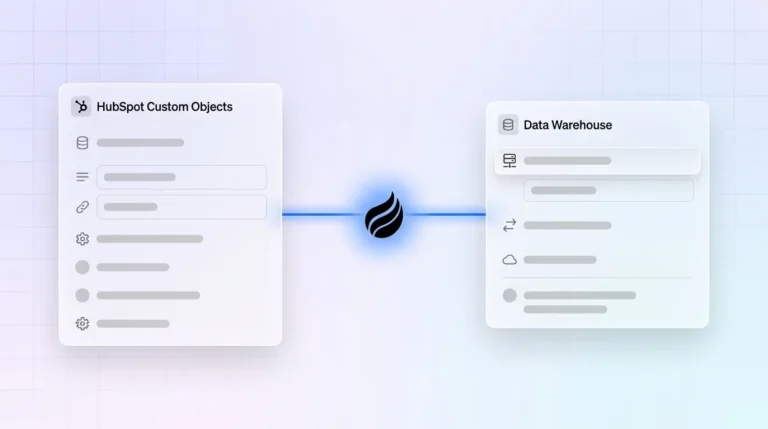
- Coffee Companion upgrades existing Hubspot instances by writing structured data back to properties without a migration or retraining.
- Coffee removes the data entry burden and helps teams reclaim 8–12 hours per rep each week. See pricing to learn more.
Why Hubspot’s Manual Data Entry Is a Problem
Sales reps are hired to sell, yet a significant portion of their week disappears into CRM fields. Sales reps spend roughly 25% of their workweek, about 10–11 hours, on manual CRM data entry, because most CRM systems require human input after every call, email, and meeting. Hubspot’s own data shows that reps typically spend 10–15 minutes after each call logging notes, updating deal stages, and setting follow-up tasks.
The structural consequence is a vicious cycle: low adoption produces bad data, and bad data produces bad forecasts. That distrust is reflected in the numbers. Only 35% of sales professionals completely trust the accuracy of their CRM data, and 47% say data accuracy is harder now than it was a year ago. When reps skip logging activities, managers lose visibility, and pipeline reviews turn into guesswork instead of strategy.
The financial cost is measurable. Gartner estimates that poor data quality costs organizations an average of $12.9 million annually. Validity’s 2025 State of CRM Data Management report found that 37% of organizations lose revenue as a direct consequence of poor data quality, and companies lose an average of 16 sales deals per quarter because of bad data.
This is a structural problem. CRM systems were designed for management reporting, not for sellers, so the architecture forces reps to serve the software instead of the software serving them.
Start your free trial with Coffee to put an AI agent on your data entry from day one.
The Two Paths: Replace Vs. Augment
Sales leaders and RevOps managers facing this problem can choose between two clear strategic options.
Path 1: Replace Hubspot with an AI-first CRM. This path means migrating to a new system where an AI agent handles data capture natively. The trade-offs include disruption from migration and team retraining. The payoff is a clean break from manual entry and a modern architecture built for agents from the ground up.
Path 2: Keep Hubspot and add an AI agent. This path layers a tool like Coffee Companion on top of your existing Hubspot instance. The agent handles data entry, enrichment, and activity logging, then writes structured data back to Hubspot automatically. The trade-offs include continuity and no migration risk, while ongoing Hubspot seat costs remain.
Key considerations for choosing between the two paths:
- Team size: Smaller teams under 20 reps may find replacement easier to execute. Larger teams with complex workflows often benefit from augmentation.
- Budget: Replacing Hubspot removes seat costs but introduces migration effort. Augmenting adds an agent subscription on top of existing Hubspot spend.
- Tolerance for disruption: Augmentation is lower risk and preserves the familiar Hubspot interface. Replacement is a larger change but offers a cleaner long-term foundation.
- Workflow complexity: Custom objects, complex pipelines, and deep integrations make migration risky. Augmentation preserves that investment.
- Sales motion: High-volume outbound with many calls and emails demands an agent that auto-logs everything. Lower-volume motions can work with lighter automation.
If you decide the replace path fits your situation, the next step is choosing which AI-first CRM aligns with your needs.
AI-First CRM Options for the Replace Path
For teams ready to migrate away from Hubspot, the primary AI-first platforms as of 2026 differ mainly in how actively they capture data. Coffee is the only option with a full agent that works across structured and unstructured data.
Coffee (Standalone): Coffee is the only AI-first CRM that works with both structured and unstructured data, built on a data warehouse that preserves historical context. The agent auto-creates and enriches contacts, logs activities, and drafts follow-ups. It also delivers pipeline intelligence, all without manual input. Coffee’s Intelligence layer allows users to define deep context on business model, ICP, and competitors for tailored AI suggestions, and Custom Meeting Briefings and Summaries let teams define exact formats, from executive overviews to granular technical breakdowns. Seat-based pricing includes the agent. Coffee works best for teams that want a true AI-first experience with no manual entry.


Attio: Attio is a modern CRM with a clean UI that relies on passive database logic instead of an active agent. Attio’s starting paid price is $35 per user per month on the Plus plan when billed annually (as of July 2026), with the Free plan available for up to three seats at $0. Attio suits small teams that want a modern interface but do not need deep AI automation.
Salesflare: Salesflare pulls data from email, phone, and company directories to build contact records automatically. It fits small B2B teams that want simple automation without a full AI agent.
Day AI: Day AI focuses on unstructured data from productivity tools but lacks the integration depth required for complex Hubspot or Salesforce workflows. It works best for very small teams with simple needs.
Coffee’s differentiator across this category is its dual-path flexibility. Coffee’s improved summary templates are customizable and writable back to Coffee, Hubspot, or Salesforce, which means teams can start on the replace path and later layer the agent onto a legacy system, or start with augmentation and move to full replacement, without rebuilding from scratch.
Traditional CRM Options for the Replace Path
Traditional CRMs reduce friction at the interface level but still rely on manual entry. They function as passive databases that depend on reps to type data in.
- Pipedrive: Pipedrive offers a visual deal board with straightforward pipeline management. Pricing starts from $14 per user per month. It suits small teams needing simple pipeline visibility, yet most fields still require manual updates.
- Zoho: Zoho provides a budget-friendly entry point with basic automation at higher tiers. Zoho CRM’s Standard plan starts at $14 per user per month when billed annually, or $20 per user per month on monthly billing. It works well for cost-conscious teams with straightforward needs.
- Close: Close is built for sales teams with native calling functionality. Close CRM’s Solo plan starts at $19 per user per month when billed monthly, or $9 per user per month when billed annually. It still relies on manual data entry for most CRM fields outside of call logging.
These tools automate mechanical tasks such as lead routing, stage transitions, and email sequences. The underlying data still depends on human input to stay accurate and complete.
How To Keep Hubspot and Automate With an AI Agent (The Augment Path)
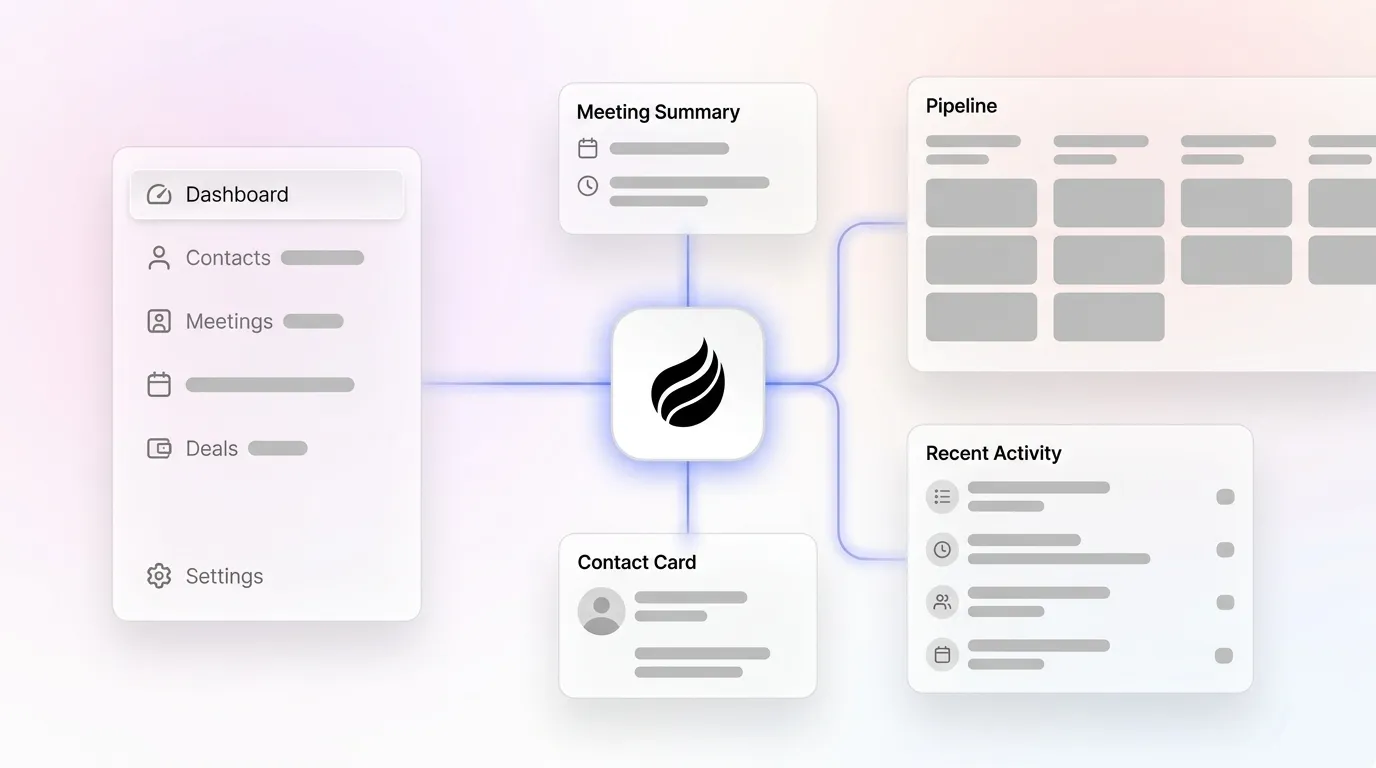
Coffee Companion deploys the Coffee Agent as an intelligent layer on top of an existing Hubspot instance. Hubspot’s Chief Product and Technology Officer, Duncan Lennox, has stated, “Agents can run on Hubspot. And agents can run Hubspot.” Coffee Companion makes this vision operational today.

The augmentation workflow operates in four steps:
- Connect. A simple authentication links Coffee Companion to your Hubspot instance and Google Workspace or Microsoft 365.
- The agent gets to work. It scans emails and calendars to auto-create and enrich contacts and companies. It logs activities, sets “last activity” and “next activity,” and ensures every note is associated with the correct record.
- The agent handles meetings. It joins calls on Zoom, Teams, or Meet to record and transcribe. After each call, it generates summaries, identifies next steps, and drafts follow-up emails for reps to review and send.
- The agent writes back to Hubspot. All structured data, including deal stages, qualification fields, and next steps, is written directly to Hubspot properties so the system of record stays accurate without human effort.
This path preserves every existing investment in Hubspot, including custom objects, workflows, dashboards, and historical data. The same agent also extends beyond call notes. Coffee’s Stripe integration automatically imports customers and companies, enriches them, and adds paid invoices to deals as Closed Won, which shows how the agent removes manual updates across the entire revenue stack.

See how Coffee Companion works and remove manual Hubspot data entry without a migration.
Comparison Table: Coffee Vs. Alternatives
The table below summarizes the key differences across automation level, pricing, and best-fit use case. The main takeaway is that Coffee deploys a full AI agent, while the other tools function as passive databases or lighter automation layers.
| Tool | Automation Level | Pricing | Best For |
|---|---|---|---|
| Coffee (Standalone) | Full AI agent that auto-captures emails, calendars, and calls, then writes structured data to a built-in data warehouse | Seat-based, agent included; contact Coffee for current rates | Teams replacing Hubspot with an AI-first CRM |
| Coffee (Companion) | Full AI agent layered on Hubspot that auto-creates and enriches contacts, logs activities, and writes back to Hubspot properties | Seat-based, agent included; contact Coffee for current rates | Teams keeping Hubspot but removing manual entry |
| Attio | Passive database with some automation that relies on background database logic instead of an active agent | From $35/user/month (annual billing) | Small teams wanting a modern UI |
| Salesflare | Auto-builds contacts from email and phone, with no active agent for post-call field writes | From $29/user/month | Small B2B teams needing simple automation |
| Day AI | Unstructured data focus from productivity tools with limited integration depth for complex CRM workflows | Not publicly listed | Very small teams with simple needs |
| Pipedrive | Visual pipeline management with manual updates required for most fields | From $14/user/month | Teams needing simple pipeline visibility |
| Zoho | Basic automation available, with advanced features at higher tiers | From $14/user/month (annual billing) | Budget-conscious teams with basic needs |
| Close | Built-in calling with call logging, while most CRM fields still require manual entry | From $19/user/month (monthly billing) | Teams prioritizing call-centric workflows |
Pricing data for Attio, Pipedrive, Zoho, and Close is based on publicly available pricing pages as of September 2026. Coffee pricing is seat-based with the agent included; contact Coffee for current rates.
To translate these comparisons into a concrete choice, use the decision guide below.
Decision Guide: Questions To Ask
The right path depends on your team’s specific situation. Use this framework to identify the approach that fits your needs.
| Scenario | Recommended Path |
|---|---|
| Fewer than 20 reps, want an AI-first experience | Replace with Coffee Standalone |
| Larger team with complex Hubspot workflows | Augment with Coffee Companion |
| Low budget, willing to accept manual entry | Traditional CRM (Pipedrive, Zoho) |
| High-volume outbound, need auto-logging | Replace or augment with Coffee |
Ask these questions before making a decision:
- How many reps are on your team? Teams under 20 reps with appetite for a modern experience are strong candidates for Coffee Standalone. Larger teams or those with established Hubspot workflows are better served by Coffee Companion.
- How complex are your Hubspot workflows? Custom objects, complex pipelines, and deep integrations make migration risky. Augmentation preserves that investment while removing the data entry burden.
- What is your budget? Replacing Hubspot removes seat costs but adds migration effort. Augmenting adds an agent subscription on top of Hubspot. AI-native CRM platforms typically charge $50–$150 per user per month with AI features included at all tiers, compared to Hubspot Professional at $100 per seat per month before AI add-ons.
- How tolerant is your team to disruption? If reps already feel frustrated with Hubspot, replacement may feel like an upgrade. If they are comfortable with the interface but dislike data entry, augmentation is the lower-risk path.
- What is your sales motion? High-volume outbound with many calls and emails demands an agent that auto-logs everything. Simpler, lower-volume motions can work with lighter automation.
Frequently Asked Questions
Can You Keep Hubspot and Automate Data Entry?
Yes. Coffee Companion connects to an existing Hubspot instance and handles data entry automatically. The agent auto-creates and enriches contacts, logs activities, and drafts follow-ups, then writes everything back to Hubspot without manual effort. This path preserves the team’s investment in Hubspot while removing the data entry burden. Hubspot’s architecture is increasingly agent-ready, with expanded API surfaces and MCP server support that let external agents operate inside the platform.
Which CRM Works Best for Automated Data Entry?
Coffee is the only solution that supports both strategic paths. It can replace Hubspot as a standalone AI-first CRM or augment it as a companion app. Attio and Salesflare operate as passive databases that rely on background automation logic. Coffee’s agent actively captures structured and unstructured data from emails, calendars, and calls. It handles both the “data in” and “data out” sides of the problem so pipeline intelligence, forecasts, and summaries stay accurate and actionable.
How Much Time Does Automated Data Entry Save?
Teams using Coffee save 8–12 hours per rep per week. That 25% admin burden represents $25,000 in misallocated compensation annually for a rep earning $100,000 per year. On a 10-person team, this is equivalent to 2.5 full-time sellers focused only on data entry. Automation removes this overhead and lets reps focus on revenue-generating activity.
Is Coffee Secure?
Yes. Coffee is SOC 2 Type 2 and GDPR compliant. Data is not used to train public models. For teams evaluating AI agents that will access CRM records and email data, Coffee’s compliance posture addresses the governance requirements that security-conscious sales and RevOps leaders prioritize.
How Does Coffee Compare To Attio or Salesflare?
Coffee handles both structured data such as deal stages, qualification fields, and contact properties, and unstructured data such as email threads and call transcripts through an active agent. Attio and Salesflare are passive databases that rely on basic automation and do not offer an agent that can join calls, generate post-meeting summaries, or write structured values back to Hubspot properties. Coffee also supports both the replace and augment paths, while Attio and Salesflare do not function as companion apps on top of Hubspot.
Conclusion: Choosing Your Path With Coffee
Hubspot’s manual data entry burden is a structural problem. As noted earlier, the 25% admin load on reps and the millions lost to bad data reflect a system that depends on humans for accurate inputs. The vicious cycle of low adoption, bad data, and unreliable forecasts changes only when an agent handles the data work.
Two paths lead to that outcome. You can replace Hubspot with an AI-first CRM and start fresh with an agent as the system of record. You can also keep Hubspot and layer Coffee Companion on top, letting the agent handle every data entry task while your team keeps the interface they know. Coffee is the only solution that supports both paths, so you can match the approach to your team’s size, complexity, and tolerance for disruption.
Regardless of the path, the goal stays the same. You want to remove manual data entry, improve data quality, and give your reps back their time to sell. Coffee’s agent handles the busywork so your team can focus on revenue.
Explore Coffee’s pricing and give your reps their selling time back.