Written by: Doug Camplejohn, CEO & Co-Founder, Coffee
Key Takeaways
-
Demandbase excels at advertising orchestration but still depends on manual CRM data entry, which limits impact for most mid-market teams.
-
6sense leads in predictive intent scoring with 1 trillion daily signals, yet needs heavy manual inputs and long implementations.
-
Coffee’s AI agent unifies CRM data from emails, calls, and visitors, cutting the 71% admin time sales reps currently waste.
-
Traditional ABM platforms cost $45k-$100k+ per year with weeks or months of setup, while Coffee uses seat-based pricing and delivers value in days.
-
Teams facing ABM data chaos can start a free Coffee trial to automate their revenue stack.
How Coffee, Demandbase, and 6sense Compete in ABM
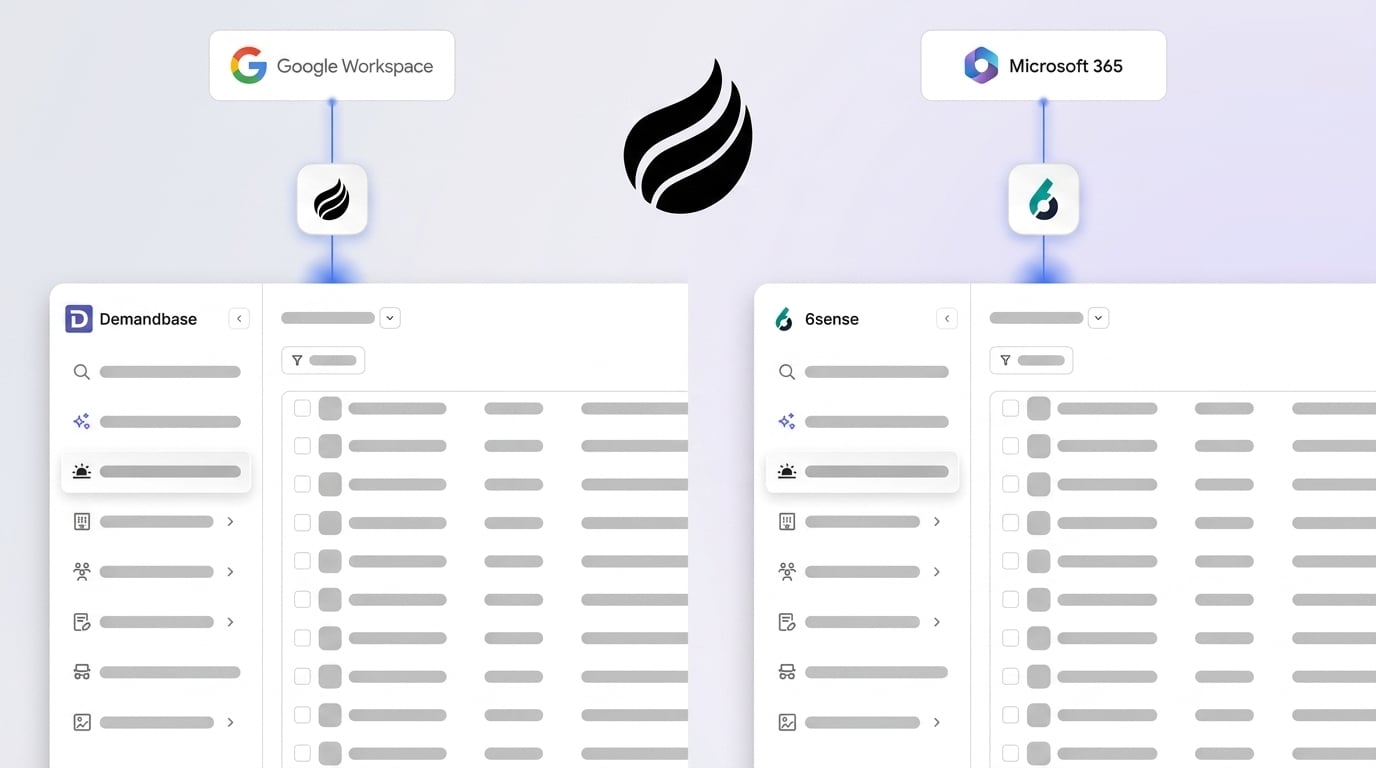
Demandbase positions itself as an all-in-one ABM orchestration platform that shines in advertising execution and account-based experiences. 6sense focuses on predictive analytics and AI-driven intent scoring to surface in-market accounts. Coffee operates as an autonomous CRM agent that unifies emails, calls, and visitor data into Salesforce or HubSpot without human intervention. Traditional ABM platforms chase buyer signals through complex dashboards, while Coffee removes the manual data entry bottleneck that weakens both Demandbase and 6sense implementations.
Evaluation Criteria for ABM Platforms in 2026
To compare these different approaches fairly, teams need a consistent evaluation framework. Enterprise revenue teams now judge ABM platforms across six dimensions: data automation capabilities, CRM integration depth, visitor identification accuracy, total cost of ownership, user adoption rates, and pipeline intelligence. The key differentiator has shifted from intent data breadth to automation depth, so teams now look for platforms that work autonomously instead of demanding constant human input.
The table below shows how each platform handles three of the most important automation-related dimensions.
|
Feature |
Demandbase |
6sense |
Coffee |
|---|---|---|---|
|
Data Quality/Automation |
Manual CRM feeds |
Manual data inputs required |
Agent auto-logs/unifies |
|
CRM Integration |
Autonomous sync |
||
|
Visitor ID Accuracy |
Company-level signals |
Account predictive scoring |
Persona-matched suggested leads |
Struggling with CRM data chaos? See how Coffee’s agent automates it for free.
Side-by-Side View: Pricing, Setup, and Automation
The 2026 ABM market shows clear gaps in pricing, implementation complexity, and automation strength. Demandbase contracts range from $45,000-$65,000 annually for mid-market teams, while 6sense median pricing hits $58,310 with contracts reaching $137,984. Both platforms require substantial onboarding investments, including about $29,000 for Demandbase implementation, along with ongoing manual maintenance that Coffee’s agent removes.
|
Criteria |
Demandbase |
6sense |
Coffee |
|---|---|---|---|
|
Pricing (Mid-Market/yr) |
$50k-$100k |
Seat-based, agent unlimited |
|
|
Implementation Time |
Days, not months |
||
|
CRM Integration Depth |
Autonomous data entry |
Intent Data and Visitor Identification in Practice
6sense processes over 1 trillion buying signals daily across 40+ languages through its Signalverse technology. Demandbase tracks intent across 3 million sites in 575,000+ topics. Both platforms deliver company-level insights that still require manual interpretation and follow-up. Coffee’s visitor identification moves beyond anonymous traffic and provides persona-matched suggested leads with LinkedIn profiles and contact details, so reps can start outbound outreach immediately without extra research tools.

CRM Integrations and Data Hygiene
6sense reduces manual territory management through automated lead scoring and routing in Salesforce, while Demandbase emphasizes account enrichment with continuous firmographic updates. Both platforms still need 2-3 weeks of CRM admin work during setup and ongoing field mapping maintenance. Coffee removes this overhead by creating contacts, logging activities, and enriching records from Google Workspace or Microsoft 365 automatically, which addresses the core problem that sales reps spend 71% of their workweek on administrative work, data entry, and preparation.

Pricing, Setup, and Total Cost in 2026
Enterprise ABM pricing now strains most mid-market budgets. Vendr’s dataset shows Demandbase’s median contract at $68,001 with additional seat costs layered on top of that spend. 6sense follows similar patterns, with median pricing of $58,310 and contracts that can reach $137,984. 6sense also requires several months for full deployment because its predictive models need training, which further increases total cost of ownership. Coffee’s seat-based pricing avoids per-feature charges, and its agent handles setup automatically, delivering 8-12 hours of weekly time savings that quickly cover the investment.
Explore Coffee’s pricing and features.
Pipeline Intelligence and Data Completeness
Pipeline visibility suffers on traditional ABM platforms because they miss large portions of sales activity. 6sense’s predictive models need rich historical data before they reach peak accuracy, and Demandbase One has a steep learning curve that takes time to master. Coffee’s Pipeline Compare feature delivers week-over-week pipeline analysis from day one because its agent captures complete data automatically, which removes the “garbage in, garbage out” problem that holds back traditional ABM dashboards.

Best-Fit Use Cases by Team Type
Enterprise teams with dedicated ABM operations staff and $100,000+ budgets can consider Demandbase for advertising orchestration or 6sense for predictive analytics, as long as they can support the manual data work these tools expect. Small to mid-market revenue teams with 1-100 employees rarely have that operational capacity, so they see stronger value in Coffee’s agent-first approach that removes the maintenance burden. This flexibility extends to deployment because Coffee works as either a standalone CRM or a companion app for existing Salesforce or HubSpot instances, which means it meets teams where they are instead of forcing a platform migration.

See how our agent unifies your stack and start your free trial.
Operational and Long-Term Considerations
Legacy ABM platforms often create vendor lock-in through complex implementations and custom integrations. Demandbase’s $29,000 onboarding investment and 6sense’s multi-month implementation timeline make switching both costly and risky. Coffee avoids this trap through standard integrations, since SOC2 compliance and Zapier connectivity keep you away from proprietary data formats and fragile custom APIs. Its agent-driven automation scales “good data in, good data out” principles without adding technical debt or creating shadow CRM instances that become hard to unwind.
Risks, Limitations, and Data Misconceptions
ABM teams often assume that more data automatically produces better results. Both Demandbase and 6sense depend on manual CRM updates that weaken their advanced analytics when reps fall behind on data entry. Coffee’s agent model addresses this flaw by improving data quality through automation, instead of hoping busy sales reps keep every record current.
Decision Framework for Choosing a Platform
Teams should choose an ABM platform based on automation priority rather than feature breadth. The six criteria described earlier can be distilled into three decision-making priorities that guide which platform fits best.
|
Priority |
Demandbase |
6sense |
Coffee |
|---|---|---|---|
|
Data Automation |
Low |
Medium |
High |
|
CRM Adoption |
Manual |
Manual |
Autonomous |
|
Time to Value |
3+ months |
6+ months |
Days |
If your team spends more time managing data than selling, Coffee’s agent delivers immediate value. Teams with dedicated operations staff that need enterprise-grade advertising orchestration will see Demandbase perform well. Organizations with clean historical data that want advanced predictive analytics can benefit from 6sense. Coffee ultimately breaks the manual data entry model that constrains both traditional platforms.
Hire Coffee’s agent today and eliminate manual data entry.
FAQ
What are the key differences between 6sense vs Demandbase in 2026?
6sense excels in predictive analytics and AI-driven intent scoring, processing over 1 trillion buying signals daily to identify in-market accounts. Demandbase dominates advertising orchestration and account-based experiences with sophisticated campaign management across multiple channels. Both platforms still depend on manual CRM data entry and complex implementations. Coffee focuses on the underlying data quality problem that affects both tools and solves it through an autonomous agent.
What is the best CRM agent alternative to Demandbase and 6sense?
Coffee represents a true CRM agent alternative to traditional ABM platforms. Demandbase and 6sense expect constant manual data feeding, while Coffee’s agent automatically captures emails, calls, and visitor interactions, enriches records, and maintains CRM hygiene without human effort. This approach removes the administrative burden discussed earlier, including the 71% of sales rep time spent on administrative work, data entry, and preparation, and it delivers stronger pipeline intelligence through complete data capture.
How do Demandbase and 6sense CRM integrations compare?
6sense offers deep Salesforce integration with automated lead scoring and routing that can reduce manual territory management. Demandbase provides bi-directional sync with both Salesforce and HubSpot, with a focus on account enrichment and firmographic updates. Both platforms require 2-3 weeks of CRM admin work during setup and ongoing maintenance. Coffee’s autonomous CRM integration removes this complexity by handling data entry, enrichment, and sync automatically.
Which platform offers better ROI for mid-market revenue teams?
Mid-market teams with limited operations resources usually see stronger ROI from Coffee because it delivers immediate time savings and simple implementation. Enterprise teams with dedicated ABM staff and large advertising budgets may still justify Demandbase or 6sense costs. Most growing companies, however, gain more value from Coffee’s agent-driven automation, which scales with the business without demanding platform expertise or constant manual maintenance.