Written by: Doug Camplejohn, CEO & Co-Founder, Coffee | Last updated: September 8, 2026
Key Takeaways
- Demandbase is an enterprise ABM platform with a median annual contract of $68,591, while Apollo.io starts at $49/user/month but often grows through credit and overage costs.
- Demandbase works well for large marketing-led ABM programs, yet its 8–16 week implementation and need for dedicated ops staff make it hard for most mid-market teams to adopt.
- Apollo.io fits small outbound sales teams with its contact database and sequencing tools, but it lacks ABM capabilities and struggles with data accuracy in some international markets.
- Running both platforms usually creates data silos, integration overhead, and duplicated spend that most teams struggle to justify in 2026.
- Consider an AI-first alternative like Coffee if you need both account intelligence and outbound execution without the cost and complexity of running two separate tools.
Demandbase Vs Apollo.Io: Key Differences At A Glance
Demandbase is an enterprise-grade account-based marketing platform built around account intelligence, intent data, and targeted B2B advertising. Apollo.io is an all-in-one sales engagement platform with a large contact database and outbound sequencing capabilities. Each platform supports a different go-to-market motion.
| Attribute | Demandbase | Apollo.Io |
|---|---|---|
| Primary Focus | Enterprise ABM & account intelligence | Outbound prospecting & sales engagement |
| Best For | Marketing-led ABM programs at enterprise companies | SDR teams at SMB and mid-market companies |
| Pricing Model | Custom quote; median annual contract of $68,591 per Vendr | Freemium; paid plans from $49/user/month (annual billing) |
| Data Coverage | 100M+ companies, 176M+ contacts | 240M+ contacts, 30M+ companies |
| Key Features | Native B2B DSP, intent monitoring, buying group mapping | Email sequences, dialer, 65+ search filters |
Pricing: What You Will Really Pay
Demandbase uses opaque enterprise pricing with custom quotes only. Vendr’s marketplace data across 185 purchases puts the median annual contract at $68,591, with deals ranging from $24,000 to $164,265. That figure covers the platform fee only. Professional services and advertising spend sit on top of that number. Multiple Capterra reviewers report onboarding fees around $29,000, which cover Salesforce or HubSpot integration, data connections, initial campaign setup, and training.
Apollo.io looks far more accessible at first glance. Basic starts at $49/user/month with annual billing, and many small teams start there. The credit system, overage charges, and seat minimums often add 20–40% to most teams’ actual bills. Credits expire every billing cycle and do not roll over. Overage pricing runs $0.20 per credit with a 250-credit minimum purchase. Beyond these direct costs, both tools also require extra spending on CRM integrations and ongoing maintenance.
Coffee takes a simpler approach. Its seat-based pricing includes the agent’s unlimited labor, so teams avoid credit metering, hidden fees, and implementation surcharges.
Demandbase For Abm: When It Is Worth The Investment
Demandbase delivers strong results for enterprise companies running marketing-led ABM strategies with large budgets and complex sales cycles. Its native B2B advertising DSP is the only demand-side platform built exclusively for B2B. It includes intent monitoring across 810,000+ keywords and buying group mapping that tracks engagement by role across an account. Coupa’s ABM program using Demandbase opened opportunities at 29% of targeted accounts, and 42% of those reached later funnel stages.
The operational cost for this capability is high. Implementation takes 8–16 weeks, and the platform requires dedicated marketing operations staff. That role often costs $80,000–$120,000 annually. For mid-market teams with fewer than 50 target accounts, the cost and complexity are difficult to justify. These teams usually benefit more from a lighter, faster-to-deploy solution.
Apollo.Io For Outbound: When It Is The Right Choice
Apollo.io supports sales-led teams that focus on outbound prospecting. It is affordable, quick to start, and offers a genuinely usable free tier. The platform combines a 230M+ contact database with email sequences, a native dialer, and 65+ search filters. Reps work inside a single workspace, which keeps daily workflows simple.
The trade-offs become clear as teams scale. Email accuracy drops to approximately 60% in some international markets. Apollo lacks ABM capabilities such as account-level advertising and buying group orchestration. LinkedIn sequence steps are manual reminders rather than automated actions, so Apollo does not automatically complete LinkedIn tasks. As a point solution, Apollo also needs CRM integration to keep records clean, which adds stack complexity and cost.
Can You Use Both Demandbase And Apollo.Io Together?
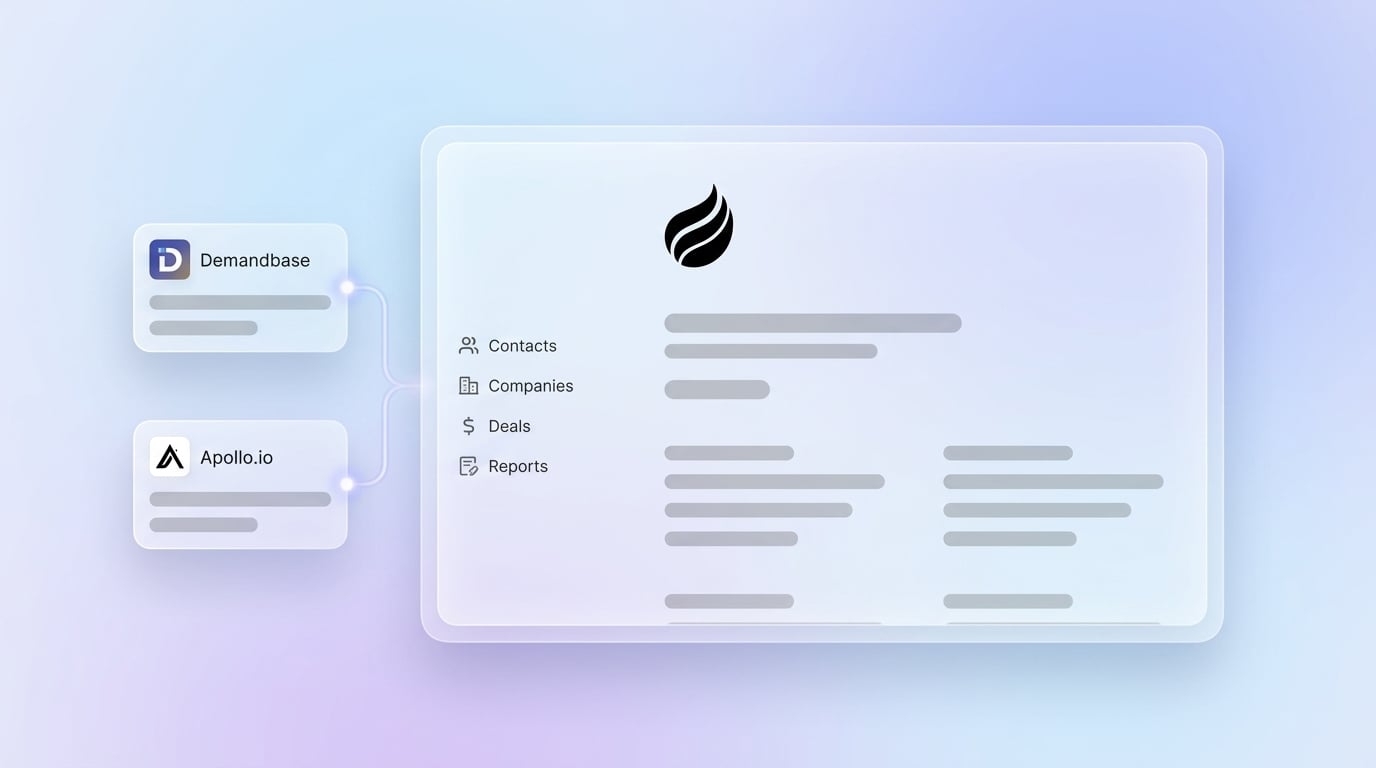
Some enterprise teams with dedicated ops resources run Demandbase for ABM and Apollo.io for outbound at the same time. Most mid-market teams struggle with this approach. It creates data silos, integration headaches, and significant cost duplication. Both tools depend on manual data entry or separate integrations to maintain CRM data quality.
Coffee offers a different path. Its AI agent combines account intelligence, lead finding, and engagement in one platform. It also automates data entry, enrichment, and pipeline intelligence. You avoid separate ABM tools, separate prospecting databases, and manual stitching between systems.

See how Coffee consolidates your stack and bring your ABM and outbound motions into a single AI-first agent.
Decision Framework: Matching Each Tool To Your Team
Your team size, budget, and primary go-to-market motion determine which platform fits best. Use this simple framework to guide your choice:
- Choose Demandbase if: You are an enterprise with a dedicated ABM budget ($100K+ annually), a marketing-led motion, and a full-time marketing operations person to manage the platform.
- Choose Apollo.Io if: You are a small sales team (under 10 reps) focused on outbound prospecting, need a low-cost entry point, and can tolerate data quality inconsistencies in international markets.
- Choose Coffee if: You are a mid-market team that needs both account intelligence and outbound execution without extra bloat and cost. Coffee works as a standalone CRM or as a companion to Salesforce or HubSpot, so it adapts to your current stack.
Coffee is the only option in this comparison that combines lead finding, enrichment, engagement, and pipeline intelligence in one AI-first agent. That structure removes the need for separate ABM and outbound tools.

Risks, Limitations, And Common Misconceptions
Demandbase often draws criticism for complexity and cost. Multiple G2 reviewers describe the learning curve as “steep” and the interface as “overwhelming for non-power users.” The platform requires annual or multi-year commitments with no free trial. The only way to evaluate it is through a guided demo before signing an annual contract.
Apollo.io users frequently mention data accuracy issues and credit limitations. A cross-platform review analysis found 691 data-quality complaint tags, and one independent reviewer reported an email bounce rate above 20%. Both tools rely on manual data entry or separate integrations to keep CRM data clean. Coffee addresses this gap by automating data entry and enrichment through its agent.
Frequently Asked Questions
Is Demandbase Similar To 6Sense?
Yes. Both are enterprise-grade ABM platforms with comparable pricing and capabilities. As noted earlier, 6Sense’s pricing sits close to Demandbase’s, with median contracts in the low-to-mid $60,000 and $68,000 ranges. Both require significant implementation effort, dedicated marketing operations staff, and multi-week onboarding timelines. For most mid-market teams, the cost and complexity exceed what the team can realistically use.
How Much Does Demandbase Cost?
Demandbase uses custom enterprise pricing with no public list prices. Vendr’s marketplace data across 185 purchases reports a median annual contract of $68,591, with deals ranging from $24,000 to $164,265. Onboarding fees around $29,000 are commonly reported, covering Salesforce or HubSpot integration, data connections, initial campaign setup, and training. Demandbase requires annual or multi-year commitments, and advertising spend sits on top of the platform fee.
Is Apollo.Io Good For Small Business?
Apollo.io offers a genuinely usable free tier and paid plans starting at $49/user/month with annual billing, which makes it accessible for small businesses and solo founders. Credit limitations, data quality inconsistencies in international markets, and the need for CRM integration add complexity and cost as teams grow. Most solo founders move from the free plan to Basic within three to six months when mobile credits run out. Teams above five reps typically need the Professional plan to access AI features and additional mailboxes.
Can Coffee Replace Both Demandbase And Apollo.Io?
Yes. Coffee combines account intelligence, lead finding, enrichment, email sequencing, and pipeline intelligence in one AI-first CRM agent, though the contact database size is not specified in the manifesto. It automates data entry, removes the need for separate ABM and outbound tools, and works as either a standalone CRM or a companion to Salesforce or HubSpot. The agent handles contact creation, activity logging, meeting summaries, and outreach sequences, which replaces the work of multiple point solutions without credit metering or hidden fees.

What Are The Hidden Costs Of Running Both Demandbase And Apollo.Io?
Running both tools simultaneously creates three categories of hidden cost. First, there is direct spend duplication: a Demandbase contract averaging $68,591 per year plus Apollo.io Professional for a five-person team adds thousands more annually, before implementation fees. Second, there is the labor cost of a dedicated ops hire, as mentioned earlier, which adds significantly to the total. Third, there is the ongoing cost of manual data entry and integration maintenance to keep CRM records clean across both platforms. An AI-first agent like Coffee removes most of this ongoing work.
Conclusion: The Case For Consolidation
The choice between Demandbase and Apollo.io creates a trade-off between account intelligence and outbound execution. Demandbase delivers powerful ABM capabilities at an enterprise price point that most mid-market teams cannot justify. Apollo.io offers accessible outbound tooling with data quality limitations and a credit system that adds unexpected cost at scale. Running both at once multiplies the expense and the operational burden.
Many B2B teams in 2026 find more value in an AI-first CRM agent like Coffee. Coffee removes the manual data entry that makes both tools expensive to operate, automates the busywork of enrichment and logging, and delivers accurate pipeline intelligence without integration sprawl. It works as a standalone CRM for growing teams or as a companion layer on top of existing Salesforce or HubSpot instances, so it fits into your current workflows.
Ready to simplify your revenue stack? Start your consolidation with Coffee.