Written by: Doug Camplejohn, CEO & Co-Founder, Coffee | Last updated: August 4, 2026
Key Takeaways for 2026 Contact Management Decisions
- Scalable contact management platforms fall into two groups: legacy passive databases and AI agent systems that capture, enrich, and act on data without manual entry.
- Five concrete criteria – automation depth, data quality architecture, integration model, team-size fit, and security – determine whether a platform scales without extra admin work.
- Legacy CRMs force reps to spend 25% of their time on manual data entry, while AI agent platforms remove this overhead and preserve history with warehouse-backed architectures.
- Teams of 25–100 reps gain the most from seat-based pricing with unlimited agent labor, which avoids hidden per-process AI fees that spike costs in legacy systems.
- Teams ready to remove manual CRM work and improve forecasting accuracy can get started with Coffee today.
Five Criteria for Evaluating Contact-Management Platforms in 2026
These five criteria show whether a contact management platform can grow with your team without adding administrative burden.
- Automation depth: The system should capture contacts, log activities, and enrich records without rep involvement. If it still needs manual input for basic tasks, it will not scale.
- Data quality architecture: A warehouse-backed model preserves historical context. A relational database that overwrites records loses prior state and weakens forecasting.
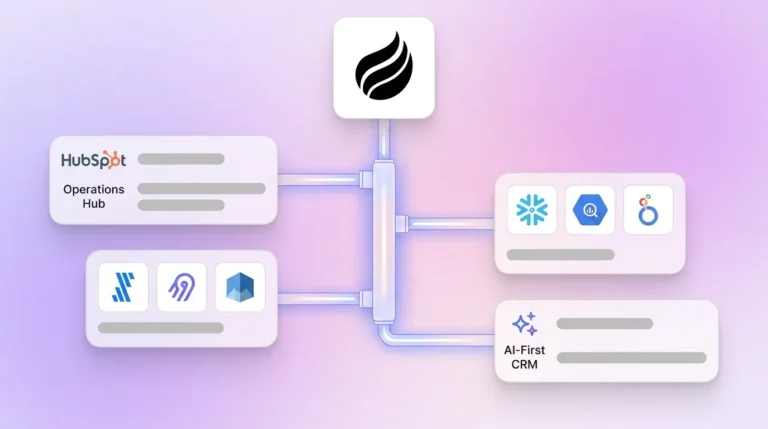
- Integration model: The platform should work as both a standalone system of record and a companion layer on Salesforce or HubSpot, not just one or the other.
- Team-size fit: Pricing and feature depth must serve teams of 5–25, 25–100, and 100+ reps without forcing enterprise contracts or per-feature metering.
- Security and compliance: The platform must be SOC 2 Type 2 certified, GDPR compliant, and explicit that customer data is not used to train public models.
Team-Size Fit at a Glance
This table maps platform category to team-size fit across three rep-count bands. Every claim comes from vendor documentation and independent research cited inline.
| Platform Category | 5–25 Reps | 25–100 Reps | 100+ Reps |
|---|---|---|---|
| Legacy CRM (Salesforce, HubSpot) | Overbuilt; high manual entry burden for small teams | Functional but requires dedicated admin or RevOps to maintain data quality | Designed for this band; high total cost of ownership and implementation complexity |
| Modern Passive CRM (Attio, Pipedrive, Close) | Good UX; still relies on human data entry; no agent layer | Scales records but data decays ~25–30% annually without automated enrichment | Integration gaps emerge; lacks warehouse-backed history for AI forecasting |
| AI Agent CRM — Standalone (Coffee) | Ideal; agent handles all data entry from day one; seat-based pricing with unlimited agent labor | Strong fit; Pipeline Compare, Lead Finder, Campaigns, and Visitor ID scale outbound without adding headcount | Outside stated ICP; large enterprises with complex custom workflows are better served by Salesforce |
| AI Agent Layer — Companion (Coffee on Salesforce/HubSpot) | Viable for teams already committed to HubSpot | Primary sweet spot; agent writes enriched data back to existing CRM, eliminating low adoption and bad data cycles | Applicable where Salesforce is entrenched; Coffee handles data-in so Agentforce or Einstein can produce reliable data-out |
| Point Solutions Stack (ZoomInfo + Gong + Salesloft) | Expensive and fragmented for small teams; overlapping tools create multiple sources of truth | Common but creates tool fatigue; SDRs spend 21% of their time navigating between platforms when using 6-8 tools daily in fragmented stacks | Manageable with dedicated RevOps; still requires human stitching between systems |
How AI Changes CRM Without Replacing It
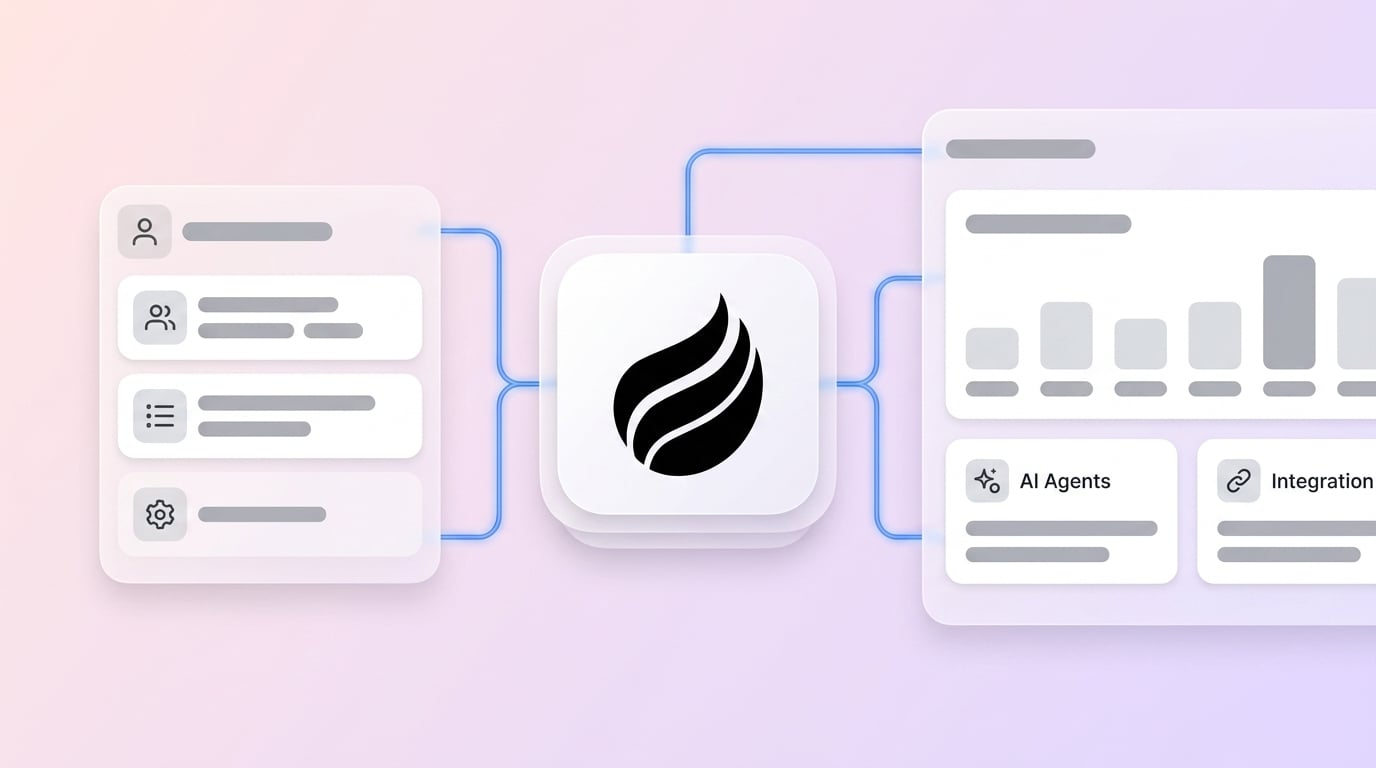
AI is replacing the human-operated UI layer of CRM, not the underlying system of record. AI agents do not replace the system of record; they replace the human interface and treat CRM as workflow infrastructure. The governed data backbone remains, while the need for reps to interact with it manually disappears.
The architectural shift is measurable. Thirty-eight percent of new CRM licenses in 2026 include AI-driven features, up from 11% in 2022, as the global CRM market grows. The same analysis identifies a third wave of AI in CRM: autonomous LLM agents that capture interactions, update pipelines, and trigger follow-ups without direct human intervention. This wave differs from the predictive AI wave of 2018–2022 and the generative AI wave of 2023–2024.
Legacy platforms are responding by bolting agent layers onto existing architectures. Salesforce Agentforce crossed $540M ARR in Q3 FY2026, a 330% year-over-year jump. The same analysis notes that traditional REST APIs impose rate limits that autonomous agents can exhaust in seconds during multi-step workflows. The constraint is architectural. Legacy systems were built for human operators using forms, fields, and pipelines, while AI agents require query, reasoning, planning, and execution capabilities that traditional architectures cannot fully support.
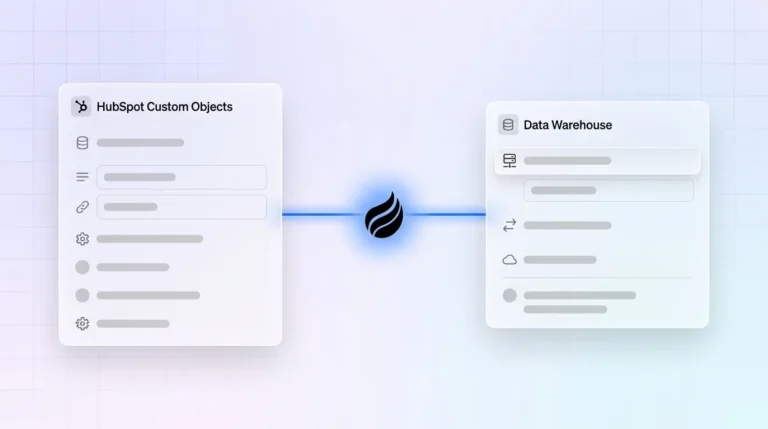
The passive-versus-active distinction guides sales teams evaluating platforms today. Passive CRMs function primarily as record systems that store data, whereas agentic CRMs act on data through autonomous decision-making, goal-oriented behavior, continuous learning, and multi-agent collaboration. Coffee follows the agentic model. The agent ingests emails, calendars, and call transcripts into a data warehouse, preserves historical context that relational databases overwrite, and writes structured outputs back to the team’s chosen system of record.
Data quality remains the critical risk in any AI CRM deployment. AI-powered CRM automation does not fix bad data; it scales it. Coffee’s architecture addresses this at the source. The agent handles data entry instead of reps, so the input stays structured and grounded in real interactions from the first touch.
How to Increase Sales-Team Productivity in 2026
This data quality advantage translates directly into measurable productivity gains. Sales reps lose 546 hours annually, or 27% of productive time, on manual data entry and chasing inaccurate records. The productivity gap reflects architecture, not motivation. Three scenarios show how Coffee’s agent closes this gap.
Early-stage teams (5–25 reps): A founder-led team that has outgrown spreadsheets connects Google Workspace or Microsoft 365 to Coffee. The agent scans emails and calendars to auto-create contacts and companies, logs last and next activity, and enriches records with job titles, funding data, and LinkedIn profiles via licensed data partners. This setup removes the need for a separate Apollo or ZoomInfo subscription. Coffee’s January 2026 Stripe integration automatically imports customers, enriches them, and marks paid invoices as Closed Won. This automation removes a manual reconciliation step that usually falls to a founder or first RevOps hire.

Growing outbound organizations (25–100 reps): As outbound volume scales, Coffee’s Lead Finder lets reps issue natural-language commands such as “Find me VPs of Sales at SaaS companies with 50–200 employees” and receive a verified prospect list that lives in the same system running enrichment and outreach. Campaigns then executes multi-step, AI-generated email sequences from the rep’s connected mailbox. Stop-on-reply runs by default, so no automated message reaches a prospect after a real conversation starts. Visitor Identification converts anonymous website traffic into named, qualified prospects with enrichment pre-filled, and surfaces Suggested Leads, which are the two or three individuals inside a visiting company who match the buyer persona for immediate LinkedIn or email outreach.

Teams committed to Salesforce or HubSpot: Coffee deploys as a Companion App. A simple authentication allows the agent to sync data, enrich it, and write structured insights, including BANT, MEDDIC, or SPICED qualification fields, back to the primary CRM. Improved summary templates released in November 2025 are customizable to match existing workflows and writable back to Coffee, HubSpot, or Salesforce. Pipeline Compare visualizes week-over-week changes automatically, replaces manual CSV exports, and turns pipeline reviews from interrogation sessions into strategic discussions.

Best CRM Choice for 25–100 Rep Sales Teams
For teams in the 25–100 rep band, five factors determine long-term fit.
Automation depth: Email sync, calendar sync, AI call summaries, and enrichment APIs together can eliminate 80–90% of the manual data entry work performed by sales reps. Coffee automates all four natively. Salesforce and HubSpot automate email and calendar sync but require additional paid tools such as Gong, ZoomInfo, and Salesloft for call intelligence and enrichment, each adding a separate subscription and data silo.
Integration model: Coffee operates as a standalone CRM or as a companion layer on Salesforce or HubSpot. Newer AI CRMs such as Clarify and Day.ai lack the integration depth to handle Salesforce quotas, forecasting requirements, and required fields reliably at this team size.
Data quality: CRM data decays over time, and many companies lose revenue because of poor data quality. Coffee’s agent continuously enriches records from licensed data partners, keeping the decay rate mentioned earlier below the level that breaks AI-driven forecasting.
Security and compliance: Coffee meets the security requirements outlined earlier with SOC 2 Type 2 and GDPR compliance, and it does not use customer data for public model training. Integration with third-party tools is currently available via Zapier, with deeper native integrations on the roadmap.
Pricing: Coffee uses seat-based pricing. The agent’s unlimited labor across enrichment, meeting bots, campaign execution, visitor identification, and lead finding is included in the seat cost. There is no per-process metering on LLM usage, which is the hidden cost that makes Salesforce Agentforce and HubSpot Breeze expensive at scale for this team size.
See Coffee’s pricing for 25–100 rep teams — get started with Coffee today.
Risks and Limitations Across CRM Options
Legacy CRMs carry a hidden maintenance cost that compounds as teams grow. Organizations should budget time and resources for data quality remediation before deploying AI agents on any CRM with accumulated data. The administrative overhead does not disappear when AI features are added. It shifts from reps to RevOps and implementation consultants.
Newer “AI” CRMs that lack a data warehouse face a different limitation. Third-party middleware bolted onto legacy CRM APIs often leaves agents with insufficient context for reliable autonomous decisions because traditional REST endpoints return only discrete records rather than synthesized narratives from email threads, calendar events, and competitor mentions. Day.ai focuses primarily on unstructured productivity data and does not address the structured CRM fields that RevOps requires for forecasting. Clarify lacks the Salesforce and HubSpot integration depth to serve teams already committed to those platforms.
Point-solution stacks using ZoomInfo for enrichment, Gong for call intelligence, and Salesloft for sequencing solve individual problems but create new fragmentation. Fragmented stacks with overlapping point solutions create multiple sources of truth, slow adoption, erode confidence, and accelerate tool fatigue as B2B organizations grow.
Decision-Framework Checklist for Selecting a Platform
Use this checklist to connect your constraints to the platform characteristics that resolve them.
- Reps spend more than 5 hours per week on CRM updates: Start by measuring how much time your reps spend on CRM maintenance. If the total exceeds 5 hours per week, require a platform with autonomous email, calendar, and call capture that writes structured fields, not free-text notes, back to the system of record.
- Forecast accuracy is low despite a full pipeline: Next, assess whether your current data supports accurate forecasting. If forecast accuracy is low, require a data warehouse architecture that preserves historical deal state instead of overwriting records on update.
- Already on Salesforce or HubSpot with low adoption: Then consider your existing infrastructure commitments. If you are already on Salesforce or HubSpot with low adoption, require a companion agent that authenticates to the existing CRM and handles data-in without a migration.
- Outbound prospecting requires three or more separate tools: If outbound prospecting depends on several disconnected tools, require a platform where lead finding, enrichment, and campaign execution share a single data layer with no CSV exports between steps.
- Website traffic is unidentified: If most website visitors remain anonymous, require visitor identification that resolves named individuals, not just companies, and maps them to buyer personas for immediate outreach.
- Security review is required: If procurement involves a formal security review, confirm SOC 2 Type 2 certification, GDPR compliance, and a clear data-use policy before purchase.
- Pricing must be predictable as headcount grows: If budget predictability matters, require seat-based pricing with agent labor included and avoid per-process or per-LLM-call metering.
Frequently Asked Questions
How long does it take to implement Coffee?
For the Standalone CRM, setup begins immediately after connecting Google Workspace or Microsoft 365. The Coffee agent scans emails and calendars to auto-create contacts, companies, and activity logs within minutes of authentication. Teams starting fresh do not need an implementation consultant or data migration. For the Companion App on Salesforce or HubSpot, a simple authentication flow connects the agent to the existing CRM. The agent then enriches records and writes structured data back to the primary system. Teams with clean existing data are typically operational the same day.
How difficult is migrating existing contact data into Coffee?
Teams migrating from spreadsheets or a lightweight CRM can import existing records directly. For teams on Salesforce or HubSpot that prefer to keep those platforms as the system of record, no migration is necessary. Coffee operates as a Companion App that enriches and writes back to the existing CRM instead of replacing it. The most common migration friction point is data quality in the source system. Duplicate records, missing fields, and inconsistent naming conventions should be resolved before or during migration so the Coffee agent can work from clean records.
How does Coffee’s built-in data quality compare to ZoomInfo?
Coffee’s enrichment data, sourced from licensed data partners and augmented by the agent’s continuous capture of emails, calendars, and call transcripts, is roughly on par with ZoomInfo for most B2B use cases at the 10–80 rep team size. The key architectural difference is that Coffee’s enrichment lives in the same system running outreach and pipeline management, so there is no export-import cycle between a standalone database and the CRM. For teams that need the deepest possible coverage on enterprise accounts or highly specialized verticals, ZoomInfo remains a dedicated option. Most growing teams, however, find Coffee’s built-in Lead Finder and enrichment sufficient to remove the separate subscription.
Is Coffee secure enough for B2B sales data?
Yes. Coffee holds SOC 2 Type 2 and GDPR certifications. Customer data is not used to train public AI models. For teams in heavily regulated industries such as healthcare or finance that require multi-year security reviews or custom compliance frameworks, Coffee is not the recommended fit. For U.S. B2B companies in technology, professional services, and related sectors, the current certifications satisfy standard procurement security reviews.
Does Coffee integrate with tools outside Salesforce and HubSpot?
Yes. Integration with third-party tools beyond Salesforce and HubSpot is currently available via Zapier, which covers most of the sales and RevOps stack. Deeper native integrations are on the product roadmap. Coffee also integrates natively with QuickBooks, automatically syncing invoices and payment statuses into the CRM, and with Stripe, automatically importing customers, enriching them, and marking paid invoices as Closed Won deals.
Conclusion: Why AI Agent CRMs Now Scale Better Than Legacy Systems
The productivity cost outlined earlier, with 27% of rep time lost to manual entry, compounds as teams grow. Many organizations running AI in production also report inaccurate or misleading outputs because of upstream data issues. These issues describe the same underlying problem. Legacy passive CRMs turn reps into data entry clerks, and the bad data they produce makes every downstream AI feature unreliable.
Coffee resolves both sides of the equation. The agent handles data-in by capturing contacts, enriching records, logging activities, transcribing calls, and running outreach. As a result, data-out stays accurate enough to trust for forecasting, pipeline reviews, and autonomous decision-making. Coffee operates as a standalone CRM for teams of 5–25 reps and as a Companion App for teams already committed to Salesforce or HubSpot. This flexibility makes it a scalable contact management platform that meets a growing sales team at any stage of its stack evolution.