Written by: Doug Camplejohn, CEO & Co-Founder, Coffee
Key Takeaways for Choosing Lead Management Software
- Sales reps lose 71% of their time to admin work, so leading tools now automate data entry, enrichment, and CRM updates.
- Coffee ranks as the top AI agent, with 5-star setup via OAuth for Salesforce and HubSpot and autonomous handling of complex data.
- Effective platforms deliver bi-directional sync, deep automation, strong data quality, high user adoption, and 2026-ready AI such as predictive scoring.
- Tools like Pardot and ZoomInfo offer powerful features yet often feel complex, fragmented, and less friendly for everyday sales reps.
- Coffee typically saves teams 8–12 hours each week and strengthens pipeline visibility, and you can review Coffee’s pricing and plans to see fit.
Scope of This Comparison and How Each Tool Was Evaluated
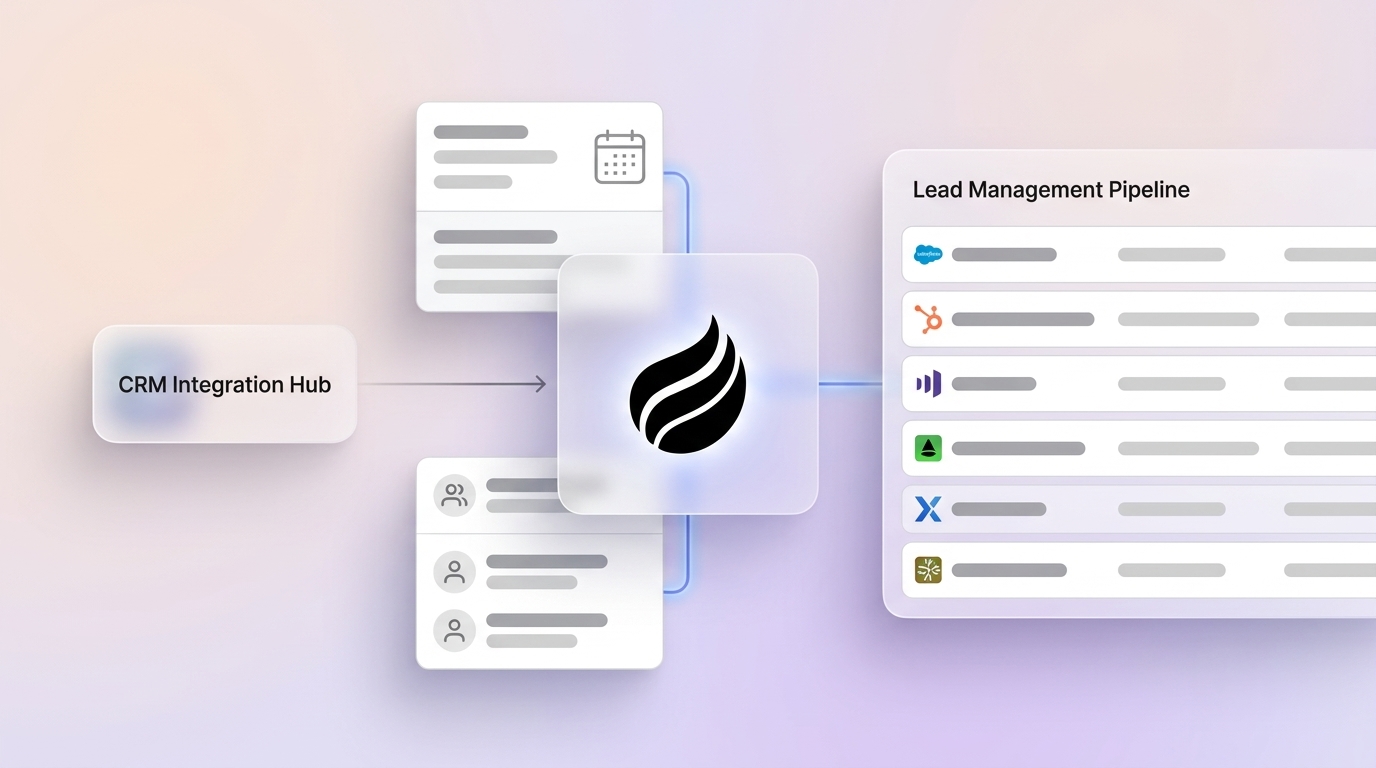
This comparison focuses on tools that automate lead capture, tracking, nurturing, and enrichment while attaching to existing CRMs without migrations. The analysis centers on solutions that keep high-quality data flowing into CRM systems so revenue teams can trust their reports and forecasts.
The evaluation criteria work together as a checklist for real-world adoption and long-term value:
- Seamless Integration: Bi-directional sync with major CRMs like Salesforce and HubSpot using OAuth authentication, which reduces setup friction.
- Automation Depth: Autonomous data entry, unstructured data processing, and workflow orchestration that replace manual updates.
- Data Quality: Real-time enrichment, duplicate prevention, and reliable activity logging that keep records clean.
- User Adoption: Rep-friendly interfaces that encourage consistent daily use across the sales team.
- Pipeline Intelligence: Historical tracking, forecasting accuracy, and clear visualization of pipeline changes over time.
- 2026 AI Features: Predictive lead scoring, conversational AI assistants, and behavioral insights that support proactive selling.
- SMB Scalability: Straightforward setup and seat-based pricing models that fit growing teams.
RevOps professionals now favor deep native integrations over point-to-point connections, and they look for orchestration layers that simplify rather than complicate tech stacks.
Side-by-Side Comparison Table of the Top 10 Tools
The table below compares core CRM integrations, setup experience, and pricing models across the ten platforms so you can quickly see how Coffee’s enterprise-grade automation pairs with consumer-grade simplicity.
| Tool Name | Key CRM Integrations | Setup Ease (1-5 stars) | Starting Price |
|---|---|---|---|
| Coffee | Salesforce, HubSpot | 5 stars | Custom (seat-based) |
| Pardot | Salesforce native | 3 stars | $1,250/month |
| Marketo | Salesforce, Microsoft | 2 stars | $895/month |
| HubSpot Marketing | HubSpot native | 4 stars | From $9/user/month |
| Pipedrive | Native CRM + integrations | 4 stars | From $14/user/month |
| ZoomInfo | Salesforce, HubSpot | 3 stars | Custom (enterprise) |
| Apollo.io | Salesforce, HubSpot | 4 stars | From $49/user/month (annual) |
| Gong | Salesforce, HubSpot | 3 stars | Custom (enterprise) |
| RB2B | Via Zapier | 3 stars | $0/month |
| Clarify | Limited integrations | 4 stars | $0/month |
Coffee stands out with 5-star setup ease through simple OAuth authentication and broad automation that handles both structured and unstructured data.
See Coffee’s integration options if you need fast, low-friction CRM connectivity.
The Top 10 Lead Management Platforms for Existing CRMs
The following sections walk through each platform in detail and show how their integration models and automation depth map to the evaluation criteria above.
1. Coffee – AI Agent for CRM Companion and Standalone
Coffee acts as an autonomous AI agent that removes manual CRM maintenance through intelligent automation. As a Companion App, it connects to existing Salesforce or HubSpot instances through the OAuth protocol mentioned earlier, then automatically creates contacts and companies from Gmail or Outlook, enriches records with job titles and LinkedIn profiles, and logs activities without human effort.

Key differentiators include visitor identification with suggested leads, where a tracking pixel identifies anonymous website visitors and recommends specific contacts based on buyer personas. To power these recommendations, the platform processes structured CRM data alongside unstructured content such as email transcripts and stores full history in a built-in data warehouse that supports pattern recognition across every touchpoint.

Coffee also offers a Standalone CRM for SMBs that want a modern system instead of legacy tools. SOC2 Type 2 compliance and transparent seat-based pricing keep it practical for both small teams and larger organizations.
2. Pardot – Salesforce Native Marketing Automation
Pardot delivers deep Salesforce integration as a native marketing automation platform and performs well for lead nurturing and scoring workflows. Its marketing-first design and complex setup, however, often feel heavy for sales teams that mainly want straightforward lead management automation.
3. Marketo – Adobe Ecosystem Integration
Marketo provides robust marketing automation with Salesforce connectivity and strong support for enterprise campaigns. Many teams need significant technical resources for implementation, and the steep learning curve can slow adoption in mid-market environments.
4. HubSpot Marketing Hub – Native CRM Extensions
HubSpot’s native marketing tools integrate smoothly within the HubSpot ecosystem and connect to more than 1,800 other tools. Its AI features remain more limited than those in specialized AI-first platforms.
5. Pipedrive – SMB-Focused Simplicity
Pipedrive combines CRM and lead management features and offers AI-powered pipeline suggestions starting at $14/user/month. Small teams appreciate its simplicity, although it lacks the advanced automation and data handling found in more comprehensive systems.
Explore Coffee’s automation capabilities if you need deeper workflows than Pipedrive provides.
6. ZoomInfo – Data Enrichment Focus
ZoomInfo excels as a contact database and enrichment engine that plugs into CRM. Many teams still need to stitch together manual workflows, which can create fragmented processes when ZoomInfo runs alongside several other tools.
7. Apollo.io – Outbound-Centric Platform
Apollo.io offers data enrichment using a database of 230+ million B2B contacts and connects through Zapier and native integrations. Its outbound orientation supports prospecting but does not fully cover the entire lead lifecycle.
8. Gong – Conversation Intelligence Specialist
Gong provides native integrations with three CRM systems: Salesforce, HubSpot, and Microsoft Dynamics to deliver revenue intelligence from calls and emails. It functions as a focused conversation intelligence tool rather than a complete lead management platform.
9. RB2B – Basic Visitor Identification
RB2B offers website visitor identification for teams that want a simple way to see which companies browse their site. It lacks the richer lead suggestions and persona-based recommendations available in more advanced solutions.
10. Clarify – Narrow-Scope AI CRM
Clarify focuses on zero-input lead management with auto-enrichment and one-click LinkedIn capture. Its limited integration options make it harder for established Salesforce or HubSpot teams to adopt at scale.
Category-by-Category Analysis and Best-Fit Use Cases
The ten platforms fall into three main categories based on the primary problem they solve. Matching your team’s biggest pain point to the right category simplifies the selection process.
Integration Pain Solvers for System Toggling
Many teams struggle with manual toggling between systems and unreliable data sync. Coffee addresses these issues with autonomous data unification and real-time synchronization that remove context switching for reps.

Future-Proofing with AI Agents as CRM Companions for 2026
AI-powered CRM systems featuring predictive lead scoring, conversational AI assistants, and behavioral insights define the 2026 standard. Coffee leads this shift by acting as a proactive agent that manages data and workflows instead of serving as a passive database.
Simplicity-First Options for Small Business
HubSpot provides free CRM functionality that suits very small teams. Coffee’s Standalone mode offers stronger automation for teams that have outgrown spreadsheets but are not ready for complex enterprise stacks.
Compare Coffee’s pricing tiers if you want AI-driven lead management for a growing small business.
Operational Considerations, Risks, and Coffee in Practice
Security remains critical when connecting lead management tools to CRM systems. Coffee maintains SOC2 Type 2 compliance and uses simple authentication flows that reduce implementation risk. However, even secure rollouts can fail if users resist change, and poor user adoption causes 55% of CRM implementations to fail, which makes intuitive interfaces just as important as security controls.
One company generating tens of millions in revenue from custom AI solutions replaced spreadsheet-based lead tracking with Coffee’s autonomous agent. The rollout delivered automated contact creation from Google Workspace, actionable pipeline intelligence through the Compare feature, and API access for custom briefing workflows. The familiar, streamlined interface encouraged adoption across the sales team.

Decision Framework Summary Matrix
Use this matrix as a quick reference to see where Coffee typically excels compared with most traditional competitors across the criteria that matter most for adoption and automation.
| Criteria | Coffee | Typical Alternatives |
|---|---|---|
| Minimal Setup | ✓ Simple OAuth-based setup | Often complex, consultant-led implementations |
| Maximum Automation | ✓ AI agent that runs core workflows | Heavier reliance on manual steps |
| Data Quality | ✓ Handles structured and unstructured inputs | Focus on narrower data types |
| CRM Compatibility | ✓ Designed for Salesforce and HubSpot | Frequently tied to a single ecosystem |
Frequently Asked Questions
What is the best free lead management software that integrates with CRM systems?
HubSpot offers free CRM functionality with basic lead management features. Coffee’s Standalone mode delivers stronger automation and AI for small teams that want more than simple contact storage and prefer autonomous lead capture and enrichment.
Which lead management software works best for small businesses?
Coffee works well for small businesses through its dual-model approach. Standalone CRM fits teams of 1–20 employees that want modern automation, while Companion mode supports businesses already on Salesforce or HubSpot. Seat-based pricing and straightforward setup keep it accessible for growing teams.
How does Coffee integrate with Salesforce?
Coffee connects to Salesforce through the same OAuth authentication described earlier, which enables bi-directional data sync without manual configuration. The AI agent then creates contacts and companies, enriches records with external data, logs activities, and writes insights back to Salesforce while preserving data integrity.
What is the difference between Coffee and ZoomInfo for CRM integration?
ZoomInfo focuses on contact database and enrichment, while Coffee operates as a full AI agent that manages the entire lead lifecycle. Coffee keeps historical context, automates workflows, and handles varied data types instead of relying on manual data management.
What are the key trends in CRM companion tools for 2026?
The main trend is the move from passive databases to active AI agents. Platforms like Coffee lead this evolution by delivering autonomous data management, predictive insights, and workflow orchestration that cut manual work and improve data quality and sales productivity.
Conclusion: Choosing a Lead Management Platform for 2026
Modern lead management software that integrates with existing CRM systems in 2026 removes manual data entry and adds automation that sales teams willingly adopt. Coffee stands out as a leading AI agent solution, with Companion mode for Salesforce and HubSpot users and a Standalone CRM for growing businesses.
Coffee automates lead capture, enrichment, and activity logging while maintaining data quality that supports accurate forecasting and pipeline management. The platform’s autonomous approach directly addresses the core CRM challenge of turning reliable data into reliable insights.
Review Coffee’s pricing and integration details to see how AI-powered automation can reshape your lead management process.