Written by: Doug Camplejohn, CEO & Co-Founder, Coffee
Key Takeaways
- Leadfeeder’s 2026 pricing of €99-399/month limits ROI because it only identifies companies, while several alternatives reveal specific people at lower costs.
- Coffee stands out as the top agent-powered alternative, surfacing named visitors like “John Doe, VP Sales” with AI persona matching and native HubSpot/Salesforce sync.
- Notable alternatives include RB2B ($79/month, US person-level ID), Visitor Queue ($31/month entry-level), and Warmly (ABM with AI chat at $15,000/year).
- Key evaluation criteria include individual ID accuracy (Coffee 9.5/10), CRM integrations, transparent pricing, real-time alerts, and setup time under one day.
- Transform anonymous traffic into qualified pipeline with Coffee’s agent-powered automation. Start your free trial today.
Why RevOps Teams Are Replacing Leadfeeder in 2026
Leadfeeder pioneered B2B website visitor identification, but its company-only model now creates critical gaps for modern RevOps teams. Company-only identification delivers lower match rates and hides the actual people behind each visit. Teams then spend hours manually researching contacts and enriching records before any outreach begins.
G2 reviews frequently describe how “stitching tools kills ROI” when teams bolt together separate enrichment, sequencing, and CRM sync tools. Each extra step adds friction, delays follow-up, and increases the risk of bad data. RevOps leaders now look for platforms that identify real people, enrich them automatically, and sync clean data into their CRM in one flow.
How We Evaluated Leadfeeder Alternatives in 2026
Our evaluation criteria reflect 2026 RevOps priorities: 1) individual identification accuracy, 2) native CRM integrations (HubSpot and Salesforce), 3) transparent 2026 pricing, 4) real-time alert capabilities, 5) AI persona suggestions, and 6) setup time.
The first criterion, identification accuracy, deserves special attention because it determines whether your team can run direct outreach. Person-level identification rates of 5-20% matter most for outbound sequences and SDR workflows. Company-level tools typically reach 10-20% match rates, but they still require additional enrichment steps before anyone can send a targeted email.
The table below compares how the leading alternatives perform across these six criteria. The Individual ID Score column is the strongest predictor of how many outreach-ready leads you can generate from your existing traffic.
| Tool | Individual ID Score (/10) | CRM Integrations | 2026 Pricing (Starter) | Real-Time Alerts | AI Persona Suggestions | Setup Time |
|---|---|---|---|---|---|---|
| Coffee | 9.5 | HubSpot/Salesforce native/Zapier | Contact for pricing | Slack | Yes (2-3 ICP-matched) | <1 day |
| RB2B | 8.5 | HubSpot/Salesforce/Zapier | $79/month | Slack | No | <1 day |
| Visitor Queue | 7.0 | Zapier | $31-49/month | No | 1-2 days | |
| Warmly | 8.0 | HubSpot/Salesforce | $15,000/year | Real-time chat | Yes (Bombora intent) | 3-5 days |
| Lead Forensics | 6.5 | Salesforce/HubSpot | Contact for pricing | Email/CRM | No | 1-2 weeks |
Start your free trial to see how Coffee’s 9.5/10 individual ID score turns anonymous visitors into real names and job titles.

Top 10 Leadfeeder Alternatives for 2026
This section walks through the ten strongest Leadfeeder alternatives and how they fit different team needs. Each tool includes a short overview plus clear pros and cons so you can compare options quickly.
1. Coffee – Agent-Powered Alternative for HubSpot-Centric Teams
Coffee’s agent connects pixel-based identification with CRM automation, so your team sees named visitors instead of anonymous companies. The agent then suggests persona-matched humans for outreach and syncs enriched records directly into HubSpot or Salesforce. The February 2026 Intelligence layer adds ICP-matched lead suggestions with LinkedIn profiles for deeper context.
Pros: Individual identification, AI persona matching, native HubSpot/Salesforce sync
Cons: Newer platform, Zapier required for some integrations

2. RB2B – Budget-Friendly Person-Level Identification
RB2B delivers person-level identification for US traffic at $79/month with LinkedIn profiles and real-time Slack alerts. It works well for teams that value direct contact data and want a straightforward, affordable option.
Pros: Person-level ID, affordable pricing, fast setup
Cons: US-only coverage, no AI persona matching, limited beyond visitor lists
3. Visitor Queue – Lowest-Cost Entry to Visitor Identification
Visitor Queue offers basic visitor identification starting at $31/month for budget-conscious teams. It focuses on company-level identification with email alerts and simple CRM integration through Zapier.
Pros: Low pricing, simple setup
Cons: Limited individual ID, basic feature set, no real-time alerts
4. Warmly – ABM Platform with AI Chat
Warmly combines visitor identification with AI-powered chatbots for automatic lead qualification and real-time engagement. Business plans at $15,000/year include Bombora intent data for account-based campaigns.
Pros: Real-time engagement, AI chat, integrated intent data
Cons: High pricing, more complex setup, geared toward enterprise ABM teams
5. Lead Forensics – Enterprise-Grade Company Identification
Lead Forensics serves large organizations that need broad company-level coverage and established workflows. It offers strong European coverage but does not surface individual visitor details for direct outreach.
Pros: Enterprise features, mature platform, strong EU coverage
Cons: Higher cost, company-only ID, longer implementation time
6. KickFire – Mid-Market Company-Level Identification
KickFire focuses on company-level identification with CRM integrations and intent data for mid-market teams. It sits between budget tools and full enterprise platforms on both price and capability.
Pros: Intent data included, suitable for mid-market budgets, established CRM integrations
Cons: Company-only ID, limited individual contact data, enrichment still required
7. Clearbit (HubSpot Breeze Intelligence) – Built for HubSpot Users
Clearbit’s Breeze Intelligence lives inside the HubSpot ecosystem and feels native for existing HubSpot customers. Pricing starts at $45/month (annual) or $50/month (monthly) for 100 credits, which works for light enrichment and basic identification.
Pros: Native HubSpot experience, strong enrichment data, predictable credit-based pricing
Cons: Limited standalone functionality, credit caps for heavy usage, not focused on agent-style automation
8. 6sense – Enterprise ABM and Revenue Platform
6sense pricing starts at $0/year for a limited tier and scales into full enterprise ABM packages. The platform includes AI-powered account scoring and buying stage prediction for complex sales cycles.
Pros: Deep ABM capabilities, predictive scoring, strong fit for large sales teams
Cons: Complex to implement, oriented toward enterprise budgets, overkill for smaller teams
9. Prospeo – Visitor Identification with Data Quality Emphasis
Prospeo emphasizes contact verification and data accuracy while offering visitor identification capabilities. It fits teams that care more about clean, verified records than raw lead volume.
Pros: Strong verification, focus on data quality, useful for compliance-conscious teams
Cons: Smaller ecosystem, less emphasis on automation, may surface fewer total contacts
10. Factors.ai – Attribution with Company-Level Identification
Factors.ai combines visitor identification with marketing attribution and reporting. It achieves 75%+ company-level match rates through a 6sense partnership, which helps teams connect traffic sources to pipeline.
Pros: Strong attribution features, high company match rates, useful for marketing analytics
Cons: Company-level focus, fewer individual contacts, more complex than simple ID tools
Each of these tools addresses a specific slice of the visitor identification problem. Coffee receives a deeper look next because its agent-powered model directly tackles the manual stitching and enrichment work that hurts ROI for most teams.
Coffee Deep-Dive: How Coffee Replaces Leadfeeder Workflows
Coffee stands apart by using an agent-powered approach that connects pixel identification with CRM orchestration in one system. Competing tools like RB2B focus on raw visitor lists, and Warmly centers on chat engagement, while Coffee’s agent handles the full journey from visit to enriched record.

The agent identifies named visitors, suggests persona-matched humans for outreach, and enriches CRM records automatically. The February 2026 Intelligence layer adds deep ICP context so AI suggestions align with your ideal buyers instead of generic contacts.
A typical Coffee workflow might flag “John Doe, VP Sales at TechCorp” visiting your pricing page. The agent then suggests two or three relevant contacts based on your buyer personas and logs those enriched leads in HubSpot or Salesforce. Your team receives Slack alerts and can launch sequences without manual research.
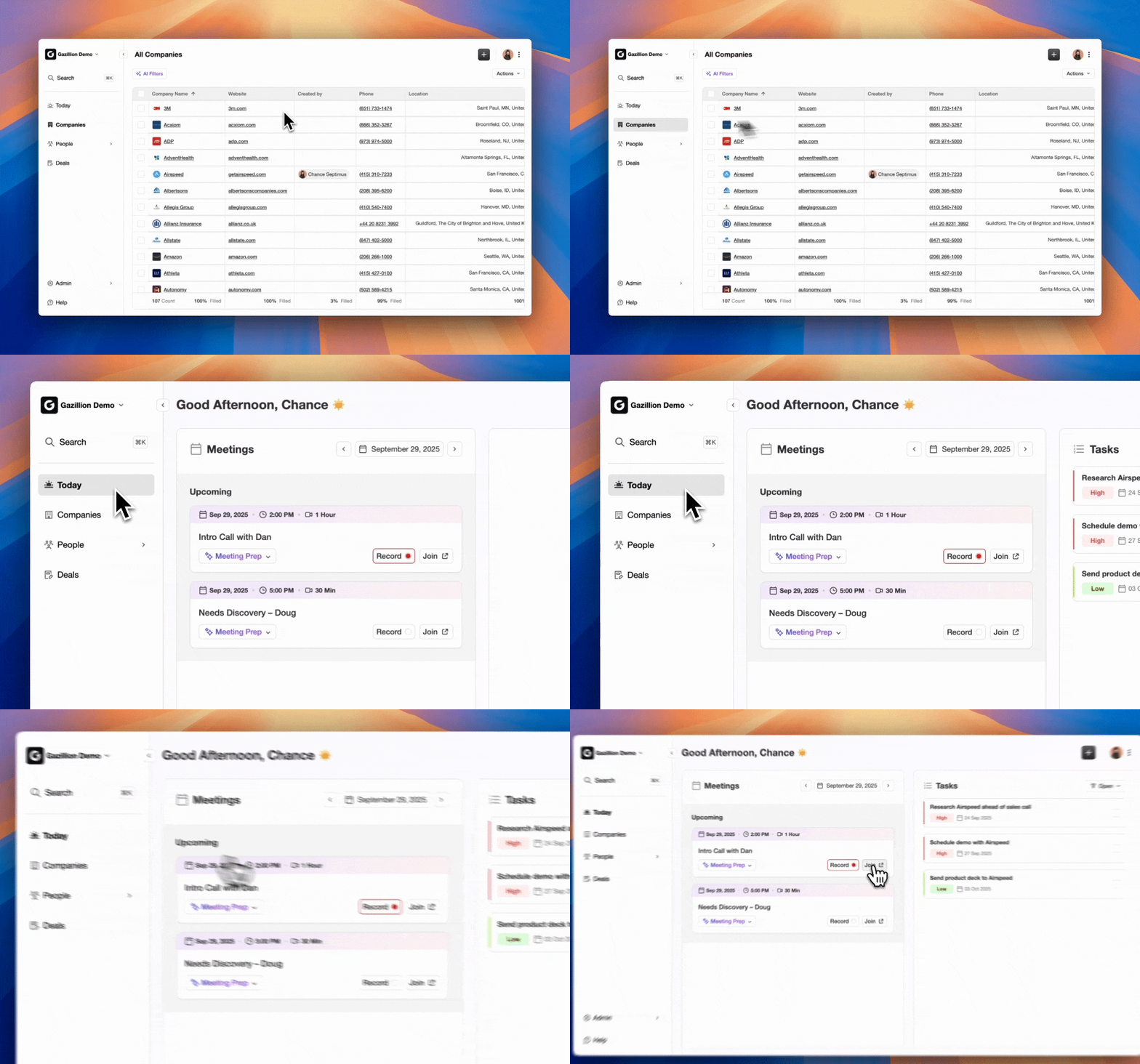
Coffee does not meter usage, so teams can track all traffic and run as many workflows as they need. This combination of individual identification, persona-matched suggestions, and automatic CRM enrichment makes Coffee a strong replacement for Leadfeeder’s manual, company-only workflows. HubSpot-focused teams that want automated lead generation see the biggest gains.
Migration Steps from Leadfeeder and Best-Fit Use Cases
If Coffee’s agent-powered approach aligns with your workflow, migrating from Leadfeeder follows three clear steps. First, export your existing company data from Leadfeeder so you can preserve historical insights. Second, install Coffee’s tracking pixel in your website’s head tag to start capturing visits. Third, configure Zapier or native CRM sync so new leads flow into HubSpot or Salesforce automatically.
Before you begin this process, confirm that Coffee fits your use case. Coffee works best as a HubSpot companion for teams that want automated lead enrichment and SDR-ready records. It also functions as a lightweight CRM for SMBs that are outgrowing spreadsheets and need a single place for visitor and contact data.

Teams already using RB2B or similar tools can treat Coffee as an upgrade when they need AI persona matching and agent-driven workflows instead of static visitor lists. In those cases, Coffee becomes the orchestration layer that turns raw identification into qualified pipeline.
Risks to Consider and Common Misconceptions
Coffee still relies on Zapier for some integrations, although additional native connectors sit on the roadmap. Teams with strict security requirements should confirm SOC 2 compliance and data handling policies before rollout.
AI suggestions can accelerate prospecting, but they still require validation through real-world engagement. Treat Coffee’s recommendations as a starting point, then confirm fit through email replies, meetings booked, and revenue outcomes rather than assuming every suggestion is perfect.
FAQ
What is the strongest free Leadfeeder alternative in 2026?
RB2B provides 150 free credits each month for person-level identification, which makes it a strong free starting point. Coffee’s trial, however, includes full AI persona matching and agent automation, so teams can evaluate the complete workflow before committing.
How does RB2B compare to Coffee?
RB2B focuses on person-level visitor identification with LinkedIn profiles and real-time alerts. Coffee adds AI persona suggestions, automated CRM enrichment, and agent-powered workflows that connect identification to outreach.
Teams that only need raw contacts often start with RB2B, while teams that want a guided, automated path from visit to qualified lead tend to choose Coffee.
What is Leadfeeder’s 2026 pricing?
Dealfront (now Leadfeeder) charges €99-399/month for unlimited company identification with discounts for annual billing. The free plan includes only 100 companies with seven-day data retention, which limits long-term analysis.
Which tool works best with Salesforce?
Coffee offers a comprehensive Salesforce companion by pairing individual identification with agent-driven CRM automation. Enterprise teams that need full ABM orchestration and predictive scoring may prefer 6sense for its broader revenue platform.
RB2B supports basic Salesforce integration for person-level identification, which suits teams that want simple contact creation without advanced automation.
How accurate is Coffee’s visitor identification?
Coffee reaches high accuracy benchmarks for individual visitor identification through its agent-powered data unification. The comparison table’s 9.5/10 Individual ID Score indicates performance well above the industry’s typical 5-20 percent person-level baseline from standalone tools.
See Coffee in action. Install the tracking pixel in under an hour and start receiving ICP-matched lead suggestions by tomorrow.