Written by: Doug Camplejohn, CEO & Co-Founder, Coffee
Key Takeaways
-
Leadinfo’s high costs and company-only identification make it hard for SMBs to justify, with 97% of B2B visitors remaining anonymous.
-
Affordable alternatives under $100 per month include Coffee, Snitcher, RB2B, and Leadfeeder, each offering a free trial or free tier.
-
Coffee stands out with an AI agent that identifies visitors, suggests persona-matched prospects, and enriches connected CRMs.
-
Free tiers from RB2B and HubSpot help with early testing, but paid tools deliver better accuracy and features for growing teams.
-
Coffee offers the best value among Leadinfo alternatives, providing unlimited agent automation and a 14-day free trial at $49 per month.
Why Replace Leadinfo? Cost and Capability Gaps
Leadinfo’s limitations go beyond its price tag. The platform focuses on company-level identification and misses the individual decision-makers who actually buy. Average identification rates of approximately 2% for website traffic, with 98% anonymous mean most visitors still slip through undetected. Integration options remain basic, which forces sales teams to handle manual follow-up tasks that drain time.
The ideal Leadinfo replacement should offer sub-$100 monthly pricing, match or beat Leadinfo’s identification accuracy, sync cleanly with HubSpot and Salesforce, and include modern features like AI-powered lead suggestions. Coffee meets all four criteria. Its $49 monthly pricing sits well below the $100 threshold, its identification rates match or exceed Leadinfo’s 2% baseline, it offers native companion apps for both HubSpot and Salesforce, and its AI agent provides persona-matched prospect recommendations that traditional tools lack.

The following seven alternatives all meet the sub-$100 entry threshold, but they differ in features, coverage, and automation depth.
Top 7 Cheap Leadinfo Alternatives
1. Coffee – AI-Powered Visitor Identification with Agent Automation
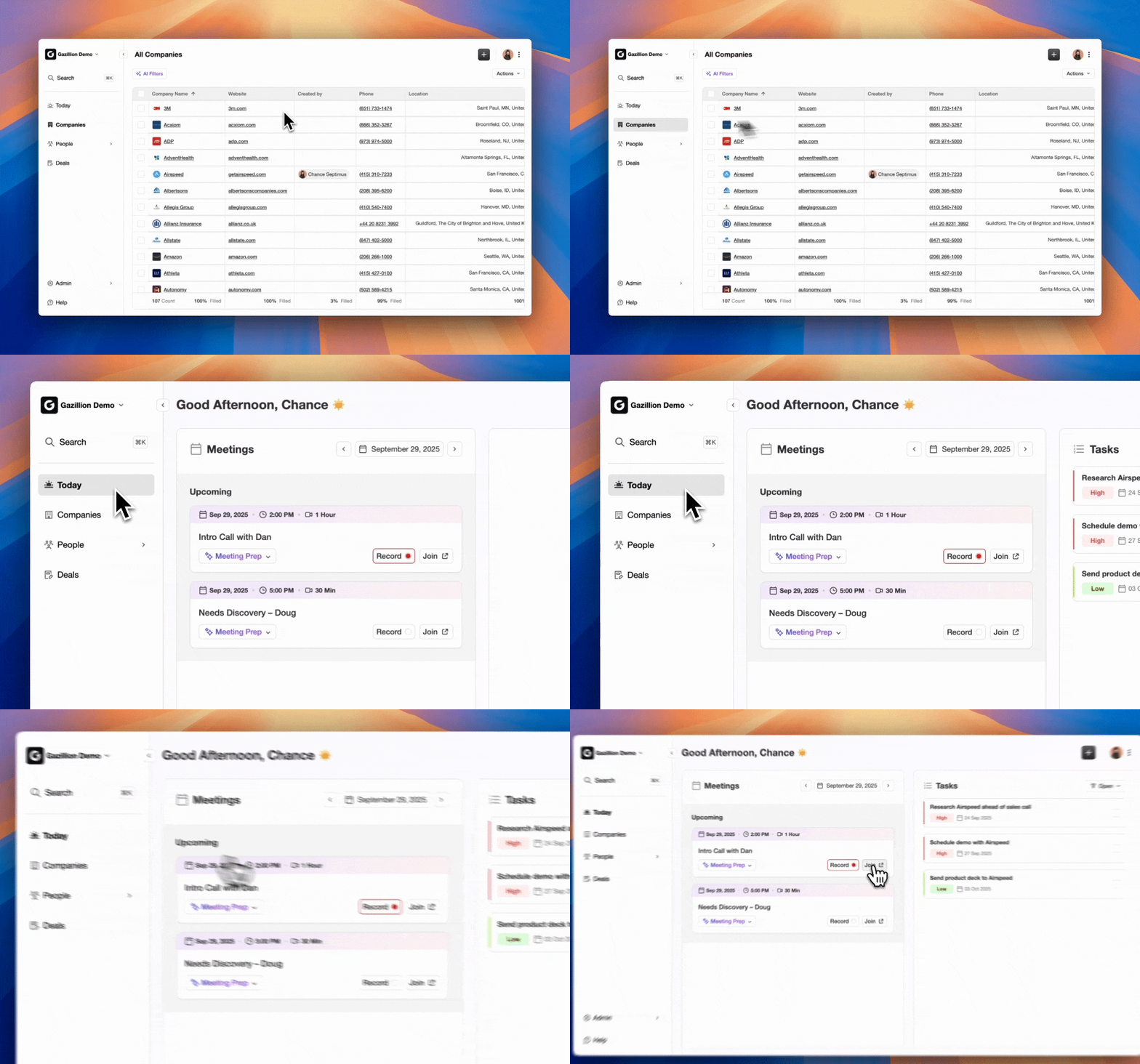
Coffee turns anonymous website traffic into named prospects through a simple tracking pixel and then continues the workflow. When a company visits your site, the AI agent identifies the organization and suggests specific people inside that company who match your buyer persona, including LinkedIn profiles and contact details. These high-intent visitors trigger real-time Slack notifications, and their information flows into your CRM automatically, which removes manual data entry.

Pros: Agent-powered lead suggestions reduce the need for separate tools like ZoomInfo, save 10 or more hours each week on prospect research, and connect directly to HubSpot and Salesforce through companion apps.
Cons: Currently tuned for US-based traffic and still expanding its feature set as a newer platform.
Pricing: $49 per month for 1–25 active users with a 14-day free trial. Setup uses a single pixel installation.
2. Leadfeeder – European-Focused Company Identification
Leadfeeder delivers robust company-level visitor identification with strong European coverage. The platform provides GDPR-compliant data handling and integrations with Salesforce, HubSpot, and Pipedrive. Intent scoring helps teams prioritize follow-up based on visitor behavior.
Pros: Strong European company database, GDPR compliance, and a free tier for testing.
Cons: Limited to company-level identification and higher pricing for full functionality.
Pricing: Free plan for 100 companies monthly, paid plans from €99 monthly with a 14-day trial.
3. Snitcher – Budget-Friendly Benelux Solution
Snitcher focuses on small businesses in the Benelux region with usage-based pricing starting at $49 monthly. The platform offers basic company identification and CRM integrations, although match rates remain modest.
Pros: Low entry price, straightforward setup, and regional focus.
Cons: Modest identification rates and a limited integration ecosystem.
Pricing: Usage-based pricing starting at $49 monthly based on identification volume.
4. RB2B – Person-Level US Traffic Identification
RB2B specializes in person-level visitor identification for US-based traffic. The platform sends LinkedIn profiles to Slack in real time, which supports immediate outreach to identified prospects.
Pros: Person-level identification, real-time Slack alerts, and a generous free tier for testing.
Cons: Person-Level ID identifies US traffic only using IP ringfencing, relies on credits, and can become expensive as volume grows.
Pricing: Free tier with 150 credits, paid plans from $79 monthly.
5. Warmly – Multi-Provider Waterfall Identification
Warmly combines several identification providers in a waterfall setup to raise match rates. The platform supports both company and person-level identification with Slack and chat alerts for immediate engagement.
Pros: Multi-provider approach that improves accuracy, rich visitor data, and chat integration.
Cons: The startup plan at approximately $700 monthly becomes expensive quickly.
Pricing: Free plan for 500 visitors monthly, Data Agent from $900 monthly.
6. HubSpot Breeze Intelligence – Native CRM Integration
HubSpot’s native visitor identification tool connects directly to existing HubSpot CRM accounts. It uses a credit-based pricing model on HubSpot Starter plans.
Pros: Native HubSpot integration, no extra setup, and an established data provider.
Cons: Requires a HubSpot subscription, uses credits, and carries higher costs for full packages.
Pricing: Credit-based pricing bundled into HubSpot plans, with costs varying by usage.
7. Clearbit – Enrichment-Focused Identification
Clearbit offers visitor identification paired with deep data enrichment. The platform integrates with major CRMs and supplies detailed company and contact information for identified visitors.
Pros: Rich enrichment data, strong market presence, and powerful APIs.
Cons: Limited standalone functionality, a credit-based model, and higher costs for full access.
Pricing: Credit-based pricing integrated into CRM platforms, with costs varying by usage volume.
Pricing Comparison for Budget-Conscious Teams
Pricing often becomes the deciding factor once you understand each tool’s strengths. The table below compares entry-level pricing and trial options, highlighting that Coffee and Snitcher tie for the lowest starting price at $49 per month, while Coffee uniquely includes AI-powered automation at that level.
|
Tool |
Starting Price |
Free Trial |
Key Features |
|---|---|---|---|
|
Coffee |
14 days |
AI suggestions, CRM auto-sync |
|
|
Snitcher |
Available |
Company ID, basic CRM sync |
|
|
RB2B |
Free tier |
Person-level US, Slack alerts |
|
|
Leadfeeder |
14 days |
EU compliance, intent scoring |
Free Leadinfo Alternatives for Early Testing
Several platforms provide free tiers that help you test visitor identification before committing budget. RB2B offers 150–200 monthly credits for person-level identification, and HubSpot’s free CRM includes basic visitor tracking. These free options usually cap identified companies or monthly credits, which makes them suitable for very low-traffic sites or proof-of-concept projects. Businesses that outgrow these limits often move to paid tools for higher accuracy and automation.
AI-Powered Leadinfo Replacements like Coffee
Coffee represents the next generation of visitor identification tools through agent-powered automation. The tracking pixel identifies named visitors and their LinkedIn profiles, while the key differentiator is the AI-driven prospect suggestions. Instead of only listing which companies visited your website, Coffee’s agent analyzes those organizations and recommends specific people who match your buyer persona.
This automation continues through the sales workflow. Real-time Slack notifications surface high-intent visitors, and automatic CRM enrichment updates HubSpot and Salesforce records without manual work. Businesses using AI for lead generation report a 50% increase in sales-ready leads, and Coffee’s agent helps move from anonymous visitor to qualified prospect in minutes instead of hours.

Traditional tools like Leadfeeder stop at company identification, which leaves sales teams to research and contact prospects manually. That process often adds 15 to 30 minutes per lead and can still result in outreach to the wrong person. Coffee’s suggested leads feature removes this bottleneck by surfacing the most relevant contacts within visiting companies, complete with LinkedIn profiles for immediate outreach.

Setup and Integration Matrix for Key Platforms
Implementation speed and CRM compatibility play a major role when you roll out a new visitor identification tool. The table below shows that Coffee and Leadfeeder support Salesforce, HubSpot, and Slack, while HubSpot Breeze trades Salesforce compatibility for native HubSpot integration and instant setup.
|
Tool |
Salesforce |
HubSpot |
Slack |
Setup Time |
|---|---|---|---|---|
|
Coffee |
Yes |
Yes |
Yes |
Quick setup with single pixel |
|
Leadfeeder |
Yes |
Yes |
10 minutes |
|
|
RB2B |
Limited |
Yes |
Yes |
5 minutes |
|
HubSpot Breeze |
No |
Native |
Yes |
Instant |
Conclusion: Matching a Leadinfo Alternative to Your Situation
Your ideal Leadinfo alternative depends on budget, region, and how much automation you need. For SMBs that want comprehensive visitor identification below $100 per month, Coffee offers a complete package with AI-powered agent automation. The platform combines accessible pricing with features like persona-matched lead suggestions and tight CRM integrations.
Budget-conscious startups with low traffic can start with RB2B’s free tier for person-level US identification or Snitcher’s $49 entry point for basic company tracking. These options help validate the value of visitor identification before larger investments. Companies that operate mainly in Europe and require strong GDPR coverage may justify Leadfeeder’s €99 pricing. Once you have proven the channel and need to scale outreach, Coffee’s agent-powered approach delivers strong ROI by automating the visitor-to-prospect workflow at the same price point as basic tools.
Start your free 14-day Coffee trial to experience agent-powered visitor identification at an SMB-friendly price.
FAQ
What is the best free Leadinfo alternative?
RB2B offers one of the most generous free tiers, with 150–200 monthly credits for person-level visitor identification, LinkedIn profiles, and real-time Slack alerts. HubSpot’s free CRM also includes basic visitor tracking. These free options come with strict limits on identified companies and monthly usage, which keeps them best suited for testing. Coffee’s full agent automation delivers more value than these free tiers by combining visitor identification, AI-powered lead suggestions, and ongoing CRM enrichment for a modest monthly fee.
How does Leadinfo compare to Coffee?
Coffee costs roughly 50 percent less than Leadinfo while offering broader functionality. Leadinfo focuses on company-level identification with higher starting prices, while Coffee delivers both company and person-level identification plus AI-driven prospect suggestions at Coffee’s price point. The agent automation suggests specific contacts within visiting companies and enriches CRM records automatically. Coffee also connects through companion apps to the major CRMs mentioned earlier.
Which is the cheapest visitor identification tool with HubSpot sync?
Snitcher provides the lowest entry price at $49 monthly with HubSpot integration, although identification rates stay modest. Coffee delivers stronger value at the same $49 tier by pairing higher identification accuracy with AI-powered lead suggestions and a full HubSpot companion app. For teams already on HubSpot, the native Breeze Intelligence tool uses credit-based pricing but requires an existing HubSpot subscription.
How long does implementation take for visitor identification tools?
Most modern visitor identification platforms need only 5–10 minutes for basic setup, which usually includes adding a JavaScript snippet and authenticating your CRM. Coffee’s implementation uses a single pixel and automatic CRM sync. HubSpot Breeze offers instant setup for existing HubSpot customers, while more complex tools can require extra configuration for advanced features and custom integrations.
What ROI can I expect from switching to a cheap Leadinfo alternative?
As noted earlier, AI-powered tools can increase sales-ready leads by about 50 percent and can reduce customer acquisition costs by up to 60 percent. Coffee’s agent automation typically saves more than 10 hours each week on prospect research while improving lead quality through persona-matched suggestions. At the monthly cost mentioned earlier, many teams recover the investment within the first month through higher conversion rates and less manual sales work.
How does Leadinfo compare to Leadfeeder?
Leadinfo and Leadfeeder both target European markets with similar monthly pricing, but Leadfeeder offers a more generous free tier with 100 company identifications monthly. Leadfeeder provides stronger GDPR compliance and European company coverage, while Leadinfo can deliver slightly better identification rates. Both focus on company-level identification, so businesses that need person-level data and automated suggestions often prefer Coffee for more complete visitor intelligence.