Written by: Doug Camplejohn, CEO & Co-Founder, Coffee
Key Takeaways
- Sales reps spend about 71% of their time on manual CRM data entry, while leading cloud tools now automate capture, scoring, and pipeline management.
- Coffee ranks #1 for AI agent capabilities, syncing with Google and Microsoft 365, identifying visitors, and powering Pipeline Compare to save 8-12 hours per week per rep.
- HubSpot, Pipedrive, Salesforce, Zoho, Freshsales, and Copper support different use cases but do not match Coffee’s end-to-end AI agent automation.
- Small teams with 1-20 reps see the strongest results using Coffee as a standalone CRM, while teams with 20-50 reps pair Coffee with Salesforce or HubSpot for annual gains of roughly $24,000 to $36,000 per rep.
- Teams ready to cut data chaos and grow revenue faster can start a free Coffee trial today.
#1 Coffee: The AI Agent That Handles Lead Management For You
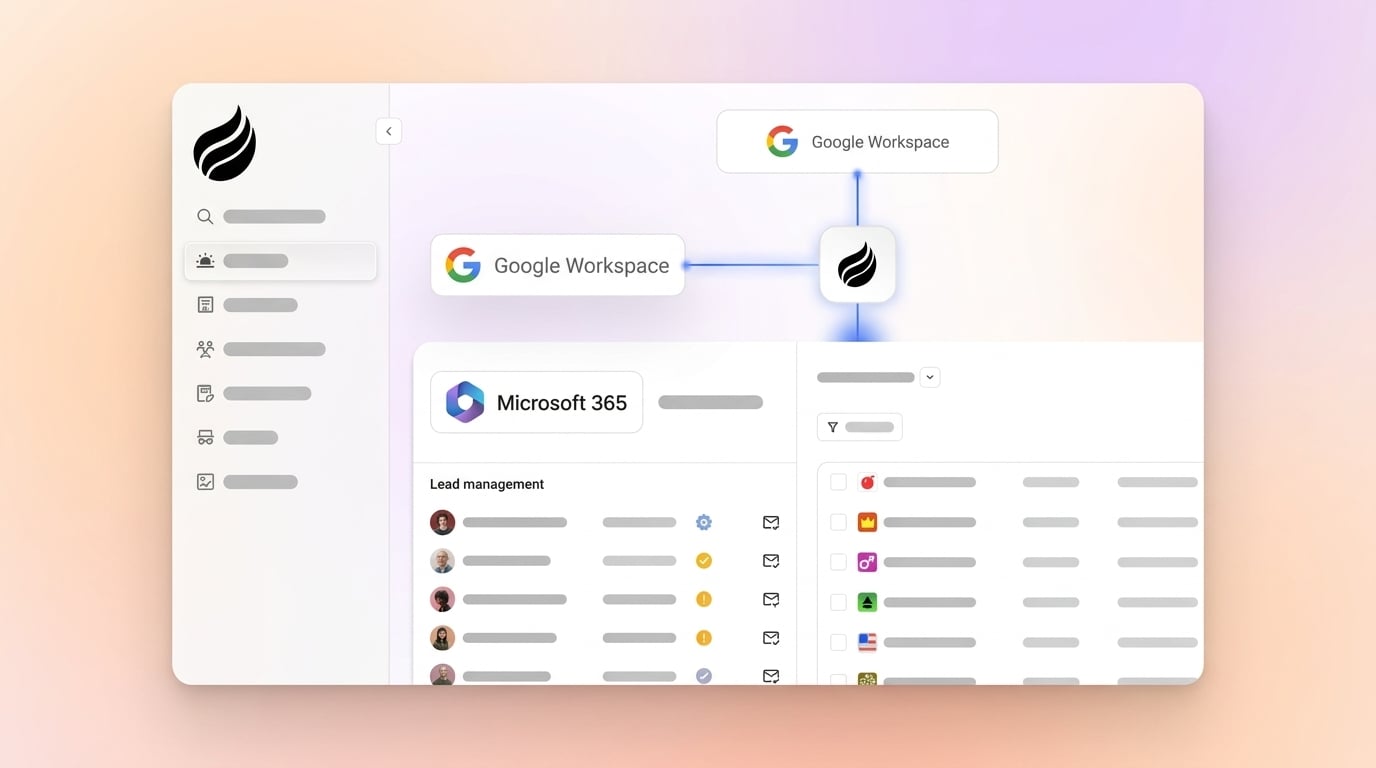
Coffee operates as an autonomous AI agent that removes manual data entry by syncing with Google Workspace and Microsoft 365. It creates and enriches contacts, generates meeting briefings and summaries, and converts anonymous website traffic into named leads with persona-based outreach suggestions. The platform’s natural language list builder supports commands like “Find VPs of Sales in North America at $10M+ funding companies using Salesforce.”

Coffee offers two deployment models: a standalone CRM for teams under 20 representatives and a companion app that layers intelligent automation on top of existing Salesforce and HubSpot instances. This flexibility lets teams adopt Coffee without discarding current systems. Recent 2026 updates strengthen both paths, including AI search functionality on deals for faster deal discovery and automatic Stripe customer imports for unified revenue tracking.
The visitor identification feature uses a tracking pixel to turn anonymous website traffic into qualified prospects with LinkedIn profiles, job titles, and company details. Coffee’s Pipeline Compare feature then visualizes week-over-week deal progression without manual spreadsheet exports. Pipeline reviews shift from interrogation about missing data to focused strategy conversations.
ROI calculations show Coffee saves approximately $36,000 per representative annually by reclaiming 8-12 hours each week from administrative work. One AI solutions company removed spreadsheets from its sales process after rolling out Coffee’s automated contact creation and pipeline intelligence.
See Coffee’s AI agent in action with a free trial and experience hands-free lead management.
Six Leading Alternatives to Coffee
Coffee ranks first for AI agent depth, yet many teams still compare it with established CRM platforms. The six tools below cover marketing-focused systems, visual pipeline specialists, and enterprise platforms. They appear in order of automation sophistication, from closest to Coffee’s capabilities to more basic options.
#2 HubSpot
HubSpot offers a strong free tier and broad workflow automation but leans heavily toward marketing use cases and still requires substantial manual data entry. HubSpot’s Starter Customer Platform pricing starts at $15 per seat monthly (limited-time offer for new customers, normally $20) for Smart CRM features. Unlike Coffee’s autonomous agent, HubSpot depends on human input for most data capture and enrichment.
#3 Pipedrive
Pipedrive delivers intuitive visual pipeline management with simple manual lead scoring starting at $14 per seat per month, billed annually. It suits teams that prefer hands-on control but lacks automated data entry and visitor identification features that Coffee includes by default. Small teams comfortable with manual updates gain clarity but not automation.
#4 Salesforce
Salesforce provides deep enterprise scalability yet carries more than two decades of legacy architecture. Salesforce Free Suite starts at $0 USD per user per month for up to two users, while advanced AI features require costly add-ons. Einstein SDR capabilities exist but do not match Coffee’s fully autonomous agent that manages capture, enrichment, and pipeline intelligence in one layer.
#5 Zoho CRM
Zoho delivers strong value with free plans for up to three users and paid tiers reaching $52 monthly. Its Zia AI offers basic automation but remains limited compared with Coffee’s full agent model. Zoho works well for growing teams already invested in the Zoho ecosystem that prioritize cost efficiency over advanced automation.
#6 Freshsales
Freshsales includes Freddy AI for partial automation at entry pricing around $9 monthly. It covers core CRM needs but offers limited integrations and modest pipeline intelligence. Smaller teams with straightforward processes can succeed here, although they miss Coffee’s visitor identification and autonomous data management.
#7 Copper
Copper integrates tightly with Google Workspace at starting prices of $9–$12 per seat per month (annual billing at $9, otherwise $12). It focuses on ease of use rather than advanced analytics, providing minimal pipeline intelligence and no visitor identification. Google-centric teams that need basic CRM features but not AI agents often choose Copper.
Best Sales Lead Management Setup by Team Size
Small teams with fewer than 20 representatives gain the most from Coffee’s standalone model, which delivers enterprise-grade automation without legacy complexity. The lightweight architecture avoids the configuration overhead and consulting costs common with traditional CRM rollouts.
Mid-sized teams with 20-50 representatives see better outcomes when they use Coffee as a companion app alongside existing Salesforce or HubSpot deployments. This approach keeps familiar workflows in place while Coffee automates data capture, enrichment, and pipeline analysis. The table below summarizes the recommended setup and typical time savings for each team size.
| Team Size | Recommended Solution | Key Benefits | Time Savings |
|---|---|---|---|
| 1-20 reps | Coffee Standalone | No legacy bloat, full automation | 8-12 hours/week per rep |
| 20-50 reps | Coffee + Salesforce/HubSpot | Preserves investment, adds intelligence | 6-10 hours/week per rep |
| 50+ reps | Enterprise solutions | Complex workflow support | Varies by implementation |
Why AI Lead Management Software in 2026 Beats Legacy CRMs
AI agents shift CRMs from passive databases into active digital teammates that handle routine work. Eighty-seven percent of sales organizations already use some form of AI in their sales pipeline. This widespread adoption reflects a clear reality: manual processes drain selling time that should go toward closing deals.
Coffee’s advantage starts with its data warehouse architecture, which preserves historical context when fields change. Legacy relational databases overwrite values and lose that history. Coffee’s approach supports advanced pipeline intelligence and trend analysis that traditional CRMs cannot easily match.
The agent-first design automates both structured and unstructured data processing. Coffee handles email transcripts, call recordings, and meeting notes alongside standard contact information. This comprehensive capture supports accurate forecasting and clear pipeline visibility with minimal human input.

Top Criteria for Choosing a Lead Management CRM for Small Teams
Data quality forms the base of effective lead management. Coffee’s autonomous agent keeps “good data in, good data out” by capturing and enriching contact details directly from email and calendar activity. This continuous automation prevents the data decay that plagues manually updated systems.

Automation depth sets the ceiling for time savings. Representatives earning $150,000 annually who spend 10 hours weekly on data entry incur $36,000 in yearly opportunity costs. Coffee’s comprehensive automation returns those hours to revenue-generating work.
Time savings only matter when representatives actually use the system. User adoption rates therefore play a central role in CRM success. Coffee’s agent-first experience removes the manual data entry burden that drags down adoption in legacy tools, so representatives treat the platform as a co-pilot instead of an administrative chore.
This positive experience directly affects financial outcomes. Here is the ROI calculation framework that explains the $36,000 figure mentioned earlier: Coffee saves 8-12 hours weekly per representative × $150,000 annual salary ÷ 2,080 working hours = $36,000 annual value per representative from time reclamation alone.
Best-Fit Use Cases and ROI Expectations
Growing SMBs gain the most from Coffee’s standalone deployment, which avoids enterprise CRM complexity while delivering advanced automation. The platform supports a smooth path from founder-led sales to structured teams without disruptive system migrations.
Established mid-market companies with Salesforce or HubSpot already in place maximize returns by adding Coffee as a companion app. This setup protects existing training investments and workflows while Coffee automates data capture and pipeline analysis. The table below shows how ROI and payback periods differ across the main implementation scenarios.
| Use Case | Implementation | Annual ROI per Rep | Payback Period |
|---|---|---|---|
| Growing SMB | Coffee Standalone | $36,000 | 1-2 months |
| Established Mid-market | Coffee Companion | $24,000 | 2-3 months |
| Enterprise | Custom Integration | $18,000 | 3-6 months |
Frequently Asked Questions
Which CRM handles lead management best for small teams?
Coffee’s standalone AI agent delivers the most complete automation for small teams by removing the manual data entry burden discussed earlier. The platform creates contacts from email and calendar interactions, enriches records with professional details, and converts website visitors into qualified leads without human effort. This agent-first model keeps data clean and pipelines accurate from day one.
What are the best Salesforce companion apps for automation?
Coffee’s companion app provides the most advanced automation layer for existing Salesforce environments. It handles data capture, enrichment, and pipeline intelligence that Salesforce typically addresses through expensive add-ons. The agent syncs meeting notes, creates follow-up tasks, and maintains accurate activity logs while preserving current Salesforce workflows and permissions.

How secure are cloud CRM solutions for sales teams?
Enterprise-grade cloud CRM platforms maintain SOC 2 Type 2 and GDPR compliance, delivering protection comparable to on-premise systems with stronger disaster recovery and access controls. Coffee uses bank-level encryption for data in transit and at rest, along with granular permissions and full audit logging. Cloud deployment often improves security through professional data center operations and automatic security updates.
What ROI can teams expect from AI lead management software?
Teams typically achieve 300-500% ROI in the first year through time savings, higher conversion rates, and lower manual overhead. Coffee users reclaim 8-12 hours each week per representative from administrative tasks, delivering the $36,000 annual value detailed earlier for reps earning $150,000. Additional gains include faster lead response, more accurate forecasts, and fewer data errors that stall deals.
How quickly can small teams implement cloud lead management software?
Coffee’s AI agent starts working as soon as Google Workspace or Microsoft 365 connects, creating contacts and logging activities within hours. Most teams reach full productivity within a week, compared with the months often required for traditional CRM rollouts. The agent manages data migration, enrichment, and workflow setup, which removes the technical hurdles that slow legacy implementations.
Conclusion: Pick the Right Lead Management Platform for 2026
The move from passive databases to active AI agents marks the biggest shift in CRM since the rise of the cloud. Given the massive time waste from manual data entry, teams can no longer justify systems that focus on storage instead of intelligent automation.
Coffee stands out as the leading choice for teams that want full AI agent capabilities, with both standalone and companion models that fit different stages of growth. Its autonomous data capture, visitor identification, and pipeline intelligence features create measurable ROI through time savings and stronger conversion rates.
Legacy CRM adoption often fails because representatives end up serving the software instead of receiving support from it. Coffee’s agent-first approach reverses that pattern by handling administrative work while surfacing clear insights for better decisions.