Written by: Doug Camplejohn, CEO & Co-Founder, Coffee
Key Takeaways for Choosing a Leadinfo Alternative
- Leadinfo identifies visiting companies but lacks person-level data, deep CRM automation, and AI-driven lead suggestions, which keeps workflows manual.
- Coffee stands out as the top alternative with AI-powered person-level identification, suggested leads, and native Salesforce/HubSpot integrations that create true pixel-to-pipeline automation.
- Competitors such as Warmly focus on real-time engagement but charge premium prices, while RB2B emphasizes US person-level identification with basic CRM syncing.
- Enterprise platforms like ZoomInfo deliver broad sales intelligence but often exceed SMB budgets, and European tools like Leadfeeder prioritize GDPR compliance ahead of advanced automation.
- RevOps teams benefit most from CRM-native agents like Coffee’s AI-powered platform, which turns anonymous traffic into qualified leads without manual enrichment.
Scope: US B2B SMB Teams Using Salesforce or HubSpot
Website visitor identification tools place tracking pixels on your site and match anonymous IP addresses to company databases, so you can see which businesses browse your pages. Traditional platforms like Leadinfo handle company-level identification well but fall short on person-level data, CRM integration depth, and automated follow-up orchestration. Leadinfo identifies 35-40% of B2B website traffic in European markets, yet offers limited named contact data and depends on manual CRM syncing.
This analysis focuses on US B2B SMBs with 1 to 500 employees that use Salesforce or HubSpot. It compares standalone visitor trackers with CRM-native agents like Coffee that deliver suggested leads and automated outreach workflows directly inside existing systems.
Evaluation Criteria for Leadinfo Competitors
To determine which tools best serve this audience, the comparison evaluates 12 platforms across eight dimensions that directly affect RevOps efficiency and revenue impact:
- Data Depth: Company versus person-level identification with usable contact details
- CRM Integrations: Native Salesforce and HubSpot syncing versus basic or Zapier-based connections
- Pricing Transparency: 2026 published rates and clear seat-based models
- Accuracy Rates: Realistic 60-80% company-level and 30-55% person-level match benchmarks
- Automation Capabilities: Ability to move from pixel to outbound workflows without manual steps
- Setup Complexity: Implementation time, required technical skills, and maintenance overhead
- SMB Scalability: Pricing and features that support growing teams without surprise costs
- Unique Differentiators: AI agents, suggested leads, and compliance or security strengths
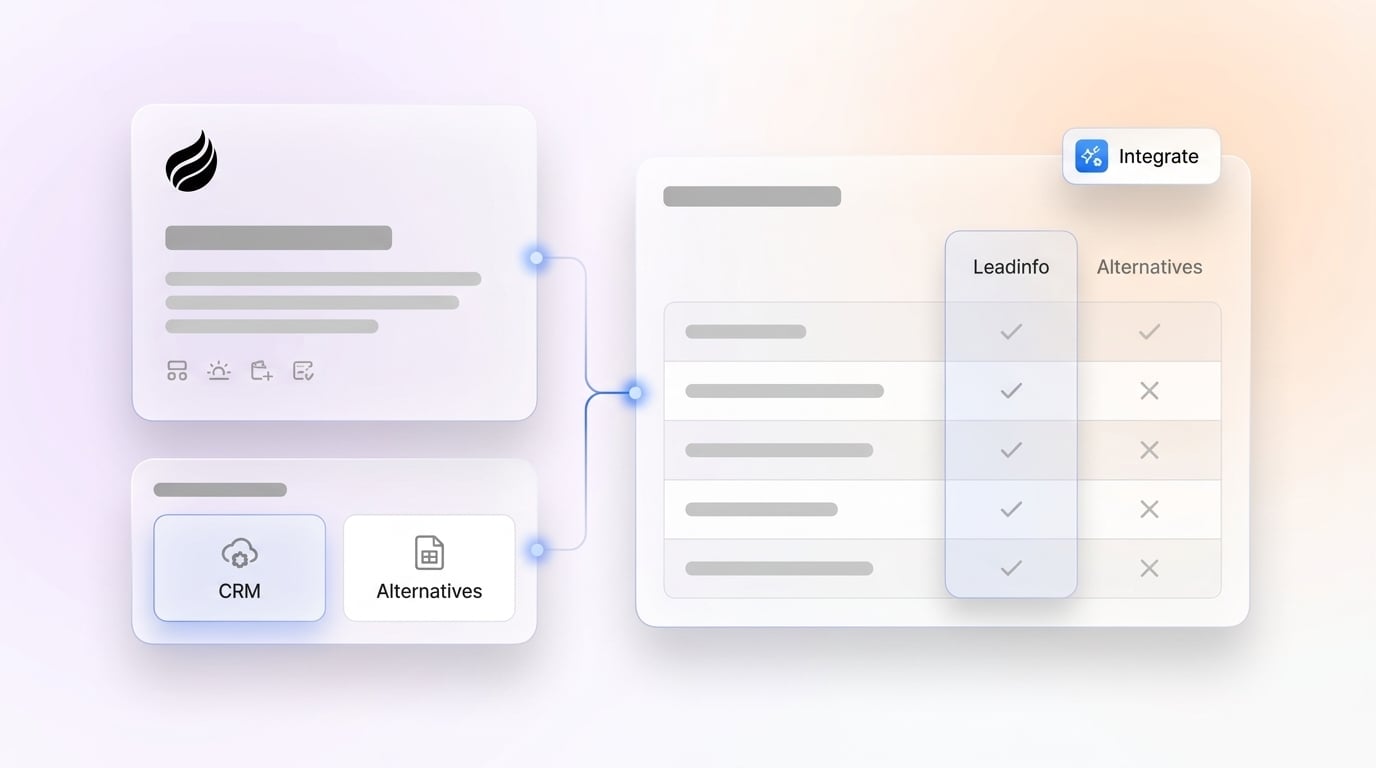
The table below condenses these criteria into four decision factors: pricing, CRM integration depth, person-level match strength, and ideal use case. Use it to quickly narrow your shortlist before diving into the detailed reviews.
Leadinfo Competitors Comparison Table
| Tool | Starting Price 2026 | CRM Integration | Person-Level Match Rate | Best For |
|---|---|---|---|---|
| Coffee | Seat-based pricing | Native SF/HubSpot | AI-suggested leads | CRM teams seeking automation |
| Warmly | $15,000 per year | Native SF/HubSpot | 5-20% | Real-time engagement |
| RB2B | $79/month | Basic CRM sync | 10-20% | US person-level ID |
| ZoomInfo WebSights | Enterprise pricing | Native SF/HubSpot | Person-level identification | Enterprise sales intelligence |
| Leadfeeder | €99/month | Basic CRM sync | 10-15% | European compliance |
| Albacross | Contact for pricing | Standard integrations | Company-level identification | Scandinavian markets |
Top 5 Leadinfo Alternatives: Detailed Reviews
1. Coffee – Best Overall for CRM Teams
Coffee turns anonymous website traffic into named leads with AI agent assistance and person-level identification that includes name, title, email, and LinkedIn profiles. The platform’s Suggested Leads feature uses buyer persona matching to recommend specific contacts within visiting companies, which removes the need for manual prospect research.

Key Features: Pixel-to-pipeline automation, real-time Slack alerts, native Salesforce and HubSpot syncing, AI-powered contact suggestions, and automated enrichment workflows
Pros: Person-level identification, CRM-native workflows, AI agent assistance, suggested outreach targets, SOC2 compliance

Cons: Newer platform with a growing database, primary focus on US markets
Best For: RevOps leaders and Heads of Sales who want automated visitor-to-lead conversion inside their CRM
2. Warmly – Real-Time Visitor Engagement
Warmly uses cross-validation from more than 20 data providers to achieve person-level identification rates of 5-20%. The platform focuses on real-time on-site engagement with live chat and video capabilities that help SDRs act while visitors are active.
Pros: Multi-provider data validation, real-time engagement tools, live chat and video capabilities
Cons: Premium pricing that starts at $15,000 per year, more complex setup requirements
Best For: Mid-market teams with dedicated SDRs who can respond instantly to visitor signals
3. RB2B – US Person-Level Specialist
RB2B focuses on person-level identification for US website traffic and provides LinkedIn profiles plus contact details for individual visitors instead of only company records.
Pros: Person-level focus, LinkedIn integration, strong US market specialization
Cons: Limited to US traffic, basic CRM integrations, higher per-credit costs for heavy usage
Best For: US-focused teams that value individual prospect identification more than broad company coverage
4. ZoomInfo WebSights – Enterprise Sales Intelligence
ZoomInfo serves more than 35,000 customers with a broad B2B intelligence platform that includes website visitor identification through WebSights.
Pros: Large contact database, enterprise-grade features, deep CRM integrations
Cons: High cost for SMBs, complex implementation, annual contracts that reduce flexibility
Best For: Enterprise sales teams with significant budgets that need comprehensive sales intelligence
5. Dealfront (now Leadfeeder) – European Compliance Leader
Dealfront, now branded as Leadfeeder, delivers visitor identification with strong GDPR compliance features tailored to European markets.
Pros: GDPR compliance, strong European database, established platform
Cons: Limited person-level data, basic automation features, regional focus that suits EU companies more than US teams
Best For: European B2B companies that require GDPR-compliant visitor identification above advanced automation
7 Additional Tools Worth Considering
Beyond the top five, seven other platforms serve specific niches: Albacross (Scandinavian strength), Visitor Queue (simple setup), Apollo.io (integrated prospecting), Leadinfo (benchmark comparison), Clarify (modern UI), Day.ai (unstructured data focus), and Pipedrive add-ons (native integration). Explore Coffee’s CRM-integrated approach to see how AI agents compare with these standalone or niche-focused tools.
Category-by-Category Analysis of Leadinfo Alternatives
Now that the individual tools are covered, the next step is to look at the broader patterns that separate these platforms into meaningful categories. These differences often matter more than long feature checklists when you choose a tool for your specific workflow.
Standalone Trackers vs CRM Agents
Traditional standalone trackers such as Leadfeeder and Albacross focus on company identification but still require manual CRM syncing and prospect research. CRM agents like Coffee connect natively with Salesforce and HubSpot, enrich records automatically, and suggest outreach targets inside your existing workflow.

Pricing Breakdown for 2026
Seat-based models like Coffee create predictable costs for growing teams because pricing scales with users instead of traffic volume. Credit-based systems introduce uncertainty as traffic increases, which complicates budgeting for RevOps leaders. Enterprise solutions like ZoomInfo start at $15K+ annually, so many SMBs treat them as full intelligence suites rather than pure visitor identification tools.
GDPR and Compliance Leaders
European-focused platforms such as Albacross and Leadfeeder lead on GDPR compliance and regional data coverage. Coffee maintains SOC2 Type 2 certification that aligns with US security expectations and supports global teams. Cognism holds ISO 27001, ISO 27701, and SOC 2 Type II certifications, which positions it as another strong option for teams with strict security requirements.
AI Automation Gaps
Most visitor identification tools stop at data collection and leave follow-up workflows to manual effort or separate systems. Coffee’s AI agent manages the full pixel-to-pipeline process, from visitor identification through suggested outreach and CRM updates. This approach removes manual handoffs that often cause lead leakage and slow response times.

Best-Fit Use Cases and Decision Framework
Based on the feature comparison and pricing analysis above, you can match your team profile to the tools that fit best.
SMB Teams (1-50 employees): Coffee Standalone CRM delivers visitor identification with built-in automation and suggested leads, which removes the need for separate prospecting tools.
For teams already invested in enterprise CRMs, Salesforce and HubSpot users should consider Coffee Companion App, which integrates natively without replacing existing CRM investments.
Larger organizations with broad intelligence needs may find Enterprise organizations better served by ZoomInfo WebSights, which offers comprehensive sales intelligence with visitor identification as one component.
European companies face unique compliance requirements, so Leadfeeder or Albacross often work better for GDPR-compliant visitor tracking with strong regional databases.
The decision matrix centers on automation depth and manual workload. Teams that struggle with manual data entry and fragmented visitor identification should prioritize CRM agents like Coffee instead of standalone trackers. Start automating your visitor identification workflow with Coffee’s native CRM integration.
Risks and Common Objections
Website visitor identification accuracy varies by traffic source, and remote workers reduce IP-based company-level match rates. Because traditional IP matching fails for distributed teams, Coffee addresses these limitations with AI agent assistance that cross-references multiple data sources beyond IP addresses while maintaining SOC2 and GDPR compliance standards.
FAQ
What’s the difference between Leadinfo and Coffee for visitor identification?
Leadinfo focuses on company-level visitor identification with basic CRM syncing, while Coffee provides person-level identification with AI-suggested leads and native CRM automation. Coffee’s agent approach removes manual prospect research by recommending specific contacts within visiting companies and orchestrating follow-up workflows directly in Salesforce or HubSpot.
Which Leadinfo alternative offers the best free option?
Most enterprise-grade visitor identification tools rely on paid plans because of data licensing costs. Coffee offers transparent seat-based pricing without hidden credit limits, and platforms like Visitor Queue provide basic company identification on entry-level plans. Free options usually lack person-level data and CRM automation features that sales teams need for reliable follow-up.
How does Leadfeeder compare to Leadinfo in 2026?
Both platforms perform well in European markets with strong GDPR compliance, but Dealfront (now Leadfeeder) identifies B2B website traffic in the EU at competitive rates compared with Leadinfo. Leadfeeder offers stronger CRM integrations and contact data on paid plans, while Leadinfo provides better cookieless tracking options. Neither platform matches Coffee’s person-level identification and AI-powered suggested leads.
What’s the best visitor identification tool for HubSpot users?
HubSpot Breeze Intelligence offers native integration but shows varying identification rates by market. Coffee provides deeper HubSpot integration with person-level identification, AI-suggested leads, and automated enrichment workflows. For teams that prioritize basic native functionality, Breeze Intelligence works for simple company identification, while Coffee delivers full visitor-to-lead automation.
How does Coffee’s pricing compare to other visitor identification tools?
Coffee uses transparent seat-based pricing without credit limits or traffic caps, which keeps costs predictable as teams scale. This approach contrasts with credit-based models like RB2B or enterprise contracts such as ZoomInfo, which often start in the five-figure range. Coffee’s pricing includes AI agent automation that many competitors treat as an add-on, so teams avoid surprise overage charges and extra automation fees.