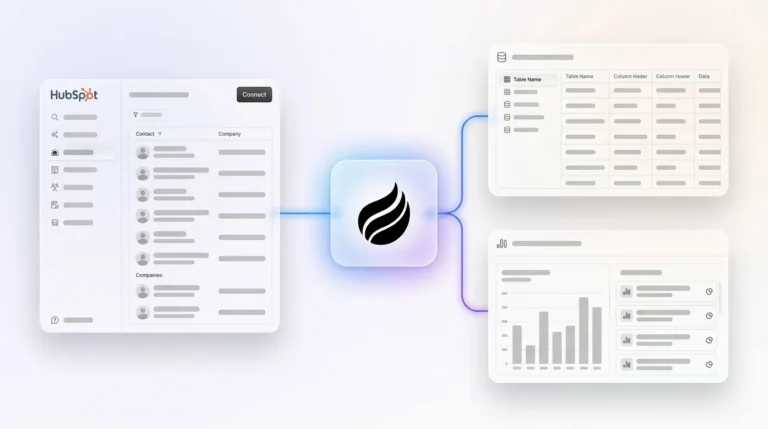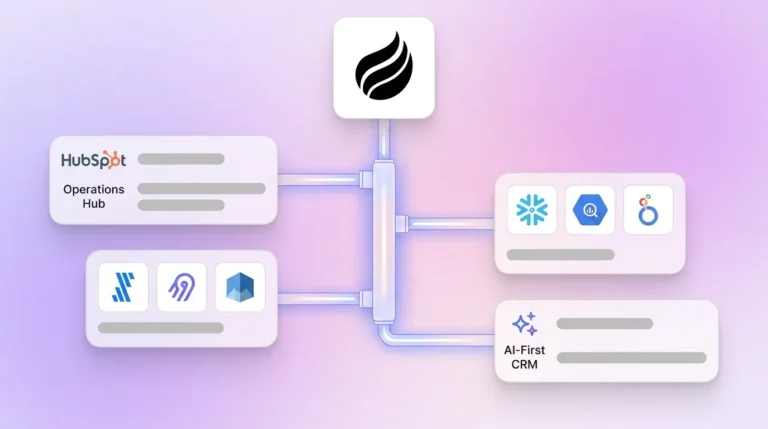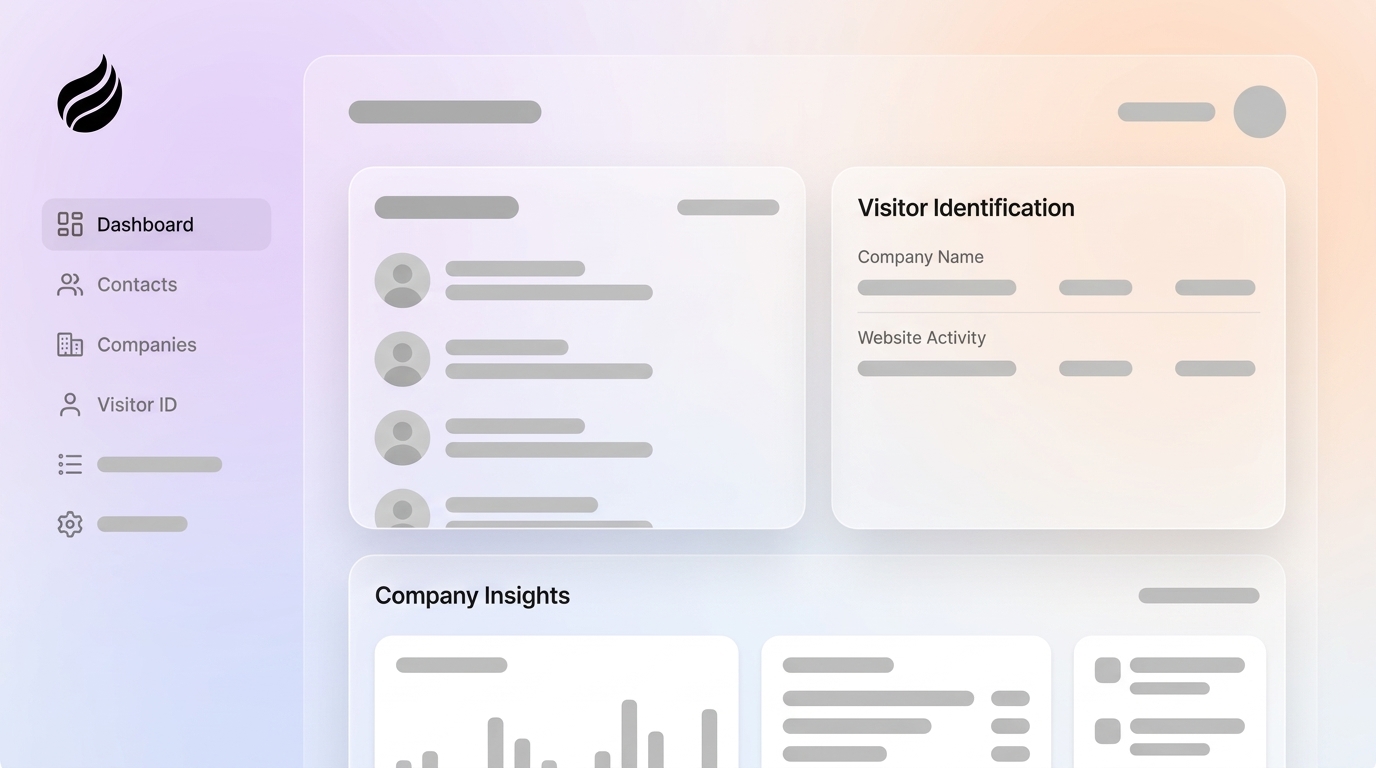
Written by: Doug Camplejohn, CEO & Co-Founder, Coffee | Last updated: July 17, 2026
Key Takeaways for 10–50 Person Sales Teams
- Apollo.io’s free plan caps exports at 10 contacts per month and offers no named visitor identification, so teams either upgrade or rely on manual research.
- Warmly and its alternatives (RB2B, Leadfeeder, Snitcher, Dealfront) deliver company-level or raw person-level visitor data but do not match visitors to buyer personas automatically.
- The persistent gap across tools is the manual step required to turn an anonymous visitor into an ICP-matched, enriched contact ready for outreach.
- Coffee combines real-time named-lead identification, Suggested Leads persona matching, one-click CRM sync, and Slack alerts in a single automated workflow.
- For 10–50 person sales teams ready to eliminate credit walls and manual data entry, explore Coffee’s seat-based pricing today.
Apollo’s Free Plan in 2026
Apollo.io maintains a permanent free plan in 2026 that does not expire and requires no credit card. The plan provides access to Apollo’s contact database and a Chrome extension, so it works as a starting point for solo founders or early-stage SDRs evaluating outbound data quality. The structural problem for growing sales teams is that the free plan’s credit architecture was designed for platform evaluation, not production prospecting. It also provides zero visitor identification capability, so it solves only the contact-sourcing half of the problem.
Apollo.io Free Plan Limits in Practice
The exact credit figures on Apollo’s free plan vary across sources because Apollo has adjusted its tier structure multiple times. The most consistent figures across verified June 2026 pricing data and independent plan audits are as follows.
Email credits are the most generous allocation. Apollo’s free plan provides a hard cap of 10,000 email credits per month. Accounts using personal Gmail or non-corporate domains receive only 100 email credits per month under the platform’s fair use policy. Mobile credits are the tightest constraint. The free plan provides 5 mobile credits per month, and each direct phone number reveal costs 8 credits, so the free plan cannot unlock even a single mobile number. Export credits cap at 10 per month, with each CRM sync or CSV export consuming one credit per contact.
These export limits become even more restrictive when combined with Apollo’s automation constraints. Automation is restricted to 2 active sequences on Apollo’s free plan. The free plan provides no A/B testing, no advanced filters such as technographics or revenue signals, no dialer, and no call recording. Unused credits expire at the end of each billing cycle with no rollover. Apollo provides anonymous website visitor identification on all plan tiers, but it does not attach those visitors to named, ICP-matched contacts.
Warmly and Visitor Identification Alternatives
Warmly focuses on identifying anonymous website visitors and surfacing them as actionable leads. Warmly reports identifying up to 65% of anonymous visitors at the company level, delivers real-time Slack alerts, includes AI chat engagement, and integrates natively with HubSpot and Salesforce. Its pricing starts at $15,000 per year, which is prohibitive for most 10–50 person teams.
Several tools offer similar visitor identification capabilities at different price points and depths.
- RB2B: A free-forever tier for company-level identification (150 resolutions) and a Starter plan at $79/mo that unlocks person-level US visitor matching with verified business emails and LinkedIn profiles. RB2B achieves 5-20% person-level identification for US traffic. It does not perform buyer-persona matching against a defined ICP.
- Leadfeeder (Dealfront): A free-forever Lite tier identifying up to 100 companies per month via Google Analytics integration. Leadfeeder provides individual names, departments, and buyer persona signals via its Contacts tab, contact data, and buyer persona filters, and identifies up to 45% of companies visiting your website.
- Snitcher: A 14-day free trial for company-level identification, starting at $49/mo after the trial. Contact reveal of verified decision-makers is available on paid tiers but without persona-matching logic.
- Dealfront: A free Lite tier identifying up to 100 companies per month at €0 with GDPR compliance for EU markets. It remains company-level only with no person-level data or contact enrichment on the free tier.
- Clearbit (HubSpot Breeze Intelligence): Included free with HubSpot Marketing Hub Professional ($800/mo), delivering company-level visitor ID and form enrichment. It delivers only company-level visitor ID with no individual identification.
The consistent limitation across these tools is the gap between identifying a visiting company and knowing which specific person at that company matches the buyer persona. That step still requires manual cross-referencing against a contact database.
Free-Tier Comparison Across Visitor and Contact Tools
| Tool | Free Credits / Mo | Visitor ID Depth | Warmly Feature Parity | SOC 2 / Zapier |
|---|---|---|---|---|
| Apollo.io | 10,000 email; 5 mobile; 10 export | Anonymous visitor identification on all plans | Provides visitor ID | SOC 2 Yes / Zapier paid only |
| RB2B | 150 company resolutions free | Person-level (US only, 5-20%) | Slack alerts, no persona matching | Partial / Yes |
| Warmly | Limited free tier | Company + person-level; up to 65% company match | Native (baseline) | Yes / Yes |
| Leadfeeder | 100 companies/mo; 7-day retention | Identifies up to 45% of companies; provides names, departments, buyer persona signals | Provides individual names, departments, and buyer persona signals | Yes / Yes |
| Dealfront | 100 companies/mo free (EU-focused) | Company-level only | No person-level, GDPR-focused | Yes / Yes |
| Snitcher | 14-day trial; $49/mo after | Company-level, decision-maker reveal on paid | Partial, no persona matching | Yes / Yes |
| Leadpipe | 500 enriched leads free trial; $147/mo after | Person-level with intent signals | Enrichment + visitor ID combined, no persona matching | Not specified / Yes |
| Coffee | Included in seat-based plan, no per-credit metering | Named individual + Suggested Leads persona matching | Full parity + ICP-matched lead recommendations | SOC 2 Type 2 / Yes (Zapier) |
How Coffee Converts Visitors into Suggested Leads
Coffee’s visitor identification capability starts with a single tracking pixel dropped into the <head> tag of a website. From that point, the Coffee agent infers the visiting individual’s name, title, email address, and LinkedIn profile alongside the company they belong to, pages visited, time on site, and whether it is a first or returning visit.

Suggested Leads provides the differentiating layer. RB2B surfaces a raw list of individuals who visited, and Warmly surfaces the visiting company with some person-level data. Coffee applies the team’s defined buyer persona to recommend specifically which two or three people inside the visiting company are the highest-priority contacts for outreach. This approach removes the manual step of cross-referencing a visitor list against an ICP definition because the agent performs that matching automatically.

The workflow from pixel hit to outreach is:
- A visitor lands on the site, and the Coffee agent identifies the individual and company in real time.
- A Slack notification surfaces the visitor with full enrichment pre-filled.
- Suggested Leads surfaces the two or three ICP-matched contacts at that company.
- One click adds the prospect to Coffee with all enrichment data populated, ready for a LinkedIn connection request, outbound email, or auto-enrollment in a drip campaign.
Coffee is SOC 2 Type 2 and GDPR compliant, and data is not used to train public models. Integration with Salesforce and HubSpot is available via the Companion App model, and Zapier connectivity extends the workflow to the broader tech stack. Deploy Coffee’s tracking pixel to see Suggested Leads in action.
Reddit-Reported Pain Points Coffee Addresses
The most common complaints about Apollo’s free plan and Warmly-style tools on Reddit and review platforms cluster around three operational failures that affect 10–50 person sales teams directly.
The credit wall: Apollo’s free plan functions as roughly one hour of active prospecting before credits are exhausted. Teams that build a workflow around the free tier hit the export cap of 10 contacts per month and must either upgrade or manually copy data from the UI. Neither path scales for a growing outbound motion.
Undifferentiated visitor lists: Warmly and RB2B return visitor data, but without ICP filtering the output is a list that still requires a human to decide who is worth contacting. Leadfeeder provides individual names, departments, and buyer persona signals via its Contacts tab, contact data, and buyer persona filters. This additional data still leaves every identified company as a research project rather than an actionable lead because the tool surfaces information but does not remove the manual decision step.
Manual data entry into CRM: Even when a tool identifies a named visitor, pushing that contact into Salesforce or HubSpot with full enrichment typically requires manual copy-paste or a separate enrichment tool. Free CRM plans eliminate native automation beyond basic email sequences, forcing sales reps to perform manual data entry that drains productivity as teams scale. Coffee handles this automatically, so the prospect is added to the CRM with enrichment pre-filled in a single click.
2026 Pricing and Shutdown Rumors
Apollo.io’s free plan remains active as of July 2026. The plan is genuinely free forever and is not a trial, with pricing last verified in June 2026. No credible shutdown or discontinuation of the free tier has been announced. Apollo’s paid plans begin at approximately $49/user/month for the Basic tier, with advanced features such as intent data, enrichment API access, and advanced filters gated behind higher tiers.
Warmly’s enterprise-tier pricing (noted earlier at $15,000 annually) remains unchanged as of 2026, with no acquisition or shutdown rumors substantiated. RB2B’s Starter plan at $79/mo remains the lowest-cost entry point for person-level US visitor identification among standalone tools.
Coffee operates seat-based pricing with no per-credit metering. Visitor identification, enrichment, and Suggested Leads functionality are included in the seat cost rather than gated behind a separate credit wall.
Decision Matrix by Team Size and Stack
The right tool combination depends on team size, existing CRM investment, and whether the primary need is contact sourcing, visitor identification, or both.
- 1–5 person team, no CRM, limited budget: Apollo’s free plan covers basic contact lookup for ICP validation. Pair it with RB2B’s free tier for company-level visitor ID. Both tools still require manual data entry and persona research.
- 5–15 person team, HubSpot or Salesforce, moderate budget: Apollo Basic ($49/user/mo) covers contact sourcing. Warmly or RB2B Starter covers visitor ID. Two separate tools and two separate credit systems keep manual CRM sync as ongoing operational overhead.
- 10–50 person team, active outbound, Salesforce or HubSpot, needs both problems solved: Coffee delivers contact enrichment, named visitor identification, Suggested Leads persona matching, real-time Slack alerts, and one-click CRM addition in a single workflow. This unified approach works in two ways. As a Companion App, it layers onto existing Salesforce or HubSpot instances without replacing them. As a Standalone CRM, it replaces the passive database entirely. SOC 2 Type 2 compliance and Zapier integration satisfy security and stack requirements without additional procurement.
For teams whose primary bottleneck is the manual gap between “someone visited our site” and “a qualified, enriched contact is in our CRM ready for outreach,” no combination of Apollo’s free plan and a standalone visitor ID tool closes that gap automatically. Coffee is the only solution in this comparison that performs both functions inside one automated workflow with buyer-persona filtering. Automate your visitor-to-CRM workflow with Coffee and eliminate the manual research step entirely.
Frequently Asked Questions
How long does it take to implement Coffee’s visitor identification?
Implementation requires dropping a single tracking pixel into the <head> tag of your website. Coffee verifies installation automatically and begins identifying visitors immediately. For teams using the Companion App on Salesforce or HubSpot, a simple authentication connects the Coffee agent to the existing CRM. After that connection, it begins syncing enrichment data and surfacing Suggested Leads without additional configuration. Most teams are operational within a single business day.
How does Coffee’s data quality compare to ZoomInfo?
Coffee’s enrichment data is sourced through licensed data partners and is roughly on par with ZoomInfo for the majority of B2B use cases at 10–50 person tech companies. ZoomInfo’s primary advantages are database depth for enterprise accounts and specialized intent signal layers that carry a significant price premium. For teams that need verified emails, LinkedIn profiles, job titles, and funding signals on SMB and mid-market contacts, Coffee’s built-in enrichment removes the need for a separate ZoomInfo subscription.
What is the migration effort when switching from Apollo or Warmly to Coffee?
Teams switching from Apollo retain their existing contact lists, which can be imported into Coffee or synced via the Companion App into an existing Salesforce or HubSpot instance. No re-prospecting is required. Teams switching from Warmly replace the Warmly pixel with Coffee’s tracking script. Because Coffee’s Suggested Leads feature uses the buyer persona defined inside the platform, the primary setup task is configuring that ICP definition. Most teams complete this one-time step in under an hour.
Is Coffee SOC 2 Type 2 compliant, and how is data handled?
Coffee is SOC 2 Type 2 and GDPR compliant. Customer data is not used to train public AI models. This compliance posture satisfies the security review requirements of most 10–50 person U.S. tech companies without the multi-year review cycles required by heavily regulated industries. Teams with specific data residency or security requirements should contact Coffee directly to confirm fit before procurement.
Does Coffee replace Apollo entirely, or does it complement it?
For most 10–50 person teams, Coffee replaces the functional need for Apollo’s free plan by providing built-in contact enrichment, a List Builder for natural-language prospect searches, and visitor identification with Suggested Leads, all without per-credit metering. Teams that have invested heavily in Apollo’s paid sequencing infrastructure can continue using Apollo for outreach while routing Coffee’s Suggested Leads into those sequences via Zapier. Coffee is designed to meet teams where they are rather than force a wholesale replacement of the existing stack.
Conclusion: Closing the Visitor-to-Contact Gap
Apollo’s free plan and Warmly each address one half of the problem facing 10–50 person B2B sales teams in 2026. Apollo provides contact sourcing with a credit wall that limits production use to fewer than 10 fully enriched contacts per month on the tightest export cap. Warmly and its alternatives (RB2B, Leadfeeder, Snitcher, Dealfront) provide visitor identification at the company or raw person level without filtering output against a buyer persona. The gap between identifying a visitor and having an ICP-matched, enriched contact ready for outreach remains a manual step in every standalone tool in this comparison.
Coffee closes that gap in a single automated workflow: pixel installation, real-time named-lead identification, Suggested Leads persona matching, one-click CRM addition, and Slack alerts. SOC 2 Type 2 compliance and Zapier integration are included in seat-based pricing that carries no per-credit metering. For teams that have outgrown Apollo’s free plan and need more than a company-level visitor list, Coffee is the only tool in this comparison that solves both problems without manual data entry. Turn your anonymous website traffic into pipeline with Coffee’s automated workflow.