Written by: Doug Camplejohn, CEO & Co-Founder, Coffee | Last updated: August 17, 2026
Key Takeaways for B2B Sales Teams
- Anonymous B2B visitors represent 97% of traffic, and adding intent data can substantially lift MQL-to-SQL conversion rates.
- A first-party tracking pixel plus CRM integration automatically converts consented sessions into named leads without manual entry.
- 2026 privacy rules require explicit consent tiers and IP masking, and Coffee only fires its identification pixel after visitors accept the sales-tracking tier.
- Buyer-persona rules and Suggested Leads surface the exact contacts inside visiting companies, enabling targeted outreach in seconds.
- Real-time alerts and automated campaign enrollment eliminate 8–12 hours of weekly CRM work, so start saving CRM time with Coffee today.
What You Need Before You Start
Confirm these pieces are in place before you install anything.
- Google Workspace or Microsoft 365 access with permission to connect a third-party application
- Site admin rights sufficient to edit the
<head>tag on every page, or access to a tag manager container - A documented buyer persona that defines target industries, company sizes, and job titles
- A CRM already in use, or a decision to use Coffee as the system of record
- A consent management platform (CMP) capable of granular consent tiers
Step 1: Install and Verify the Coffee Tracking Pixel
Log into Coffee and navigate to Visitor Identification. Coffee generates a custom script tag unique to your domain. Copy the full script and paste it inside the <head> element of every page on your site, before any other analytics tags. If you use Google Tag Manager, create a Custom HTML tag, paste the script, and set the trigger to All Pages.
To verify installation, open your site in an incognito browser window and browse two or three pages. Then return to the Coffee dashboard. A green verification indicator and an initial session record confirm that the pixel fires correctly. If the indicator remains pending after five minutes, check that the script is not blocked by a Content Security Policy header or an ad blocker active in your test browser.
Checkpoint: Coffee displays a successful verification message and at least one session record. Output: First-party session data begins accumulating immediately.
Install your tracking pixel in under ten minutes with Coffee’s guided setup.
Step 2: Configure Consent Banner and IP Masking for 2026 Compliance
Modern privacy rules require explicit prior consent for any non-essential tracking technology used to identify individual visitors. The UK ICO’s April 2026 guidance confirms that consent remains the default under PECR Regulation 6 for storage and access technologies including tracking pixels. In the EU, person-level identification almost always requires consent, while company-level IP resolution may qualify under legitimate interest for B2B contexts. In the United States, 20 states now have comprehensive privacy laws, and California requires businesses to honor the Global Privacy Control signal.
Configure your CMP with at least three consent tiers to separate essential functionality from optional tracking. The Strictly necessary tier fires without consent and covers only session continuity. The Analytics tier requires consent and covers aggregate session data. The Sales and marketing tracking tier includes the Coffee visitor-identification pixel and must appear as a separate, optional choice so visitors can accept analytics while declining sales tracking.
Set your tag manager to listen for the CMP consent signal before loading the Coffee script. Non-essential tracking scripts must not fire before consent is recorded. Enable IP anonymization within Coffee’s settings so that raw IP addresses are masked before any matching occurs. IP addresses are considered personal data under GDPR and must be anonymized or pseudonymized before use in IP-matching workflows.
Common pitfall: Consent banner copy that hides the sales-tracking purpose inside a generic analytics category. Regulators require a specific and understandable purpose. Consent must be freely given, specific, informed, and unambiguous, with “Accept all” and “Reject all” options given equal visual weight.
Checkpoint: The Coffee pixel fires only after a visitor accepts the sales-tracking tier. Visitors who decline are counted in aggregate only, with no PII stored. Output: A compliant consent log capturing timestamp, banner version, and categories accepted.
Step 3: Map Coffee Session Data to Your CRM
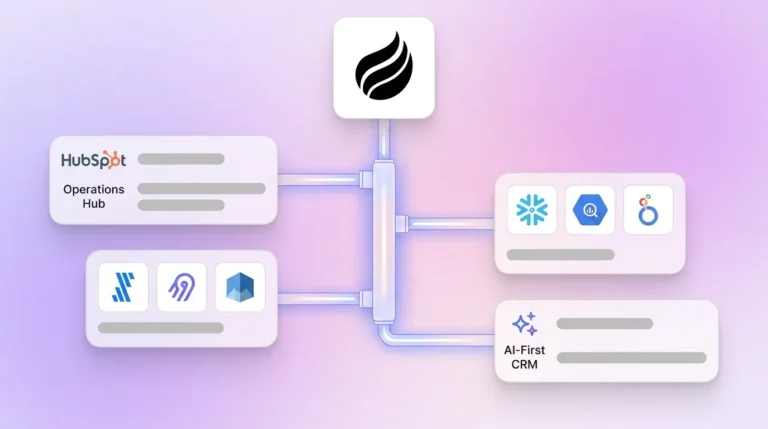
With compliant tracking in place, the next step connects that visitor data to your sales workflow. Connect Coffee to your Google Workspace or Microsoft 365 account via OAuth. If you use Salesforce or HubSpot, authenticate Coffee as a Companion App. Coffee immediately scans emails and calendar events to pre-populate existing contacts and companies, so the CRM does not start from zero.
For visitor identification, Coffee’s webhook receiver captures person-level fields such as name, email, title, and LinkedIn profile alongside company data and visit details. It then writes them directly to a matched or newly created CRM record. Webhook payloads include exact fields such as person.firstName, person.email, company.name, visit.pages, and visit.duration, allowing direct mapping into CRM contact records without manual spreadsheets or data entry.

Set a deduplication rule that checks for an existing contact by email before creating a new record. Use a data validation rule to reject records missing a unique identifier such as email address or Contact ID.
Checkpoint: The first named record appears in your CRM within seconds of a consented, identified visit. Output: Contact and company records created automatically, with pages visited and session duration logged as activity.
Step 4: Use Buyer-Persona Rules to Power Suggested Leads
Coffee’s Suggested Leads feature turns anonymous visits into specific people to contact. It uses your defined buyer persona to recommend the two or three individuals inside that company who match your ICP and surfaces their LinkedIn profiles for immediate outreach. Competitors such as RB2B and Warmly surface either company-only data or undifferentiated people lists. Coffee closes this gap by matching visitors to your ICP before surfacing names.

In Coffee’s persona settings, define:
- Target industries and sub-verticals
- Company headcount range
- Job titles and seniority levels that match your buyer
- Signals that indicate high intent, such as pricing page views, documentation visits, or multiple sessions
Common pitfall: Overly broad persona rules that flag every visitor as high-fit and flood reps with low-quality alerts. Start narrow with one or two industries and two or three titles, then expand after the first two weeks of data.
Checkpoint: Suggested leads match the titles and industries in your persona definition. Output: A ranked shortlist of named individuals inside each visiting company, ready for outreach.
Step 5: Turn Visitor Signals into Alerts and Campaigns
In Coffee’s notification settings, connect your Slack workspace or preferred email address. Configure alerts to fire when a visitor scores above your ICP threshold or views a high-intent page such as pricing or a product comparison. A recommended pipeline is: visitor identified, score by ICP fit and pages viewed, create contact in CRM, then send a Slack alert for high-value visitors.
From the alert, a single click adds the prospect to Coffee with all enrichment pre-filled. From there, enroll the contact in a Coffee Campaign, which is a multi-step email sequence that sends from the rep’s own connected mailbox, stops automatically on reply, and personalizes every message with name, company, and title variables. No CSV export and no copy-paste between tools.
Checkpoint: A test visit from a persona-matched company triggers a Slack alert within seconds and creates a campaign-enrolled contact record. Output: Automated outreach running without manual intervention.
Validation Checklist: Confirm Your Setup Works
After 48 hours of live traffic, verify the following items.
- Every high-fit visitor record displays name, title, LinkedIn URL, and company
- No PII is stored for visitors who declined the sales-tracking consent tier
- Suggested leads match the job titles and industries defined in your persona
- Duplicate contacts are not being created for returning visitors
- Campaign enrollment pauses correctly when a prospect replies
How This Workflow Scales from 5 to 25 Reps
For a team of five, a single shared Slack channel for visitor alerts and one active campaign sequence per persona usually works well. Coffee’s Standalone CRM handles the full system of record, and the agent manages all data entry automatically, delivering the time savings mentioned earlier without extra admin work.
For a team of twenty-five, Coffee operates as a Companion App on top of an existing Salesforce or HubSpot instance. Territory-based alert routing sends visitor notifications to the rep who owns that account or region. Multiple persona rule sets support distinct product lines or market segments. The Pipeline Compare feature automates weekly pipeline reviews without CSV exports and replaces manual interrogation with a visual week-over-week diff that highlights progressed deals, stalled opportunities, and new additions.
Comparison of Visitor-Identification Approaches
| Approach | Identification Rate | Compliance Effort | CRM Integration |
|---|---|---|---|
| Pixel + agent (e.g., Coffee) | 30–40% person-level for US B2B traffic (varies by provider) | Consent banner required for person-level ID, IP masking required under GDPR | Automatic record creation and campaign enrollment, no manual entry |
| Session-replay tools (e.g., FullStory, Hotjar) | Behavioral data only, no inherent identity resolution | Consent required, PII masking and redaction configuration needed | No native lead creation, manual export required to feed CRM |
| IP-to-company lists only | IP-to-company lists typically achieve 30-65% company-level resolution and low-double-digit (often ~7%) person-level resolution via identity graphs, with rates varying by traffic mix, geography, and first-party signals | Lower exposure for company-level data, person-level still requires consent in EU | Manual enrichment and data entry typically required to reach named contacts |
Frequently Asked Questions
How long does initial setup take?
Most B2B teams complete the full workflow in 30 minutes to two hours. This includes pixel installation, consent banner configuration, CRM connection, persona rules, and alert setup. Connecting Coffee to Google Workspace or Microsoft 365 uses a single OAuth authentication. If you use Salesforce or HubSpot, Coffee’s Companion App authenticates in the same way. Persona rules and alert thresholds can be refined over the first two weeks as real visitor data accumulates.
How long is visitor data retained?
Coffee retains visitor session data according to your configured data retention policy and applicable privacy regulations. Under GDPR, personal data should not be kept longer than necessary for the stated purpose. For B2B sales outreach, a 90-day rolling window is a common and defensible retention period. Visitors who declined consent are counted in aggregate only and are not stored as individual records. You can configure retention periods inside Coffee’s privacy settings to match your legal obligations by geography.
What consent text examples meet 2026 rules?
Effective consent text states a clear purpose, identifies the data controller, and makes declining as easy as accepting. An example that meets current UK ICO and GDPR standards: “We use tracking technologies to identify companies and individuals visiting this site for sales outreach purposes. You can accept or decline below. Declining will not affect your ability to use this site.” The banner must present “Accept” and “Decline” with equal visual prominence, with no pre-ticked boxes and no buried reject options. For US visitors in states that require Global Privacy Control compliance, your CMP must detect and honor the GPC browser signal automatically and treat it as a valid opt-out for the sale or sharing of personal information.
What happens when traffic volume doubles?
Coffee’s agent-led architecture scales with traffic volume without extra configuration. Pricing is seat-based, so you pay for human seats and the agent’s processing capacity is included. As visitor volume grows, the persona-matching and Suggested Leads logic continues to filter for high-fit visitors, so rep alert volume stays manageable even as raw traffic increases. For teams that expand from one product line to multiple, additional persona rule sets can route alerts to the appropriate rep or campaign without rebuilding the integration. Dynamic campaign lists in Coffee auto-enroll new contacts as they are identified, so outreach scales in parallel with identification volume.
Conclusion: Turn Anonymous Traffic into Pipeline
Anonymous website traffic has a clear solution in 2026. A single tracking pixel, a properly configured consent banner, and an agent that maps sessions to named, persona-matched leads remove the manual spreadsheet work that costs sales teams 8–12 hours per week. The five-step workflow above, covering pixel installation, consent configuration, CRM mapping, persona rules, and real-time alerts, delivers a compliant, automated pipeline from first visit to active campaign enrollment, whether your team runs on Coffee’s Standalone CRM or on an existing Salesforce or HubSpot instance.
Start converting anonymous visitors to named leads with Coffee today.