Written by: Doug Camplejohn, CEO & Co-Founder, Coffee
Key Takeaways for Choosing Coffee, Attio, or HubSpot
- Attio gives small teams strong customization but struggles to scale beyond 20 reps and still relies on manual data entry.
- HubSpot delivers deep integrations and powerful marketing tools but becomes expensive with contact-based pricing and ongoing manual logging.
- Coffee’s AI agent fully automates data capture from email and calendar, dramatically reducing time spent on manual entry.
- For small B2B startups, Coffee works as a simple standalone CRM for early teams and as a HubSpot companion for growing ones.
- Ready to automate your CRM and improve ROI? See Coffee’s pricing and pick a plan that fits your team.
How This Coffee, Attio, and HubSpot Comparison Is Structured
This analysis focuses on core CRM needs for small B2B teams. It covers data quality and entry automation, workflow customization, integration depth, 2026 pricing structures, and scalability limits. Attio stands out for customization flexibility, and HubSpot shines for comprehensive marketing integration. Both tools, however, fall short on automated data capture. Coffee’s AI agent closes this gap by acting as either a lightweight standalone CRM for early teams or an intelligent layer on top of an existing HubSpot setup.
Evaluation Criteria for Small B2B Startup CRMs
Small B2B startups need CRMs that support rapid setup and adoption and automated data capture that removes the 71% time sink of manual entry. They also depend on robust integrations and API access, transparent 2026 pricing without hidden escalations, and enough customization flexibility to support evolving go-to-market strategies. AI-powered pipeline insights, scalability to 50 or more users, and positive user adoption backed by real-world feedback from platforms like Reddit round out the core requirements.

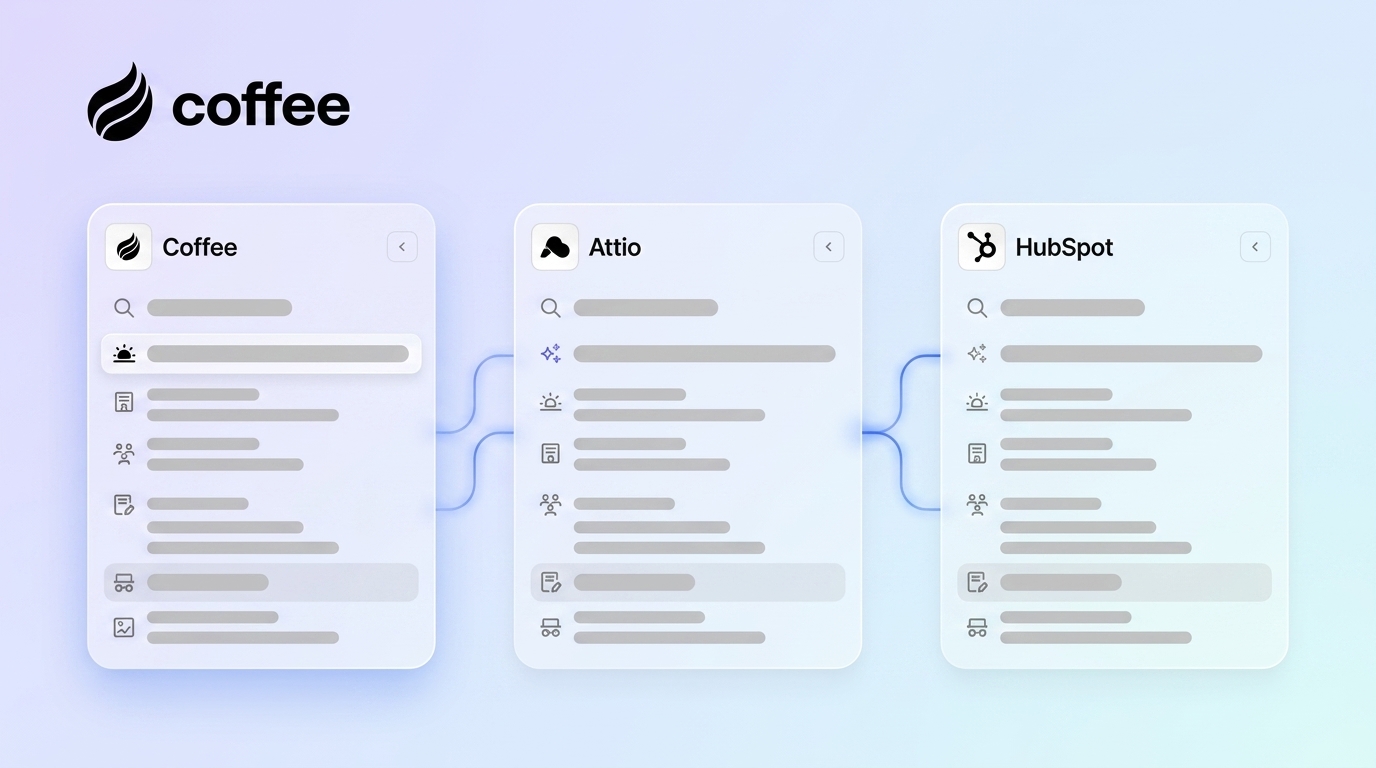
Side-by-Side Comparison of Coffee, Attio, and HubSpot
The following table highlights a key difference between these platforms. Attio and HubSpot both add AI features but still depend on manual data entry, while Coffee automates capture from the start.
| Platform | Data Entry | 2026 Pricing (10 seats/year) | Integrations | Automation |
|---|---|---|---|---|
| Attio | Manual + AI Attributes | $8,280 (Pro) | API-first, Zapier | AI Workflows |
| HubSpot | Manual + Breeze AI | $12,000 (Sales Hub Professional) | over 1,800 integrations | Workflow builder |
| Coffee | Fully automated | Simple seat-based | Native HubSpot, Zapier | AI agent handles all |
Teams that want to remove manual logging from day one can try Coffee’s automated data capture and see the impact on their workflow.
Deep Dive by Category: Coffee vs Attio vs HubSpot
Data Quality and Automation: Fixing the 71% Time Sink
Reddit users consistently report that “HubSpot manual logging kills productivity”, which reflects a common pain across sales teams. Attio’s AI Attributes provide partial automation for summarizing conversations and enriching records, but they still require manual oversight and updates. HubSpot’s Breeze AI adds another layer of cost through usage-based pricing that sits on top of existing licenses. Coffee’s AI agent takes a different approach by removing manual entry entirely and automatically capturing and enriching all customer interactions to save teams hours every week.

Pricing Breakdown for 2026: Free Plans and Hidden Traps
Attio’s transparent pricing starts with a genuine free plan for 3 seats and 50,000 records and scales to Pro at $8,280 annually for 10 seats. In contrast, HubSpot’s “free” plan includes strict limits on users and contacts that push teams toward upgrades to HubSpot Sales Hub Professional 2026 pricing for 10 seats per year at $12,000. Contact-based pricing can increase HubSpot costs by 350% as lists grow, which turns early savings into long-term expense.
Integrations and Workflows for Lean Startup Teams
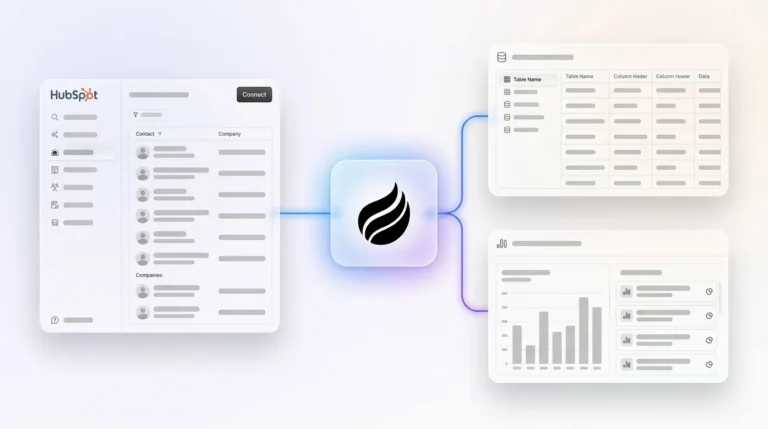
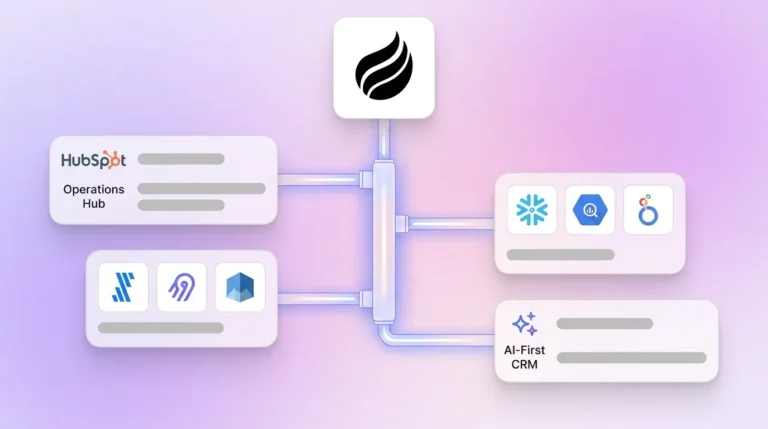
HubSpot dominates the integration landscape with over 1,800 integrations that cover marketing, sales, and service tools. Attio takes an API-first approach with fewer native connections but a stronger developer experience for teams that want to build custom workflows. Coffee bridges these approaches by offering native HubSpot integration as a companion app and Zapier connectivity for broader ecosystem access without heavy engineering work.
Pipeline Visibility and AI-Driven Insights
Attio’s “Ask Attio” feature supports natural language queries so teams can pull insights directly from their data. HubSpot’s Breeze AI provides cross-platform intelligence that layers on top of its marketing and sales tools. Coffee’s “Compare” feature automatically tracks pipeline changes week over week and turns pipeline reviews into strategic discussions instead of manual interrogation sessions in spreadsheets.

Scalability and Adoption Pains from Real Users
Real users report that Attio struggles once teams reach 20 or more reps, which limits its usefulness for growing sales organizations. HubSpot’s administrative burden also increases quickly with team size, as each new user adds configuration, training, and data hygiene work. Coffee scales efficiently to 50 or more users with minimal administrative overhead, as shown in case studies of tens-of-millions revenue firms that rely on its agent-first model.
Best-Fit Use Cases for Coffee, Attio, and HubSpot
For nascent teams with 1 to 10 reps, Coffee as a standalone tool outperforms both Attio and HubSpot by removing setup complexity while still delivering enterprise-grade automation. As teams grow to 10 to 50 reps and already invest in HubSpot’s marketing tools, Coffee works better as a companion app that adds intelligent data capture without disrupting existing workflows. This creates a straightforward decision framework: choose Coffee if eliminating manual data entry is your priority, consider Attio if you need extreme customization flexibility before scaling, or evaluate HubSpot plus Coffee if your growth strategy depends on integrated marketing automation.

Teams ready to simplify their stack and automate logging can start a Coffee trial and see how it fits their current workflows.
Operational and Long-Term CRM Considerations
Coffee supports low-friction migration with SOC2 compliance and can replace expensive tools like ZoomInfo and Gong while preventing “shadow CRMs” through a better user experience. Legacy platforms often accumulate technical debt over time and eventually require costly migrations to newer systems. Coffee’s agent-first architecture evolves alongside AI capabilities and reduces the need for disruptive platform changes as the team grows.
Risks, Limitations, and Common Misconceptions
Attio faces clear limits on team size, and HubSpot’s administrative workload grows quickly as more users join. Both tools also suffer from data quality issues because they still depend heavily on manual entry. Coffee is not designed for highly complex enterprise environments but excels in the small-to-mid market where speed and automation matter most. The belief that “HubSpot free scales” collapsed in 2026 as pricing escalations became more aggressive and exposed the long-term cost of contact-based models.
Decision Framework Summary for Startup Teams
The table below summarizes which tool fits which scenario and what each platform does best.
| Tool | Best Fit | Winner |
|---|---|---|
| Attio | Early-stage customization | Flexibility |
| HubSpot | Marketing integration | Ecosystem |
| Coffee | Automation-first teams | ROI & efficiency |
Coffee reframes the usual Attio versus HubSpot debate by solving the core problem both platforms overlook: automated data capture. Used either on its own or alongside HubSpot, Coffee’s AI agent delivers the productivity gains that small B2B startups need to scale efficiently.
Teams that want to hire an AI agent instead of another admin can view Coffee’s plans and choose the level of automation that matches their stage.
FAQ
What are the 2026 pricing differences between Attio and HubSpot?
Attio offers more transparent pricing with Pro plans at $69 per user per month billed annually, while HubSpot Sales Hub Professional costs $100 per user per month plus contact-based fees that can triple costs as your database grows. For a 10-person team, Attio Pro totals $8,280 annually, while HubSpot Sales Hub Professional reaches $12,000 for the same number of seats.
Which CRM is best for small B2B startups in 2026?
Coffee’s AI agent is the strongest fit for automation-focused teams that want to remove manual data entry while still scaling efficiently. Attio works well for technical teams that need extreme customization flexibility and are comfortable managing more configuration. HubSpot suits marketing-led organizations that require comprehensive inbound tools and a broad ecosystem.
Does Coffee integrate with existing HubSpot installations?
Yes, Coffee connects as a native HubSpot companion app and automatically captures and enriches data from emails and calendars while writing insights back to your existing HubSpot instance. This setup removes manual data entry and preserves established workflows for sales and marketing teams.

How do Attio and HubSpot handle data entry automation?
Both platforms still require significant manual data entry even with their AI features. Attio’s AI Attributes provide partial automation for record enrichment, and HubSpot’s Breeze AI runs on expensive credit systems that sit on top of core licenses. Coffee’s AI agent fully automates data capture from email and calendar sources without human intervention.
What are the scalability limits of Coffee versus Attio?
Coffee scales effectively to 50 or more users with minimal administrative overhead, as shown by successful implementations at tens-of-millions revenue firms. Attio typically hits scalability walls around 20 users, while Coffee’s agent-first architecture grows with your team and avoids the complexity penalties of traditional CRMs.
Should I choose HubSpot free or Attio free for my startup?
Attio’s free plan offers stronger limits with 3 seats and 50,000 records compared with HubSpot’s free plan, which restricts users and contacts. Both free plans, however, still rely on manual data entry and can slow teams down. Coffee’s simple seat-based pricing removes hidden costs and delivers enterprise-grade automation from day one.