Written by: Doug Camplejohn, CEO & Co-Founder, Coffee
Key Takeaways
- BANT (Budget, Authority, Need, Timeline) still qualifies B2B leads effectively and keeps teams from chasing poor-fit prospects.
- Modern BANT uses AI agents to capture data from calls and emails, so reps qualify buyers naturally instead of running rigid checklists.
- BANT fits SMB and transactional sales, while MEDDIC supports complex enterprise deals, and AI-enhanced BANT scales well for mid-market teams.
- Teams can roll out BANT in seven steps, including mapping committees, uncovering needs first, subtle budget and timeline questions, CRM integration, and AI analysis.
- Coffee automates full BANT qualification and removes manual data entry, so reps can sell more and admin less — see pricing and start your free trial to boost close rates today.
Why BANT Matters in 2026 B2B Sales
RevOps managers and sales VPs face mounting pressure to improve mid-journey performance as nearly 67% of B2B deals fail because of poorly qualified leads. Sales teams battle low CRM adoption, bad data quality, and stalled pipelines when manual BANT interrogation shuts down conversations. Buyer-centric, agent-automated BANT processes give teams consistent qualified leads while preserving natural relationship building.
BANT vs MEDDIC for Today’s Sales Motions
Before rolling out any automated qualification system, teams need a framework that matches their sales motion. The choice between Traditional BANT, MEDDIC, and Agent-Powered BANT depends on deal complexity and sales cycle length. BANT is best suited for simpler B2B deals in SMBs, transactional sales cycles, high-volume qualification by SDRs, and inbound lead triage. In contrast, MEDDIC/MEDDPICC excels in enterprise and complex B2B deals with mid-high ACV, long sales cycles (90-180+ days), and high complexity. The table below highlights how each framework handles authority mapping, budget and timeline, and automation, so teams can match the approach to their deal complexity.
| Criterion | Traditional BANT | MEDDIC | Agent-Powered BANT (Coffee) |
|---|---|---|---|
| Best For | Simple SMB deals | Complex enterprise | SMB and mid-market teams using AI automation |
| Authority | Single decision-maker | Economic buyer and champion | Maps committees from call transcripts |
| Timeline/Budget | Direct questions | Decision process | AI predicts from conversational and engagement signals |
| Automation | Manual | Partial | Full agent logging |
The BANT sales methodology performs best when teams pair it with practical AI capabilities. Coffee auto-structures notes in BANT, MEDDIC, and SPICED formats. This structured capture reduces skepticism about traditional frameworks and keeps qualification consistent across every rep and channel.
Readiness Requirements for Modern BANT
Successful BANT implementation depends on a few core foundations, including CRM access, defined sales processes, rep training, and Google Workspace or Microsoft 365 integration. Without these basics, even a strong AI agent cannot deliver reliable qualification. Coffee’s simple authentication supports instant setup without complex configuration, so teams can connect tools quickly. The real prerequisite is a clear ideal customer profile and agreed qualification criteria, which guide the AI’s analysis and keep automated workflows aligned with the sales strategy.
Step-by-Step BANT Implementation
Teams can follow these seven steps to roll out modern BANT qualification across their sales process.
1. Map the buying committee
Reps start by identifying every stakeholder involved in the decision. Scripts such as “Who else is involved in this decision?” help surface champions, influencers, and approvers. AI tools then map authority figures during calls and capture this context, so reps avoid guessing about decision-makers.

2. Uncover need first
Reps lead with buyer-centric questions such as “What challenges are you facing with your current CRM?” and stay on the problem before talking price. This BANT example keeps budget off the table early, builds rapport, and reveals real pain points that drive urgency later in the cycle.
3. Frame budget and timeline subtly
Reps ask “Based on your needs, what would a typical investment look like?” instead of blunt budget questions that create defensiveness. They then connect that investment to timing by working backward from key milestones, which builds urgency around business goals without adding pressure to the conversation.
4. Integrate BANT into CRM workflows
Teams embed BANT in CRM systems by configuring automated BANT record creation and updates. Coffee auto-creates BANT records from emails and calendar interactions, so qualification data stays consistent even when reps forget to log details.
5. Automate call analysis
Coffee joins Zoom, Teams, and Meet calls to extract BANT criteria from transcripts. The agent handles note-taking and qualification capture, which keeps conversations natural while still feeding structured data into the CRM.
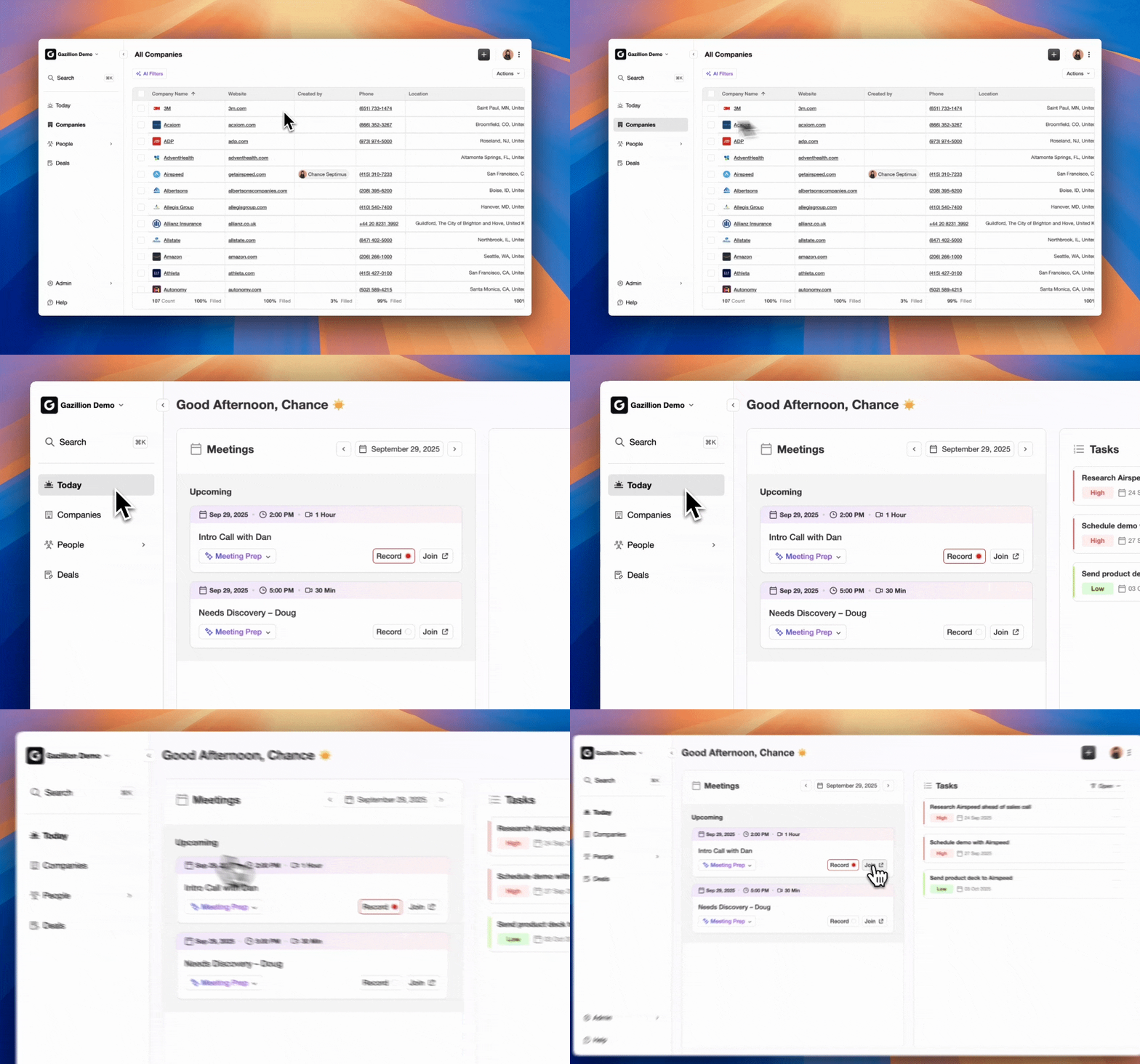
6. Deploy AI playbooks for every meeting
Teams use Coffee’s “Today” briefings to prepare for meetings with BANT context and historical insights already summarized. This AI-powered preparation improves qualification accuracy, keeps questions relevant, and raises the overall quality of each conversation.
7. Track and improve BANT performance
Leaders monitor qualification completion rates, time-to-qualify, and conversion by BANT score using Coffee’s “Compare” feature for pipeline velocity analysis. Try Coffee free to automate these workflows and scale qualification without adding manual entry.
Why Automating BANT with Coffee Matters
After teams run these seven steps manually, they usually hit a ceiling as volume grows and consistency drops. Maintaining BANT quality across dozens of daily conversations becomes the bottleneck, not the framework itself. Automation turns BANT from a checklist that reps must remember into a background system that quietly captures and applies qualification data on every deal.
Coffee serves as a CRM agent that handles data entry, orchestration, and BANT insights automatically. This automation tackles the time-drain problem directly, saving hours per rep each week through auto-enrichment, AI summaries, and intelligent list building. Unlike legacy CRMs that rely on manual input or tools with shallow AI features, Coffee delivers modern BANT qualification without forcing reps to trade data quality for selling time.
Coffee works as a standalone CRM for small teams and as a companion agent for Salesforce and HubSpot installations. Recent updates include custom meeting briefings and summaries that extract BANT data automatically and feed it into workflows. These orchestration features extend beyond simple note capture and make Coffee a strong choice for teams that want BANT embedded across their entire CRM environment.

Validation and Success Metrics for BANT
Teams measure BANT success through qualification completion rates, rep adoption, and pipeline velocity improvements. Organizations implementing AI-driven lead scoring achieve 40% improvements in qualification accuracy compared to manual systems, which connects directly to the 67% failure rate caused by poor qualification. Coffee’s dashboards surface this impact through automated forecasting and pipeline analysis, so leaders can see how better BANT data changes win rates and cycle times.
Scaling BANT and Combining Frameworks
Advanced teams often blend BANT with MEDDIC for complex enterprise deals, using BANT for initial filtering and MEDDIC for deeper qualification. This hybrid approach keeps early-stage qualification fast while still supporting detailed enterprise discovery later. Coffee scales across both methodologies and supports these blended models, so teams can match qualification depth to deal size and sales cycle length without juggling separate tools.
Conclusion
Rolling out these BANT qualification steps with Coffee’s AI agent reshapes lead qualification and drives higher close rates through automated data capture and buyer-centric conversations. Start automating your BANT qualification today to modernize your sales process and remove manual admin from your reps’ day.
FAQ
Is BANT still relevant in 2026?
BANT remains highly relevant when teams enhance it with AI automation. The framework’s simplicity makes it ideal for high-volume qualification, and buyer-centric questioning keeps conversations natural. Automated data capture prevents interrogation-style calls and turns BANT from a static checklist into a dynamic qualification system powered by AI agents such as Coffee.
How does Coffee implement BANT qualification?
Coffee automates BANT qualification by joining video calls and extracting budget, authority, need, and timeline information from natural conversations. The AI agent logs this data directly into the CRM, creates enriched contact records, and prepares meeting briefings with BANT context. This approach removes manual data entry and keeps qualification consistent across every rep and team.
How can teams use BANT and MEDDIC together?
Many teams start with BANT for quick initial filtering, then layer in MEDDIC for opportunities that progress and show higher potential value. Reps qualify basic budget, authority, need, and timeline first, then expand into metrics, decision criteria, and champions as deals advance. This combined approach keeps early discovery efficient while still supporting the depth required for complex enterprise sales.
What’s a good BANT example script?
Effective BANT scripts focus on needs first with questions such as “What challenges are you facing with your current solution?” and then move to authority with “Who else would be involved in evaluating alternatives?” For budget, reps can ask “What would solving this problem be worth to your organization?” Timeline questions work backward from goals with prompts like “When do you need this resolved to hit your Q3 targets?” This structure feels consultative and avoids interrogation.
How does BANT sales automation work?
Sales automation for BANT uses AI agents that capture qualification data from emails, calls, and meetings without manual input. The system analyzes conversation transcripts, identifies BANT criteria, and updates CRM records with structured qualification fields. This process keeps data quality high and frees sales reps to focus on building relationships instead of handling administrative tasks.