Written by: Doug Camplejohn, CEO & Co-Founder, Coffee | Last updated: September 7, 2026
Key Takeaways From This MEDDIC Guide
- Small business sales teams lose deals when they lack a clear qualification process that separates real opportunities from wishful thinking.
- MEDDIC was developed by analyzing lost deals at PTC and helped the company grow from $300M to $1B in revenue in four years.
- The six elements of MEDDIC become a natural conversation flow for small teams when you streamline them for shorter cycles and fewer stakeholders.
- This guide includes dialogue examples, a simple scorecard template, and practical ways to reduce MEDDIC-related admin work.
- Automation tools like Coffee can handle MEDDIC tracking and reduce the time your team spends on manual data entry.
When MEDDIC Works For Small Businesses (And When It Becomes Overkill)
MEDDIC helps you verify six key points before you invest more effort in a deal. For small businesses, this reduces “zombie deals” and shifts time toward opportunities that can actually close.
Use full MEDDIC for deals above roughly $5K–$10K or any deal with more than one decision-maker. For fast transactional sales under $5,000 with cycles under two weeks, a simplified version focused on Metrics, Pain, and Champion works well. When the average deal size is under $10K with a sales cycle under 30 days, the overhead of full MEDDIC rarely pays off.
The bigger risk for small teams is over-engineering the process. Six to eight written fields per deal create too much overhead for a 14-day cycle, and small teams gain most of the value from two habits: naming the Economic Buyer and writing down the Decision Process. Market data shared by Coffee shows that sales reps spend only 35% of their time selling because of data entry burdens. A lightweight framework that your team uses consistently is more effective than a complex one they ignore.
The Six MEDDIC Conversations For Small Business Sales
Each MEDDIC element maps to a specific conversation with your prospect. Here is a streamlined sequence for small business selling:
- Metrics: Quantify the prospect’s pain in simple, direct numbers.
- Economic Buyer: Identify the real decision-maker quickly, often the owner.
- Decision Criteria: Ask which features, price points, or results matter most.
- Decision Process: Map their exact steps to buy, including who signs off.
- Identify Pain: Uncover the daily frustration or lost money driving urgency.
- Champion: Build a strong relationship with your internal advocate.
M — Metrics: Turn Pain Into Clear Numbers
Metrics describe the quantified business impact your solution delivers. In small businesses, focus on simple numbers such as time saved, monthly revenue gained, or costs reduced. The goal is to help the prospect put a dollar figure on their problem so the value of solving it feels concrete.
Consider a $20K consulting sale where the prospect wants to reduce customer churn. A natural dialogue might look like this:
You: “What’s customer churn costing you right now?”
Prospect: “We lose maybe 15 customers a year.”
You: “At your average contract value, what’s that worth annually?”
Prospect: “Roughly $75K.”
You: “If we could cut that by a third, what would that mean for your bottom line?”
That final question anchors the conversation to a specific, agreed-upon number. A practical Metrics template turns discovery into a business case in three steps: quantify the cost of inaction, agree on the target metric, and calculate the payback period. Once the prospect states the number out loud, you have a usable Metric.
E — Economic Buyer: Reach The Person Who Can Say “Yes”
The Economic Buyer is the individual with the authority and budget control to approve a purchase, even if they do not run the day-to-day evaluation. In small businesses, this is often the owner or a senior executive, but not always. Your main contact may need approval from a business partner, a board, or a parent company.
Use these practical approaches to identify the Economic Buyer early:
- Ask directly: “Who ultimately decides on this budget?”
- Check LinkedIn to understand the org structure before your first call.
- Ask your champion: “Has this type of purchase gone through your CFO in the past?”
- Ask about prior purchases: “How did you handle a similar decision last time?”
A founder selling to a marketing manager might discover through a direct question that the owner’s business partner handles all vendor approvals, a stakeholder who never appeared in initial conversations. This illustrates a widespread misconception: the most engaged contact is not always the decision-maker. The Economic Buyer is often less visible and more senior than the day-to-day evaluator, and their absence from a deal strongly predicts delay or no decision.
Deals without direct Economic Buyer engagement before the final stage close at 23% lower rates than deals with documented Economic Buyer involvement at mid-funnel. Confirm access early to avoid late surprises.
D — Decision Criteria And Process: Clarify How They Will Buy
Small businesses follow simpler buying processes than enterprises, but they still use clear criteria and steps. Decision Criteria are the specific requirements such as features, price points, integration needs, or outcomes. The Decision Process is the sequence of steps, approvals, and people involved before a contract is signed.
Here is a sample conversation that uncovers both:
You: “What’s your timeline for making a decision here?”
Prospect: “We’d like to move within 30 days.”
You: “What needs to happen between now and then?”
Prospect: “I need to check with my business partner and review a couple of options.”
You: “What criteria will you use to compare options?”
Document their answers simply in your CRM or a shared document. Your goal is to know exactly which steps remain and what they are using to compare you with alternatives. Decision Criteria change as new stakeholders join, competitors enter, or priorities shift, so reps who document once and never revisit risk selling to outdated needs.
I — Identify Pain: Move From Symptoms To Real Impact
Specific pain creates urgency and stronger deals. If a prospect says they want to “improve efficiency” and the rep does not dig deeper, they may miss that manual processes cost the operations team nearly 20 hours each week and delay customer onboarding. That level of detail changes the conversation.
Use open-ended questions that surface root causes:
- “What’s driving you to look for a solution right now?”
- “What happened recently that made this a priority?”
- “What’s it costing you to keep doing things the current way?”
- “What happens if you do not solve this in the next quarter?”
Here is a short dialogue that moves from symptom to cost:
You: “You mentioned wanting to improve efficiency. What’s that costing you today?”
Prospect: “Our operations team spends nearly 20 hours a week on manual processes.”
You: “Twenty hours a week is significant. What could they do with that time instead?”
That follow-up question connects the pain to a missed opportunity, which motivates action more than the pain alone.
C — Champion: Grow An Internal Advocate Who Takes Action
A Champion is the person inside the prospect’s organization who advocates for you when you are not in the room. In small businesses, this might be the person who first found you, but they need influence and a personal stake in the outcome. A true Champion does more than like the solution. They advocate for it when the rep is not present, introduce the rep to key stakeholders, share internal information, and help move the opportunity forward.
Use these tips to build and validate a Champion relationship:
- Validate through action instead of enthusiasm. Ask: “Could you introduce me to your business partner?” If they refuse, they act as a friendly contact rather than a Champion.
- Share internal-facing material that helps them sell on your behalf, such as competitive comparisons, ROI summaries, and talking points for their partner.
- Give them language to use internally: “Here’s how other businesses like yours have described the value to their leadership team.”
A true Champion has three traits: influence with decision-makers, motivation to solve the problem, and a willingness to take action. In smaller organizations, one person can be both Champion and Economic Buyer, and you should mark this explicitly because losing that person ends the deal.
MEDDIC Scorecard Template For Fast Deal Reviews
Rate each element on a 1–5 scale after every significant conversation. A score of 5 means you have fully verified the element with evidence directly from the prospect.
| MEDDIC Element | Score (1–5) | Evidence Needed |
|---|---|---|
| Metrics | Quantified business impact agreed with prospect | |
| Economic Buyer | Direct conversation with budget holder confirmed | |
| Decision Criteria | Specific requirements documented | |
| Decision Process | Steps, timeline, and approvers mapped | |
| Identify Pain | Root cause and cost of inaction understood | |
| Champion | Advocate validated through action |
Use this scoring guide: 25–30 means a strong deal, so advance confidently. Scores from 18–24 indicate a promising deal, but close gaps before you invest more time. Scores below 18 signal that you should re-evaluate or disqualify. B2B data degrades by 25 to 30% per year, so a MEDDIC scorecard needs regular updates to stay accurate. Review and refresh it after every call.
MEDDIC Vs. MEDDPICC Vs. BANT: Choosing The Right Framework
The three most common qualification frameworks support different sales motions. The table below compares them on the dimensions that matter most for small business teams, focusing on deal complexity and cycle length.
| Framework | Best For | Key Elements | Overhead Level |
|---|---|---|---|
| BANT | Low-complexity, short-cycle deals (days to a few weeks) with one or two decision-makers | Budget, Authority, Need, Timeline | Low |
| MEDDIC | Mid-market deals closing in 60–120 days where a dedicated Paper Process field is rarely needed | Metrics, Economic Buyer, Decision Criteria, Decision Process, Identify Pain, Champion | Medium |
| MEDDPICC | Complex enterprise deals where procurement and competitors materially affect the outcome | MEDDIC + Paper Process + Competition | High |
For small businesses that want structure without heavy overhead, MEDDIC usually hits the sweet spot. BANT works well for simple sales, while MEDDIC suits more complex cycles by uncovering deep buyer pain and mapping stakeholders, processes, and metrics that drive decisions. MEDDPICC adds Paper Process and Competition, which helps in enterprise deals with heavy procurement and legal review, but often exceeds what small-business cycles require. For a deeper look at the extended framework, see our MEDDPICC for small business guide and our MEDDIC vs. MEDDPICC comparison.
How To Track MEDDIC Without A Heavy CRM Setup
Many small businesses track MEDDIC in spreadsheets or Notion, which works for a while. Over time, reps forget to update fields, data goes stale, and pipeline reviews turn into guessing sessions. Most MEDDIC implementation failures come from over-engineered CRM fields, treating every field as equally important at every stage, and separating MEDDIC data from the rest of the deal record.
Coffee is an AI-powered CRM agent that automatically logs calls, emails, and meeting notes and structures those notes according to MEDDIC. Instead of typing qualification data after every conversation, Coffee captures it from your emails, calendar, and call transcripts. The agent saves reps 8–12 hours per week on data entry so they can spend more time selling.

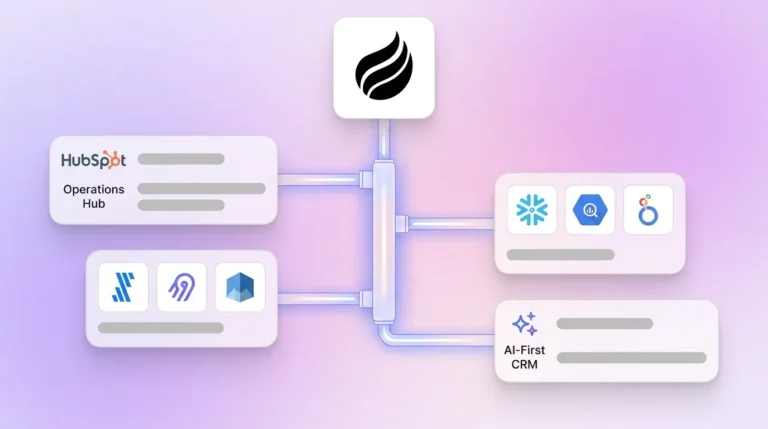
Coffee works in two main ways. It can act as a standalone CRM for small businesses that have outgrown spreadsheets. It can also run as a companion app on top of Salesforce or HubSpot. Coffee is SOC 2 Type 2 and GDPR compliant, so your data stays secure and never trains public models.


Common MEDDIC Mistakes In Small Teams
Small teams tend to repeat a few MEDDIC mistakes that quietly weaken their pipeline quality.
- Treating MEDDIC As An Interrogation: Treating MEDDIC as an interrogation is a common error. The framework guides what you need to learn, not how to talk, so keep conversations natural and curiosity-driven.
- Ignoring The Economic Buyer: The Economic Buyer is the person with budgetary authority who can sign the contract. Without reaching and engaging this stakeholder directly, a deal remains unqualified regardless of champion strength or compelling metrics.
- Failing To Update The Scorecard: Qualification data goes stale quickly. Review and refresh the scorecard after every call instead of waiting for stage changes.
- Confusing A Friendly Contact With A Champion: Champions are validated through action, such as introductions and internal advocacy, rather than positive opinions alone.
- Applying Full MEDDIC To Tiny Deals: For deals under $5K, focus on Metrics, Pain, and Champion. Full MEDDIC on a two-week transactional deal adds overhead that discourages adoption.
- Documenting Once And Moving On: As noted earlier, adherence to new methodologies can decay by 40–50% within six months without reinforcement. Build MEDDIC into every pipeline review, not just onboarding.
Frequently Asked Questions About MEDDIC
What Is The MEDDIC Sales Checklist?
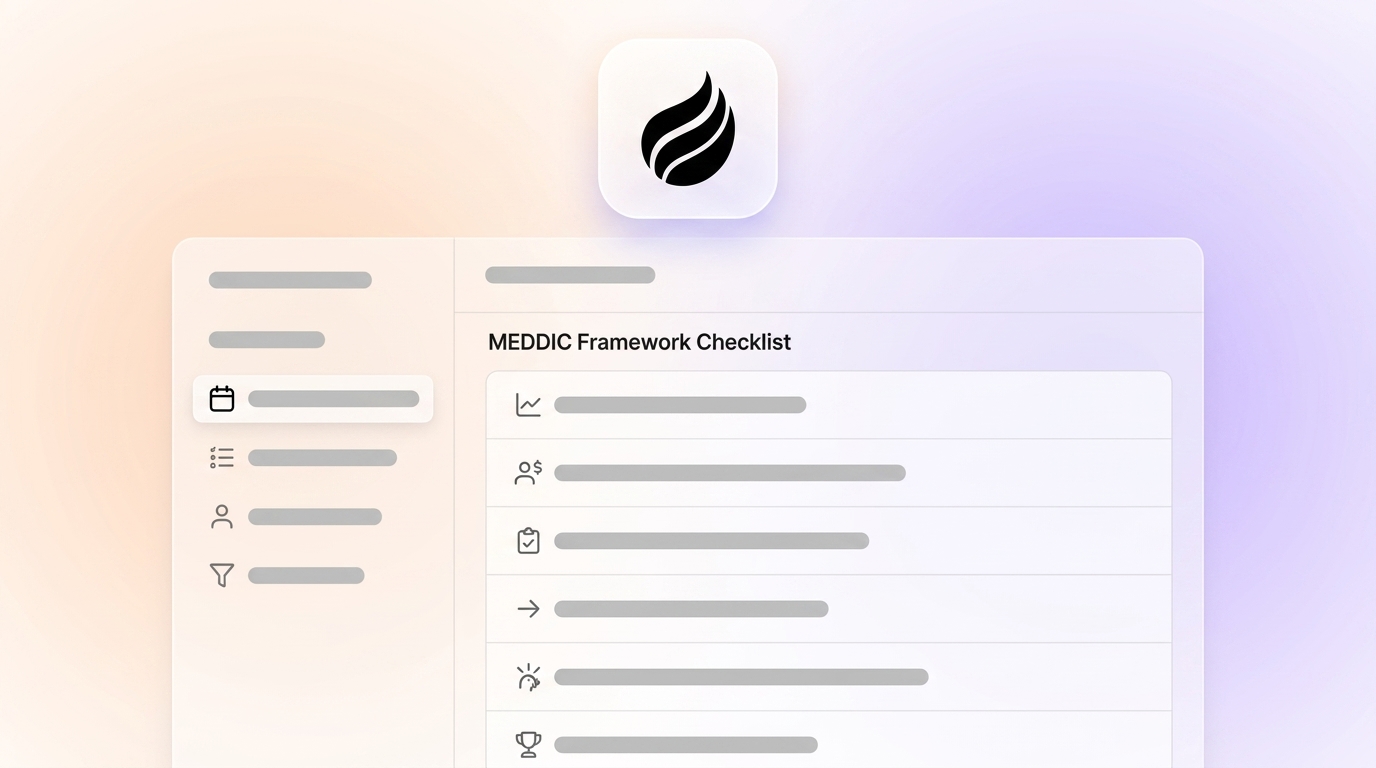
The MEDDIC checklist covers six elements that you must verify before you treat a deal as qualified. Metrics means you have quantified the business impact your solution delivers, using numbers the prospect agrees with. Economic Buyer means you have spoken directly with the person who controls the budget and can approve the purchase. Decision Criteria means you have documented the specific requirements, such as features, price, and outcomes, that the prospect will use to evaluate options. Decision Process means you have mapped the steps, timeline, and approvers involved before a contract is signed. Identify Pain means you understand the root cause of the problem and the cost of inaction, not just the surface symptom. Champion means you have an internal advocate who has demonstrated support through action, not just enthusiasm. Rate each element 1–5 after every significant conversation and update the scorecard as new information appears.
How Do I Identify The Economic Buyer In A Small Business?
Start by asking directly: “Who ultimately decides on this budget?” In small businesses, this is often the owner or a senior executive, but you should confirm instead of assuming. Check LinkedIn before your first call to understand the org structure. Ask your champion about past purchases: “Has this type of decision gone through your CFO or business partner before?” Ask who signed the last contract for a similar purchase. In very small businesses, the person you speak with may be both Champion and Economic Buyer, so note this explicitly because losing that one person ends the deal. Confirm Economic Buyer access as early as possible because deals that advance without it carry significant late-stage risk.
Is MEDDIC Worth It For Small Teams?
MEDDIC pays off for deals above roughly $5K–$10K or any deal with multiple decision-makers. It prevents wasted time on unqualified opportunities and improves forecast accuracy by forcing you to verify six elements before you invest more effort. For smaller transactional deals under $5K with a single decision-maker and a cycle under two weeks, a lightweight version focusing on Metrics, Pain, and Champion usually works well. Match the depth of qualification to the complexity of the deal. Applying full MEDDIC to every deal regardless of size creates administrative overhead and reduces adoption.
How Much Does MEDDIC Certification Cost?
Formal certification programs through providers like Force Management or MEDDICC.com typically cost from a few hundred to several thousand dollars per person. Enterprise-level MEDDIC training rollouts through firms like Force Management or Winning by Design can reach $100,000 to $500,000 for full organizational deployments. Small businesses do not need formal certification to benefit. The six-element framework, the conversation scripts in this guide, and the scorecard template above give you enough structure to start using MEDDIC conversationally today, with no cost beyond the time it takes to practice.
What Is The Difference Between MEDDIC And BANT?
BANT (Budget, Authority, Need, Timeline) is a lightweight four-question filter designed for fast, low-complexity deals with one or two decision-makers. It works well at the top of the funnel for early qualification, especially for inbound leads where the buyer has already diagnosed their own problem. MEDDIC is a continuous qualification discipline built for deals with multiple stakeholders, longer cycles, and higher values. The key difference is depth. BANT tells you whether a deal deserves a conversation, while MEDDIC tells you whether a deal will close and what you need to do to reach that outcome. MEDDIC pushes you to identify the Economic Buyer, map the Decision Process, and validate a Champion, which BANT does not cover. For small businesses, BANT-lite fits deals under $5K with a single decision-maker, while MEDDIC delivers strong returns on anything above $10K or involving more than one approver.
Conclusion: Build A MEDDIC Habit That Fits Your Team
MEDDIC can stay lightweight and still deliver value. When you adapt it to small-business realities such as shorter cycles, fewer stakeholders, and founder-led deals, the six elements turn into a natural conversation framework that keeps you away from deals that will not close. Quantify Metrics, find the Economic Buyer, map Decision Criteria and Process, dig into Pain, and nurture a Champion. Use the scorecard after every call, update qualification data as conversations evolve, and review your pipeline through a MEDDIC lens.
The teams that benefit most from MEDDIC share one trait: consistency. The methodology does not improve forecasts on its own. The discipline of using it in weekly reviews helps teams catch revenue risk earlier than teams that only mention MEDDPICC in a slide deck. With Coffee handling tracking from your calls, emails, and calendar, your team can focus on better conversations and closed deals.
Explore Coffee’s pricing to streamline your MEDDIC tracking today.