Written by: Doug Camplejohn, CEO & Co-Founder, Coffee | Last updated: August 16, 2026
Key Takeaways for SMB Sales Leaders
- Legacy CRMs and spreadsheets fail SMB teams because they rely on manual data entry, which causes inaccurate pipelines, missed forecasts, and low adoption rates.
- Coffee is the only platform in this review that uses an active AI agent to eliminate manual entry by automatically creating contacts, logging activity, and enriching records.
- Among the six tools compared, Coffee offers the fastest onboarding and strongest manager visibility because its agent captures complete, real-time data without rep input.
- Teams already on Salesforce or HubSpot can deploy Coffee as a Companion App to layer intelligent automation on top of their existing system without migration.
- Eliminate the 8–12 hours per rep lost weekly to manual CRM tasks—see how Coffee’s agent reclaims that time.
SMB Pricing and Automation Comparison (2026)
The following table compares six leading CRM platforms across three critical dimensions for SMB teams: entry-level pricing, depth of automation, and ideal use case. These tools span traditional passive CRMs and Coffee’s agent-based architecture, which the rest of this review examines in detail.
| Tool | Starting Price (per user/month, billed annually) | Automation Depth | Best For |
|---|---|---|---|
| Pipedrive | $14 (Lite) | Rule-based workflow automation, add-ons required for AI features | Visual pipeline management for lean B2B teams |
| HubSpot Sales Hub | $90–$100 (Professional depending on billing, no seat minimum + $1,500 onboarding fee) | Sequences and workflow automation at Professional tier, limited at Starter | Inbound-led SMBs already in the HubSpot ecosystem |
| Zoho CRM | $14 (Standard when billed annually) | Zia AI assistant, automation rules available across tiers | Budget-conscious teams wanting broad feature coverage |
| Freshsales | $9 (Growth billed annually) | Freddy AI for scoring and insights, multichannel automation | SMBs needing built-in phone, email, and chat |
| Close | $19 (Solo); $99 (Growth billed annually) | Native power dialer, SMS, and email sequences, limited AI enrichment | High-velocity inside sales teams |
| Coffee | Seat-based, agent labor included, see pricing | Active AI agent that auto-creates contacts, logs activity, enriches records, runs sequences, and tracks pipeline changes without human input | SMBs replacing manual CRM work with an autonomous agent |
Pipedrive Review: Visual Pipelines for Lean Teams
Best for: Small B2B teams that want a visual, drag-and-drop pipeline without enterprise complexity.
Pros:
- Low entry price at $14/user/month (Lite, billed annually) with no seat minimums.
- Intuitive visual pipeline that reduces training time.
- No mandatory onboarding fee, unlike HubSpot Professional.
Cons:
- AI features, web visitor tracking, and email campaigns require paid add-ons ranging from $7 to $41/month.
- Reps still enter activity data manually, with no agent to auto-log calls or emails.
- Reliance on manual data entry can push adoption below 50%.
- SME implementation typically requires 20–40 hours of project-owner time over 2–4 weeks.
While Pipedrive targets lean teams with simple visual pipelines, HubSpot Sales Hub serves a different segment that relies heavily on inbound marketing.
HubSpot Sales Hub Review: Inbound-Focused Sales CRM
Best for: Inbound-led SMBs already using HubSpot Marketing Hub who need sequences and reporting.
Pros:
- Free CRM tier with unlimited contacts and two free Sales Hub seats.
- Broad ecosystem of integrations and a large partner network.
- Sequences and deal automation available at Professional tier.
Cons:
- Professional tier costs $90–$100 per seat per month (depending on billing) with no seat minimum and a mandatory $1,500 onboarding fee.
- Without reinforcement and process documentation, adoption drops below 30% within 3 months.
- Built as a marketing tool with a CRM bolted on, not a unified intelligence system.
- Data quality still depends on rep input, with no autonomous enrichment agent.
Zoho CRM Review: Low-Cost CRM With Heavy Configuration
Best for: Budget-conscious teams that want broad feature coverage and are willing to invest time in configuration.
Pros:
- Standard tier at $14 per user per month when billed annually, and Zoho One bundle at $37/user/month including 45 integrated business apps.
- Zia AI assistant provides scoring and anomaly detection.
- Free edition available for up to three users.
Cons:
- High configuration complexity, with meaningful automation requiring significant admin time.
- Zia AI operates on structured fields only, so unstructured data from calls or emails is not natively processed.
- UI complexity increases training requirements beyond the typical SMB setup benchmark.
Freshsales Review: Multichannel CRM With Freddy AI
Best for: SMBs that need built-in phone, email, and chat without purchasing separate communication tools.
Pros:
- Starts at $9 per user per month billed annually with a free plan available.
- Freddy AI provides lead scoring and deal insights natively.
- Multichannel communication (phone, email, chat) included in the platform.
Cons:
- Freddy AI scores leads but does not autonomously capture or enrich contact records.
- Activity logging still requires rep input, which sustains the manual entry burden.
- Advanced automation features are gated behind higher tiers.
Close Review: Calling-First CRM for Inside Sales
Best for: High-velocity inside sales teams that prioritize calling and sequencing over deep CRM data management.
Pros:
- Native power dialer and SMS built into the base plan.
- Email sequencing included without add-ons.
- Clean UI designed for rep speed.
Cons:
- Close has no Base plan, and the entry-level Solo plan starts at $19 per user per month. Close has no Startup tier, and its Growth tier starts at $99 per user per month when billed annually.
- Higher tiers can create higher annual costs for small teams compared to alternatives like Pipedrive.
- No autonomous data enrichment, so reps manually maintain contact records.
- Positioned for calling-heavy workflows and less suited to complex multi-stakeholder pipeline management.
Coffee Review: Active AI Agent for SMB Pipeline Tracking
Best for: SMB sales teams (1–25 reps) that want an autonomous agent to handle all data entry, enrichment, and pipeline tracking, and teams already on Salesforce or HubSpot that need an intelligent data layer on top.
Pros:

- Agent automatically creates contacts and companies from Google Workspace or Microsoft 365 connections, so reps avoid manual entry.
- Enriches records with job titles, funding data, and LinkedIn profiles via licensed data partners, replacing standalone tools like Apollo or ZoomInfo.
- Stripe integration (launched January 2026) automatically imports customers, enriches them, and marks paid invoices as Closed Won.
- QuickBooks integration (February 2026) syncs invoices and payment statuses in real time.
- AI search on deals answers natural-language questions like “Which deals are stuck in negotiation?” without manual report building.
- Pipeline Compare feature tracks week-over-week changes automatically, which replaces manual CSV exports.
- Available as a Standalone CRM or as a Companion App layered on top of existing Salesforce or HubSpot instances.
- Simple seat-based pricing where agent labor is included with no metering on AI usage.
- Free 14-day trial with guided onboarding, introduced December 2025.
Cons:
- Third-party integrations currently run via Zapier, with deeper native integrations on the roadmap.
- Not suited for large enterprises with complex, custom compliance workflows.
- Teams in heavily regulated industries such as healthcare or finance that require multi-year security reviews should evaluate fit carefully.
Setup and Onboarding Comparison for SMB Teams
Beyond pricing and automation depth, onboarding speed is the third critical factor in CRM selection. For SMB teams, onboarding speed is a direct revenue variable. Well-designed CRMs for teams under 50 employees can achieve initial setup in days to weeks, with individual proficiency and full team adoption following over the next one to two months. Enterprise implementations follow a different curve, as Salesforce often requires several weeks to months for setup and adoption and may require a dedicated admin.
Pipedrive and Freshsales sit at the faster end of the SMB spectrum, with no mandatory onboarding fees and self-serve configuration. HubSpot Professional’s mandatory onboarding fee and multi-week stakeholder time commitment (detailed in the review above) extend implementation timelines significantly. Zoho CRM’s configuration depth extends timelines further for teams without a dedicated admin. Coffee’s agent-led architecture reduces onboarding friction because reps do not need to learn data entry workflows, since the agent handles them after connecting Google Workspace or Microsoft 365.
Data Capture and Maintenance Comparison: CRM Data Entry Time Savings
Manual data entry drives low CRM adoption for many SMB teams, and leaders frequently cite record creation as the most painful step. The downstream consequence is predictable: an inefficient setup relying on manual data entry can cause CRM adoption rates to drop below 50%.
Pipedrive, HubSpot, Zoho, Freshsales, and Close all operate on the same foundational assumption that reps will reliably enter data. No evidence supports the existence of a HubSpot 2024 Sales Trends Report finding that 67% of sales managers report at least 4 hours lost per rep weekly to manual CRM updates; other reports cite different time burdens such as a median of 5 hours or 58% spending at least 3 hours. A typical sales rep working 40 hours per week loses 8–12 hours to manual processes such as data entry and CRM updates, equating to 416–624 hours annually per rep.
Coffee’s agent inverts this model and removes the dependency on rep discipline. It ingests emails, calendar events, and call transcripts to auto-create and enrich records, log activity, and update deal stages. An AI-native CRM that automatically captures emails, meetings, and calls can produce a significant reduction in data entry time. For a 5-person SMB team, Coffee’s agent can help recover substantial commercial hours per week from manual data entry and admin tasks.

Frontline Usability and Manager Visibility Comparison
Salespeople who like their tools are more likely to use them consistently and hit quota. Usability functions as a revenue driver rather than a cosmetic feature. Pipedrive and Close score well on rep-facing simplicity. HubSpot’s interface feels familiar to marketing-trained users but can feel cluttered for pure sales workflows. Zoho’s depth creates a steeper learning curve that Between 55% and 70% of CRM implementations fail to meet their objectives, with over 60% of failures attributed to people-related challenges such as low user adoption.
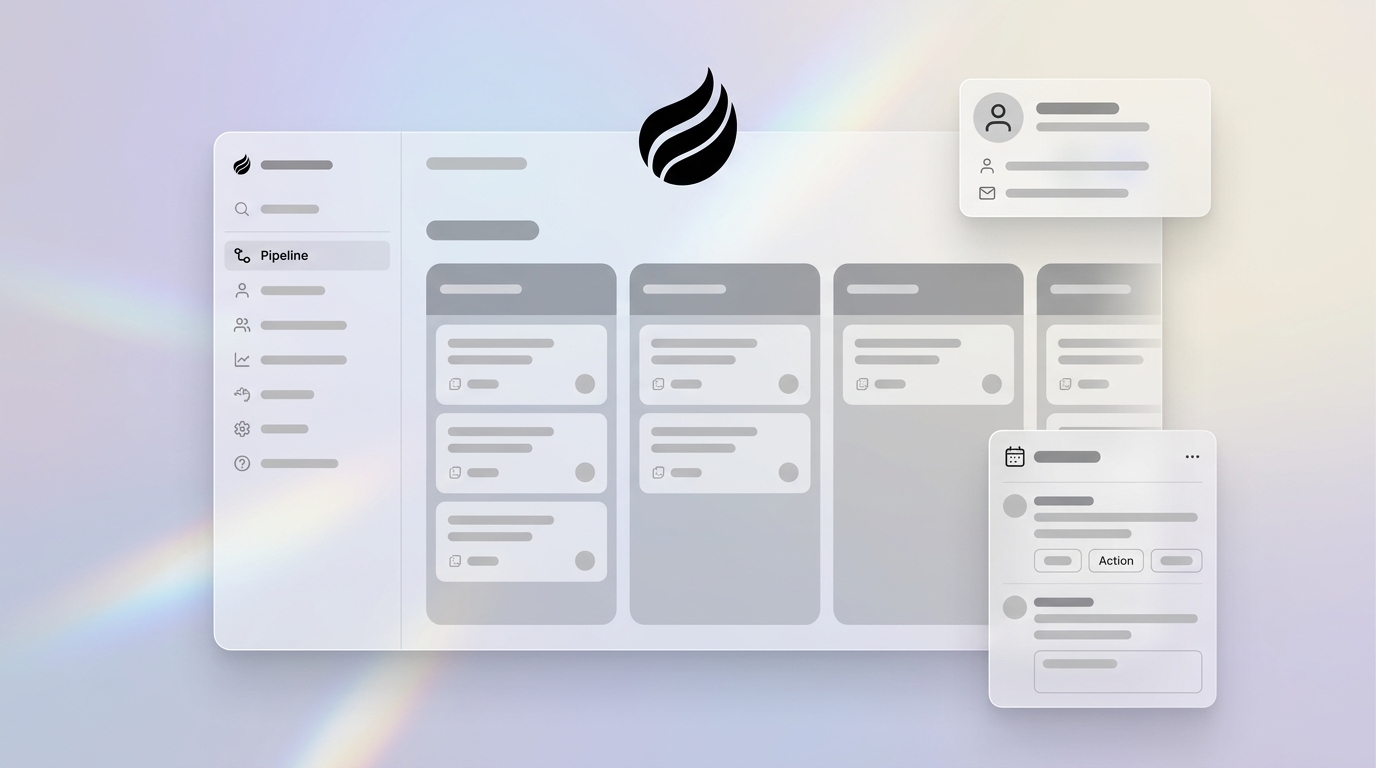
For managers, visibility depends entirely on data quality. When reps under-log, pipeline reports become fiction. Coffee’s agent ensures the data entering the system is complete and current, so manager dashboards reflect ground truth. The Pipeline Compare feature surfaces week-over-week deal movement, including progressed, stalled, and new deals, without requiring a manager to interrogate reps or export spreadsheets.

Integration Complexity and Long-Term Flexibility Comparison
Integration breadth and complexity shape how each CRM fits into an existing tech stack. HubSpot and Salesforce offer the broadest native integration ecosystems, but complexity scales with team size. Zoho’s app suite is extensive but requires configuration expertise. Pipedrive, Freshsales, and Close rely on Zapier or native connectors for most third-party tools, with advanced integrations requiring developer time.
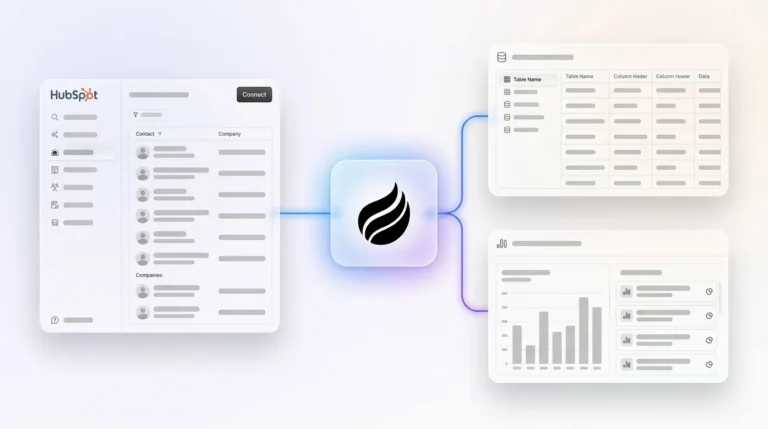
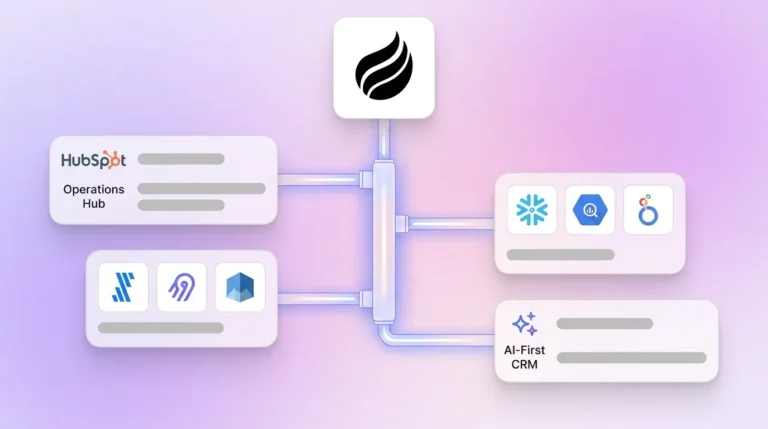
Coffee addresses integration complexity through two deployment models. Teams without an existing CRM use the Standalone AI-First CRM. Teams already committed to Salesforce or HubSpot deploy Coffee as a Companion App, where a simple authentication allows the agent to sync data, enrich it, and write insights back to the primary system of record. This approach means Coffee does not require a rip-and-replace decision and instead layers intelligence on top of an existing stack. Current third-party integrations run via Zapier, with deeper native integrations on the product roadmap.

Agent vs. Passive CRM: Manual Data Entry as an Adoption Barrier
Every legacy CRM in this comparison, including Pipedrive, HubSpot, Zoho, Freshsales, and Close, functions as a passive database. Each system stores structured data when a human enters it and cannot read an email thread, parse a call transcript, or infer a deal stage change from a calendar event. Traditional CRMs like HubSpot or Salesforce function as passive databases that wait for structured data and cannot read free-text fields such as email replies or contact form notes to understand prospect intent.
Sales reps spend more than an hour per day on data entry and manual CRM tasks—over five hours a week—leading reps to abandon systems when updating a deal stage requires five clicks and three field fills. The result is shadow CRMs such as spreadsheets and Notion docs that become the real workspace while the CRM accumulates stale data.
AI-enabled sales teams achieve 3.7× higher quota attainment and reclaim 2–3 hours per representative weekly from automated CRM updates and activity logging. Coffee’s agent extends this further by handling the entire data-in process, including enrichment, deal stage updates, meeting summaries, and follow-up drafts, so reps interact with a system that serves them rather than one they serve. As noted earlier, this agent-led approach directly addresses the manual-entry dependency that undermines adoption in passive CRMs.
Deploy Coffee’s agent and eliminate the manual entry burden that is costing your team hours of selling time each week.
Best-Fit Use Cases by Team Stage
Early-stage teams (1–20 employees, founder-led sales): Coffee’s Standalone CRM is purpose-built for this stage. Teams that have outgrown spreadsheets but find Pipedrive or HubSpot to be expensive maintenance burdens benefit from an agent that keeps the CRM current without requiring a dedicated admin or structured data entry habits.
Growing SMB teams (5–25 reps): Pipedrive and Freshsales offer accessible entry points with predictable per-seat pricing. Close suits teams where calling volume is the primary activity. Coffee suits teams where data quality and pipeline accuracy are the primary bottleneck, particularly where reps are already avoiding the CRM.
Teams committed to Salesforce or HubSpot: Coffee’s Companion App deploys the agent on top of an existing instance. RevOps leaders who have invested in Salesforce or HubSpot but face low adoption and poor data quality can add Coffee without migrating their system of record. The agent handles data in, and the existing CRM handles reporting and compliance workflows.
Risks and Limitations for SMB Buyers
Every platform in this comparison carries tradeoffs that SMB buyers should evaluate honestly.
Hidden maintenance costs: Many CRM implementations exceed their planned timeline significantly because configuration, data migration, and ongoing admin work consume far more hours than vendors estimate, yet per-seat pricing models hide these labor costs entirely.
Incomplete automation: AI features in Pipedrive, HubSpot, Zoho, and Freshsales operate on structured fields and do not process unstructured data from emails or transcripts. Automation depth advertised at the platform level often requires higher tiers or add-ons to reach meaningful coverage.
Integration gaps: Coffee’s third-party integrations currently run via Zapier, so teams with complex native integration requirements should verify compatibility before committing. HubSpot and Salesforce offer broader native ecosystems for teams with established tech stacks.
Overbuying: Close’s pricing structure, with the Growth tier starting at $99 per user per month when billed annually (no Startup tier), makes it expensive for teams that do not need high-volume dialing. HubSpot Professional’s $1,500 mandatory onboarding fee adds upfront cost that small teams may not recover quickly.
AI data quality dependency: Only 3% of enterprise data meets basic quality standards, and AI outputs are only as reliable as the data feeding them. Coffee’s agent addresses this at the source by capturing ground-truth data from emails, calendars, and transcripts rather than relying on rep input.
Decision Framework and Checklist
Use the following criteria to match your team’s situation to the right platform:
- Team size and budget: Under 10 reps with a lean budget, consider Pipedrive Lite or Freshsales. Under 20 reps wanting agent-led automation, consider Coffee Standalone CRM. Teams already on Salesforce or HubSpot should evaluate Coffee Companion App.
- Manual-work tolerance: If your reps will not reliably enter data, and most will not, a passive CRM will fail regardless of features. An agent-based system is the only architecture that removes this dependency.
- Calling volume: High-volume inside sales teams making 50 or more calls per day should look at Close. Mixed-channel teams can consider Pipedrive, Freshsales, or Coffee.
- Existing tech stack: Teams with deep HubSpot or Salesforce investment should prioritize Coffee Companion App. Teams with no existing CRM can consider Coffee Standalone or Pipedrive.
- Onboarding capacity: Teams without a dedicated admin should avoid Zoho’s configuration depth and HubSpot Professional’s onboarding requirements and instead target platforms that offer quick setup for SMB teams.
- Data quality priority: If pipeline accuracy and forecast reliability are the primary goal, only an agent-based system that captures data autonomously will deliver consistent results.
- Security requirements: Coffee is SOC 2 Type 2 and GDPR compliant, and unlike some AI platforms, does not use customer data to train public models. However, teams in heavily regulated industries should still conduct a full security review before committing to any platform, because compliance requirements vary by jurisdiction and use case.
Frequently Asked Questions
How long does it take to implement Coffee for a team of 5–25 reps?
Coffee’s agent-led architecture significantly compresses implementation timelines compared to legacy CRMs. Because reps do not need to learn data entry workflows, the agent handles contact creation, enrichment, and activity logging automatically after connecting Google Workspace or Microsoft 365, so the system begins producing value within hours of authentication. A guided onboarding flow, introduced in December 2025, walks teams through configuration, and most SMB teams are operational within 1–3 days. This contrasts with HubSpot Professional, which requires a significant activation period and time from key stakeholders, or Salesforce, which often requires several weeks for initial setup and may need a dedicated admin.
What happens to existing CRM data if a team migrates to Coffee?
Teams migrating from a legacy CRM can import existing contact and company records into Coffee. For teams already on Salesforce or HubSpot who do not want to migrate, Coffee’s Companion App model is the recommended path. In this model, the agent layers on top of the existing system of record, enriching and updating data without requiring a full migration. This approach allows teams with years of historical data in Salesforce or HubSpot to add Coffee’s agent capabilities without abandoning their existing investment or disrupting established reporting structures.
How does Coffee’s data quality compare to dedicated enrichment tools like ZoomInfo or Apollo?
Coffee enriches contact and company records with job titles, funding data, and LinkedIn profiles via licensed data partners, providing coverage that is roughly on par with standalone enrichment tools for most SMB use cases. The key difference is consolidation. Instead of paying a separate subscription for a prospecting database, a separate tool for enrichment, and a separate platform for outreach sequencing, Coffee’s agent performs all three functions within a single system. Teams with highly specialized enrichment requirements, such as intent data or technographic signals at enterprise scale, may find dedicated tools like ZoomInfo offer deeper coverage in specific categories, but for the majority of SMB sales workflows, Coffee’s built-in enrichment eliminates the need for additional subscriptions.
How accurate is Coffee’s pipeline reporting, and can it replace manual forecast reviews?
Pipeline accuracy in any CRM depends on data quality. Because Coffee’s agent captures activity data autonomously from emails, calendars, and call transcripts rather than relying on rep input, the underlying data is more complete and current than in systems dependent on manual logging. The Pipeline Compare feature tracks week-over-week deal movement automatically and surfaces progressed deals, stalled opportunities, and new additions without requiring managers to run manual exports or interrogate reps during pipeline reviews. The AI search feature, launched in January 2026, answers natural-language questions such as “What’s closing this month?” directly, which replaces manual report-building. For teams where forecast accuracy has historically suffered due to incomplete CRM data, Coffee’s agent-led data capture addresses the root cause rather than the symptom.
Can Coffee scale as the team grows beyond 25 reps?
Coffee’s seat-based pricing model scales linearly with team size, and the agent’s labor is included regardless of seat count, with no metering on AI usage or processes. The Companion App model is specifically designed for teams that have already scaled into Salesforce or HubSpot and need an intelligent data layer rather than a new system of record. Coffee is not positioned for large enterprises with complex, custom compliance workflows or heavily regulated industries requiring multi-year security reviews. For growing SMB and mid-market teams in the 5–100 rep range, the platform is designed to scale without requiring a dedicated CRM admin or significant re-configuration as headcount increases.
Conclusion: Choosing an Architecture, Not Just a CRM
The core tradeoff in this comparison is not price or feature count; it is architecture. As shown in the data capture analysis, passive CRMs like Pipedrive, HubSpot, Zoho, Freshsales, and Close depend entirely on rep input, and when reps spend 8–12 hours weekly on manual entry, adoption inevitably collapses.
Coffee is the only platform in this comparison built on a different premise, where the agent does the work, not the rep. It captures, enriches, and structures data from emails, calendars, and transcripts automatically. It tracks pipeline changes without manual updates. It runs outreach sequences, prepares meeting briefings, and drafts follow-ups without requiring reps to act as data entry clerks. For SMB teams where CRM adoption has historically been the bottleneck, this architectural difference becomes the deciding factor.