Written by: Doug Camplejohn, CEO & Co-Founder, Coffee | Last updated: August 16, 2026
Key Takeaways on CI, CRM Write-Back, and Coffee
- Conversation intelligence tools differ widely in CRM write-back depth, and only a few reliably populate structured fields like MEDDIC or BANT qualification data.
- Write-back latency, custom field support, and compatibility with Salesforce or HubSpot validation rules are critical for mid-market RevOps teams evaluating CI integrations.
- Fragmented tech stacks that combine separate CI, enrichment, and forecasting tools can cost $180–$420 per rep per month and create ongoing integration and maintenance overhead.
- Agent-native solutions that sit directly inside existing CRMs remove separate vendor contracts while still delivering structured deal signals and forecasting-grade data.
- Teams ready to consolidate their stack can explore Coffee’s pricing to replace fragmented CI tools with an agent that writes directly to Salesforce or HubSpot.
Scope: CI Integrations for Salesforce and HubSpot Revenue Teams
This guide focuses on mid-market revenue teams already committed to Salesforce or HubSpot as their system of record. These teams are not evaluating whether to adopt a CRM. They are deciding whether a CI tool will write reliably and deeply enough into their existing CRM to justify added seat cost, integration overhead, and maintenance burden. Native CRM options such as Salesforce Einstein Conversation Insights and HubSpot Conversation Intelligence appear here as reference points. Given this focus on mid-market teams with established CRMs, the primary comparison covers third-party integrations that bolt onto these platforms and emphasizes integration quality over standalone features.
Evaluation Criteria: How We Judge CRM Write-Back Quality
Write-back depth is the single most important criterion for mid-market RevOps teams. A CI tool that deposits call summaries only into the Activity Notes field while leaving MEDDIC qualification fields, deal stage, and next-step tasks untouched represents a 70% solution that still requires manual work for forecasting-critical data. Four sub-criteria define write-back quality, moving from what data is captured to how quickly and reliably it reaches your CRM:
- Field coverage: Which specific CRM fields receive automated updates versus requiring rep confirmation.
- Latency: Time elapsed between call end and CRM record update. The native HubSpot-Salesforce connector runs on scheduled cycles rather than real time, so latency remains a live concern for any tool that routes through it.
- Structured field support: Whether the tool maps AI-extracted signals to typed CRM fields such as picklists, numbers, or lookups, or only to free-text notes.
- Custom object compatibility: Whether the tool can write to custom Salesforce objects or HubSpot custom properties beyond standard Contact, Account, and Opportunity records.
The following vendor analysis evaluates each platform against these four dimensions, with particular attention to field coverage and latency, because those factors most directly affect forecasting accuracy.
Category-by-Category Analysis of CI Platforms
Gong CRM Integrations in 2026
Gong remains a benchmark for pure-play CI write-back depth. Its AI Data Extractor can auto-populate next-steps and qualification fields from call content, but this capability requires an Enterprise platform contract rather than basic integration access. This enterprise-tier requirement drives significant cost implications. Conversation intelligence tools in 2026 are typically priced from $30–$150 per rep per month, with many enterprise options $80–$165, and these fees sit on top of existing CRM seat costs. These cost and capability tradeoffs explain why B2B sales teams that evaluate vendors on CRM integration depth before purchase often see better long-term adoption than teams that select based on demo performance alone.
Avoma vs. Fireflies for Salesforce Teams
Avoma and Fireflies sit at different points on the write-back depth spectrum. Avoma offers CRM integration that can reduce post-call administrative time by pushing structured updates into Salesforce. Fireflies, by contrast, provides more limited CRM write-back capabilities that constrain its utility for teams needing structured data beyond basic notes, with field-level write-back gated behind its Business plan. As a result, Avoma tends to fit teams that prioritize structured fields, while Fireflies fits teams that mainly need recording and searchable transcripts.
Clari Copilot for Pipeline and Forecasting Signals
Clari Copilot differentiates on forecasting signal quality rather than raw transcription depth. It writes deal risk scores and pipeline movement signals to Salesforce Opportunity fields, which serves teams whose primary CI use case is forecast accuracy rather than coaching. The tradeoff is that Clari Copilot functions as another vendor contract layered onto an existing CRM and CI stack. That extra contract compounds the fragmentation problem it partially solves, especially for mid-market teams already juggling several tools.
Best CI Options for HubSpot in 2026
HubSpot Conversation Intelligence is available in Sales Hub Professional and Enterprise editions. HubSpot’s native features reduce tool sprawl but offer less mature coaching workflows and signal fusion compared to dedicated platforms for teams with higher call volumes and complex deals. Third-party tools such as Avoma and Gong can write to HubSpot and add depth. They also introduce the object-model mismatch risks described in the next section, which RevOps teams must manage carefully.
Salesforce Write-Back and Object-Model Mismatches
HubSpot and Salesforce use fundamentally different record models. HubSpot has a single Contact record associated with a Company, while Salesforce maintains separate Lead and Contact records. CI tools that write back data without reconciling these models upfront can create broken or orphaned records that compound silently. Write-back silently degrades when Salesforce validation rules, field-level security restrictions, or Record Type page layout visibility changes block mapped fields after deployment. These failures often occur without clear alerts, so RevOps teams discover them only after reporting gaps appear.
Total Cost of Fragmented Sales Tech Stacks
A realistic fully-loaded mid-market sales tech stack in 2026 runs $180–$420 per rep per month when CRM, contact data, sequencing, and CI are purchased separately. These technical integration challenges translate directly to financial overhead. Companies running multiple tools often spend a substantial portion of their total software budget on integration, maintenance, and human effort to connect tools rather than on the licenses themselves. Seventy-three percent of sales teams report tool overlap wasting roughly $2,340 per rep each year in redundant spend. Implementation, admin, and integration work add significantly to total cost of ownership, and these layers rarely appear clearly on vendor invoices.
Forecasting Signals from Conversation Data in 2026
Many sales professionals do not fully trust their pipeline data, which reflects the gap between what reps say happened on calls and what actually gets logged. Agent-native systems that extract budget confirmation, decision timeline, and champion identification from unstructured conversation content and write them directly to custom CRM fields close this gap without relying on rep discipline. Strategic AI-integrated sales tech stacks built on clean data deliver 43% higher win rates and 37% faster sales cycles versus fragmented approaches. These performance gains set the stage for a practical question for teams already paying for both a CRM and a separate CI tool.
Do You Still Need Gong If Your CRM Has an Agent?
Most mid-market teams do not need Gong if their CRM agent writes back with the same structured depth that Gong delivers at the Enterprise tier. The core value Gong provides is not transcription. Its value lies in structured extraction of deal signals and reliable population of CRM fields that forecasting models depend on. Native CRM conversation intelligence tools from Salesforce, HubSpot, and Dynamics 365 extract keywords, sentiment, and talk ratios but do not provide built-in structured scoring of deals against qualification frameworks such as MEDDPICC or BANT. An agent-native solution that handles transcription, structured note extraction against MEDDIC or SPICED, and direct CRM field write-back inside the existing Salesforce or HubSpot instance removes the need for a separate Gong contract.
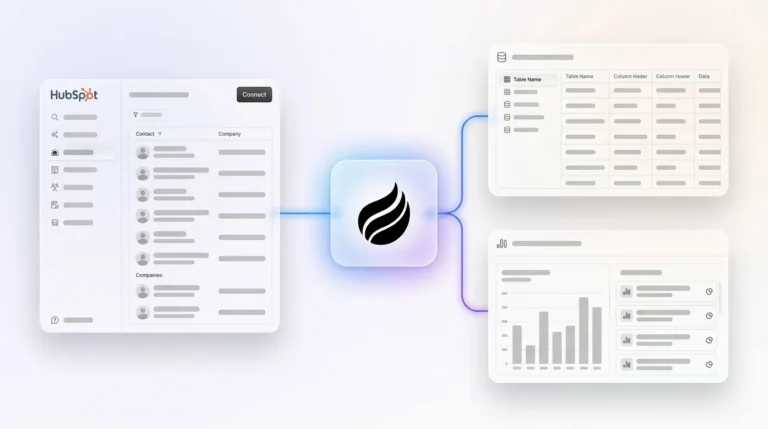
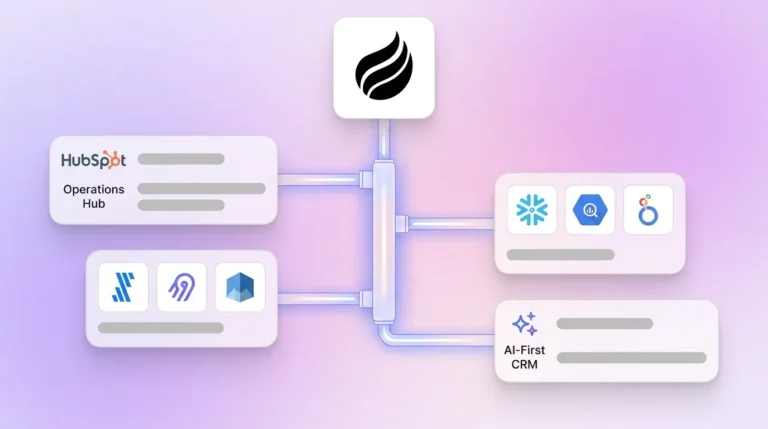
Coffee Companion App follows this architecture. Its AI Meeting Bot joins calls, generates summaries structured to BANT, MEDDIC, or SPICED, and writes them back to Salesforce or HubSpot using customizable templates released in November 2025. In February 2026, Coffee added an Intelligence layer that stores deep context on business model, ICP, and competitors to tailor AI suggestions per account, which previously required a separate Gong contract for many teams.

See how Coffee’s agent-native approach compares and replace your fragmented CI stack with an agent that writes directly to your existing Salesforce or HubSpot instance.
Best-Fit Use Cases by Platform
The following scenarios map each platform to the team profile and primary use case where it delivers the strongest return on investment:
- Gong: Enterprise teams with more than 200 reps, dedicated RevOps admins to manage the integration, budget for Enterprise contracts, and a primary use case of manager-led coaching workflows.
- Avoma: Mid-market teams running 20–100 calls per week that need structured MEDDIC write-back without Gong’s price point and are willing to manage a separate vendor relationship.
- Fireflies: Small teams whose primary need is call recording and basic notes logging, not structured field population.
- Clari Copilot: Teams whose primary CI use case is forecast accuracy and deal risk scoring rather than coaching or write-back depth.
- Coffee Companion App: Mid-market teams on Salesforce or HubSpot that want Gong-level structured write-back without a separate CI seat, and whose RevOps leader wants to consolidate recording, note-taking, enrichment, and pipeline intelligence into one agent.
Operational Considerations for HubSpot–Salesforce CI Integrations
Operational constraints in HubSpot and Salesforce integrations affect every CI tool that writes back through them. Syncing contacts between HubSpot and Salesforce consumes API calls, and exceeding the daily API-call allocation suspends the integration, causing write actions to queue or retry. Any CI tool that routes write-backs through the native HubSpot-Salesforce connector inherits these limits.
Field mapping problems recur whenever Salesforce admins convert field types, rename API names, delete fields, or add validation rules after the initial integration configuration, which breaks previously working mappings without notification. Poor synchronization between HubSpot and Salesforce then leads to fragmented customer data and lost revenue. Teams evaluating CI integrations should audit Salesforce validation rules, field-level security settings, and API quota headroom before deployment to avoid these issues.
Risks and Misconceptions in CI Evaluations
Three risks are consistently underweighted in CI evaluations:
- Transcription accuracy on named entities: Studies show that speech-to-text models can have significantly higher error rates on named entities such as person names and organization names, which are the exact fields CI tools write back to CRM Contact and Account records. Independent benchmarking shows real-world word error rates of 8–12% for Whisper-based transcription on meeting audio, versus vendor claims that do not disclose word error rates.
- AI hallucination in action items: AI-generated action items can hallucinate in some cases, including false attribution, temporal smoothing of hedged statements into firm dates, and consensus fabrication.
- Consent and compliance: Thirteen US states require all-party consent for call recording, including California, Connecticut, Delaware, Florida, Illinois, Maryland, Massachusetts, Montana, Nevada, New Hampshire, Oregon, Pennsylvania, and Washington. GDPR requires documented legitimate-interest balancing tests. Teams deploying CI tools must configure consent disclosures before recording begins, not after.
Six-Step Decision Framework for Selecting a CI Tool
Use this checklist to prioritize evaluation criteria before issuing an RFP or starting a trial:
- Map every CRM field your forecasting model depends on, and confirm the CI tool writes to each field automatically, not just to Activity Notes.
- Audit your Salesforce API quota and HubSpot sync cycle frequency, and confirm the CI tool’s write-back latency matches your pipeline review cadence.
- Count the number of vendor contracts the CI tool adds to your stack, and calculate fully-loaded TCO using the cost breakdown established earlier.
- Verify consent disclosure configuration for every state and country where your reps record calls.
- Test write-back against your actual Salesforce validation rules and field-level security settings in a sandbox before committing to a contract.
- Confirm whether the tool scores deals against your qualification framework or only extracts free-text summaries.
Coffee Companion App passes each checkpoint by design through the qualification framework mapping and agent-native architecture described earlier. It authenticates directly to Salesforce or HubSpot, removes the separate CI vendor contract, and centralizes structured notes in mapped CRM fields. Call recording expanded in January 2026 to include Zapier-based ingestion from Fathom, Gong, Fireflies, and a Desktop app for MacOS, Windows, and Linux, so teams migrating from existing CI tools can route recordings through Coffee without losing historical data continuity.
Review Coffee’s plans and consolidate your CI, enrichment, and pipeline intelligence into one agent that works inside your existing CRM.
Frequently Asked Questions
How long does it take to implement Coffee Companion App on an existing Salesforce or HubSpot instance?
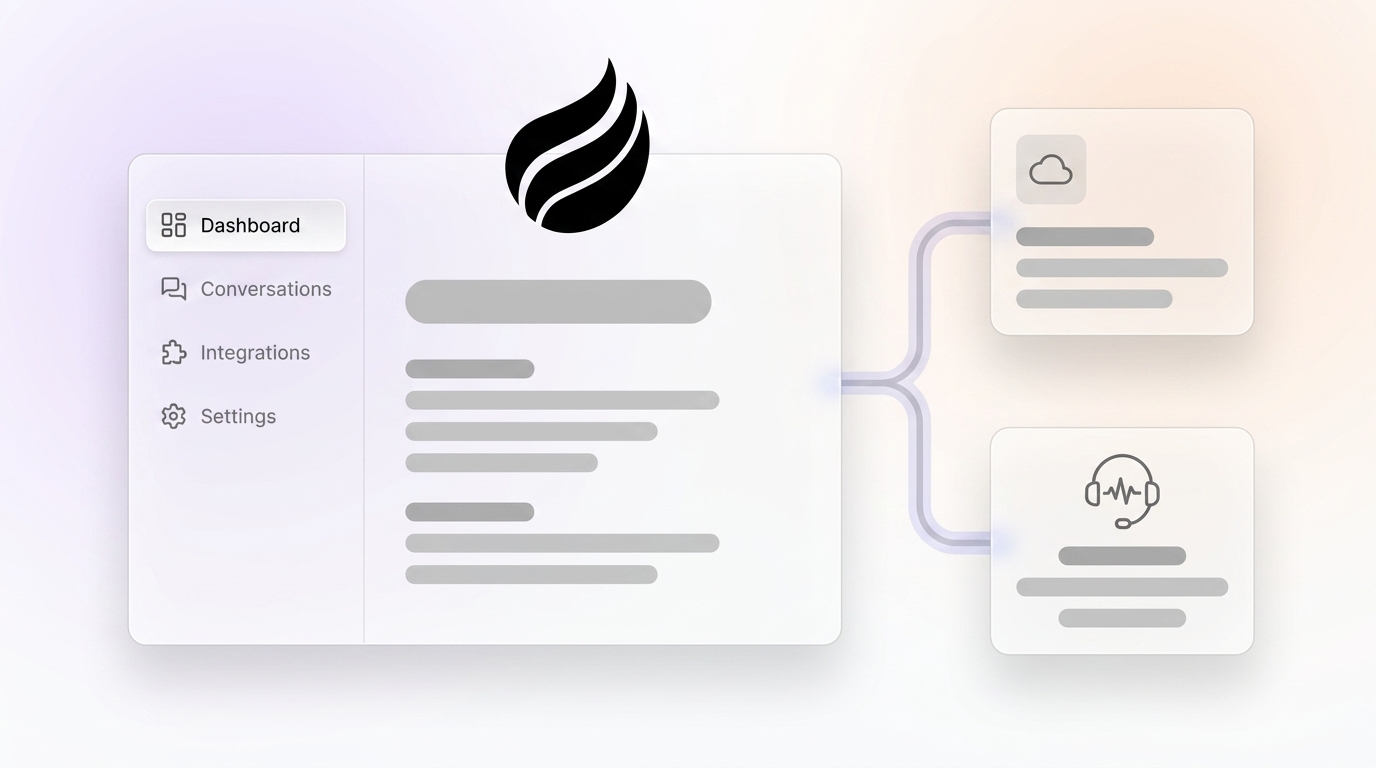
Implementation requires a single authentication step that connects the Coffee Agent to your existing Salesforce or HubSpot account. Once authenticated, the agent begins syncing contacts, logging activities, and writing call summaries to mapped CRM fields without a Salesforce admin project or custom development work. Most teams are operational within the same day. Custom summary templates and qualification framework mappings can be configured after the initial connection is live.
How does Coffee handle CRM write-back differently from tools like Gong or Fireflies?
Gong and Fireflies operate as standalone platforms that push data to your CRM via API after a call ends, which introduces a separate vendor contract, API quota consumption, and ongoing mapping maintenance. Coffee Companion App functions as an agent-native layer that sits directly on top of your Salesforce or HubSpot instance. The agent captures calls, extracts structured deal signals, and writes them to CRM fields as part of a single workflow, without routing through a third-party integration layer. This approach avoids much of the field-mapping drift, validation rule conflicts, and API quota risks that affect bolt-on CI tools.

What happens to CRM data quality if transcription accuracy is imperfect?
Transcription errors affect named entity fields most severely, because person names and organization names carry the highest word error rates in current speech-to-text models. Coffee addresses this through its Intelligence layer, which stores verified context on your ICP, known contacts, and competitors to improve entity recognition accuracy on your specific calls. Summary templates are fully customizable and can be reviewed before writing to CRM fields, which gives reps a confirmation step for high-stakes Opportunity updates without requiring manual data entry for routine activity logging.
Is Coffee Companion App secure enough for mid-market sales data?
Coffee is SOC 2 Type 2 and GDPR compliant. Call recordings and transcripts are not used to train public AI models. For teams operating in all-party consent states such as California, Illinois, or Florida, Coffee’s meeting bot displays a disclosure to all participants before recording begins, which satisfies state wiretapping statutes. Data residency and retention policies are configurable at the account level.
Can Coffee replace a fragmented stack that currently includes separate tools for recording, enrichment, and pipeline forecasting?
For most mid-market teams on Salesforce or HubSpot, Coffee can replace that fragmented stack. Coffee Companion App handles call recording and transcription, structured note extraction against sales qualification frameworks, contact and company enrichment, activity logging, and pipeline intelligence through its Pipeline Compare feature, all within a single agent that writes directly to your existing CRM. Teams currently paying separately for a CI tool, an enrichment database, and a pipeline analytics add-on can consolidate those functions into one Coffee seat and reduce integration debt and duplicate data problems.
Compare Coffee to your current stack and see how an agent-native approach to conversation intelligence delivers better CRM write-back.