Written by: Doug Camplejohn, CEO & Co-Founder, Coffee
Key Takeaways for US B2B Sales Teams
- US B2B sales reps spend 71% of their time on manual data entry, leaving only 35% for selling. Automated tools remove this drag on productivity.
- Coffee leads as a top agent-style CRM, saving 8-12 hours per rep weekly through autonomous data automation and deep CRM integration.
- Salesforce Agentforce fits enterprises, HubSpot fits SMBs, Apollo supports prospecting, and ZoomInfo powers intent data and enrichment.
- Key evaluation criteria include automation depth, US compliance (SOC2/GDPR/CCPA), integrations, ROI with 8-12 hours weekly savings, and scalability.
- Teams ready to automate their sales pipeline can start automating with Coffee and move beyond legacy CRM busywork.
How We Evaluated Automated Sales Pipeline Tools
Our assessment framework prioritizes six key factors for US B2B teams.
- Automation Depth: AI-powered data entry, meeting orchestration, and pipeline intelligence capabilities.
- US B2B Fit: Pricing between $50-200/user/month with SOC2, GDPR, and CCPA compliance.
- Integration Ecosystem: Native connections to Salesforce, HubSpot, and essential sales tools.
- ROI Metrics: Documented time savings of 8-12 hours per rep weekly.
- Scalability: Support for SMB to mid-market teams with 10-200 representatives.
- User Experience: Adoption rates and ease of implementation.
These criteria guide every recommendation in the tool breakdown that follows.
The 10 Best Automated Sales Pipeline Tools
1. Coffee: Best Agent CRM for Data Automation
Coffee leads the market as the world's first true CRM agent, built to solve the manual data entry problem that consumes the majority of rep time. Unlike passive legacy systems, Coffee functions as an autonomous agent that keeps data accurate and complete through intelligent automation.

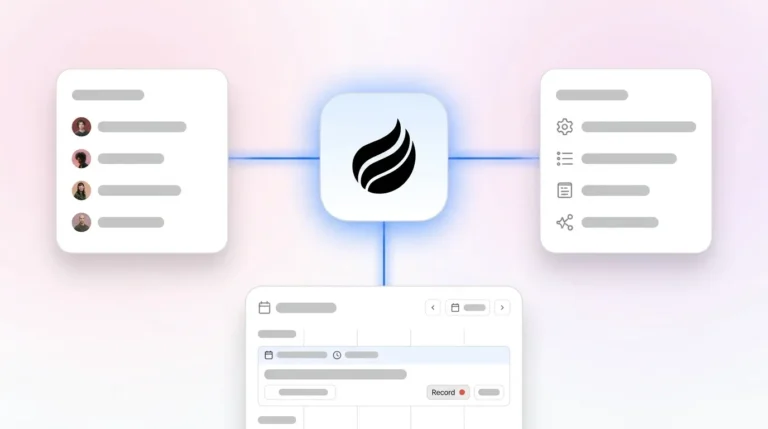
The platform offers two deployment models. Small teams can use a standalone AI-first CRM. Larger teams can run Coffee as a companion app that enhances existing Salesforce or HubSpot installations.
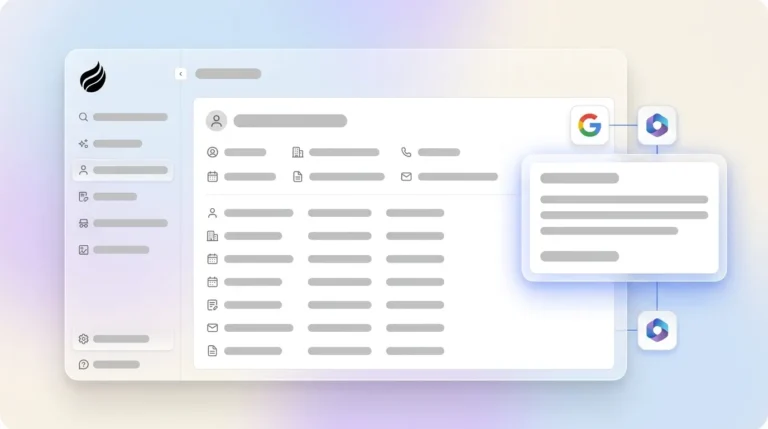
Coffee's agent automatically creates contacts and companies from email and calendar data. It enriches records with job titles and funding information and logs all activities without human intervention.

Key features include AI-powered meeting briefings and custom summaries, pipeline compare views that show week-over-week changes, and natural language list building for targeted prospecting. Recent integrations with QuickBooks and Stripe automate invoice syncing and payment tracking.

Pros: Saves 8-12 hours per rep weekly, SOC2 compliant, works as standalone or companion to existing CRMs, built-in data warehouse preserves historical context.
Cons: Some tools connect through Zapier, newer platform with an evolving feature set.
Best For: SMB to mid-market B2B teams that want to remove manual CRM work across the entire pipeline.

2. Salesforce Agentforce: Enterprise AI Platform
Salesforce Agentforce extends the world's largest CRM platform into AI-driven automation for complex enterprises. Many sales professionals focus on data cleansing to maximize AI returns, so Agentforce's automated data hygiene capabilities matter for large teams.
The platform uses Einstein AI for lead scoring, opportunity insights, and forecasting while keeping Salesforce's extensive integration ecosystem. Agentforce automates routine tasks like data entry and provides real-time analytics dashboards for pipeline management.
Pros: Mature platform with extensive integrations, enterprise-grade security, comprehensive feature set.
Cons: Complex implementation, high total cost of ownership, requires significant customization.
Best For: Large enterprises with complex sales processes and dedicated Salesforce administrators.
3. HubSpot Sales Hub: SMB All-in-One Solution
HubSpot Sales Hub combines CRM, marketing automation, and sales tools in one platform for small to medium businesses. The system offers AI-powered insights, automated email sequences, and deal scoring to streamline sales processes.
Recent updates include stronger forecasting capabilities and improved mobile CRM functionality. Sixty-five percent of salespeople using mobile CRM meet quotas compared to 22% without, which underscores the value of HubSpot's mobile-first approach.
Pros: Intuitive interface, strong marketing integration, generous free tier.
Cons: Limited customization options, can become expensive at scale, basic automation compared to agent-style solutions.
Best For: Small businesses that want an integrated marketing and sales platform.
4. Apollo: Prospecting and Outreach Automation
Apollo specializes in B2B prospecting with a database of over 230 million contacts and 30 million companies. The platform automates lead generation, email sequences, and CRM synchronization to streamline outbound sales.
Apollo's AI features include lead scoring, email optimization, and conversation intelligence. The platform integrates with major CRMs and provides detailed analytics on outreach performance and pipeline conversion rates.
Pros: Extensive contact database, strong prospecting tools, competitive pricing.
Cons: Limited CRM functionality, data quality varies by region, requires manual sequence management.
Best For: Sales teams focused on outbound prospecting and lead generation.
5. ZoomInfo: Intent Data and Enrichment
ZoomInfo provides comprehensive B2B data and intent signals that support automated prospecting and account prioritization. The platform tracks billions of online research activities and technology installation changes to surface in-market accounts.
ZoomInfo Copilot acts as an AI assistant that analyzes signals and recommends next actions for sales representatives. The platform offers native CRM integrations with bi-directional sync for Salesforce, HubSpot, and Microsoft Dynamics.
Pros: High-quality B2B data, powerful intent signals, strong enterprise compliance.
Cons: Expensive for smaller teams, complex interface, requires training for effective use.
Best For: Mid-market to enterprise teams that need deep B2B data and intent insights.
Data enrichment and intent signals help teams find opportunities. The remaining tools in this list focus more on what happens after you identify those prospects, from revenue forecasting to conversation intelligence. See how Coffee's agent supports your entire workflow by automating both prospecting inputs and post-contact CRM work.

6. Clari: Revenue Intelligence Platform
Clari focuses on revenue forecasting and pipeline management through AI-powered analytics. The platform uses machine learning to analyze CRM data and activity patterns and improves forecast accuracy compared to manual methods.
Clari automates pipeline inspection, flags at-risk deals, and provides real-time revenue insights. The platform integrates with major CRMs and communication tools to capture comprehensive sales activity data.
Pros: Advanced forecasting capabilities, comprehensive pipeline analytics, strong enterprise features.
Cons: High price point, complex setup, limited prospecting functionality.
Best For: Revenue operations teams that require advanced forecasting and pipeline analytics.
7. Gong: Conversational Intelligence
Gong captures and analyzes sales conversations across calls, emails, and meetings to deliver actionable insights and coaching recommendations. The platform automatically logs activities in CRM and identifies deal risks through conversation analysis.
Gong's AI reviews talk time, sentiment, and competitive mentions to help sales teams improve performance. The platform sends automated alerts for at-risk opportunities and surfaces coaching insights based on successful deal patterns.
Pros: Deep conversation analytics, automated activity logging, strong coaching features.
Cons: Limited CRM functionality, high cost, requires call recording compliance.
Best For: Sales teams that want conversation intelligence and coaching insights.
8. Outreach: Sales Engagement Platform
Outreach automates multi-channel sales sequences across email, phone, and social media. The platform provides workflow automation, A/B testing, and detailed performance analytics to improve outbound sales efforts.
Recent updates include AI agents that automate outreach tasks and provide data-driven insights. Outreach integrates with major CRMs and offers extensive customization options for complex sales processes.
Pros: Comprehensive sequence automation, strong analytics, extensive integrations.
Cons: Complex interface, expensive for smaller teams, requires significant setup.
Best For: Enterprise sales teams with complex, multi-touch outbound processes.
9. Clay: Personalization and Data Enrichment
Clay focuses on automated data enrichment and personalized outreach at scale. The platform combines multiple data sources to create detailed prospect profiles and generates personalized messaging with AI.
Clay's workflow automation handles lead research, data validation, and personalized content creation. The platform integrates with popular CRMs and outreach tools to streamline the full prospecting workflow.
Pros: Powerful data enrichment, AI-powered personalization, flexible workflow builder.
Cons: Steep learning curve, limited CRM functionality, can be expensive at scale.
Best For: Sales teams that run highly personalized outbound campaigns with extensive data enrichment.
10. Fathom: Meeting Intelligence Alternative
Fathom provides AI-powered meeting recording, transcription, and summary generation as a lower-cost alternative to enterprise conversation intelligence platforms. The tool automatically joins calls and creates detailed summaries with action items.
Fathom integrates with major CRMs to log meeting notes and follow-up tasks automatically. The platform offers competitive pricing and simple setup compared to larger conversation intelligence solutions.
Pros: Affordable pricing, easy setup, strong meeting summarization.
Cons: Limited analytics, basic CRM integration, fewer advanced features.
Best For: Small to medium teams that want basic meeting intelligence without enterprise complexity.
Top 5 Tools: Quick Comparison Matrix
The comparison below highlights how the top five tools differ in automation style, pricing, integrations, and time savings so you can match them to your team's needs.
| Tool | Automation Level | US Pricing (/user/mo) | Key Integrations | Time Savings (hrs/week) |
|---|---|---|---|---|
| Coffee | Agentic (full automation) | Contact for pricing | Salesforce, HubSpot, QuickBooks, Stripe | 8-12 hours |
| Salesforce Agentforce | AI-assisted | $125 add-ons | Native Salesforce ecosystem | Varies |
| HubSpot Sales Hub | Workflow automation | $15-150 | HubSpot ecosystem, Zapier | Varies |
| Apollo | Sequence automation | $49-79 | Salesforce, HubSpot, Pipedrive | Varies |
| Clari | Analytics automation | Contact for pricing | Salesforce, Microsoft Dynamics | 2-3 |
2026 AI Trends and Simple ROI Calculator
AI agents continue to spread across B2B sales teams, with 45% of B2B suppliers using AI in sales processes. Many organizations now run multiple AI tools across their stack, and agent-style platforms like Coffee represent the next step beyond basic workflow automation.
A simple ROI model shows the impact. Ten sales reps saving 10 hours weekly at a $100 hourly rate create about $52,000 in annual savings per team. McKinsey research shows automation can return 15-20% of selling time to representatives, which directly improves pipeline velocity and quota attainment.
Calculate your team's ROI with Coffee by mapping those time savings to your current headcount and deal values.
Best-Fit Use Cases and Implementation Guidance
Small businesses with 1-50 employees see strong results from Coffee's standalone CRM or HubSpot's all-in-one platform. Mid-market teams with 50-200 reps often use Coffee as a companion to existing Salesforce installations or adopt Clari for advanced revenue intelligence.
Common implementation concerns include integration complexity, data security, and user adoption. Coffee addresses integration complexity through simple authentication that connects to existing tools in minutes. For data security, the platform maintains SOC2 compliance with enterprise-grade protection. To drive user adoption, Coffee's agent-based workflows remove the manual data entry that causes traditional CRM friction.
Security requirements for US B2B teams typically include SOC2 compliance, and leading platforms provide enterprise-grade data protection to meet those standards.
Frequently Asked Questions
What are the best automated sales pipeline tools for US B2B teams in 2026?
Coffee leads as a top agent-style CRM solution, followed by Salesforce Agentforce for enterprise teams, HubSpot for SMB all-in-one needs, Apollo for prospecting automation, and ZoomInfo for intent data and enrichment. These tools address the core problem of manual data entry that consumes most sales rep time.
How does Coffee compare to HubSpot for sales automation?
Coffee operates as an autonomous agent that removes manual data entry, while HubSpot still relies on human input for CRM maintenance. Coffee saves 8-12 hours per rep weekly through intelligent automation, compared to HubSpot's more traditional workflow automation. Coffee works as both a standalone CRM and a companion to existing systems, which gives teams more flexibility than HubSpot's all-in-one approach.
What advantages does Coffee offer over Salesforce?
Coffee addresses Salesforce's core reliance on manual data entry by deploying an intelligent agent for complete automation. Salesforce carries 25 years of legacy architecture, while Coffee was built for the AI era with a modern data warehouse that preserves historical context. Coffee also reduces the need for expensive Salesforce customizations and lowers total cost of ownership.
Which tool works best as a Salesforce companion?
Coffee excels as a Salesforce companion through its agent-based approach that automatically enriches and maintains Salesforce data quality. The Coffee agent handles data entry, meeting orchestration, and pipeline intelligence while Salesforce remains the system of record. This combination removes the manual work that often causes low Salesforce adoption rates.
What US compliance standards do these tools meet?
Leading automated sales pipeline tools maintain SOC2 compliance for US B2B teams, and many platforms offer broader enterprise security standards. Coffee also ensures customer data is not used to train public AI models, which protects sensitive sales information and supports strict privacy requirements.
Conclusion: Moving From Static CRMs to Active Agents
Automated sales pipeline tools for US B2B teams in 2026 must remove the manual data entry that wastes most representative time. Coffee leads this shift as a true CRM agent, delivering 8-12 hours of weekly savings through intelligent automation that keeps data accurate and actionable.
The move from passive databases to active agents defines the future of sales technology. Legacy systems like Salesforce and HubSpot still require human maintenance, while agent-style platforms such as Coffee handle busywork automatically so sales teams can focus on relationships and revenue.
Experience agent-led CRM with Coffee and bring automated pipeline management into your daily workflow.