Written by: Doug Camplejohn, CEO & Co-Founder, Coffee | Last updated: September 13, 2026
Key Takeaways
- Sales teams can reclaim 30–50% of non-selling time by automating CRM data entry, protecting prime selling hours, and filtering unqualified leads before they reach reps.
- A two-week time audit across five categories provides the baseline needed to measure real improvement and justify automation investments.
- Every non-selling task should be routed to a named destination: automation, sales ops, deal desk, or an assistant. Shared inboxes are not a destination.
- Automated activity capture from email, calendar, and calls eliminates the 25–75 minutes of daily manual data entry that breaks rep focus.
- Teams ready to run this plan can automate the admin layer with Coffee and keep recovered hours focused on selling.
Phase 1: Measure Where Selling Hours Actually Go
A two-week time audit baselines where selling hours actually go. Each rep logs time in 15-minute increments across five categories: CRM entry, internal meetings, research and list-building, scheduling, and proposal and admin work. The business owner owns the audit and reviews results before any tool or process change.
The five categories map directly to the largest documented time sinks. The 70–72% of a rep's week not spent selling breaks down into CRM updates and data entry averaging 22 minutes per deal interaction, email and calendar coordination consuming 15–20% of the week, manual account research running 30–90 minutes per meeting, and internal reporting and pipeline reviews. Logging in 15-minute increments forces precision. Reps cannot round a 45-minute CRM session to "a few minutes" when they track in quarter-hour blocks.
In Phase 1 (Weeks 1–2) of the AI-Powered Small Business playbook, the two-week time audit is owned by the business owner, who must know precisely where hours are lost before any tool is installed. Two weeks is the minimum required to capture a full operating cycle. That window includes pipeline reviews, forecast calls, and recurring internal meetings without distorting the baseline around an atypical week.
The common mistake is skipping the baseline and jumping straight to tool changes. Without a measured starting point, leaders cannot prove improvement to the board or defend the investment at the next budget review.
Phase 2: Triage Every Non-Selling Task
Every non-selling task gets routed to one of four destinations: automation, sales ops, deal desk, or an assistant. The decision rule is simple. If the task requires a salesperson's judgment about a customer or deal, keep it. If it is data movement, formatting, scheduling, or research, route it away. Triage should be owned by a single accountable person, with RevOps support.
With the five categories measured in Phase 1, you can now apply the decision rule to each one. The result is a concrete routing map:
- CRM entry → automation (activity capture agent)
- Meeting scheduling → automation (scheduling link) or assistant
- Proposal formatting → deal desk or sales ops template
- List-building and research → automation or sales ops
- Deal-desk approval → deal desk with a defined SLA
Triage with a named destination actually removes work. When “route to sales ops” means a shared inbox with no owner and no SLA, reps pick the task back up themselves within 48 hours.
Phase 3: Automate CRM Data Entry And Activity Capture
Automated activity capture replaces manual CRM data entry by logging email, calendar, and call activity directly to the right records. Contact and company records are created and enriched automatically, and meetings are transcribed and summarized. This is the single largest automatable bucket and the fastest path to reclaiming selling hours.
Manual CRM data entry forces a context switch after every interaction. Reps end a call, open the CRM, locate the record, type notes, update the stage, and create a follow-up task. Activity logging takes 3 to 5 minutes manually per activity and occurs 8 to 15 times per rep per day, producing 25 to 75 minutes of lost selling time daily. Automated activity capture removes that loop. The system reads email threads, calendar events, and call transcripts, then writes structured data to the correct records without rep input.
The Coffee Agent is the recommended solution for this phase. Coffee connects to Google Workspace or Microsoft 365. It then creates contacts and companies from email and calendar activity, enriches records with job titles, funding data, and LinkedIn profiles, and logs last and next activity autonomously. Deal state stays current without rep input. Coffee's AI Meeting Bot joins Zoom, Teams, and Google Meet calls to record and transcribe. It then drafts post-call summaries, next steps, and follow-up emails for rep review.

Coffee works as a standalone AI-first CRM for small teams or as a Companion App layered on top of an existing Salesforce or HubSpot instance. The team keeps its system of record and still deploys the agent. According to Coffee's own data, the Coffee Agent saves reps 8–12 hours per week.
The automation categories that matter most in this phase are activity capture from email and calendar, meeting transcription and summarization, contact and company auto-creation, and data enrichment. Each category removes a discrete manual step. Together they remove most of the CRM data-entry burden.

The common mistake is automating only one data source and leaving the rest manual. A rep whose calls are transcribed but whose emails still require manual logging has a half-trusted CRM and a half-removed admin burden. The board cannot see that gap from the pipeline report.
Let the Coffee Agent handle data entry from day one.
Phase 4: Protect Selling Time With Calendar Blocking
Protect selling time by reserving prime selling windows, mid-morning and early afternoon, exclusively for customer outreach. Audit every recurring internal meeting and make each one earn its place by requiring a clear purpose, a fixed agenda, and a decision or outcome. The Head of Sales or another senior leader should own the calendar policy.
Prime selling windows are mid-morning and early afternoon, when prospects are most reachable. The mid-morning window of 10:00 AM to 11:30 AM is the strongest connect block across multiple datasets, with Wednesday at 10:00 AM outperforming every other weekly slot by 16% according to Salesloft analysis. Internal meetings scheduled inside that window directly tax pipeline.
A single accountable leader should own the calendar policy, because someone has to defend the protected windows when other teams request time. That leader's first job is the meeting audit. Apply a single test to each recurring internal meeting: does it require a salesperson's judgment about a customer or deal, or is it a status update a dashboard could replace? Meetings that fail the test get cancelled or converted to async. The ones that survive earn a written agenda, a defined outcome, and a fixed end time.

Meeting bloat is the failure mode of reclaiming hours without defending them. Without a calendar policy or attention boundary, newly freed time refills with digital noise and coordination overhead, with the first few weeks producing only modest, measurable changes.
Phase 5: Filter Lead And Opportunity Quality Before Reps Spend Time
Filter non-ICP prospects before they reach reps by tightening the ideal customer profile, using buyer personas to score inbound interest, and routing inbound to the right owner. Unqualified prospects consume selling time in discovery calls that never convert. Front-end qualification protects rep calendars for serious buyers.
A discovery call with a non-ICP prospect typically costs a rep 15–45 minutes of prime selling time and produces zero pipeline. For a VC partner, a 45-minute off-thesis call represents a hard-floor opportunity cost of about $750. Tightening the ICP means defining the firmographic and behavioral criteria that predict a real buying conversation, then using those criteria to score inbound interest before it reaches the rep's calendar.
Coffee's Visitor Identification feature turns anonymous website traffic into named, qualified prospects. A single tracking pixel identifies visitors by name, title, email, and LinkedIn profile, alongside the company they belong to, the pages they visited, and whether it was a first or returning visit. Coffee's Suggested Leads feature goes further. Where other visitor identification tools surface a company or a raw list of people, Coffee uses the buyer persona to recommend which two or three humans inside a visiting company to contact and surfaces their LinkedIn profiles for immediate outreach. This turns anonymous traffic into a pre-qualified, prioritized list without any rep research time.

Phase 6: Decide What To Do With The Hours You Recover
Recovered time must be pre-assigned to prospecting or customer conversations before it is reclaimed. A sales manager or similar leader should own the assignment. A clear destination rule keeps admin cuts from refilling the calendar with internal noise. Track customer-facing hours per rep, pipeline created per rep, and revenue per selling hour on a dashboard.
The destination rule is what makes the admin cuts stick. If recovered hours are not pre-assigned, they refill with internal noise. Before any automation goes live, the owner assigns each recovered hour to a specific activity such as outbound prospecting, discovery calls, or customer pipeline review. The assignment is written into the rep's calendar as a protected block. Open time is not a destination.
The dashboard that validates the assignment covers three metrics:
- Customer-facing hours per rep per week as the primary leading indicator, measured from calendar data and call logs
- Pipeline created per rep per month as the output metric that confirms recovered hours are reaching prospects
- Revenue per selling hour as the efficiency metric that connects time investment to closed revenue
An Alexander Group study of over 130 salespeople found an average 6-percentage-point increase in quota attainment for every 10-percentage-point increase in engaged selling time. That relationship holds when recovered hours are assigned to customer-facing work and not left to drift into unstructured calendar space.
Phase 7: Validate That The Plan Is Working
Validation ties every check back to the two-week baseline from Phase 1. The metrics to track are:
- Field completeness on active deals should climb toward 100% without manual reminders once activity capture is live. If completeness stays flat, the automation is likely not mapped to the fields the team actually relies on.
- Self-reported CRM admin time per rep should fall week over week from the baseline. A flat or rising figure indicates the automation is not covering the full data-entry loop.
- Customer-facing hours per rep per week as the primary output of the calendar-blocking phase. Compare against the baseline to confirm recovered hours are reaching customers, not internal meetings.
- Pipeline created per rep per month as the downstream confirmation that customer-facing hours are producing qualified opportunities.
- Workflow completion signals that verify automated sequences pause on reply, enrichment writes to the correct fields, and meeting summaries appear on the right CRM records within minutes of call end.
- User adoption measured through login frequency and feature usage. Low adoption is the most common failure mode for any automation rollout, and it surfaces within the first 30 days if the tool adds friction instead of removing it.
The 30-day checkpoint is the first formal review. At that point, compare field completeness, admin time, and customer-facing hours against the baseline. If the gap has not closed by at least 30%, identify which phase of the plan is not holding, such as triage routing, calendar policy, or automation coverage, and address the root cause before the next quarter begins.
Where Time Actually Goes By Role: SDR, AE, And Field Sales
The triage map in Phase 2 assumed a uniform time-sink profile, but the reality differs sharply by role. Before you finalize routing, check where your specific roles lose their hours.
SDRs lose the largest share of their day to research and list-building. SDRs spend 40–60% of their time on research and list building, 20–25% on outreach execution, 10–15% on CRM data entry and admin, and 10–15% on meetings and qualification calls. The highest-leverage automation for SDRs is ICP-matched account discovery and contact verification, which collapses the research block from hours to minutes and redirects that time to live conversations.

AEs lose the most time to CRM entry and internal meetings. The average account executive spends over 70% of their time on non-selling activities, including CRM updates, meeting prep, content assembly, email drafting, and administrative follow-ups. For AEs, automated activity capture and meeting summarization are the primary levers. These tools eliminate the post-call logging loop that consumes 10–15 minutes after every customer interaction.
Field sales reps carry the additional burden of scheduling and travel coordination on top of the standard admin load. Field reps face the same non-selling burdens as other sellers, such as manual CRM updates, meeting prep, and follow-up drafting, but additionally lose time to proposal and RFP work and forecasting support, which are especially heavy for field roles managing complex deals and territory accounts. For field reps, scheduling automation and mobile-first CRM capture are the highest-priority fixes.
The Frameworks That Guide Protected Selling Time
Three established sales frameworks help decide how to spend the hours you recover and how to coach reps inside those blocks.
The 70/30 Rule In Sales Conversations
The 70/30 rule in sales states that during a sales conversation the prospect should talk about 70% of the time and the salesperson about 30%. It serves as a discovery-call coaching benchmark and protects selling time by keeping conversations focused on buyer needs instead of monologues. The rule is commonly associated with the Sandler Sales methodology and is best understood as a coaching principle that encourages salespeople to ask better questions and listen for what matters.
The 2-2-2 Rule For Multithreading Deals
The 2-2-2 rule in sales defines a minimum multithreading cadence. Reps contact two stakeholders, at least twice each, across two different channels before considering a thread active. This pattern protects selling time by avoiding single-threaded deals that stall and consume disproportionate hours late in the cycle. Deals that engage five or more stakeholders close at roughly 30%, compared to about 5% for single-threaded deals, a six-fold gap that makes multithreading one of the highest-return uses of recovered selling hours.
The 30-60-90 Plan For Sales Team Leaders
A 30-60-90 plan for a sales team leader splits the first three months into three phases. Days 1–30 focus on auditing current time allocation and designing the target operating rhythm. Days 31–60 focus on piloting new rituals with one pod. Days 61–90 focus on standardizing across the team. In the first 30 days, leaders audit existing meetings, metrics, and cadences, interview reps and managers, and build a to-be blueprint with leadership sign-off. The operating plan in this article maps directly to that first phase.
How To Adapt The Plan To Different Team Sizes And CRM Maturity
The seven-phase sequence applies across team sizes and CRM configurations, but the implementation details change.
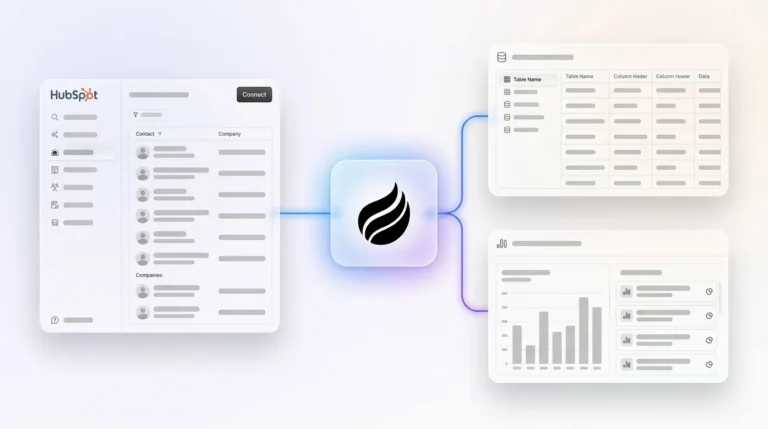
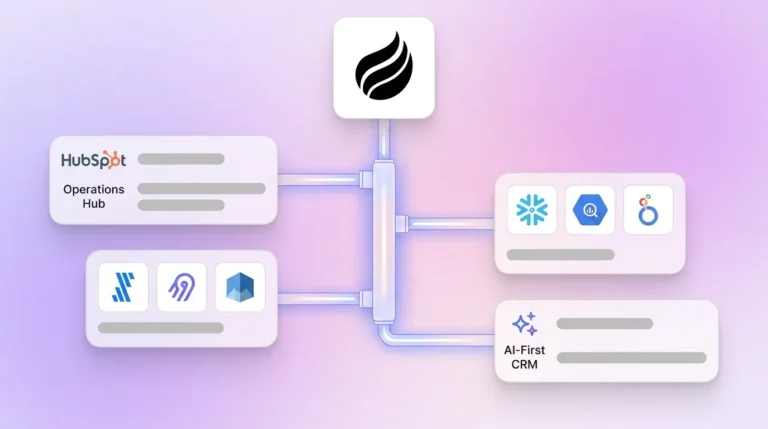
Teams on Salesforce or HubSpot deploy Coffee as a Companion App. The Coffee Agent connects to the existing instance, handles the data-in process such as activity capture, contact creation, enrichment, and meeting summarization, and writes back to Salesforce or HubSpot fields without requiring a CRM migration. The system of record stays intact while the agent removes the manual labor that kept it inaccurate.
Teams replacing their CRM or running on spreadsheets deploy Coffee as a standalone AI-first CRM. The agent manages the system of record from day one, so there is no legacy data-entry habit to break. The operating model is agent-led from the start.
Teams under 10 reps should compress the audit phase to one week and focus Phase 2 triage on the two or three highest-volume time sinks instead of all five categories. The calendar-blocking policy in Phase 4 is especially high-leverage for small teams, where a single recurring internal meeting can consume a meaningful share of total selling capacity.
Teams of 25–50 reps should run the pilot in Phase 6 with one pod before standardizing. Piloting with one region or pod for four full weeks, then running a mid-pilot retrospective at day 45, provides the evidence base needed before standardizing across the team.
As the team grows, the dashboard in Phase 6 becomes the governance mechanism. Revenue per selling hour and pipeline created per rep are the metrics that scale. They remain meaningful whether the team has 5 reps or 50 and connect the time-management operating plan directly to the board metrics that matter.
Frequently Asked Questions
How Much Time Do Sales Reps Actually Spend Selling?
As the Phase 1 baseline showed, roughly 70% of the week goes to non-selling work. Salesforce's State of Sales research puts the direct-selling share at 28–30%. Salesforce's 2024 State of Sales report, drawn from a double-anonymous survey of 5,500 sales professionals across 27 countries, confirmed that the 30% figure has remained essentially unchanged since the 2022 edition, indicating stagnant productivity despite rapid technological advancement. McKinsey's 2023 research on B2B sales automation corroborates the same 28–30% range across enterprise sales teams. Forrester's analysis adds a performance dimension: organizations with above 90% quota attainment see reps spending about 34% of their time actively selling, compared to 23% at lower-performing organizations, an 11-point gap that tracks directly with revenue outcomes.
How Do I Automate CRM Data Entry?
Automated CRM data entry connects the CRM to the communication channels where sales activity actually happens and writes structured data to the correct records without rep input. The implementation sequence has four steps. First, enable native email and calendar sync so meetings and email threads appear on contact and deal records automatically. Second, deploy an AI call-capture tool that joins calls, transcribes them, and pushes structured fields back to the CRM within minutes. Third, activate automated contact and company creation so new people in email threads or on calls generate records without manual entry. Fourth, enable data enrichment to populate job titles, company size, and contact details on record creation.
The Coffee Agent handles all four steps upon connecting to Google Workspace or Microsoft 365. It auto-creates contacts and companies from email and calendar, enriches records via licensed data partners, logs last and next activity autonomously, joins calls to record and transcribe, and drafts post-call summaries and follow-up emails for rep review. Coffee works as a standalone CRM or as a Companion App on top of Salesforce or HubSpot, so no CRM migration is required.
How Do I Reduce Tool Switching For Sales Reps?
Tool switching is one of the largest hidden time sinks in a sales team's day. The average seller uses roughly 8–10 different tools to close a single deal, depending on the source, and sellers overwhelmed by their tech stack are significantly less likely to hit quota. The fix is consolidation. Identify which tools perform overlapping functions and replace them with a single agent that covers the full workflow.
The Coffee Agent consolidates the jobs of multiple point solutions, including CRM, data enrichment, prospecting database, call recording, meeting summarization, email sequencing, and visitor identification, into one system. For teams committed to Salesforce or HubSpot, Coffee's Companion App model adds the agent layer without requiring reps to leave their existing system of record. The result is a single interface for data entry, research, outreach, and pipeline review, which eliminates the tab-switching that breaks prospecting focus and degrades data quality.
Who Should Own The Time Audit And Triage Process?
In Phase 1 (Weeks 1–2) of the AI-Powered Small Business playbook, the two-week time audit is owned by the business owner, who must know precisely where hours are lost before any tool is installed. The owner designs the logging categories, distributes the tracking method to reps, and reviews the results before any tool or process change. The triage process in Phase 2 should sit with a single accountable person, supported by RevOps. That owner applies the decision rule and assigns a named destination for each routed task.
The calendar-blocking policy in Phase 4 needs a different owner, typically the Head of Sales, who sets the protected selling windows and audits recurring internal meetings. The assignment of recovered hours in Phase 6 belongs to the sales manager, who pre-assigns reclaimed time to prospecting or customer conversations before the automation goes live. Each phase requires a named individual. Committees do not own outcomes.
How Long Before We See Measurable Time Savings?
The two-week baseline audit establishes the starting point. Once activity capture and calendar sync are live, field completeness on active deals and self-reported CRM admin time should show measurable movement within the first few weeks of deployment. The 30-day checkpoint is the first formal review. Compare field completeness, admin time per rep, and customer-facing hours against the baseline.
Pipeline impact, such as more meetings booked and more opportunities created, typically appears within 30–60 days of structured implementation, once the recovered hours have been assigned to customer-facing work and reps have adjusted their daily rhythm. Teams that skip the baseline audit cannot measure improvement at the 30-day checkpoint, which is why Phase 1 remains non-negotiable regardless of how urgent the pipeline problem feels.
Conclusion: The Sequence That Makes The Hours Stick
The seven-phase plan, measure, triage, automate, protect, filter, assign, and validate, operates as a sequenced system rather than a one-time cleanup. Each phase depends on the one before it. The baseline makes triage credible. Triage makes automation targeted. Automation makes calendar blocking defensible. Calendar blocking makes lead filtering necessary. Lead filtering makes hour assignment possible. Validation makes the whole system self-correcting.
The major checkpoints are the two-week baseline and the 30-day review of field completeness, admin time, and customer-facing hours. If any checkpoint shows the gap has not closed, the plan identifies exactly which phase to revisit, so leaders know where the leak sits.
Manual CRM data entry, unprotected calendars, and unfiltered leads consume selling hours that the business has already paid for. The Coffee Agent is the mechanism that makes the admin cuts stick. It captures activity from email, calendar, and calls, enriches records automatically, summarizes meetings, and surfaces qualified prospects, so the 8–12 hours the agent recovers stay budgeted to customer-facing work. Coffee works as a standalone AI-first CRM for small teams or as a Companion App on top of Salesforce or HubSpot, meeting the team where it already operates.
Run this plan with an agent that makes the hours stick.