Written by: Doug Camplejohn, CEO & Co-Founder, Coffee | Last updated: August 28, 2026
Key Takeaways
- Manual data entry is the hidden cost of traditional CRMs, consuming up to 30% of sales reps’ time and driving poor data quality that costs companies millions annually.
- Salesforce and similar platforms impose high licensing fees, lengthy implementation timelines, and ongoing admin overhead that SMBs cannot justify.
- AI agents that capture and enrich CRM data automatically from email and calendar sources eliminate the root cause of bad data and low adoption.
- Coffee’s Standalone CRM or Companion App delivers agent-driven automation at a simple seat-based price, replacing or enhancing legacy systems without rip-and-replace projects.
- Teams ready to stop paying for data-entry chores can get started with Coffee and let the agent handle the busywork so reps can sell.
CRM Reality Check for 2026
71% of small businesses already use CRM systems, and Businesses using a CRM are 86% more likely to exceed their sales goals than those without one. In 2026, the real decision is whether your CRM works for your team or against it. Spreadsheets and Notion documents stop working once you manage more than a handful of deals. A CRM that turns reps into data entry clerks creates the same problem in a more expensive wrapper.
Why Salesforce Punishes Smaller Teams
Salesforce Pro Suite and Enterprise tiers cost $100 and $175 per user per month, respectively (billed annually), and that figure excludes implementation. Partner-led implementation fees for SMBs can reach several thousand dollars. For small (<50 users) to medium (50-200 users) organizations, full Salesforce adoption takes 2–6 months. A 50-user SMB on Salesforce Enterprise at $175 per user monthly incurs $105,000 in annual license costs alone, with total annual expenses reaching $150,000–$200,000.
Beyond licensing, the admin burden adds substantial cost. A dedicated full-time Salesforce administrator costs $80,000–$130,000 in base salary, reaching approximately $100,000–$168,000 with benefits and overhead (typically 25–38% added). Teams that want AI features to reduce that admin load pay even more. Salesforce Unlimited tier, which includes most core Einstein AI features at no additional cost, is priced at $330 per user per month, as a separate line item on top of the base subscription. These escalating costs reflect a deeper issue. For SMBs with 5–250 employees, Salesforce’s enterprise architecture and 25 years of legacy complexity punish smaller teams.
HubSpot, Zoho, and Pipedrive TCO for 10–50 Person Teams
Salesforce is not the only CRM that carries hidden costs beyond the sticker price. HubSpot, Zoho, and Pipedrive each add real total cost of ownership through implementation, add-ons, and admin work. For a 5-person sales team, realistic year-one TCO is typically $1,200–$3,600 for HubSpot Starter, $10,000–$30,000+ for Salesforce Professional (with implementation), and $900–$4,000 for Pipedrive Advanced/Essential. These figures cover subscription, implementation, data migration, training, and integrations. Licensing accounts for only 30–40% of actual CRM spend, while implementation, administration, marketplace apps, and annual price escalations make up the rest.
HubSpot’s AI features come at a premium. HubSpot Breeze Agents require a Professional or Enterprise subscription on a relevant Hub (with credits), and the Customer Platform Professional bundle starts at around $1,300/month for AI features. That cost sits on top of the mandatory one-time onboarding fee of $1,500 and the $100 per seat per month base price. Then the app ecosystem adds another layer. A typical mid-market deployment adds six marketplace apps at an average of $40 per user per month, increasing effective per-user cost by $480 per month, or $57,600 per year for a 10-person team. Zoho CRM appears cheaper on paper with lower license fees, but Zoho implementation partners typically charge 20–35% more on service fees than independent consultants, though they may offset this with licensing discounts and higher success rates.
The Data-Entry Problem That Kills CRM ROI
32% of sales reps spend more than one hour per day on manual CRM data entry instead of selling. Recent Salesforce research shows salespeople spend 28–30% of their time actually selling, with the remainder consumed by various non-selling tasks such as data entry, meetings, and research. Across a 20-person team, manual CRM admin tasks can consume several thousand hours per year.
The time cost quickly becomes a data-quality cost. 76% of CRM users say less than half of their organization’s CRM data is accurate and complete. Poor CRM data quality costs the average B2B company $12.9–15 million per year. 50% of respondents said they lose new sales due to poor CRM data quality. Every listicle comparing Salesforce alternatives ranks features and price. None of them address the root cause. Passive databases rely on humans to fill them, and humans reliably do not. The solution is not a cheaper passive database. The solution is a different architecture.
AI Agent CRM vs Passive Database CRM
A passive CRM stores what your team puts in, generates reports from that data, and requires constant manual maintenance to remain accurate. An agent CRM initiates actions instead of waiting for input. It captures activity from calls, emails, and meetings, enriches records with firmographic data, and writes clean records into the system without human typing.
Agent adoption is already underway. By the end of 2026, Gartner projects that 40% of enterprise applications will include task-specific AI agents, up from less than 5% in 2025. 65% of businesses have already adopted CRM systems with generative AI capabilities, and those businesses are 83% more likely to exceed their sales goals. Organizations can realistically achieve a 50–70% reduction in rep admin hours per week after implementing AI CRM data entry automation.
The critical distinction is where AI sits in the workflow. AI features bolted onto passive databases scale bad data faster. AI-powered CRM automation does not fix bad data, it scales it instead. An agent built to ingest ground-truth data from emails, calendars, and call transcripts solves the input problem before the output problem exists.
Decision Guide by Team Size and Goal
| Feature / Metric | Salesforce | HubSpot | Pipedrive | Coffee |
|---|---|---|---|---|
| Starting seat price (2026) | From $100/user/mo (billed annually) | $100/seat/mo (Sales Hub Pro) | ~$34/user/mo (Advanced) | Simple seat-based pricing, agent labor included |
| Year-1 TCO (5-person team) | Higher range, see TCO breakdown above | Lower range, see TCO breakdown above | Lower range, see TCO breakdown above | No mandatory implementation fee, no dedicated admin required |
| Implementation time | 2–8 weeks setup, 2–6 months full adoption for small-medium orgs | 3–7 days setup, 4–8 weeks full adoption | 1–3 days setup, 2–4 weeks full adoption | Connects to Google Workspace or Microsoft 365, agent begins populating records immediately |
| Agent handles data entry | No, included in Unlimited tier ($330/user/mo) | No, Professional bundle from ~$1,300/mo | No, manual entry required | Yes, core agent function included in seat price |
| Suggested Leads | No | No | No | Yes, identifies which 2–3 individuals at a visiting company match your buyer persona |
Based on the cost, implementation, and agent capabilities compared above, here are specific recommendations segmented by team size and primary pain point:
- 1–20 employees: Coffee Standalone CRM. No dedicated admin needed, the agent handles data from day one, and the full stack (enrichment, prospecting, sequencing, pipeline intelligence) is consolidated into one seat-based price.
- 21–50 employees: Coffee Companion App on HubSpot or Pipedrive if switching costs are high, Coffee Standalone if the team is evaluating fresh. Avoid Salesforce. It requires a certified administrator at scale that most teams in this range cannot justify.
- 51–250 employees: Coffee Companion App on Salesforce or HubSpot. The agent fixes the data-quality problem without displacing existing workflows, quotas, or forecasting configurations that took months to build.
Coffee as Standalone Agent CRM for 1–20 Employee Teams
Teams in this range have outgrown spreadsheets but view manual CRMs as expensive chores. Coffee’s Standalone CRM deploys the agent as the system of record. Upon connecting Google Workspace or Microsoft 365, the agent immediately begins building your CRM from existing data. It scans emails and calendars to auto-create contacts and companies, then logs last and next activity autonomously so you have a complete interaction history.

From there, the agent enriches records with job titles, funding data, and LinkedIn profiles via licensed data partners, which gives reps context before every conversation. Finally, it joins calls on Zoom, Teams, or Meet to generate summaries, next steps, and follow-up drafts, closing the loop from first touch through post-call action.

The Visitor Identification feature turns anonymous website traffic into named prospects. Where competitors surface only the visiting company or undifferentiated people lists, Coffee’s Suggested Leads feature identifies which specific two or three individuals inside that company match the buyer persona, with LinkedIn profiles ready for immediate outreach. Lead Finder builds targeted prospect lists from Coffee’s own database using natural language commands, eliminating the need for a separate ZoomInfo or Apollo.io subscription. Campaigns runs multi-step email sequences natively from the rep’s own mailbox, with stop-on-reply enabled by default.

When Coffee Companion App Beats Rip-and-Replace
Teams of 21–250 employees committed to Salesforce or HubSpot face a different calculation. Ripping out an established CRM means migrating data, rebuilding workflows, retraining every rep, and absorbing a productivity dip. Sales reps slow down 30–50% for 2–4 weeks after any CRM launch. For a 10-person team generating $2 million in annual revenue, a 15% productivity decline over a 60-day adoption period represents approximately $50,000 in missed revenue.
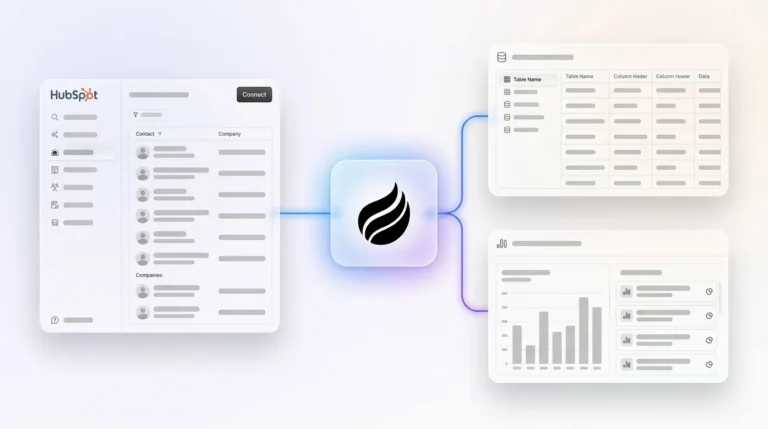
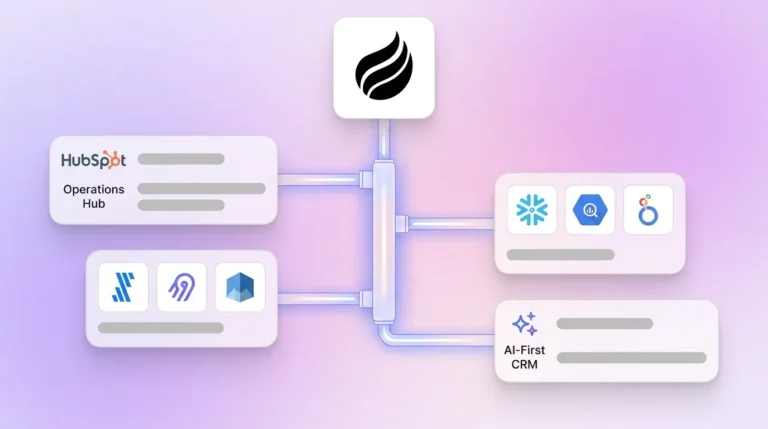
Coffee’s Companion App deploys the agent as an intelligent layer on top of the existing Salesforce or HubSpot instance. A simple authentication allows the agent to sync data, enrich it, and write insights back to the primary CRM. The system of record stays intact. Quotas, forecasting, required fields, and custom workflows remain undisturbed. The agent handles the data-in problem, including low adoption, missing call and email data, and incomplete records, without requiring a migration project.
Rep Adoption Reality Check
Average CRM user adoption is often quoted around 72%, a soft aggregate figure indicating that a meaningful share of paid seats go underused. 55% of CRM implementations fail to meet their planned objectives, with user adoption as the primary cause. The data-entry burden discussed earlier directly drives the adoption problem, because reps avoid tools that create work rather than eliminate it.
The adoption problem is structural, not behavioral. Reps avoid CRMs because the software demands labor from them rather than delivering value to them. The quota impact mentioned earlier is not theoretical. When the agent handles the busywork, including logging calls, drafting follow-ups, enriching contacts, and tracking pipeline changes, reps have a reason to open the CRM. The tool finally serves them instead of the reverse.
Frequently Asked Questions
How long does implementation take for SMBs in 2026?
Coffee’s Standalone CRM connects to Google Workspace or Microsoft 365 and begins populating records immediately, with no multi-week configuration project or mandatory onboarding fee. The agent auto-creates contacts, logs activities, and enriches records from existing email and calendar data from the moment authentication is complete. For the Companion App, a simple authentication connects the agent to an existing Salesforce or HubSpot instance, and the agent begins syncing and enriching data without displacing any existing configuration. Most teams are operational on the same day they sign up.
How difficult is migration from Salesforce?
For teams moving to Coffee’s Standalone CRM, the agent handles contact and company creation automatically from email and calendar history, which keeps the migration burden far lower than a traditional CRM-to-CRM data transfer. Historical records can be imported, and the agent immediately begins enriching and maintaining them going forward. For teams that want to keep Salesforce as the system of record, the Companion App removes the migration question entirely. The agent layers on top of the existing Salesforce instance and writes enriched data back into it without requiring any data to move.
How deeply does Coffee integrate with existing tools?
Coffee connects natively to Google Workspace and Microsoft 365 for email, calendar, and activity capture. The AI Meeting Bot joins Zoom, Teams, and Google Meet calls to record, transcribe, and generate summaries. For other tools, Coffee currently integrates via Zapier, with deeper native integrations on the product roadmap. The Companion App for Salesforce and HubSpot is built with a deep understanding of those platforms’ specific configurations, including quotas, forecasting, required fields, and custom workflows, which distinguishes it from newer agent tools that lack that integration depth.
What happens to data quality after the agent is deployed?
Data quality improves immediately because the agent removes the human dependency that causes data decay in passive CRMs. The agent captures ground-truth data from emails, calendars, and call transcripts, unstructured sources that legacy CRMs cannot process, and structures it into clean records. Contacts are auto-created, activities are logged without rep input, and enrichment data such as job titles, funding, and LinkedIn profiles is added via licensed data partners. The Pipeline Compare feature tracks week-over-week changes automatically, so pipeline reviews reflect actual deal state rather than whatever a rep last typed. Coffee is SOC 2 Type 2 and GDPR compliant, and data is not used to train public models.
Is an agent CRM secure and compliant for SMBs?
Coffee is SOC 2 Type 2 certified and GDPR compliant. Data ingested by the agent, including email content, calendar data, and call transcripts, is not used to train public AI models. For SMBs in standard B2B industries, Coffee’s security posture meets the requirements of most procurement reviews. Teams in heavily regulated industries such as healthcare or finance that require multi-year security reviews or custom compliance frameworks are outside Coffee’s current ideal customer profile, and those teams should evaluate platforms built specifically for those regulatory environments.
Conclusion: Fix Data Input, Then Trust the Output
Legacy CRMs are passive databases that charge SMBs for the privilege of doing their own data entry. The hidden costs, including admin salaries, AI add-ons, marketplace apps, implementation fees, and rep productivity losses during adoption, routinely push total cost of ownership to multiples of the stated license price. The adoption problem follows directly from the data-entry problem, because reps avoid tools that create work rather than eliminate it.
Coffee’s agent solves the input problem so the output is accurate. For teams of 1–20, the Standalone CRM replaces the entire stack, including CRM, enrichment, prospecting, sequencing, and pipeline intelligence, at a simple seat-based price with no dedicated admin required. For teams of 21–250 already on Salesforce or HubSpot, the Companion App deploys the agent on top of the existing system of record and fixes data quality without a migration project.
Put Coffee’s agent to work, accurate data in, actionable intelligence out.