Written by: Doug Camplejohn, CEO & Co-Founder, Coffee
Key Takeaways
-
AI-native CRMs replace manual databases with autonomous agents that handle data entry, enrichment, and pipeline intelligence so reps can focus on selling.
-
Coffee leads as the #1 agent-led CRM, saving 8-12 hours per week with automatic contact creation, meeting summaries, and Pipeline Compare features.
-
Top alternatives include Attio for developers, folk for simplicity, Clarify for zero-input enrichment, Day.ai for unstructured data, Close for communications, and Pipedrive for AI-enhanced legacy workflows.
-
Coffee scores 10/10 in automation depth and SMB fit, outperforming rivals in comprehensive agent unification per the comparison matrix.
Core AI-Native CRM Capabilities Sales Teams Actually Use
Modern AI-native CRMs deliver autonomous capabilities that legacy systems cannot match.
-
Automatic data entry and enrichment from emails, calendars, and calls
-
AI meeting briefings and summaries with automated follow-ups
-
Pipeline intelligence and forecasting with week-over-week comparisons
-
Natural language list building for targeted prospecting
-
Sales stack consolidation that replaces multiple point solutions
-
Workflow automation that handles routine tasks autonomously
Coffee covers all these capabilities through its intelligent Agent. The February 2026 Intelligence layer allows users to define deep context on business models and competitors for tailored AI suggestions, while automated data capture saves reps 8-12 hours per week.

With these core capabilities in mind, you can now compare how leading AI-native CRMs apply them. Each platform emphasizes different strengths, so this context helps you match tools to your team’s daily work.
Top 7 Practical AI-Native CRM Applications for Sales Teams in 2026
1. Coffee – The Complete AI Agent for Sales
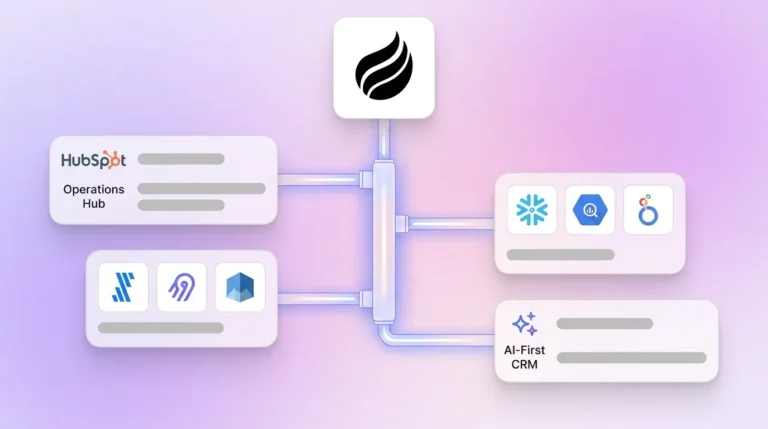
Overview: Coffee operates as a CRM Agent that behaves like an autonomous system rather than passive software. It is available as a Standalone CRM for SMBs and as a Companion App for existing Salesforce or HubSpot users.
Strengths:
-
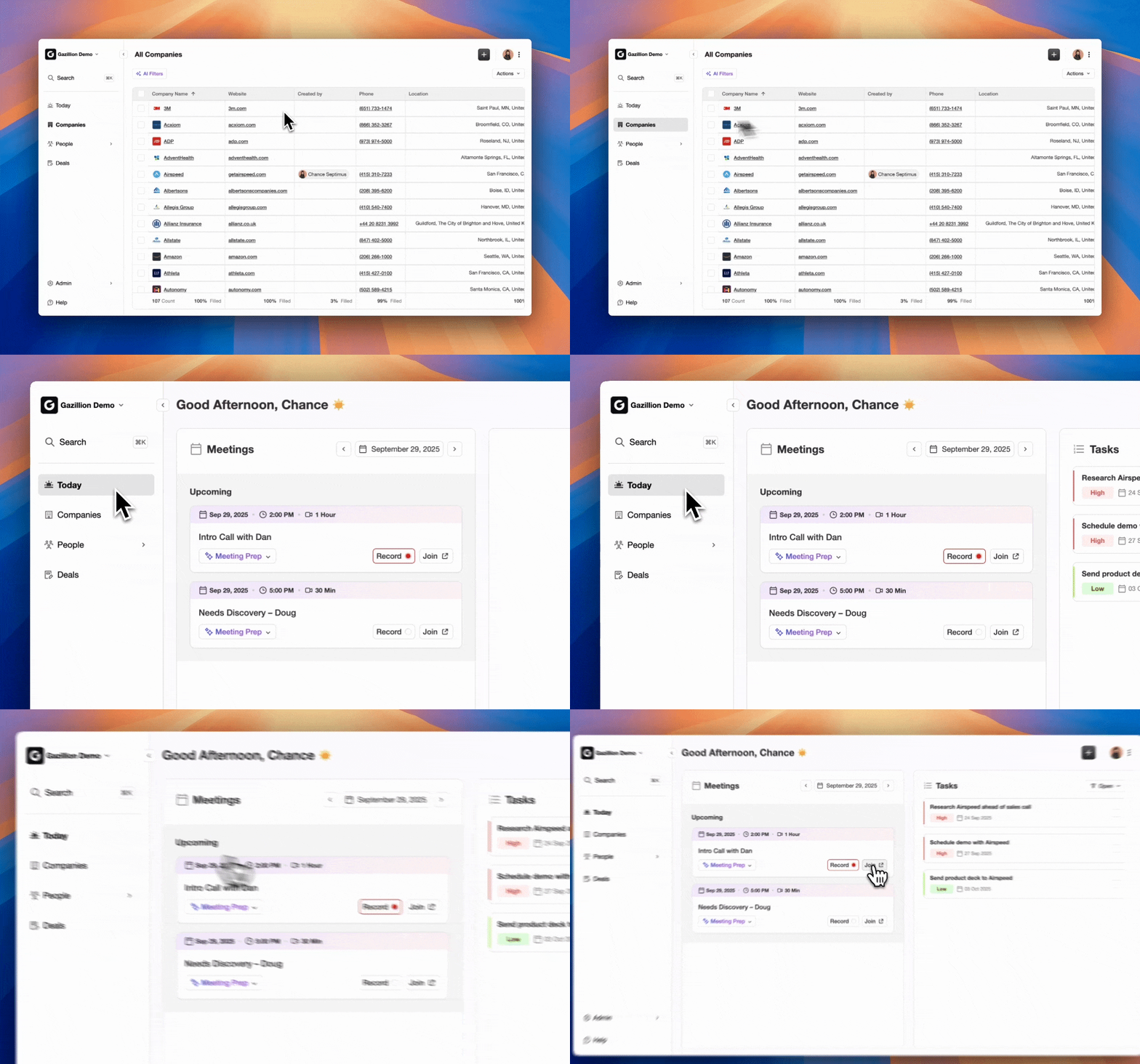
Automatic contact and company creation from Google and Microsoft integrations
-
AI meeting bot with automated summaries and follow-ups
-
Pipeline Compare feature that shows week-over-week changes without spreadsheets
-
Delivers the time savings mentioned earlier through autonomous handling of data entry, enrichment, and pipeline updates
The strengths above translate into clear outcomes in real teams.
Case Study: A company generating tens of millions in revenue ditched spreadsheets and rejected Salesforce for being too manual. The team chose Coffee for automated data entry, actionable pipeline insights, and API flexibility for custom briefings.

Limitations: Coffee is not designed for large enterprises or heavily regulated industries that require complex compliance workflows.
Ideal Fit: Coffee suits small to mid-sized companies with growing sales teams that feel frustrated with manual CRM maintenance. It also fits tech-savvy leaders who prefer automation over legacy bloat.

Pricing: Coffee uses simple seat-based pricing with unlimited agent labor included, with no complex metering on AI usage.
Implementation: Setup is quick through Google Workspace or Microsoft 365 authentication, with seamless HubSpot and Salesforce sync.
While Coffee focuses on autonomous operation for non-technical users, some teams want deeper control over data models and workflows. Developer-heavy organizations often look for a different style of AI-native CRM.
2. Attio – Developer-Friendly AI-Native Platform
Overview: Attio serves 5,000 customers with 4x ARR growth and raised $141M, including a $52M Series B from Google Ventures. It is popular among AI-native companies like Modal and Replicate.
Strengths:
-
Custom data architecture with flexible object modeling
-
API-first design for go-to-market workflow customization
-
AI assistant for natural language pipeline queries
-
Real-time data ingestion across the entire tech stack
Limitations: Attio requires developer resources for setup and customization, so it feels less plug-and-play than other options.
Ideal Fit: Attio works well for technical founders and ops-heavy teams that need programmable CRM flexibility.
Pricing: Tiered per-user model starting at $29 per user per month, billed annually.
Teams that do not have developer capacity often prefer a lighter tool. These groups usually want simple relationship tracking with a clean interface.
3. folk – Simple AI-Powered Relationship Management
Overview: folk is a modern CRM focused on relationship intelligence with AI-driven contact management and deal tracking.
Strengths:
-
Intuitive interface with a minimal learning curve
-
AI-powered contact enrichment and deduplication
-
Smart relationship mapping and interaction tracking
-
Mobile-first design for on-the-go sales teams
Limitations: folk offers limited advanced automation compared to more comprehensive platforms.
Ideal Fit: folk fits small teams that prioritize simplicity and relationship management over complex workflows.
Pricing: Standard plan at $20 per user per month, Premium at $40 per user per month with deals and dashboards.
Some teams care less about simplicity and more about never touching data entry. These teams often look for a zero-input model.
4. Clarify – Zero-Input AI CRM
Overview: Clarify ranks #2 in Reevo.ai’s 2026 guide for AI-native CRMs, offering a zero-input model with strong auto-enrichment and self-updating deals using AI models.
Strengths:
-
Automatic contact data and firmographic enrichment
-
One-click LinkedIn lead capture
-
Self-updating deals using relational AI models
-
Time-series AI for enhanced pipeline visibility
Limitations: Clarify lacks a full outbound execution engine, so teams still need separate tools for prospecting and sequencing.
Ideal Fit: Clarify suits smaller teams focused on inbound lead management and data quality.
Pricing: Credit-based model with a free tier available.
Other organizations struggle more with messy email threads and call notes than with lead capture. These teams benefit from tools that specialize in unstructured data.
5. Day.ai – Unstructured Data Specialist
Overview: Day AI raised $20 million in Series A funding led by Sequoia Capital in February 2026, with a focus on productivity through unstructured data processing.
Strengths:
-
Advanced email and communication parsing
-
Meeting transcription and automated CRM logging
-
Integration with Gmail, Slack, Zoom, and Teams
-
Natural language processing for activity capture
Limitations: Day.ai focuses primarily on productivity rather than comprehensive sales execution.
Ideal Fit: Day.ai works best for teams that generate high volumes of unstructured communication data.
Pricing: Subscription model starting at around $20 or more per user monthly.
Some sales teams still run on calls and texts as their main channel. These teams often want AI that enhances communication first.
6. Close – AI-Enhanced Sales Communication
Overview: Close CRM pricing includes Solo at $9 per user per month, with Growth at $99 per user per month featuring an AI email assistant and a Call Assistant add-on.
Strengths:
-
Built-in calling and SMS capabilities
-
AI email assistant for automated responses
-
Predictive dialing and call analytics
-
Strong mobile app for field sales
Limitations: AI features sit in higher-tier plans, and automation is less comprehensive than in pure AI-native platforms.
Ideal Fit: Close suits sales teams that prioritize phone-based outreach and communication.
Pricing: Solo at $9 per user per month, Growth at $99 per user per month with AI features.
Many companies also want a familiar CRM interface with light AI support rather than a full shift to agents. These teams often choose a traditional platform that has added AI features.
7. Pipedrive – Traditional CRM with AI Enhancements
Overview: Pipedrive offers an AI Sales Assistant that provides next-best-action recommendations and real-time pipeline monitoring, although advanced features require Premium plans and above.
Strengths:
-
Visual pipeline management interface
-
AI-generated reports from text prompts
-
Predictive deal and lead scoring
-
More than 400 marketplace app integrations
Limitations: AI capabilities act as add-ons to traditional CRM architecture rather than native agent functionality.
Ideal Fit: Pipedrive fits teams that want a familiar CRM interface with basic AI enhancements.
Pricing: Essential at $14 per user per month, Professional at $79 per user per month for AI Sales Assistant.
Side-by-Side Comparison Matrix
The table below scores each platform on two dimensions. Automation Depth measures how much manual work the AI removes, from simple assistance to fully autonomous workflows. SMB Fit reflects how well the platform serves small and midsize teams without enterprise-level complexity or resources. Scores range from 1 to 10, and a score of 10 represents best-in-class performance.
|
Tool |
Automation Depth (1-10) |
SMB Fit (1-10) |
Pricing Model |
|---|---|---|---|
|
Coffee |
10 |
10 |
Seat-based, simple |
|
Attio |
8 |
7 |
$29+/user/month |
|
folk |
6 |
9 |
$20-40/user/month |
|
Clarify |
8 |
8 |
Credit-based |
|
Day.ai |
7 |
7 |
$20+/user/month |
|
Close |
6 |
8 |
$9-99/user/month |
|
Pipedrive |
5 |
9 |
$14-79/user/month |
These perfect scores for Coffee reflect its comprehensive agent unification, which handles complete sales workflows while competitors offer partial AI implementations for specific tasks. Legacy systems score lower because they still rely on manual processes, while Coffee’s autonomous agent manages the full sales workflow with minimal human intervention.

Once you understand how each tool scores, you can move from comparison to selection. The next section walks through how to choose and roll out an AI-native CRM based on your situation.
Choosing and Implementing an AI-Native CRM That Fits Your Team
Start by mapping your selection to specific SMB pain points, team size, and your existing tech stack. This alignment keeps you focused on solving real workflow problems instead of chasing shiny features. Beyond the sticker price, consider the total cost of ownership, including migration efforts, and note that Coffee offers easy sync with existing systems to reduce disruption. Protect your future flexibility by avoiding vendor lock-in and choosing platforms with open APIs and standard integrations.
SMBs should plan AI CRM pilots for the first 3-6 months with usage caps to limit exposure, then expand based on clear results. Use phased rollouts that start with high-impact workflows such as lead scoring and automated follow-up.
Transform your sales process with autonomous AI agents. Get started with Coffee today.
FAQ
What is the best AI-native CRM for small sales teams?
Coffee stands out as the best AI-native CRM for small sales teams because its autonomous agent handles data entry, meeting management, and pipeline intelligence without manual work. Competitors often provide partial AI features, while Coffee acts as a complete sales assistant and saves 8-12 hours per week. Features like Pipeline Compare then turn that captured data into actionable insights.
How do AI-native CRMs differ from legacy systems?
AI-native CRMs function as autonomous agents rather than passive databases. Legacy systems such as Salesforce require manual data entry and maintenance, while AI-native platforms automatically capture, enrich, and analyze data from emails, calendars, and calls. They move from a “bad data in, bad data out” model to high-quality input through automated processes, which produces accurate forecasts and insights.
What is the typical setup time for AI-native CRMs?
Setup time depends on platform complexity. Coffee offers quick setup through Google Workspace or Microsoft 365 integration with immediate data capture, while more complex systems such as Salesforce can require 3-6 months. Most AI-native CRMs built for SMBs become operational within days to weeks, compared to months for traditional enterprise systems.
Are AI-native CRMs secure for business data?
Leading AI-native CRMs maintain enterprise-grade security standards, including SOC 2 Type 2 and GDPR compliance. Coffee, for example, ensures data is not used to train public models and maintains strict data governance. You should still review each vendor’s specific security certifications and data handling practices based on your industry requirements.
What are the key trends in AI CRMs for 2026?
The major trend is the shift from AI-assisted to AI-operated systems with autonomous agents that handle multi-step workflows. Agentic AI now detects, extracts, and updates data on its own while adapting campaigns in real time. Voice AI enables hands-free CRM interaction, and predictive analytics move from descriptive reporting to proactive recommendations for customer churn, lead readiness, and optimal engagement timing.
Conclusion
The era of manual CRM drudgery is ending. AI-native CRMs with autonomous agents represent the future of sales technology, and Coffee leads as the #1 agent-led solution for eliminating busywork and maximizing selling time. Stop acting as a data entry clerk.
Get started with Coffee and hire your AI sales agent today.