Written by: Doug Camplejohn, CEO & Co-Founder, Coffee
Key Takeaways
- Sales reps lose most of their week to CRM admin tasks like data entry, which AI can convert into 8–12 hours of extra selling time.
- AI agents handle data entry, enrichment, and activity logging, so reps skip manual post-call updates and constant tool switching.
- Automated meeting briefings, summaries, and logging keep CRM records complete and structured with frameworks like MEDDIC.
- Pipeline intelligence and natural language prospecting deliver real-time insights and fresh lists, replacing spreadsheets and manual research.
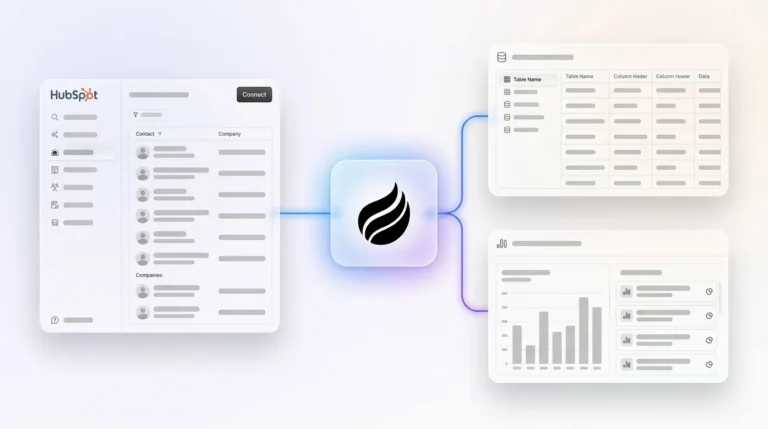
- Coffee’s zero-admin AI agent connects to Salesforce or HubSpot or runs on its own; deploy these strategies with Coffee’s AI agent and give reps more time to sell.
Find the Real Source of Your CRM Admin Overload
CRM admin work stretches far beyond basic data entry. Sales reps spend 70% of their time on non-selling activities such as manual contact creation, opportunity updates, and activity logging. Experts describe this as the “post-call black hole” where reps spend 45 minutes after each call updating CRM fields, writing notes, and creating follow-up tasks.
Tool fragmentation magnifies the problem. Sales teams rely on an average of 10 different platforms to close deals, which forces constant context switching that drains focus. Research from the University of California, Irvine shows that returning to a task after interruption takes 23 minutes on average. Frequent switches across tools compound into major productivity losses across every week.
Poor data quality adds even more friction. 85% of sellers admit making embarrassing mistakes because of faulty CRM data, and 41% name inaccurate data as their biggest challenge. These issues push reps into shadow CRMs in spreadsheets and Notion. Fragmented customer information then weakens forecast accuracy and makes coaching harder.
7 Proven Ways to Reduce Admin Work for Sales Reps in CRM
The following strategies tackle each part of the CRM admin crisis. They address the post-call black hole, tool sprawl, and data quality problems with AI automation that removes manual work at the source.
1. Automate Data Entry & Enrichment
AI agents remove manual contact and company creation by scanning email signatures, calendar invitations, and meeting attendees. Coffee’s agent automatically fills CRM records with enriched data such as job titles, funding information, and LinkedIn profiles, without separate tools like ZoomInfo. This automation saves sales reps 5–10 hours per week that previously went into manual data entry and research.
The agent maintains data quality through continuous enrichment, updating contact information as it changes and flagging outdated records. This ongoing maintenance keeps data accurate, while the underlying architecture solves a second legacy CRM issue. Traditional systems overwrite field values and lose historical context, but AI agents preserve complete interaction history in dedicated data warehouses, so teams keep a full audit trail of every change.
2. AI Meeting Briefings & Summaries
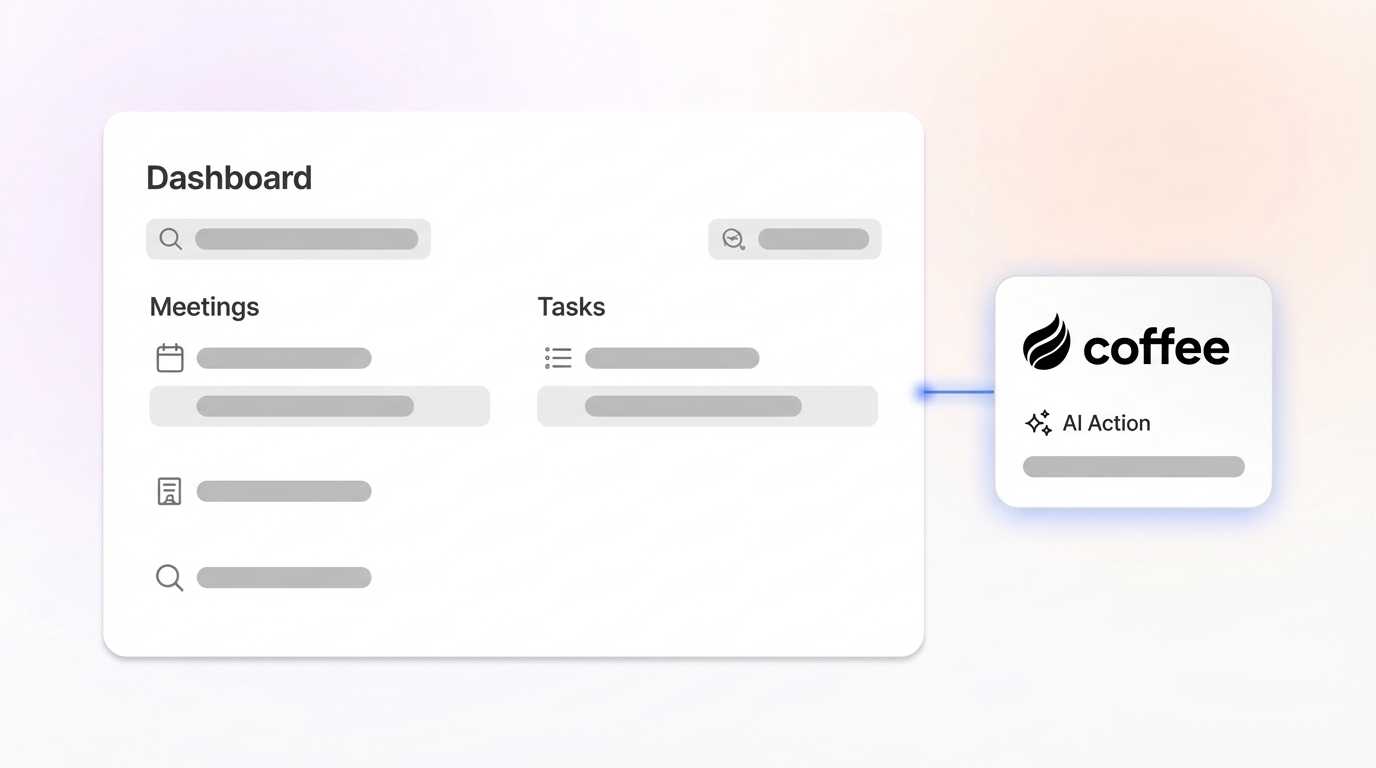
Pre-meeting prep shifts from a 10-tab scramble to a single, focused briefing. Coffee’s “Today” page gathers attendee backgrounds, previous interactions, and relevant deal context before each call. The agent then joins Zoom, Teams, and Google Meet sessions to record and transcribe conversations automatically.

Post-meeting automation closes the administrative black hole. Coffee’s February 2026 custom meeting templates create summaries, highlight action items, and draft follow-up emails directly in Gmail for quick review and sending. Reps avoid the 45-minute post-call admin block, keep momentum high, and follow up while interest remains strong.

3. Autonomous Activity Logging
The sales rule “if it’s not in the CRM, it didn’t happen” often doubles the work for reps. They complete the activity, then log it manually. AI agents fix this by tracking email exchanges, call outcomes, and meeting results automatically. Coffee structures this information with sales methodologies like BANT, MEDDIC, or SPICED, so qualification data enters the system in a consistent format.
Autonomous logging captures structured data such as deal stages and next steps, along with unstructured content like email bodies and call sentiment. This combined view gives managers full visibility into customer interactions without extra effort from reps.
4. Unify Your Sales Stack
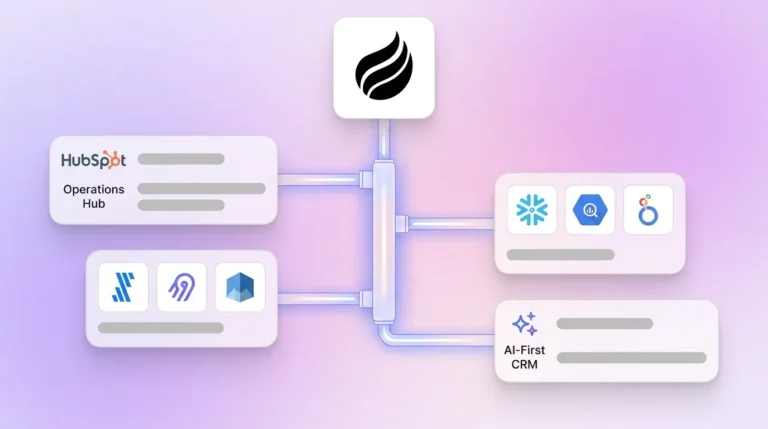
Tool consolidation cuts context switching and closes data gaps between platforms. Coffee can run as a standalone CRM replacement or as a companion app that syncs with existing Salesforce and HubSpot setups. The January 2026 Stripe integration imports customers and marks invoices as Closed Won deals, which removes manual revenue tracking.
Stack unification also covers email, calendar, and communication tools. The agent connects these systems into a single workflow, so teams escape the 10-tool maze that slows down every sales cycle.
5. Pipeline Intelligence Without Spreadsheets
Pipeline reviews no longer need manual CSV exports and guesswork forecasts. AI agents deliver real-time pipeline intelligence through automated analysis. Coffee’s “Compare” feature shows week-over-week changes, surfacing progressed deals, stalled opportunities, and new additions without extra reporting work.
Coffee’s January 2026 AI search functionality answers natural language prompts such as “Which deals are stuck in negotiation?” or “What is closing this month?” Managers avoid Thursday 1:1 chase sessions and focus on coaching and strategy instead.
6. Natural Language List Building
Prospect research shifts from a 20% weekly time drain to instant list creation. Instead of scrolling LinkedIn Sales Navigator and enriching contacts by hand, reps can say, “Find VPs of Sales at $10M+ funded companies using Salesforce.” The AI agent runs this research automatically and returns qualified prospect lists with current contact details and buying signals.

This automation prevents the “graveyard pipeline” problem where manually built lists go stale before outreach starts. Fresh, accurate prospect data improves response rates and cuts wasted outreach.
7. Zero-Admin Setup & Maintenance
Simple implementation keeps CRM projects from stalling. AI agents need only lightweight setup through authentication with existing tools. Coffee connects to Google Workspace or Microsoft 365 in a few clicks and immediately begins data capture and enrichment without complex field mapping or workflow design.
Ongoing maintenance stays low-effort because the agent learns from user behavior and keeps improving data quality. Traditional CRMs grow more complex and demanding over time, while a zero-admin agent keeps the system usable and current.
Pro Tip: Launch with high-impact automations such as meeting summaries and activity logging. Expand later into pipeline intelligence and list building once the team trusts the agent.
Try Coffee free to implement these automation strategies and give your team back meaningful selling time each week.
The table below highlights how Coffee’s AI agent model compares with legacy CRMs on the core areas that drive or reduce admin work.
| Feature | Legacy CRMs | Coffee Agent |
|---|---|---|
| Data Entry | Manual (71% time waste) | Autonomous automation |
| History Tracking | Lost on field updates | Complete data warehouse |
| Setup Complexity | Weeks of configuration | Zero-admin authentication |
| Pipeline Insights | Manual spreadsheets | AI-powered Compare and search |
Why Coffee Stands Out as a Zero-Admin AI Sales Agent
Coffee works as a proactive agent instead of passive software. Legacy CRMs store data and wait for humans, while Coffee captures, enriches, and analyzes information to surface clear next steps. The dual-model approach supports small businesses that want a standalone system and mid-market companies that need Salesforce or HubSpot integration.
Security and compliance match enterprise expectations with SOC2 Type 2 and GDPR certification. Unlike public AI models, Coffee does not use customer data for training, which keeps sales information confidential. A simple seat-based pricing model includes unlimited agent labor, so teams avoid complex metering on AI usage or workflows.
One company with tens of millions in revenue replaced spreadsheet-based sales management with Coffee’s autonomous agent. The rollout delivered automated contact creation from Google Workspace, removed manual pipeline tracking through the Compare feature, and enabled custom briefings through API access. Sales operations now run smoothly without extra administrative overhead.
Implementation Playbook & Success Metrics
Teams see the best results when they follow a clear four-step rollout. First, connect Google Workspace or Microsoft 365 for email and calendar access. Second, authenticate existing CRM systems such as Salesforce or HubSpot. Third, test the meeting bot with internal calls to confirm recording and transcription quality. Fourth, review pipeline data and adjust reporting preferences.
Success metrics include a 60–80% reduction in administrative tasks, stronger forecast accuracy from consistent data capture, and higher selling time that supports 35% or greater improvements in quota attainment. Weekly pipeline reviews shift away from data collection and move toward strategic conversations about deal movement and resource focus.
Start your zero-admin transformation with Coffee and give your sales team a clear, low-friction rollout path.
Frequently Asked Questions
How much time do sales reps spend on CRM admin work?
Sales representatives spend about 70% of their time on non-selling activities such as CRM updates, manual data entry, meeting preparation, and internal coordination. This leaves only 28–35% of their time for selling activities like customer calls and deal progression. The administrative burden translates to 8–12 hours per week of lost selling time per representative.
Can Coffee reduce admin work in existing Salesforce or HubSpot systems?
Coffee operates as a Companion App that integrates with existing Salesforce and HubSpot installations. The AI agent writes meeting summaries, updates opportunity fields, logs activities, and enriches contact data directly in your current CRM. Your team keeps familiar workflows and data structures while the agent removes manual administrative work.
Is Coffee secure for handling sensitive sales data?
Coffee maintains enterprise-grade security with SOC2 Type 2 and GDPR compliance certifications. All customer data stays private and does not train public AI models. The platform uses encryption in transit and at rest, along with detailed audit trails and access controls, to protect confidential sales information and customer interactions.
What is the difference between Coffee Standalone and Companion models?
Coffee Standalone functions as a complete CRM replacement and suits small businesses with 1–20 employees that want to avoid legacy complexity. Coffee Companion connects to existing Salesforce or HubSpot instances, which works well for mid-market companies that plan to keep their current CRM but want AI to remove administrative overhead.
How does Coffee pricing work for sales teams?
Coffee uses straightforward seat-based pricing where teams pay for human users and receive unlimited AI agent labor. There are no metered charges for AI usage, data processing, or automation volume. This transparent model scales with team size instead of penalizing heavy platform use or advanced automation.
Conclusion
Reducing CRM admin work for sales reps requires autonomous AI agents that handle data entry, meeting workflows, and pipeline intelligence. Coffee’s agent removes the administrative burden mentioned earlier and lets reps focus on selling activities that drive quota attainment and revenue growth. Hire your AI sales agent through Coffee and turn CRM administration from a productivity drain into a competitive advantage.