Written by: Doug Camplejohn, CEO & Co-Founder, Coffee | Last updated: September 5, 2026
Key Takeaways
Here is a quick overview of how AI tools cut CRM admin work and where Coffee fits in that landscape.
- AI tools that reduce CRM admin work fall into three categories: native assistants, call and meeting automation, and lead enrichment.
- Choosing the right tool starts with identifying your CRM and your biggest admin bottleneck.
- Native assistants like Salesforce Einstein and HubSpot Breeze require premium tiers and often add variable credit costs.
- Conversation intelligence and enrichment tools save time on specific tasks but leave other admin work untouched.
- Coffee automates the full data-in process across Salesforce and HubSpot at a flat seat-based price. Explore Coffee’s pricing to see how it fits your team.
The Three Categories of AI Tools for CRM Admin
Every AI tool that reduces CRM admin falls into one of three functional categories. The right category depends on which part of the workflow slows your team down the most.
Category 1: Native CRM AI Assistants. Built directly into your CRM platform, these tools automate forecasting, lead scoring, call summarization, and deal stage updates without a separate integration. Examples include Salesforce Einstein (Agentforce), HubSpot Breeze AI, and Zoho Zia. These assistants work best for teams that want minimal integration work and prefer to stay inside their CRM’s native logic.
Category 2: Call & Meeting Automation. These tools join calls, transcribe conversations, extract structured data such as next steps, objections, and MEDDIC fields, and write summaries back to the CRM. Examples include Gong, Fireflies.ai, and Dialpad AI. They fit teams that feel buried in post-call data entry and note-taking.
Category 3: Lead Enrichment & Prospecting. These tools automatically source, verify, and enrich contact data from multiple providers, then populate the CRM with complete records. Examples include Clay and Apollo.io. They help teams that lose hours to manual lead research and list building.
The top five tools in 2026, ranked by breadth of admin coverage:
- Coffee – AI agent that automates data entry, meeting prep, lead research, and pipeline intelligence natively on top of Salesforce or HubSpot, or as a standalone CRM.
- Salesforce Einstein – Native AI for enterprise teams needing predictive insights and autonomous agents inside Salesforce.
- HubSpot Breeze – Built-in AI suite for SMB and mid-market teams using HubSpot, with outcome-based agent pricing.
- Gong – Conversation intelligence for mid-to-large sales organizations needing deep call analytics and coaching.
- Clay – Waterfall enrichment and AI research for teams with dedicated GTM engineers managing complex prospecting workflows.
Choosing AI Based on Your CRM
Your current CRM narrows your options quickly. Once you know whether you run Salesforce, HubSpot, or another platform, you can decide between a native assistant, a companion agent, or a full replacement.
For Salesforce Users
Salesforce Einstein spans predictive AI, generative AI, and agentic AI through Agentforce, but the cost structure is prohibitive for most SMB and mid-market teams. Enterprise Edition starts at $175 per user per month, Data Cloud adds $25–50 per user per month, and implementation typically runs $50,000–$150,000. Seventy-seven percent of Agentforce implementations fail due to data issues, and the real total cost of ownership runs two to three times higher than license costs.
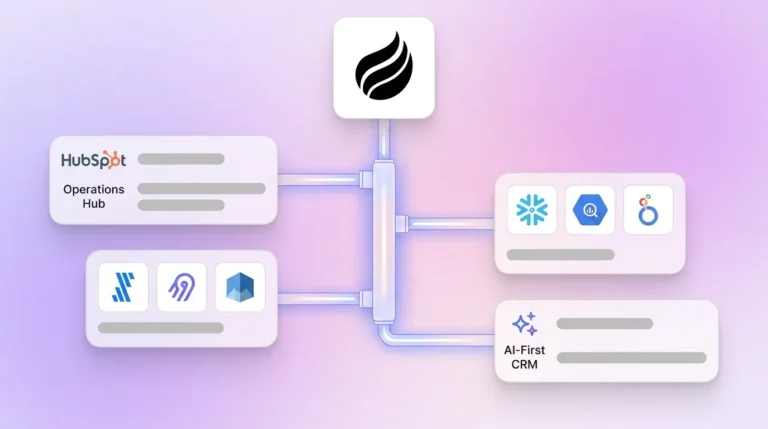
For teams that cannot justify that price tag, Coffee’s Companion App offers a practical alternative. It sits on top of an existing Salesforce instance. It auto-creates contacts, logs activities, and writes structured summaries without a migration, a dedicated admin team, or enterprise-tier licensing. This path gives Salesforce teams agentic CRM automation at a predictable cost.
For HubSpot Users
HubSpot Breeze’s Prospecting Agent costs 100 credits ($1.00) per lead recommended for outreach, and the Customer Agent costs 50 credits ($0.50) per resolved conversation. Included monthly credits vary by plan: 500 on Starter, 3,000 on Professional, and 5,000 on Enterprise. For high-volume teams, credit consumption becomes a meaningful variable cost. The Prospecting Agent requires Sales Hub Professional or Enterprise.
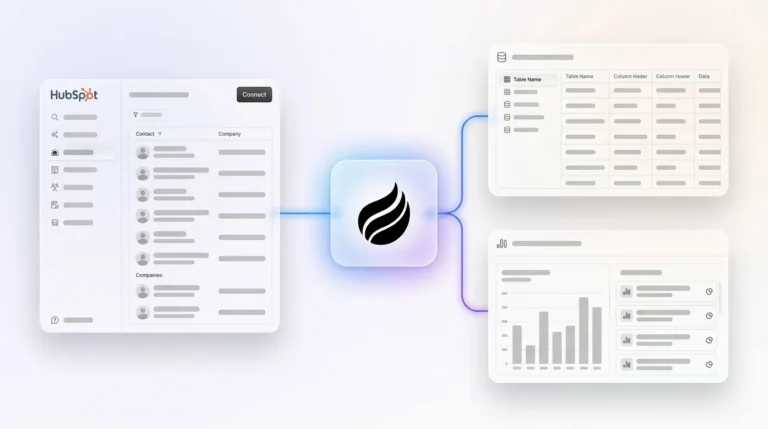
Coffee’s Companion App works alongside HubSpot and automates the data-in process more deeply. It captures emails, calendars, and call transcripts to keep records current. Pricing stays flat and seat-based, with no credit metering.
For Other CRMs (Zoho, Pipedrive, Dynamics)
Native assistants like Zoho Zia deserve a look for teams that plan to stay on those platforms. Teams open to switching can use Coffee’s Standalone CRM to get the same agent-led automation without layering on top of a legacy system. It suits small teams of one to twenty employees that have outgrown spreadsheets and feel that traditional CRMs are expensive and high maintenance.
Choosing AI Based on Your Biggest Admin Bottleneck
Your main admin bottleneck should guide your first AI purchase. Different tools save different amounts of time depending on where reps lose the most hours.
Post-Call Data Entry
Manual CRM logging takes 15–30 minutes per call, and at 10 calls per week that amounts to 2.5–5 hours of non-revenue-producing admin per rep weekly. CRM logging automation is the single biggest AI time-savings win, recovering about 6 hours per rep per week, per the Revenue Velocity Lab 2026 benchmark of 938 reps. That scale of savings explains why many teams start here.
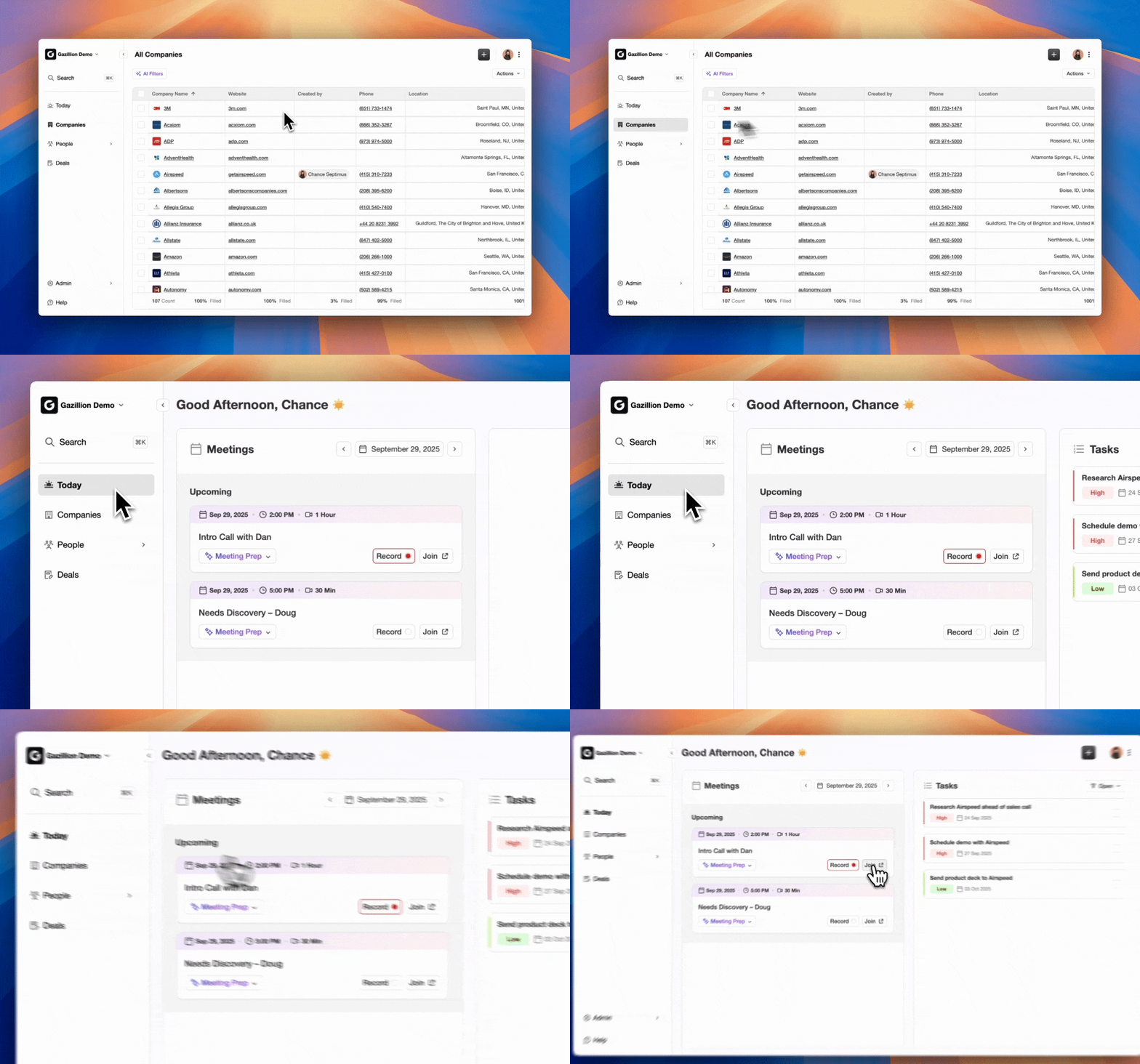
Coffee’s AI Meeting Bot addresses this bottleneck directly. It joins Zoom, Teams, or Meet calls, generates structured summaries, identifies next steps, and drafts follow-up emails in Gmail for rep review, with no manual CRM entry required. Coffee’s improved summary templates, released in November 2025, are customizable to match specific workflows and write back to Coffee, HubSpot, or Salesforce automatically.

Lead Research
SDRs save roughly 4 hours per week on research and personalization when AI handles prospecting. Tools like Clay and Apollo tackle this bottleneck in different ways. Clay’s AI research agent, Claygent, reads live sources to fill judgment fields like ICP fit, segment, and buying triggers that no data provider sells as a standard field, while Apollo’s database covers 230M+ people and 30M+ companies with 97% email accuracy, which makes it a strong all-in-one option for SMB teams.
Coffee’s Lead Finder takes a different approach. It builds targeted prospect lists from natural language queries such as “Find me VPs of Sales at SaaS companies with 50–200 employees,” with a preview-before-build step so reps confirm targeting before committing. Lists live directly in Coffee alongside every other record, so teams avoid CSV exports between tools.


Email Follow-Ups
Email drafting saves about 1.8 hours per rep per week, per the Revenue Velocity Lab 2026 benchmark. That gain matters, although it is smaller than the impact from CRM logging automation. Coffee’s Campaigns feature runs multi-step, AI-generated email sequences natively from the rep’s own connected mailbox, with stop-on-reply enabled by default. Reps describe the campaign in plain English and the agent generates subject lines, body copy, and send delays for every step.

The Automation vs. AI Generation Distinction
AI tools that generate content and AI tools that automate workflows deliver very different time savings. Generic AI writers help draft content faster, but the output still requires manual copying into the CRM, attachment to the correct record, and field-by-field updates. That pattern automates the writing step and typically saves roughly 15–20 minutes per email.
Coffee acts as an agent that handles the full data-in process. Coffee’s AI search on deals, released in January 2026, answers natural-language questions such as “Which deals are stuck in negotiation?” or “What’s closing this month?” because the underlying data is already structured and current. The rep is freed from copying, pasting, and field-by-field updates.
Teams using five or more integrated AI tools hit 12 hours of weekly savings, while single-tool pilots realistically land at 3–5 hours, per HubSpot’s 2026 State of AI in Sales report. The difference between generation and automation is the difference between saving minutes and saving hours. AI-augmented reps generate roughly 41% more revenue per rep ($1.75M vs. $1.24M) while running 18% fewer activities per month, per the Revenue Velocity Lab 2026 benchmark. When reps stop acting as data entry clerks, they spend more time in customer conversations.
Comparison Table: Top AI Tools for CRM Admin Reduction
The table below compares leading AI tools by category, ideal use case, and pricing model so you can quickly see which option aligns with your CRM and budget.
| Tool | Category | Best For | Pricing Model |
|---|---|---|---|
| Coffee | AI CRM Agent | Salesforce and HubSpot teams wanting full data-in automation, plus small teams wanting a standalone AI-first CRM | Seat-based, unlimited agent labor included |
| Salesforce Einstein | Native CRM AI | Enterprise teams on Salesforce Enterprise+ with dedicated admin resources | Enterprise Edition from $175/user/month, Agentforce add-on from $125/user/month, Flex Credits at $500 per 100,000 credits |
| HubSpot Breeze | Native CRM AI | SMB and mid-market teams on HubSpot Professional or Enterprise | Included with paid plans, Prospecting Agent at $1.00/lead, Customer Agent at $0.50/resolved conversation, credit packs at about $10 per 1,000 credits |
| Gong | Conversation Intelligence | Mid-to-large organizations needing deep call analytics and sales coaching | Platform fee from about $50K/year plus about $1,300–$1,600/user/year, 15-seat minimum |
| Fireflies.ai | Meeting Automation | Teams wanting low-cost transcription with broad CRM sync | Free tier available, paid plans from about $120/user/year |
| Clay | Lead Enrichment | Teams with GTM engineers managing complex multi-source enrichment workflows | Free plan, Starter from $134/month, Growth from $446/month (required for Salesforce and HubSpot sync) |
| Apollo.io | Prospecting + Enrichment | SMB and mid-market teams wanting an all-in-one prospecting and sequencing platform | Free tier, Basic from $49/user/month, Professional from $79/user/month, Organization from $119/user/month (annual billing) |
See Coffee’s seat-based pricing for unlimited agent labor with no credit metering.
Recommended Stacks by Team Type
Based on the comparison above, here are three practical stacks tailored to common team setups so you can see how these tools work together in the real world.
Stack 1: SMB with HubSpot
Coffee Companion App + HubSpot. This stack fits small teams of five to twenty reps on HubSpot Professional. Breeze covers basic summarization but burns credits at volume. Coffee’s Companion App handles the full data-in process, auto-creating contacts from email and calendar, logging activities, and writing structured summaries, while HubSpot remains the system of record. Teams avoid migration work, credit metering, and extra admin overhead.
Stack 2: Salesforce Mid-Market
Coffee Companion App + Salesforce. This stack serves mid-market teams on Salesforce Enterprise that have invested heavily in customization. Coffee sits on top as an agent that ensures every call, email, and meeting is captured and structured correctly. Coffee’s Pipeline Compare feature visualizes week-over-week changes, highlighting progressed deals, stalled opportunities, and new additions. Weekly pipeline reviews run without CSV exports or manual analysis.
Stack 3: SDR-Heavy Outbound Team
Coffee Standalone CRM + Campaigns. This stack fits teams running high-volume outbound. Coffee’s Standalone CRM has the agent built in. Lead Finder sources targeted prospects via natural language, Campaigns runs AI-generated sequences from reps’ own mailboxes with stop-on-reply, and the agent handles all data entry automatically. Teams avoid stitching together Apollo, Outreach, and a separate CRM.
Real-World Time Savings and ROI
These stacks translate into measurable time savings and revenue gains. Coffee’s data shows reps save 8–12 hours per week when the agent handles data entry, meeting prep, and follow-ups. The Revenue Velocity Lab 2026 benchmark of 938 reps found CRM logging automation alone recovers 6 hours per rep per week, with full AI stacks reaching 12+ hours.
AI-augmented reps see customer-facing time jump from 48% to 80% of the week, a 68% increase, while manual task share drops from 52% to 20% of work time. More customer conversations create more pipeline and revenue.
Hours saved only matter when they change selling time and revenue. Track whether selling-time percentage crosses 50% and revenue per rep rises within two quarters. Those are the metrics that resonate with a CFO.
Frequently Asked Questions
What is the best AI tool for CRM?
The best AI tool depends on your CRM and your biggest admin bottleneck. For Salesforce and HubSpot users, Coffee’s Companion App is the top recommendation because it automates the full data-in process, including data entry, meeting prep, and pipeline intelligence, without a migration or a new system of record. Native assistants like Salesforce Einstein and HubSpot Breeze work well for teams that want zero integration overhead, although they require premium tiers and, in HubSpot’s case, credit-based pricing that scales with usage volume.
Which AI tool is best for salespeople?
For sales reps whose biggest time drain is post-call data entry, tools that automate CRM logging deliver the most impact. Coffee’s AI Meeting Bot joins calls, extracts structured data, and writes summaries and next steps directly to the CRM, which recovers many hours each week. Conversation intelligence tools like Gong serve managers who need coaching insights and call analytics more than they reduce individual rep admin work.
Will CRM be replaced by AI?
AI will change how teams use CRMs rather than eliminate them. Legacy CRMs like Salesforce and HubSpot will remain systems of record, while agents take over the labor of keeping them updated. Coffee’s philosophy is that AI agents handle the data-in process so humans can focus on relationships and strategy. The CRM becomes valuable again when an agent keeps the data accurate and current.
How much time can AI actually save sales reps?
Industry benchmarks show AI saves 5–18 hours per rep per week in 2026, with 10–12 hours as the median for teams running a full AI stack across CRM, meetings, research, and outreach. CRM logging is the single biggest win at roughly 6 hours per week. Email drafting saves approximately 1.8 hours per week. In year one, realistic savings for a single-tool pilot are 3–5 hours per week, ramping to the same 8–12 hour range as additional tools are layered in.
What is the difference between AI that generates emails and AI that automates CRM data entry?
Email generation tools save minutes by drafting content, while the rep still has to copy that content into the CRM, attach it to the correct record, and update deal stages manually. CRM data entry automation tools save hours by capturing calls and emails, extracting structured data, and writing it directly to the correct records without any manual step. Coffee acts as an agent that handles the full data-in process, so it recovers selling time instead of only speeding up writing.
The Right Tool for Your CRM and Your Bottleneck
The most effective AI tool for reducing CRM sales admin work matches your CRM and your primary admin bottleneck. Native assistants like Salesforce Einstein and HubSpot Breeze suit teams willing to pay for premium tiers and manage credit consumption. Conversation intelligence tools like Gong focus on coaching more than on reducing rep admin. Enrichment platforms like Clay and Apollo solve lead research while leaving post-call data entry in place.
For Salesforce and HubSpot users, Coffee’s Companion App is the only solution that acts as an agent on top of an existing CRM and automates data entry, meeting prep, lead research, and pipeline intelligence without a migration. Coffee’s Intelligence layer, launched in February 2026, allows users to define deep context on business model, ICP, and competitors for tailored AI suggestions across every deal and contact. It covers all three bottleneck categories in one seat-based subscription with no credit metering. Start your Coffee trial and see what happens when an agent handles your CRM admin instead of another dashboard.