
Key Takeaways for Using MEDDPICC With Coffee
-
MEDDPICC is an eight-part framework (Metrics, Economic Buyer, Decision Criteria, Decision Process, Paper Process, Implicate the Pain, Champion, Competition) for qualifying complex enterprise deals over $100K.
-
Compared with BANT for small deals or MEDDIC for mid-market, MEDDPICC supports multi-stakeholder procurement, competition, and long cycles, lifting win rates by 18–41%.
-
Effective implementation relies on structured discovery, clear ROI metrics, direct Economic Buyer access, mapped decision paths, and sharp competitive differentiation.
-
AI tools like Coffee automate MEDDPICC by pulling qualification data from emails, calls, and calendars, saving 8–12 hours each week on manual CRM entry.
-
Adopt MEDDPICC with Coffee’s AI agent to streamline enterprise qualification and convert more of your pipeline into revenue.
Breaking Down Each MEDDPICC Component
MEDDPICC is an eight-component sales qualification framework that stands for Metrics, Economic Buyer, Decision Criteria, Decision Process, Paper Process, Implicate the Pain, Champion, and Competition. MEDDPICC originated in enterprise software sales for evaluating complex B2B enterprise opportunities, helping Account Executives decide which deals deserve serious time investment.
The table below introduces the first four MEDDPICC elements and shows the questions and proof points you need to qualify each one.
|
Element |
Explanation |
Key Questions |
Qualification Evidence |
|---|---|---|---|
|
Metrics |
Quantifiable business outcomes the prospect expects |
What ROI do you need? How will you measure success? |
Specific numbers, timeline, current vs. future state |
|
Economic Buyer |
Person with ultimate budget approval authority |
Who signs the final contract? Who controls the budget? |
Direct meeting scheduled, decision authority confirmed |
|
Decision Criteria |
Standards used to evaluate and select solutions |
How will you evaluate vendors? What are your requirements? |
Written scorecard, weighted priorities documented |
|
Decision Process |
Steps, timeline, and stakeholders in the buying journey |
What is your evaluation process? Who is involved? |
Meeting schedule mapped, approval stages identified |
MEDDPICC’s Metrics component quantifies measurable value like 20% reduction in onboarding time or 15% increase in lead conversion rates, which aligns your proposal with the prospect’s KPIs and builds credibility. The Economic Buyer is the individual with final purchasing authority, while Decision Criteria cover the technical, financial, and operational standards prospects use to judge vendors. The Decision Process maps organizational steps and timelines, so sales teams can forecast accurately and anticipate bottlenecks before they stall deals.
Choosing Between MEDDPICC, MEDDIC, and BANT
MEDDPICC expands the original MEDDIC framework by adding Paper Process and Competition components, which address procurement complexity and competitive dynamics in modern enterprise sales. BANT, developed by IBM in the 1950s, serves as a speed filter for high-velocity deals under $50K ACV with one decision-maker, while MEDDIC and MEDDPICC focus on enterprise deals with multiple stakeholders and extended sales cycles.
The table below shows how deal size and complexity guide your choice of qualification framework.
|
Framework |
Best For |
Deal Size |
Sales Cycle |
|---|---|---|---|
|
BANT |
Quick qualification, transactional sales |
Under $50K |
Under 60 days |
|
MEDDIC |
Mid-market deals, minimal procurement |
$50K-$100K |
90+ days |
|
MEDDPICC |
Enterprise deals, complex procurement |
$100K+ |
90+ days |
MEDDPICC is recommended for the enterprise zone with ACV $100K+, 5+ stakeholders, and 90+ day cycles due to procurement involvement and competitive bake-offs. Unlike BANT’s binary Authority check, MEDDPICC separates the Economic Buyer who controls budget from the Champion who advocates internally. HubSpot’s 2025 State of Sales Report indicates modern deals involve an average of five decision-makers and 28% fail due to inability to secure internal approval, which highlights why MEDDPICC’s broader coverage matters.
Why MEDDPICC Works and How It Impacts Win Rates
MEDDPICC reduces risk in complex enterprise deals by helping sales teams fully understand and influence the buying process. Structured qualification processes like MEDDPICC lead to 41% higher win rates and 26% shorter sales cycles. The framework also fits modern buying dynamics, where McKinsey research shows 71% of B2B buyers are comfortable spending over $50,000 through digital channels without sales involvement.
These theoretical benefits translate into measurable results for organizations that commit to MEDDPICC. Companies fully adopting MEDDPICC report 18% higher win rates and 24% larger deal sizes, while adoption doubled from 11% to 21% among B2B sales organizations between 2021 and 2022. The framework’s impact comes from its systematic approach, which keeps teams focused on winnable opportunities and surfaces deal risks early enough to address them.
Step-by-Step MEDDPICC Implementation Playbook
Successful MEDDPICC implementation starts with disciplined discovery across all eight elements throughout the sales cycle. Begin with Metrics and ask prospects to quantify their desired outcomes with questions like “What specific ROI do you need to justify this investment?” Capture measurable targets such as cost savings percentages or efficiency gains, along with realistic timelines.
Next, clarify the Economic Buyer by identifying who holds final budget authority beyond your primary contact. Ask direct questions such as “Who ultimately approves purchases of this size?” Then secure direct access through your Champion, the influential stakeholder described earlier who can connect you to the Economic Buyer and has personal stakes in the solution’s success.
Map the Decision Criteria by uncovering both formal and informal evaluation factors. Request written evaluation scorecards and clarify weighted priorities, because these documents reveal what the organization truly values. Once you understand how they will judge solutions, shift to the Decision Process and document each approval stage, required stakeholders, and realistic timelines. In parallel, address the Paper Process early by identifying legal, procurement, and security requirements that could delay closing even after verbal agreement.
Move to Implicate the Pain by quantifying business impact beyond surface-level problems. Tie operational challenges to financial consequences and to personal implications for key stakeholders. Then assess Competition, including direct vendors, internal builds, and the status quo, and position your solution’s specific differentiators against each alternative.
How Coffee’s AI Agent Automates MEDDPICC in Practice
Coffee streamlines MEDDPICC execution by using an autonomous AI agent that captures and structures qualification data from emails, calendars, and call transcripts. Traditional CRMs rely on manual data entry, while Coffee’s agent pulls in accurate data automatically, which supports reliable qualification and forecasting without extra admin work.

The Coffee agent automatically logs activities, enriches records from email signatures and meeting participants, and tracks interactions from proposal requests and evaluation documents. These logged activities feed directly into MEDDPICC by revealing stakeholders, their roles, and their engagement level. The agent also captures details from meeting notes and calendar invitations, which expose the Decision Process timeline and participant list, and it monitors requirements in contract and legal threads to map the Paper Process.

For Pain identification, Coffee’s agent analyzes conversation transcripts to surface business challenges and quantify their impact. It tracks interactions and advocacy to show Champion strength, while monitoring competitive mentions and differentiation opportunities across threads. This automated approach saves sales teams 8–12 hours per week that would otherwise go into manual CRM updates.
Coffee works as a standalone AI-first CRM for growing companies or as a Companion App that enhances existing Salesforce and HubSpot instances. The agent’s continuous data capture keeps qualification current throughout deal progression, which supports accurate forecasting and targeted deal coaching.

Explore Coffee’s pricing options to experience automated qualification that shifts your sales process from manual data entry to focused, strategic selling.
2026 MEDDPICC Tips for the Post-Cold Call Era
The sales landscape now leans heavily on AI agents that replace much of the manual qualification work. McKinsey research indicates hybrid selling models can drive up to 50% more revenue, with MEDDPICC ensuring consistency across touchpoints such as video calls, email sequences, and in-person meetings.
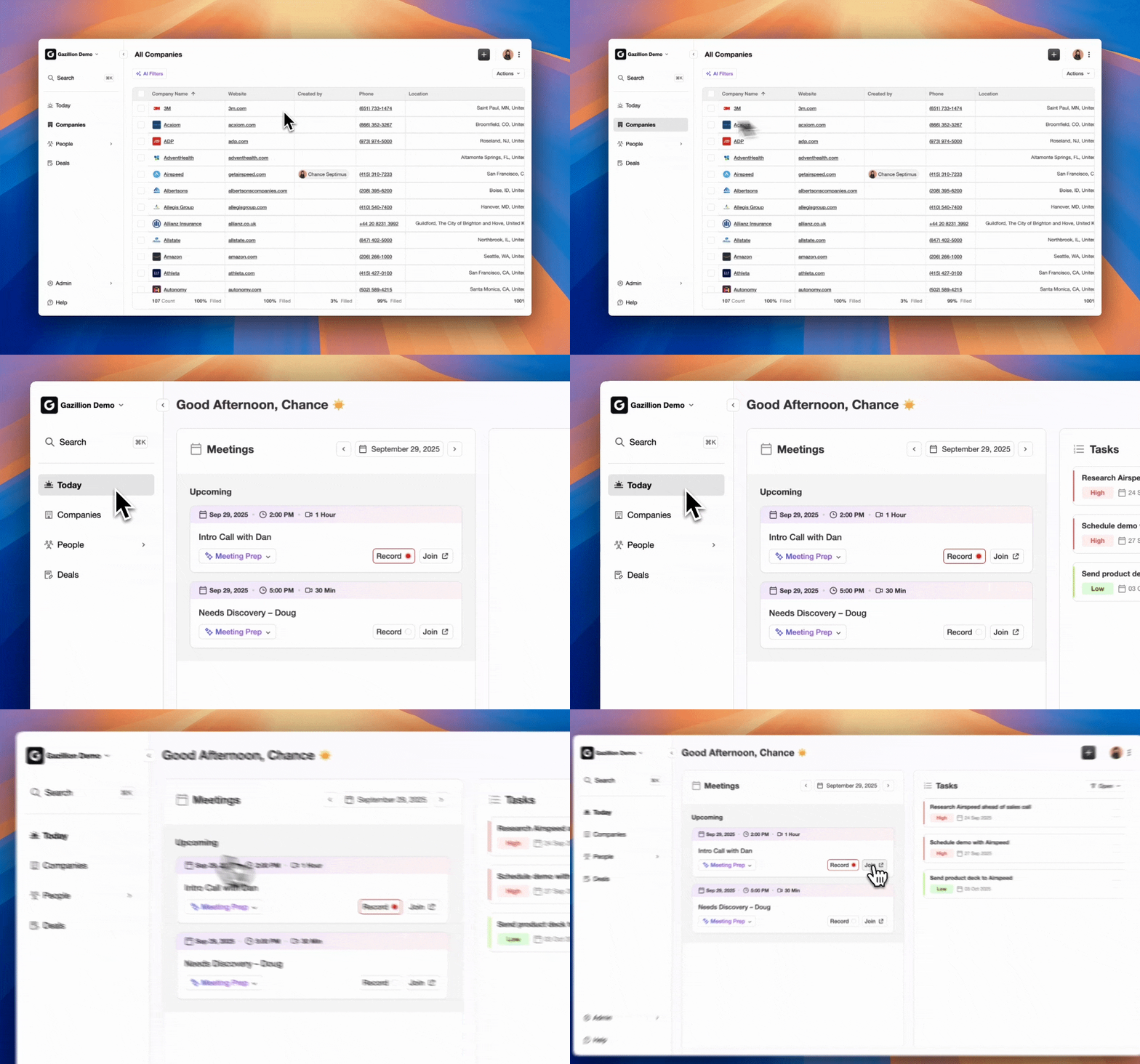
Modern MEDDPICC execution uses AI-powered tools for prospect research, competitive intelligence, and stakeholder mapping. Coffee’s List Builder supports this shift by letting sales teams identify qualified prospects with natural language commands while the AI agent handles data enrichment and initial qualification scoring. This approach matches buyer preferences for self-service research and ensures sales teams enter conversations with MEDDPICC intelligence already captured and analyzed.

Frequently Asked Questions About MEDDPICC and Coffee
What is a MEDDPICC example?
A typical MEDDPICC example features a SaaS company selling CRM software to a mid-market organization. The Metrics might include reducing sales cycle time by 25% and increasing win rates by 15%. The Economic Buyer would be the VP of Sales with budget authority, while the Champion could be a Sales Operations Manager frustrated with current manual processes. Decision Criteria would include integration capabilities, user adoption rates, and ROI timeline.
The Decision Process might involve IT security review, legal contract approval, and executive sign-off over 90 days. Paper Process would cover security questionnaires, MSA negotiations, and procurement workflows. The Pain could be quantified as lost revenue from poor pipeline visibility, while Competition might include incumbent solutions, alternative vendors, and maintaining the status quo.
Is there MEDDPICC certification?
Yes, several organizations offer MEDDPICC certification programs. MEDDIC Academy, founded by original PTC practitioner Darius Lahoutifard, provides comprehensive online courses and official certifications. Force Management offers MEDDPICC training through their Ascender program, while other providers like Inspir’em deliver specialized training.
These certification programs typically take 3–4 weeks to complete and cover practical implementation, deal coaching, and qualification best practices. Many sales organizations require MEDDPICC certification for enterprise sales roles to maintain consistent qualification standards across their teams.
What is MEDDPICC sales methodology?
MEDDPICC is a comprehensive sales qualification methodology designed for complex, multi-stakeholder enterprise deals. Unlike simple qualification frameworks, MEDDPICC provides a systematic approach to understanding and influencing the buyer’s journey across eight critical dimensions. The methodology helps sales teams decide which opportunities deserve investment, identify deal risks early, and develop strategies to win competitive evaluations.
It evolved from the original MEDDIC framework developed at PTC and has been adapted by enterprise sales teams to address modern buying processes involving procurement teams, security reviews, and competitive bake-offs. The methodology works best for deals over $100K with multiple stakeholders and sales cycles exceeding 90 days.
Does Coffee integrate securely?
Yes, Coffee maintains enterprise-grade security standards with SOC 2 Type 2 compliance and GDPR adherence. The platform integrates securely with Google Workspace, Microsoft 365, Salesforce, and HubSpot through authenticated APIs.
Coffee also connects with hundreds of additional tools via Zapier for workflow automation. All data transmission uses encryption, and Coffee does not use customer data to train public AI models. The platform undergoes regular security audits and follows strict data governance policies to protect sensitive sales and customer information.
How does Coffee handle MEDDPICC vs Salesforce?
Coffee enhances Salesforce implementations by acting as an intelligent Companion App that automates data capture and qualification. While Salesforce provides the system of record, Coffee’s AI agent handles the “data in” process by automatically logging activities, enriching records, and structuring intelligence from emails and calls.
This removes the manual data entry burden that often causes poor CRM adoption. Coffee writes structured data back to Salesforce custom fields, which enables accurate forecasting and pipeline analysis. For teams not using Salesforce, Coffee operates as a standalone AI-first CRM with built-in qualification workflows.
Conclusion: Turning MEDDPICC Into a Scalable Advantage
MEDDPICC gives enterprise sales teams a clear, repeatable structure for winning complex, multi-stakeholder deals. Manual implementation can be time-consuming, but Coffee’s AI agent automates the qualification process and keeps data accurate without extra admin work.
Start your free trial of Coffee to shift your qualification from manual busywork to automated intelligence that drives revenue growth.