
Key Takeaways
- Leadfeeder’s IP-based company tracking falls behind 2026 privacy laws and remote work. Teams now need person-level identification for reliable accuracy.
- Coffee.ai leads as the #1 alternative, with an AI agent that delivers person-level visitor ID, persona-matched lead suggestions, and automated CRM workflows.
- Other alternatives like RB2B provide person-level data but lack Coffee’s AI-driven prioritization and automation, while most tools still focus only on company-level data.
- Key 2026 criteria include 5–20% person-level match rates, native Salesforce and HubSpot integration, SOC 2 compliance, and setup in under 30 minutes.
- Upgrade to Coffee’s AI-powered platform to turn anonymous traffic into qualified pipeline with zero manual data entry.
2026 Buyer Criteria and Trends for Visitor Identification Platforms
Modern B2B teams now expect visitor identification platforms to deliver person-level accuracy, AI-driven lead suggestions, and automated CRM workflows. Person-level tools achieve 5-20% match rates for US traffic, while company-level identification reaches 30-65%. Remote work has broken traditional IP-based tracking, so multi-signal approaches now matter for serious teams.
Key Factors for 2026:
- Identification Accuracy: Person-level data quality compared with company-only records
- Lead Quality: AI-suggested prospects that match your buyer personas
- CRM Integration: Native Salesforce and HubSpot connectivity
- Automation Depth: Automated entry, enrichment, and follow-ups
- Privacy Compliance: SOC 2 Type II certification and GDPR alignment
- Setup Speed: Implementation in under 30 minutes
Privacy trends dominate 2026 requirements. California’s CCPA revisions mandate robust opt-out mechanisms, and browser restrictions limit cookie-based tracking. Teams now look for platforms that maintain accuracy while respecting user consent and data minimization principles.
With these criteria in place, you can clearly see how each Leadfeeder alternative stacks up on accuracy, automation, and compliance.
Top 10 Leadfeeder Alternatives for 2026
1. Coffee.ai – AI Agent for Person-Level Identification and Automation
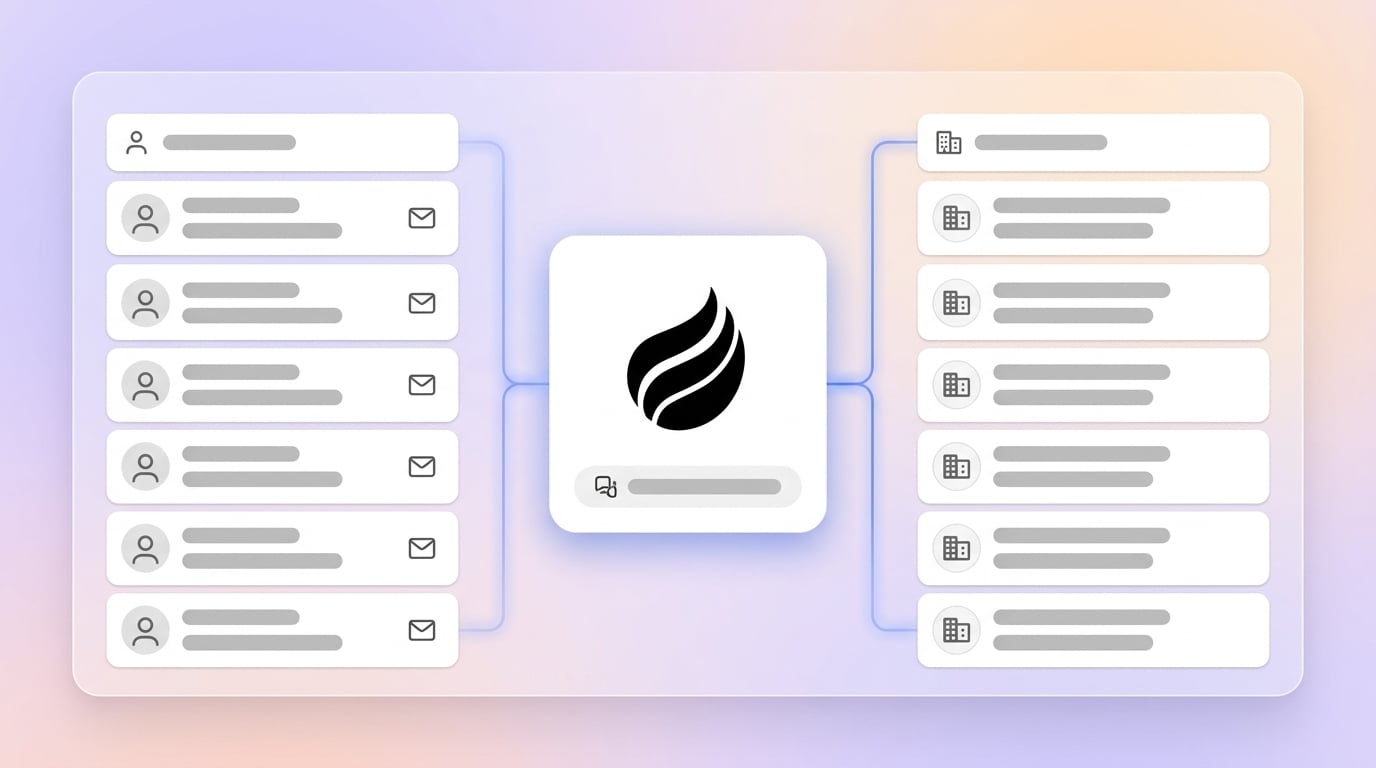
Coffee stands alone as the only visitor identification platform powered by an autonomous AI agent that unifies pixel tracking, persona-matched lead suggestions, and automated CRM workflows. Competing tools often dump raw visitor lists, while Coffee’s agent identifies named individuals and recommends the top two or three people inside visiting companies based on your buyer persona.
Key Features: Person-level identification with LinkedIn profiles, AI-suggested leads that match ICPs, automatic CRM entry and enrichment, real-time Slack notifications, and smooth integration with existing sales workflows. Coffee saves teams 8-12 hours weekly by removing manual data entry and lead research.

Best For: US SMBs and mid-market teams that want an intelligent upgrade from Leadfeeder’s company-only tracking. Coffee works as both a standalone CRM and a companion app for Salesforce and HubSpot instances.
Pricing: Seat-based pricing with unlimited agent labor included. See pricing and start your trial to experience AI-driven visitor identification.
2. RB2B – Person-Level Identification Without AI Suggestions
RB2B provides person-level match rates for US traffic with names, job titles, and LinkedIn profiles. It achieves similar person-level performance to leading tools but does not include AI-driven lead suggestions, so teams still review visitor lists manually.
Best For: Teams that want person-level data and are comfortable handling lead prioritization themselves.
3. Leadinfo – EU-Focused Budget Company Tracker
Leadinfo targets European markets with GDPR-compliant company identification for company-level tracking. It focuses on coverage and compliance rather than individual contact records.
Best For: European teams that prioritize compliance and account-level data over person-level accuracy.
4. Albacross – Intent-Focused Company Tracking for ABM
Albacross emphasizes intent signals and buying behavior analysis at the company level. It supports ABM strategies but does not provide individual contact identification.
Best For: Marketing teams focused on account-level intent that do not require person-level outreach.
5. Lead Forensics – Enterprise IP Database for Company Identification
Lead Forensics maintains an IP-matched database covering 1.4 billion IPs for company identification. It primarily targets large enterprises with complex tracking and reporting needs.
Best For: Enterprise teams with dedicated IT resources and strict compliance requirements.
6. 6sense – AI Intent for Large Account-Based Programs
6sense applies predictive modeling for intent detection and account prioritization. Its focus sits on enterprise ABM strategies rather than individual visitor identification.
Best For: Large marketing teams running sophisticated ABM campaigns.
7. Visitor Queue – Basic Company Identification for Small Teams
Visitor Queue offers straightforward company-level tracking. It does not include advanced AI features or person-level identification.
Best For: Small teams that only need basic company visitor data.
8. Clearbit – Data Enrichment for Existing Leads
Clearbit primarily enriches existing leads rather than identifying anonymous visitors and does not provide real-time visitor tracking capabilities.
Best For: Teams that already capture leads and need deeper enrichment instead of visitor identification.
9. Warmly – Person-Level Identification with Limited Automation
Warmly achieves 15-25% person-level identification rates. It still lacks Coffee’s AI-driven lead suggestions and end-to-end automated workflows.
10. Factors.ai – High Company Coverage Without Person-Level Data
Factors.ai provides company-level visitor identification and focuses on broad company coverage. It does not offer person-level insights for direct outreach.
Leadfeeder Alternatives Comparison Table
The table below highlights the main differences. Only Coffee and RB2B provide person-level identification, and Coffee is the only platform that combines this with AI lead suggestions and native CRM integration.

| Tool | Person-Level ID | AI Suggested Leads | CRM Integration | Starting Price |
|---|---|---|---|---|
| Coffee.ai | 5-20% | Yes | Native Salesforce/HubSpot | Seat-based |
| RB2B | 5-20% | No | Zapier | Basic plan starts at $79/month |
| Leadinfo | No | No | 70+ integrations | €49/month |
| Leadfeeder | No | No | Basic CRM sync | €99/month |
Why Coffee Outperforms Other Leadfeeder Alternatives in 2026
Coffee’s AI agent architecture solves the core problem that plagues visitor identification tools: turning anonymous traffic into actionable sales opportunities. RB2B shows you who visited and Leadinfo identifies companies, while Coffee’s agent tells you which two or three people to contact and then automates the entire follow-up workflow.

The agent directly addresses the time crisis facing sales teams. Seventy-one percent of sales reps say they spend too much time on data entry, which leaves only 35% of their time for selling. By automatically enriching visitor profiles, creating CRM records, and suggesting personalized outreach strategies, Coffee reclaims those lost hours and redirects them toward client acquisition through intelligent lead prioritization.

Coffee also replaces fragmented point solutions that require multiple tools. It serves as a standalone CRM for SMBs and a companion app for existing Salesforce or HubSpot installations. This flexibility, combined with SOC 2 Type II compliance, positions Coffee as a future-proof choice for US teams navigating 2026’s privacy landscape.
Coffee Setup Steps and Practical Use Cases
Coffee deploys in under 30 minutes through a simple three-step process. Add the tracking pixel to your website’s head tag, authenticate your CRM connection, and configure persona-based lead suggestions. The AI agent then starts identifying visitors and filling your pipeline with enriched contact data.

SMB Implementation: Use Coffee as your primary CRM system. This approach removes the need for separate visitor tracking, enrichment, and sales management tools.
Mid-Market Setup: Deploy Coffee as a companion app that feeds enriched visitor data into existing Salesforce or HubSpot instances. Your current workflows stay intact while you gain AI-powered lead intelligence.
Common objections around integration complexity fade because of Coffee’s native CRM connections and GDPR compliance architecture. This ease of integration explains why teams typically see qualified leads flowing within 24 hours of implementation.
Get started with Coffee to upgrade your visitor identification strategy with AI-powered lead suggestions and automated CRM workflows.
Frequently Asked Questions
How does Coffee compare to RB2B for person-level identification?
Both Coffee and RB2B achieve similar person-level match rates for US traffic, but Coffee adds AI-driven lead suggestions that recommend which specific individuals to contact based on your buyer persona. RB2B provides raw visitor lists that require manual review, while Coffee’s agent automatically prioritizes the top two or three prospects per visiting company and pre-fills outreach templates. Coffee also includes automated CRM entry and enrichment, which removes the manual data work that RB2B still requires.
What makes Coffee better than Leadfeeder in 2026?
Leadfeeder only identifies companies visiting your website, with tracking that identifies up to 45% of companies visiting your website but no individual contact details. Coffee identifies named individuals with LinkedIn profiles, job titles, and email addresses, then uses AI to suggest which people match your ideal customer profile. Coffee’s agent also automates CRM entry, lead scoring, and follow-up workflows that Leadfeeder leaves to manual handling. For 2026’s privacy landscape, Coffee relies on its earlier SOC 2 certification while Leadfeeder struggles with CCPA requirements.
Is Coffee the best Leadfeeder alternative for US teams?
Coffee specifically targets US markets with person-level identification tuned for American business data and privacy regulations. It maintains SOC 2 Type II certification and CCPA compliance, which addresses 2026’s regulatory requirements for US teams. The AI agent’s lead suggestions work best with US-based LinkedIn profiles and business hierarchies, while competitors like Leadinfo focus mainly on European markets. Coffee’s integration with popular US CRM systems like Salesforce and HubSpot supports seamless workflows for American sales teams.
How does Coffee’s pricing compare to other visitor identification tools?
Coffee uses seat-based pricing where you pay for human users and the AI agent’s unlimited labor comes included. This model differs from competitors like RB2B (Basic plan starts at $79/month) or Leadinfo (€49/month for basic features). Coffee’s pricing scales efficiently as your team grows because the agent handles increasing visitor volumes without extra per-lead costs. The plan includes person-level identification, AI lead suggestions, CRM automation, and enrichment that would otherwise require several separate tools.
Is Coffee privacy compliant for 2026 regulations?
Coffee maintains SOC 2 Type II certification and GDPR compliance, with architecture designed for 2026’s privacy landscape including CCPA revisions and state-level regulations. The platform implements consent management, data minimization, and opt-out mechanisms required by current privacy laws. Coffee’s agent processes visitor data according to privacy-first principles, unlike older IP-based tools that struggle with consent requirements. The system also includes built-in compliance features for US states with comprehensive privacy laws effective in 2026.
Conclusion: Move From Passive Tracking to AI-Driven Pipeline
Coffee represents a clear shift from passive visitor tracking to intelligent lead generation powered by an AI agent. Traditional tools like Leadfeeder send company lists that demand manual follow-up, while Coffee’s agent identifies named individuals, suggests persona-matched prospects, and automates the entire lead development workflow.
For B2B teams facing 2026’s privacy regulations, remote work challenges, and rising expectations for personalized outreach, Coffee offers a unified approach that combines visitor identification with actionable intelligence and automated execution. The platform removes tool sprawl by combining tracking, enrichment, lead scoring, and CRM automation in a single AI-powered system.
Replace Leadfeeder’s tool sprawl with Coffee’s unified AI platform and experience the future of AI-driven visitor identification.