
Key Takeaways for SMB Sales Leaders
- Standalone CRMs usually beat Salesforce for SMBs with 1-100 employees because of lower costs, instant setup, and higher adoption.
- Salesforce often suffers from data quality issues, heavy manual entry, and 3-6 month implementations that waste 71% of rep time on admin work.
- Coffee’s AI agents handle data entry, enrichment, and pipeline management, saving 8-12 hours per week for each sales rep.
- Small teams should choose Coffee as a standalone CRM, while existing Salesforce users can add Coffee’s Companion App to fix data issues without migrating.
- Ready to upgrade your CRM workflow today? Get started with Coffee for AI-powered sales productivity.
How Standalone CRMs Work for Small Sales Teams
Standalone CRMs are self-contained platforms built for simplicity and speed. Unlike Salesforce’s ecosystem approach, standalone CRMs centralize contact and deal management for teams of 100 or fewer employees, with simple permissions, minimal security setup, limited customization, and connections to key apps like email and marketing.
Popular standalone options include HubSpot, Pipedrive, and Coffee. These platforms prioritize quick implementation over complex customization. Pipedrive can be live in a day with no setup fees, and HubSpot’s free CRM is available instantly. This speed makes standalone CRMs a strong fit for growing sales teams that want immediate productivity gains.
The core difference is philosophical. Standalone CRMs serve the user, while enterprise platforms like Salesforce often expect users to serve the system. For SMBs comparing CRM options, five criteria matter most: total cost of ownership, setup complexity, scalability limits, data quality automation, and user adoption rates.
Standalone CRM vs Salesforce: Quick Verdict for 2026
| Feature | HubSpot | Salesforce | Coffee |
|---|---|---|---|
| Setup Time | Instant (Free tier) | 3-6 months | Instant integration |
| Total Cost | $9-$1,200/user/month | $25+ plus 40-60% implementation | Simple seat pricing |
| Data Entry | Manual input required | 71% of rep time wasted | AI agent automates |
| User Adoption | High (simple interface) | Low (complex workflows) | High (AI co-pilot) |
| Scalability | Full enterprise features available | Unlimited scale | Ideal for small to mid-sized businesses |
Salesforce delivers unmatched scale but carries 25 years of legacy baggage. Implementation costs often equal 40-60% of first-year subscription costs, with training adding another 20-30%. Standalone CRMs win on simplicity and cost, although most still rely on manual data entry.
Coffee closes this gap by pairing standalone simplicity with AI agent intelligence. The platform automates data entry, enrichment, and pipeline management while keeping the fast setup and high adoption rates that SMBs expect from standalone CRMs.

Why Salesforce Often Fails SMB Sales Teams
About 74% of Salesforce customers struggle with customer outcomes because of fragmented data architectures. This fragmentation pushes sales reps into manual data entry instead of strategic selling. The main problems for SMB Salesforce deployments include outdated architecture, weak user experience, and overwhelming complexity.
Salesforce’s 25-year-old architecture has trouble with unstructured data such as email text and call transcripts. When fields change, historical context disappears permanently. This behavior creates data silos that demand costly integrations and constant maintenance. Common implementation issues include disparate or dirty data and a backlog of technical debt fixes that slow Salesforce adoption.
The user experience challenge makes these technical limits even worse. Many sales reps see Salesforce as a chore because they must feed the software instead of the software supporting them. Adoption drops, shadow CRMs appear in spreadsheets, and the “bad data in, bad data out” cycle erodes the entire investment.
How Coffee’s AI Agents Help SMBs Win
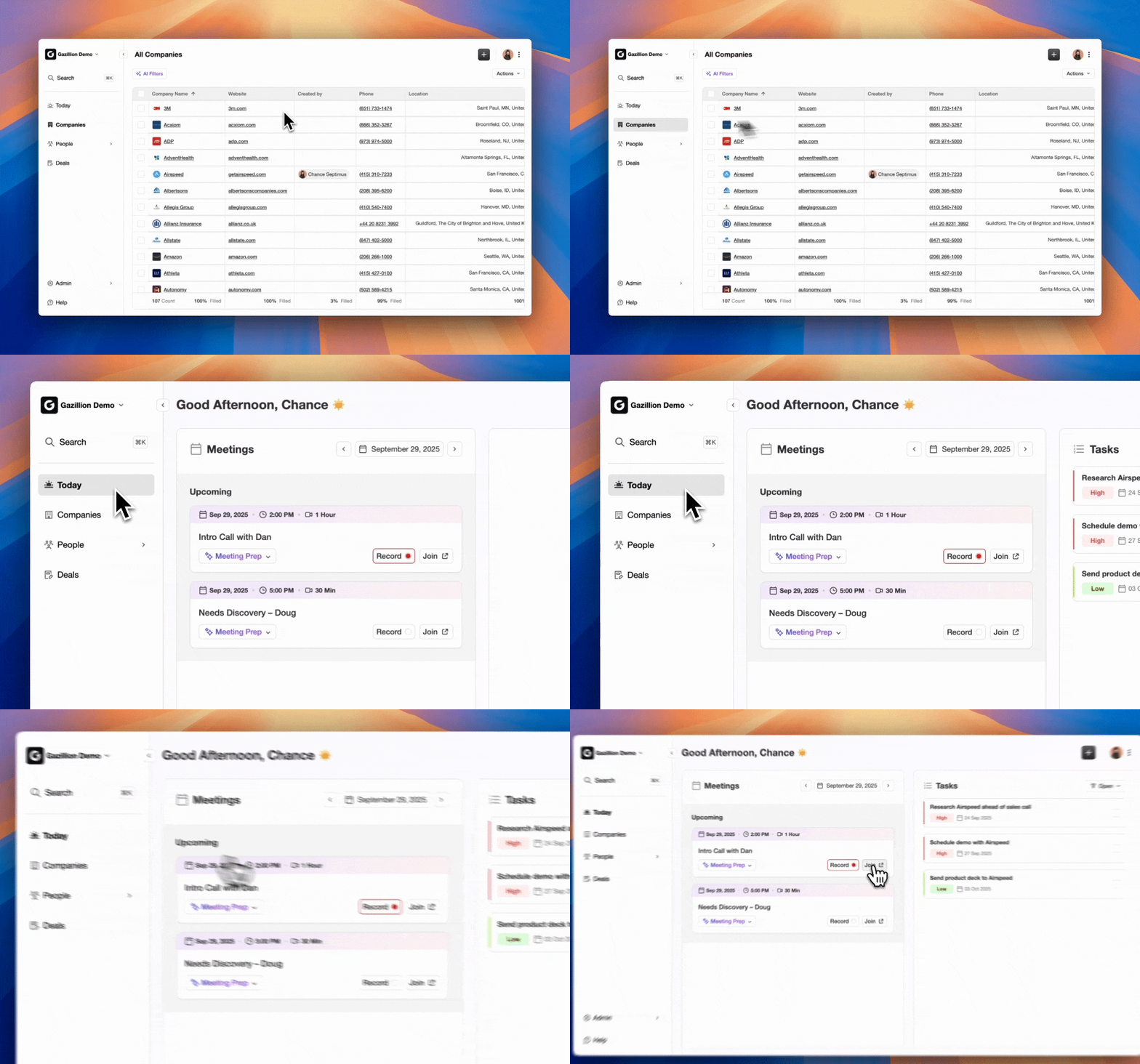
Coffee’s AI agent model removes the central flaw in traditional CRMs: the belief that humans will consistently enter complete data. Instead of turning sales reps into data entry clerks, Coffee’s agent automatically captures, enriches, and structures customer information from emails, calendars, and meeting transcripts.
Teams with 1-20 sales reps see fast value from automated data entry and enrichment, meeting orchestration with pre-call briefings and post-call summaries, and pipeline intelligence that replaces manual CSV exports. The agent typically saves 8-12 hours per week per rep by removing low-value admin work.

One company generating tens of millions in revenue recently selected Coffee instead of Salesforce and HubSpot because manual data entry could not scale. The team needed automated contact creation from Google Workspace, actionable pipeline insights, and API flexibility for custom workflows. Coffee’s agent delivered all three while keeping an intuitive experience that supports strong user adoption.

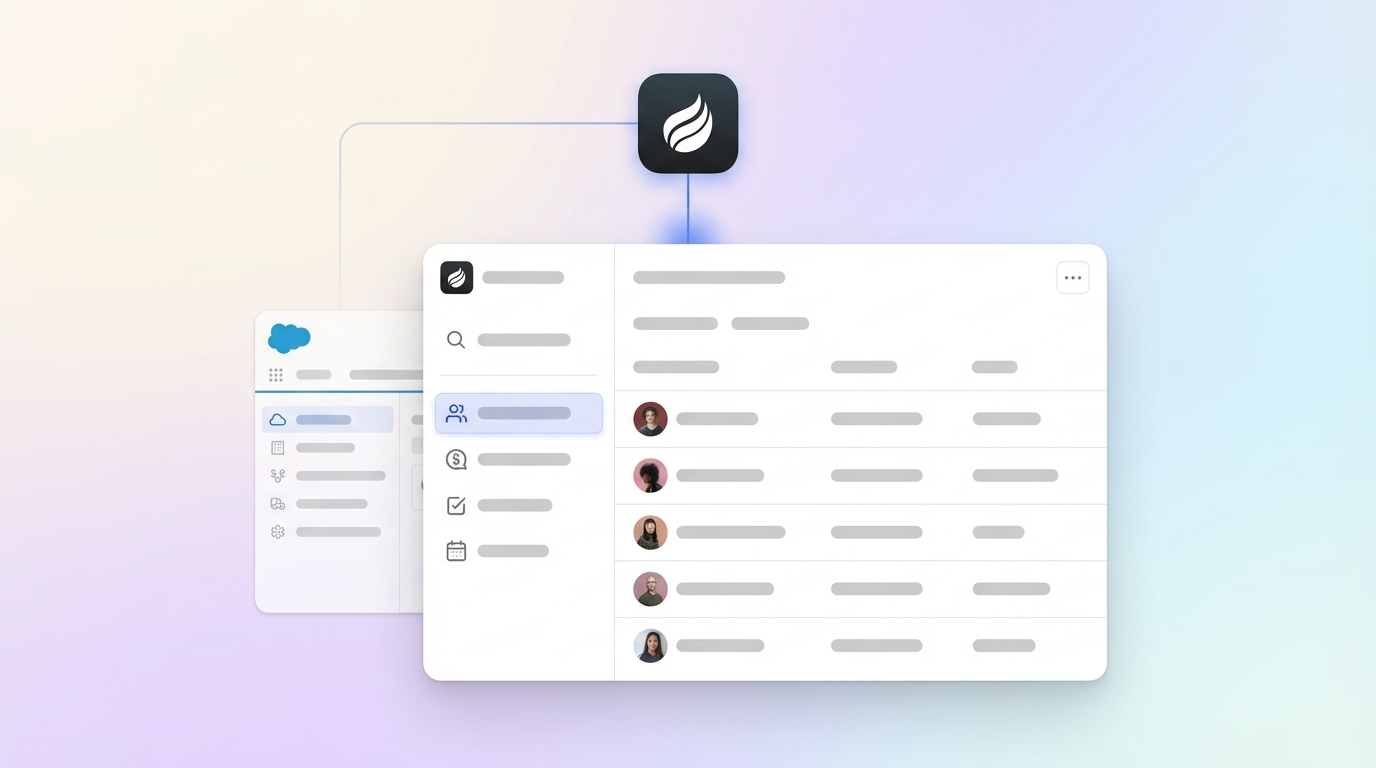
Teams already committed to Salesforce can still benefit. Coffee’s Companion App acts as an intelligent layer that protects data quality without forcing a platform migration. Get started with Coffee to see how AI agents reshape CRM productivity.

Choosing the Right CRM for Your Sales Team Size
Team size and current stack should guide your CRM decision. Small companies with 1 to 20 employees get the most value from Coffee’s standalone CRM, which delivers instant AI automation and high adoption.
Small to mid-market teams already using Salesforce or HubSpot can add Coffee’s Companion App to repair data quality issues without migration costs. This approach keeps existing workflows while improving accuracy and visibility.
For beginners, Coffee removes most of the learning curve. New users work with an AI agent that handles administrative tasks, so they can focus on selling instead of managing a complex system.
Salesforce Alternatives SMBs Should Consider
Coffee leads the standalone CRM space because of its AI agent advantage. HubSpot and Pipedrive keep things simple but still depend on manual data entry. Newer tools like Clarify and Day.ai offer modern interfaces but often lack the integration depth that established sales teams need.
Automation remains the main differentiator. Coffee is the only option in this group that deploys an AI agent capable of working with both structured and unstructured data while meeting teams where they are, either as a standalone platform or as a Salesforce companion.
Practical Decision Guide for Your CRM Strategy
A simple framework can clarify your CRM strategy. If you have fewer than 20 reps and want instant productivity, choose Coffee’s standalone platform. If you rely on Salesforce but face data quality problems, deploy Coffee’s Companion App.
Teams that only need basic CRM features and can live without AI automation can consider HubSpot or Pipedrive. These tools still provide a lighter experience than a full Salesforce rollout.
Total cost of ownership usually favors Coffee for SMBs. Salesforce often demands expensive implementation projects and ongoing administration. Coffee connects quickly with Google Workspace or Microsoft 365, and the AI agent handles most maintenance tasks automatically. Get started with Coffee to see how AI automation changes your daily workflow.
Frequently Asked Questions About SMB CRMs
What is a standalone CRM?
A standalone CRM is a self-contained customer relationship management platform built for simplicity and quick rollout. Unlike enterprise systems that demand heavy customization and technical resources, standalone CRMs focus on core sales functions such as contact management, deal tracking, and basic automation. They work well for small to mid-sized businesses with straightforward sales processes that want fast productivity gains without complex setup.
How does HubSpot compare to Salesforce for small businesses?
HubSpot offers instant setup with a free tier and an intuitive interface that supports high adoption among small teams. Salesforce provides unlimited scalability and deep customization but usually requires 3-6 months of implementation and significant ongoing administration. For SMBs under 100 employees, HubSpot’s simplicity often outweighs Salesforce’s power unless the business truly needs complex enterprise workflows.
What is the best CRM for small businesses in 2026?
Coffee leads the small business CRM category by combining standalone simplicity with AI agent automation. Traditional options like HubSpot and Pipedrive still depend on manual data entry. Coffee’s agent automatically captures and enriches customer information from emails, calendars, and meetings. This automation removes the 8-12 hours per week that sales reps usually spend on admin tasks and frees them to focus on selling.
What is the biggest problem with Salesforce?
Poor data quality is Salesforce’s biggest challenge, with 53% of users citing data availability and quality issues as the top adoption barrier. The platform’s 25-year-old architecture struggles with fragmented data, so sales reps often need to enter information manually across several systems. This pattern creates a productivity drain where reps spend more time serving the software than serving customers.
What is replacing Salesforce?
AI agents like Coffee are emerging as the next generation of CRM technology. Instead of passive databases that wait for human data entry, AI agents actively capture, enrich, and analyze customer information. This shift from software-as-a-tool to software-as-a-worker marks a fundamental change in how businesses manage customer relationships.
Conclusion: Set Your CRM Direction for the Future
The standalone CRM vs Salesforce choice reflects how you want your sales team to work. You can ask reps to serve the software, or you can let software serve your reps. For SMBs that want fast productivity gains without enterprise complexity, Coffee’s AI agent turns CRM from an administrative burden into a strategic advantage. Get started with Coffee today and experience the next generation of sales productivity.