
Key Takeaways
- Person-level website visitor identification reveals names, emails, and LinkedIn profiles from anonymous B2B traffic, so sales teams can run personalized outreach instead of guessing from company-only data.
- Coffee ranks #1 in 2026 with AI-suggested leads, native CRM integrations (Salesforce, HubSpot), and real-time Slack alerts that lift conversion rates.
- Typical person-level match rates fall between 5% and 20%, while Coffee improves accuracy through advanced fingerprinting and buyer persona matching.
- Integrated CRM agents like Coffee automate workflows from visitor capture through outreach and remove 8-12 hours each week of manual data entry.
- Start with Coffee today for seat-based pricing, GDPR/CCPA compliance, and a fast setup that turns anonymous visits into qualified pipeline.
How Person-Level Website Visitor Identification Works in Practice
Person-level website visitor identification uses a tracking pixel, browser fingerprinting, and data partnerships to match anonymous visits to named individuals with details such as name, title, email, and LinkedIn profile. This approach combines several data sources and outperforms basic IP-to-company matching, which only reveals the organization.
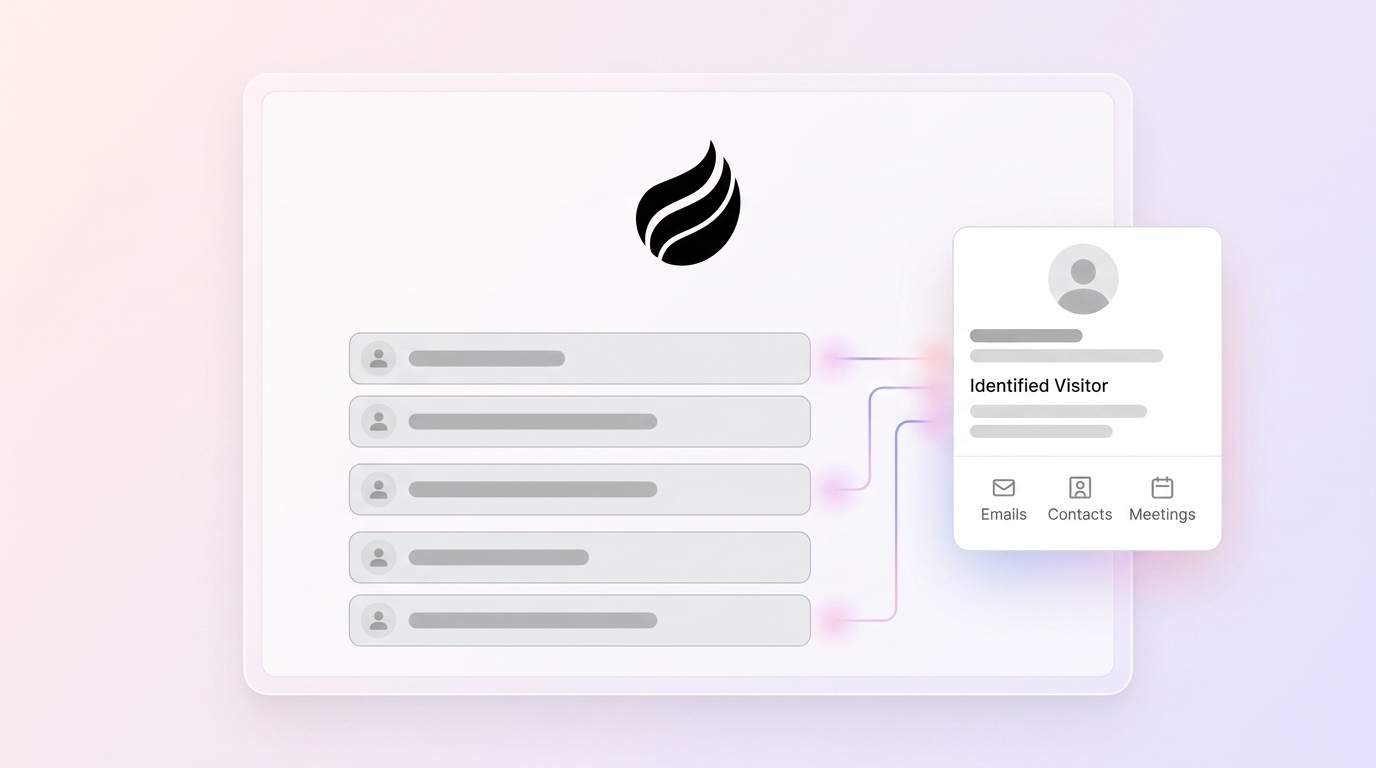
The process follows five steps that progressively turn unknown traffic into actionable leads. First, you install a tracking pixel in your website header so the system can begin collecting visitor data. The pixel then captures each visitor’s IP address, device fingerprint, and behavioral patterns across your pages. The platform next cross-references that data against identity databases using reverse lookup to find likely matches. Once it finds a match, AI enrichment adds job titles, contact information, and social profiles to create a complete prospect record. Finally, real-time CRM alerts notify your sales team with these enriched profiles so they can respond while interest is high.
Modern fingerprinting techniques achieve high accuracy for B2B traffic, with the match rates mentioned earlier varying based on visitor location, company size, and whether employees browse from corporate or home networks. Person-level identification solves the common limitation of company-only tools that leave sales teams guessing which specific individuals to contact inside large organizations.
How We Evaluated Person-Level Identification Tools for 2026
We evaluated person-level website visitor identification tools across seven criteria to determine 2026 rankings. The four primary factors shown in the table below account for 75% of each tool’s score, and person-level accuracy carries the highest weight because it directly affects whether you reach real decision-makers instead of generic contacts.
| Criteria | Weight | Benchmark | Source |
|---|---|---|---|
| Person-Level Accuracy | 25% | 5-15% match rates | MarketBetter.ai |
| CRM Integration Depth | 20% | Native vs. API-only | Guideflow |
| Real-Time Capabilities | 15% | Instant Slack alerts | AiSDR |
| 2026 Compliance | 15% | GDPR/CCPA/SOC2 | Kwanzoo |
The remaining three criteria, which complete our evaluation framework, include transparent pricing models at 10%, setup complexity at 10%, and proven ROI case studies at 5%. See Coffee’s transparent pricing and setup process to experience the #1-ranked solution for person-level visitor identification.
Top 7 Person-Level Identification Tools Ranked for 2026
1. Coffee
Coffee leads the market with AI-powered “Suggested Leads” that recommend two or three specific individuals within visiting companies based on your buyer personas. Native integrations with Salesforce, HubSpot, and Slack support automated CRM enrichment and real-time notifications that reach reps where they already work. Seat-based pricing removes complex metering, and case studies show higher outreach conversion rates through Coffee’s integrated CRM agent approach. The platform combines visitor identification, meeting intelligence, and pipeline management in one connected workflow.

2. Bullseye
Bullseye achieves up to 40% identification rates with strong person-level matching on supported traffic. The platform, however, lacks the deeper CRM integration and AI-suggested leads that set Coffee apart. Basic Slack notifications and standard enrichment data limit automation compared with agent-driven systems that manage more of the sales process.
3. Warmly
Warmly provides ~15% average person-level match rates (5-20% range across customers, on US traffic), with plans starting at $15,000 per year for outbound orchestration and $30,000 per year for inbound capabilities. The platform emphasizes real-time chat engagement and visitor routing. Teams that want full person-level coverage, however, should expect a significant budget commitment.
4. RB2B
RB2B offers 10-20% person-level match rates for US traffic only, with a free tier that provides company-level data and paid plans starting at $79 per month. LinkedIn profile matching works well for US-based prospects, yet geographic limits reduce effectiveness for global go-to-market teams.
5. Kwanzoo
Kwanzoo provides identification with CCPA-compliant USA-only data that includes mobile numbers and LinkedIn URLs. Custom pricing and an enterprise focus make it better suited to large organizations than to mid-market teams that want fast, self-serve deployment.
6. ZoomInfo WebSights
ZoomInfo offers SalesOS starting at $15,000 per year with strong enterprise CRM integrations and extensive firmographic data. The platform excels in large-scale ABM programs, yet the cost and complexity create barriers for companies that need agility and shorter sales cycles.
7. Leadfeeder
Leadfeeder focuses primarily on company-level identification with limited person-level capabilities, which works for basic visitor tracking but falls short for personalized outreach that depends on individual contact details.
The table below summarizes how the top four tools compare on the three factors that matter most for conversion: accuracy, integration depth, and pricing accessibility.
| Tool | Person-Level Accuracy | CRM Integration | Starting Price/Month |
|---|---|---|---|
| Coffee | High | Native Agent | Seat-based |
| Warmly | ~15% | API Integration | $1,250 |
| RB2B | 10-20% | Basic CRM Sync | $79 |
| ZoomInfo | Varies | Enterprise Native | $15,000+ |
Compare Coffee’s accuracy rates and pricing to see how it outperforms alternatives with built-in CRM automation.
Why Integrated CRM Agents Like Coffee Outperform Standalone Tools
Integrated CRM agents like Coffee outperform standalone visitor identification tools because they remove data silos and automate the full journey from pixel capture to personalized outreach. Coffee’s agent approach connects visitor identification with CRM enrichment, automated drip campaigns, and LinkedIn prospecting inside one system.

This tight integration removes the 8-12 hours each week that sales teams usually spend on manual data entry and prospect research. Companies report higher conversion rates when visitor identification flows directly into automated sales workflows instead of relying on handoffs between disconnected tools.

Coffee’s “Good Data In, Good Data Out” philosophy keeps CRM records enriched with fresh visitor intelligence, triggers persona-based lead scoring, and starts the right follow-up sequences without human intervention. This agent-driven model scales personalized outreach while protecting data quality across the entire sales funnel.

Fast Coffee Setup and 2026 Compliance Requirements
Coffee implementation requires five simple steps that move you from installation to automated lead capture in minutes. You generate a custom tracking pixel in the dashboard, then add the script to your website header so Coffee can collect visitor data. After the script goes live, you verify installation through real-time testing to confirm that events reach the platform. With tracking confirmed, you configure buyer personas for AI matching so Coffee knows which visitors to prioritize. Finally, you connect your CRM for automated data sync, which removes manual entry for new leads.
2026 compliance frameworks allow fingerprinting techniques under CCPA when proper opt-out mechanisms exist, and Coffee maintains SOC2 and GDPR compliance through EU data residency and transparent privacy controls. GDPR-compliant setups usually limit EU visitors to company-level identification while enabling full person-level tracking for US traffic.
Real-User Concerns and How Coffee Addresses Them
Real users often raise accuracy skepticism and privacy concerns when they evaluate person-level identification tools. Coffee addresses these issues by committing to never use customer data for public AI training and by publishing transparent accuracy reporting. The platform also offers granular privacy controls that exceed common industry standards.
Frequently Asked Questions
How accurate is person-level website visitor identification in 2026?
Leading platforms like Coffee achieve competitive person-level match rates through advanced fingerprinting and AI-powered data matching. Accuracy varies by geographic region, with US-based visitors showing higher identification rates than international traffic. Coffee’s AI-suggested leads feature, described in the rankings above, further improves relevance by automatically prioritizing decision-makers who match your ideal customer profile.
How does Coffee compare to Warmly for person-level identification?
Coffee provides deeper CRM integration through its agent-based architecture, while Warmly focuses on real-time chat engagement with basic visitor identification. Coffee’s AI-suggested leads and native CRM automation remove manual workflow steps that Warmly still requires. Coffee also offers more transparent pricing without complex tier restrictions.
What is the typical setup time for person-level visitor identification?
Coffee supports quick deployment through a guided setup process that walks teams through each step. The platform automatically verifies pixel installation, helps configure buyer personas, and establishes CRM connections without developer resources. Many competing solutions need extra time for full implementation and testing.
Is person-level identification viable after third-party cookie deprecation?
Person-level identification remains viable after third-party cookie deprecation because modern fingerprinting and first-party data collection do not rely on those cookies. Coffee’s approach combines device fingerprinting, behavioral analysis, and identity graph matching to maintain strong accuracy in the post-cookie environment.
Which person-level identification tool works best for SMBs?
Coffee’s seat-based pricing and integrated CRM agent make it a strong fit for small-to-medium businesses that want comprehensive visitor identification without enterprise complexity. The platform removes the need for separate enrichment, CRM, and outreach tools while still providing enterprise-grade accuracy and compliance features.
Conclusion: Turning Anonymous Traffic into Qualified Pipeline
Person-level website visitor identification turns the long-standing challenge of anonymous B2B traffic into qualified sales opportunities through AI-powered prospect matching and automated CRM workflows. Coffee leads the 2026 market with strong accuracy, native CRM integration, and AI-suggested leads that remove much of the manual prospecting work.
The shift from standalone tools to integrated CRM agents represents the next stage of B2B sales intelligence, where visitor identification feeds directly into personalized outreach and automated pipeline management. Companies that adopt Coffee’s agent-driven approach report meaningful gains in conversion rates and sales team productivity.
Start your Coffee trial today to experience advanced person-level website visitor identification for 2026, complete with AI-suggested leads and native CRM automation that turns anonymous traffic into qualified pipeline.