
Last updated: March 30, 2026
Key Takeaways
- Small B2B teams lose 71% of selling time to manual data entry, while organized pipelines deliver 2x faster deal closure and 30% shorter cycles.
- Define your ICP and use six clear stages (Awareness to Closed) with BANT criteria so only qualified leads move forward.
- Choose automation-focused tools like Coffee to remove manual CRM data entry and keep your pipeline clean automatically.
- Track core metrics such as 3-4x pipeline coverage, sales velocity, and stage conversion rates to forecast revenue with confidence.
- Put these steps into practice with Coffee to reclaim hours from admin work and scale your pipeline without adding headcount.
Step 1: Define Your ICP and B2B Sales Pipeline Stages
Effective pipeline organization starts with a precise ICP and a standardized stage structure. Modern B2B sales processes rely on clear qualification criteria using frameworks like BANT (budget, authority, need, timeline) so your team focuses on quality over volume, especially when 97-99% of initial prospects never become leads.
Use these six core pipeline stages for small B2B teams:
- Awareness: Initial contact and interest identification
- Interest: Qualified prospect with confirmed need
- Consideration: Active evaluation with defined requirements
- Decision: Proposal submitted with decision-maker engagement
- Negotiation: Terms discussion and contract refinement
- Closed: Won or lost with documented reasons
Generic stages that ignore your specific sales motion or allow deals to advance without clear exit criteria create confusion. Unclear stage definitions erode forecast credibility because sales reps apply inconsistent advancement criteria.
Coffee’s autonomous agent enriches your ICP by scanning emails and calendar interactions. It identifies patterns in successful deals and refines qualification criteria based on real customer behavior instead of assumptions.
Step 2: Choose the Right CRM for Sales Pipeline for Small Team
Once you define your ICP and stages, the next critical move is selecting a CRM that supports this structure without adding admin work. CRM choice heavily affects pipeline efficiency, especially around automated data entry. Poor data quality causes average annual revenue losses of 25% through inefficiencies and flawed decisions, so small teams need automation that protects data quality while reducing manual effort.
The table below compares how popular CRM options handle automated data entry, setup time, and cost so you can see where your team will spend time selling versus typing.
|
Tool |
Auto-Data Entry |
Setup Time |
Cost (1-10 Users) |
|
Coffee Standalone |
Agent scans emails/calendars |
1 hour |
Seat-based, simple |
|
HubSpot |
Manual entry required |
1 week |
Free tier available, paid from $20/month+ |
|
Salesforce |
Manual/expensive add-ons |
2+ weeks |
$75/user/month+ |
Coffee Standalone removes the manual data entry burden that consumes most of your team’s time. The autonomous agent creates contacts, companies, and activities from your existing email and calendar data, so your pipeline stays current without constant human updates.

Book a Coffee demo to see automated pipeline management working on real sales data.
Step 3: Auto-Setup Stages and Automation
Pipeline automation cuts the manual tasks that consume 64% of a sales rep’s time on non-selling activities. Effective automation connects your communication tools directly to your CRM so every interaction updates deal status without extra clicks.
Coffee’s agent auto-creates contacts and activities from emails and calendars, with 2026 integrations including Stripe and QuickBooks for automatic deal updates from payment data. This connection closes the gap where leads book meetings through Calendly but never appear correctly in the CRM, which creates reporting blind spots.
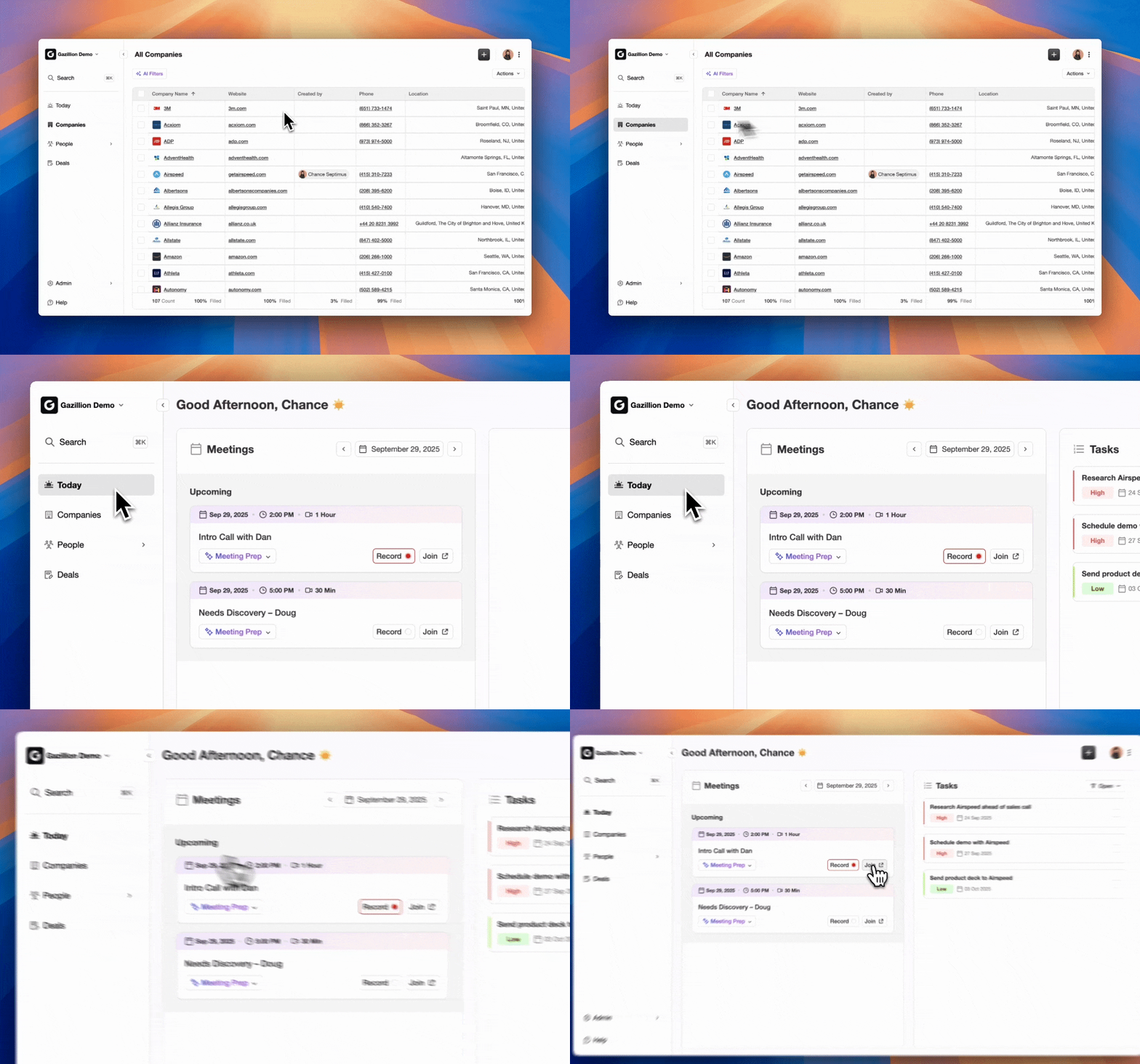
Unsynced systems cause B2B sales pipelines to collapse when meeting bookings fail to update the CRM, creating delays that kill conversions. Coffee unifies these data streams into a single source of truth and prevents those gaps.
Key automation rules include automatic activity logging, stage progression based on email engagement, and alert systems for stalled deals. The agent runs these processes continuously and keeps the pipeline accurate without constant manual checks.
Step 4: Implement Hygiene Rules for Sales Pipeline Management Small Team
Clean data keeps your forecasts accurate and your deals moving. Sixty-four percent of organizations cite data quality as their top data integrity challenge, and poor hygiene leads to stagnant deals and unreliable forecasts.
Coffee’s “Good Data In” approach delivers autonomous hygiene through continuous monitoring and correction. The agent automatically:
- Logs last and next activities for every deal
- Deduplicates records from multiple sources
- Enriches incomplete contact information
- Standardizes naming conventions
- Flags stalled deals based on engagement patterns
While the agent manages these technical tasks, your team should follow a simple hygiene routine that keeps strategy and process aligned with the automation.

Essential hygiene checklist:
- Weekly pipeline reviews with clear SLAs
- Automatic duplicate detection and merging
- Consistent stage advancement criteria
- Regular data enrichment updates
- Stalled deal identification and intervention
Missing SLAs allow qualified leads to sit idle, and speed to lead remains a key predictor of win rates. Coffee’s agent supports immediate responses to new opportunities and maintains momentum on active deals.
Step 5: Build a Metrics Dashboard for Small B2B Pipelines
Clear metrics give you visibility into pipeline health and future revenue. Pipeline coverage ratio should stay at least 3-4x quota, and average B2B win rates hover around 21%, so you need enough qualified opportunities at each stage.
Essential metrics for small B2B teams include:
- Pipeline Coverage: 3-4x quota for healthy forecasting
- Sales Velocity: (Deals × Average Size × Win Rate) ÷ Cycle Length
- Stage Conversion Rates: Percentage advancing between stages
- Average Deal Size: Revenue per closed opportunity
- Sales Cycle Length: Days from first contact to close
Coffee’s Pipeline Compare feature shows week-over-week changes without spreadsheets, highlighting progressed deals, stalled opportunities, and new additions. One $10M+ revenue team removed manual pipeline reporting and replaced weekly spreadsheet exports with automated visual dashboards.
The agent tracks pipeline changes in real time and surfaces insights about deal health and forecast accuracy. This approach removes manual reporting work and speeds up decision-making.
Step 6: Fix Bottlenecks with AI Briefings
Targeted AI briefings help you remove bottlenecks by improving how your team prepares for and follows up on meetings. Meeting preparation and follow-up often consume significant time without directly advancing deals, so automation here creates fast wins.
Coffee’s agent acts as a pre- and post-meeting executive assistant. It provides briefings on attendees, past interactions, and deal context before calls. After meetings, it generates summaries, identifies action items, and drafts follow-up emails for review and sending.

These briefings turn pipeline reviews from time-consuming interrogations into focused conversations about next steps and deal progression.

Step 7: Scale with Checklists and Methodologies
Structured methodologies keep execution consistent as your team grows. Use proven approaches like MEDDIC for qualification and structured prospecting supported by list-building tools.
Coffee’s agent supports these methodologies at scale by maintaining the structured data they require. Automated forecasting tracks MEDDIC qualification fields, Zapier integrations connect your chosen methodology to other tools, and methodology-specific note structures capture the right details during every interaction.
As your pipeline expands, the agent preserves data quality and process consistency so your team can focus on strategic work instead of admin tasks.
Implement these strategies with Coffee to keep your pipeline organized and consistent as you scale.
Manual vs. AI Pipeline Management Comparison
The table below summarizes the core efficiency differences between traditional manual CRM workflows and Coffee’s AI-powered automation so you can see where your team currently loses time and accuracy.
|
Aspect |
Manual (Traditional CRM) |
AI Agent (Coffee) |
|
Data Entry |
Most selling time spent on manual input |
Autonomous time recovery from automated capture |
|
Pipeline Hygiene |
Rep-dependent, inconsistent |
Continuous automated maintenance |
|
Forecasting |
Spreadsheet exports, manual analysis |
Pipeline Compare with visual insights |
|
Meeting Management |
Manual prep and follow-up |
AI briefings and automated summaries |
Frequently Asked Questions
What’s the best CRM for small B2B teams?
Coffee Standalone suits small B2B teams by combining CRM functionality with autonomous data management. Unlike traditional CRMs that depend on manual data entry, Coffee’s agent captures and organizes sales activities automatically, saving hours each week while keeping data hygiene high.
How many pipeline stages should small B2B teams use?
Six stages work well for most small B2B teams: Awareness, Interest, Consideration, Decision, Negotiation, and Closed. This structure matches typical B2B buying processes and stays simple enough for consistent use. Each stage needs clear entry and exit criteria so your forecast remains accurate.
What pipeline coverage ratio should small teams maintain?
Small B2B teams should maintain 3-4x pipeline coverage relative to quota. With average win rates around 21%, this coverage provides enough opportunities to hit revenue targets while accounting for slippage and longer cycles. Coffee’s Pipeline Compare feature tracks pipeline changes and offers visual insights into coverage and deal health.
How can small teams fix stalled deals in their pipeline?
Coffee’s agent flags stalled deals based on engagement patterns. It identifies deals with decreased activity through automatic logging of last and next activities, which enables proactive outreach before opportunities go cold.
What security and pricing model does Coffee use?
Coffee maintains SOC 2 Type 2 compliance and GDPR adherence with enterprise-grade security. Pricing uses simple seat-based billing where you pay for human users and receive the agent’s unlimited labor included, which keeps AI and data processing costs predictable as your team scales.
Conclusion: Scale Your Pipeline Effortlessly
These seven steps turn chaotic spreadsheets into organized, automated pipelines that deliver faster deal cycles without extra admin work. Coffee’s autonomous agent handles data entry, maintains hygiene, and surfaces intelligent insights so your team can spend more time selling.
Advanced capabilities such as agent-powered forecasting, seamless integrations, and natural-language pipeline analysis grow with your business and support more sophisticated RevOps workflows over time.
Small B2B teams no longer need to trade data accuracy for selling time. Start your Coffee trial to remove busywork and accelerate revenue growth with autonomous pipeline management.