
Key Takeaways
-
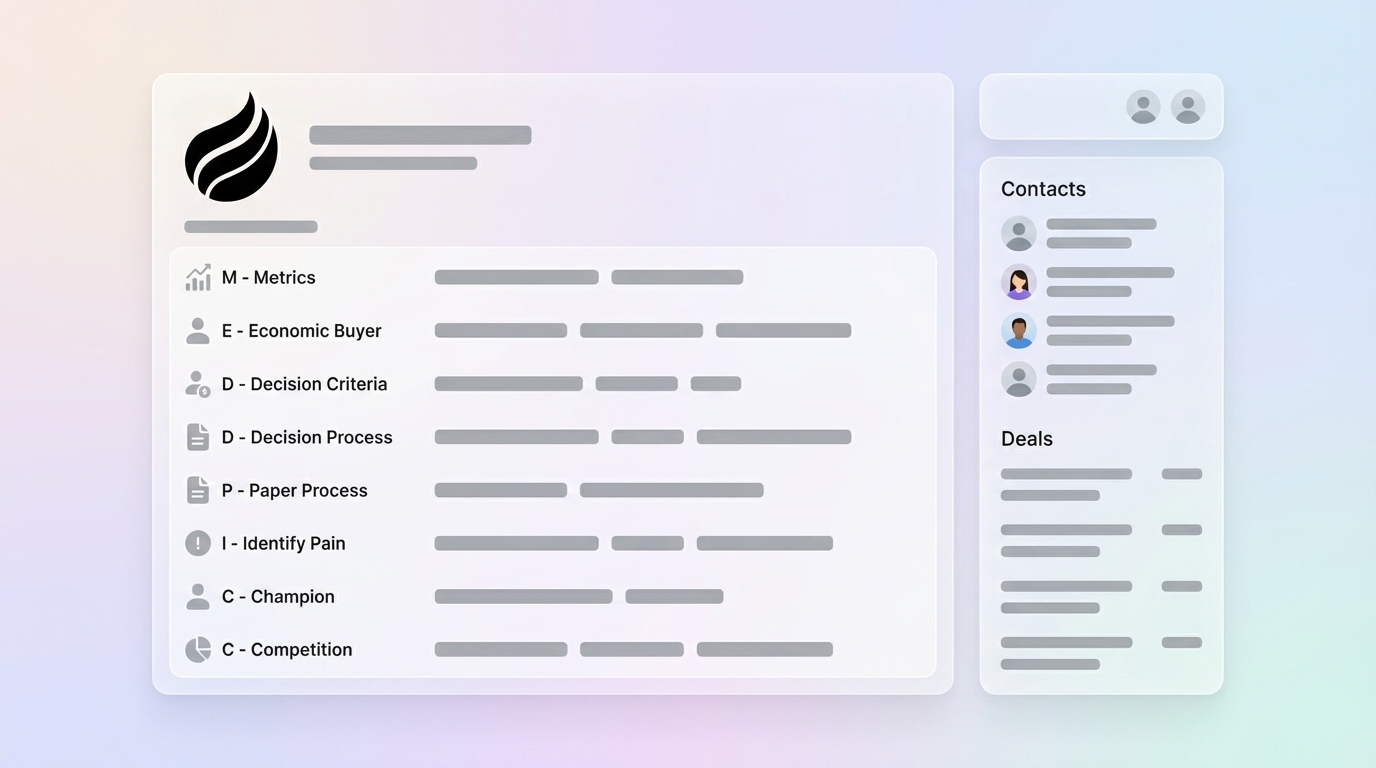
MEDDPICC qualification across eight pillars (Metrics, Economic Buyer, Decision Criteria, Decision Process, Paper Process, Identify Pain, Champion, Competition) helps teams qualify complex B2B deals twice as fast with 100+ ready-to-use questions.
-
Organizations using MEDDPICC see 18% higher win rates and 24% larger deal sizes, and early Economic Buyer involvement increases win rates by 55%.
-
Reps who focus on quantifiable Metrics and deep Identify Pain questions uncover real business impact and avoid feature-focused pitches.
-
Teams that map Decision Process, Paper Process, and Competition early navigate enterprise buying cycles more smoothly and position against alternatives with confidence.
-
Sales orgs can automate MEDDPICC qualification with Coffee’s AI agent, eliminating manual data entry and capturing call insights directly into the CRM.
MEDDPICC Overview: How The Eight Pillars Work Together
MEDDPICC is a qualification framework for complex B2B sales that keeps every deal grounded in reality. The methodology breaks deal health into eight connected areas that cover value, power, process, and risk. Metrics quantify the business case, while Economic Buyer questions reveal who controls budget and final approval. Decision Criteria and Decision Process map how the buying committee evaluates options and moves toward a signed contract.
Paper Process questions surface legal, security, and procurement hurdles that can stall deals late in the cycle. Identify Pain questions uncover why the problem matters now and what happens if nothing changes. Champion and Competition questions round out the picture by clarifying who will advocate internally and which alternatives you must beat. Together, these pillars give you a complete, practical view of deal viability and next steps.

M – Metrics Qualification Questions
Metrics questions uncover quantifiable business outcomes that prove your solution’s value. Focus on revenue growth, cost reduction, time-to-market improvements, and headcount avoided instead of product features.
Core Metrics Questions:
-
What are your current key metrics, and how are they being tracked?
-
Which of these metrics are considered the most critical to your company’s success?
-
What specific KPIs do you report to leadership?
-
Are there benchmarks or targets you are falling short of?
-
How do you currently measure the ROI of your initiatives?
-
What happens if these metrics are not improved?
-
Can you quantify the potential impact of solving this problem?
-
What metrics will determine the success of this project?
-
What are your primary business objectives for this year?
-
How would you define a successful outcome in addressing these challenges?
-
What are your key performance indicators for this project?
-
How will you measure success?
-
What does success look like for you and your team?
-
Are there specific KPIs you hope to improve with our solution?
Expected Responses: Look for specific numbers such as “20% efficiency gain” or “reduce onboarding time by 40%.” Strong responses show clear measurement systems and executive visibility. Advance deals with quantified targets and deprioritize deals where prospects cannot describe measurable outcomes.
Coffee’s AI agent joins calls, captures metric details from transcripts, and structures quantifiable outcomes in your CRM without manual entry.

E – Economic Buyer Qualification Questions
Economic Buyer questions identify the person with budget authority, usually a VP, SVP, or C-level leader who can independently approve or reject the deal. Early economic buyer involvement boosts win rates by 55%, so you want this contact engaged as soon as metrics are clear.
Core Economic Buyer Questions:
-
Who ultimately approves the budget for this initiative?
-
What is their role in the organization, and what are their top priorities?
-
Have you had conversations with the economic buyer about this project?
-
What concerns or objections do they typically raise?
-
How do they measure success for investments like this?
-
What factors would make the economic buyer prioritize this solution?
-
Who will be responsible for the final decision on this purchase?
-
What is the approval process for investments of this nature?
-
Who else will be involved in the decision-making process?
-
Within your organization, who has the final say on purchasing decisions?
-
What factors typically influence their decision-making process?
-
Who is your organization’s go-to person for this business area?
-
Do they need to see the product in action before giving approval?
-
Do they sign off on the project as well?
Power Mapping Script: “I want to make sure we are presenting to the right stakeholders. In similar organizations, the [VP of Sales or CRO] typically owns budget decisions for sales tools. Who fills that role here, and what are their current priorities?”
Expected Responses: Look for direct access to the budget holder, confirmed decision authority, and scheduled meetings. Treat “I need to check with my boss” or an inability to arrange Economic Buyer meetings as red flags.
Coffee automatically enriches Economic Buyer profiles with job titles, funding data, and LinkedIn information, which removes hours of manual research.

D – Decision Criteria Qualification Questions
Decision Criteria questions reveal the buying committee’s technical, business, and personal requirements for evaluating solutions. These answers guide how you position your product and tailor your proof.
Core Decision Criteria Questions:
-
What criteria are you using to evaluate potential solutions?
-
Are there specific features or capabilities you absolutely require?
-
How important are cost, implementation time, and scalability in your evaluation?
-
Are there industry standards or certifications that are mandatory for you?
-
What input have stakeholders provided regarding the selection process?
-
Have you ranked the importance of your decision criteria?
-
What are the key factors you consider when making a purchase decision?
-
How do you prioritise these criteria?
-
What are the most important features you are looking for in a solution?
-
What is the most important factor you use to evaluate a solution?
-
Do you have a specific budget?
-
What ROI benchmarks or thresholds must this solution meet to pass your evaluation?
-
What do you prioritise in your decision-making process?
Expected Responses: Ask for written evaluation scorecards, weighted priorities, and documented technical requirements. Pay attention to criteria such as integrations, security compliance, onboarding time, and vendor stability.
Coffee’s agent extracts decision criteria from unstructured call data and updates CRM fields with evaluation requirements automatically.
D – Decision Process Qualification Questions
Decision Process questions map the organization’s buying steps, people involved, required approvals, RFP processes, and the timeline from evaluation to signed contract. Clear answers here prevent surprises late in the cycle.
Core Decision Process Questions:
-
Can you walk me through the steps in your decision-making process?
-
Who are the key stakeholders involved, and what roles do they play?
-
What is the expected timeline for a decision?
-
Are there internal approval processes or review boards we should consider?
-
Has your organization made similar purchases before, and how were those decisions handled?
-
Are there upcoming meetings or deadlines we should aim for?
-
What are the key milestones in this process?
-
Are there potential roadblocks we should be aware of?
-
What was the process the last time you purchased a similar product?
-
Can you walk me through your team’s steps to decide on it?
-
Who besides the economic buyer usually evaluates solutions like ours?
-
What is your anticipated timeline for making a decision?
-
Are there any potential approval hurdles we should be aware of?
Process Mapping Script: “Help me understand your evaluation process. Many organizations start with technical evaluation, move to business case development, then seek executive approval. How does your process compare, and where are we right now?”
Expected Responses: Look for stakeholder meeting schedules, mapped approval stages, and timelines with specific dates. Enterprise processes often span six to nine months and include IT, legal, and executive approvals.
Coffee’s agent captures and logs interactions automatically, which keeps pipeline data accurate and improves visibility into each stage.

P – Paper Process Qualification Questions
Paper Process questions cover legal reviews, procurement onboarding, security audits, and compliance checks that can delay signatures. 28% of deals fail because teams cannot secure internal approvals, so surfacing this early protects your forecast.
Core Paper Process Questions:
-
What does your procurement process look like?
-
Are there specific contract terms or conditions that are non-negotiable?
-
How long does it typically take for legal and compliance reviews?
-
Are additional documents or certifications required for approval?
-
Do we need to involve departments such as finance or IT during this stage?
-
Are there known bottlenecks or challenges in your paper process?
-
What does your typical contract approval process look like?
-
Are there security or compliance requirements we should know about?
-
Who handles vendor onboarding and what is required?
-
What is the process of getting everything completed and signed?
-
Do you require specific insurance or bonding?
-
Are there preferred contract templates or terms?
-
What is your experience with similar vendor implementations?
Expected Responses: Ask for contract templates, the main procurement contact, and security or compliance requirements such as HIPAA or GDPR. Flag deals that require extensive legal review as early as possible.
Coffee is SOC 2 Type 2 and GDPR compliant, which supports secure data handling for your sales processes.
I – Identify Pain Qualification Questions
Identify Pain questions connect surface problems to business impact and personal implications across three layers. This approach turns “nice to solve” issues into “must solve now” priorities.
Core Identify Pain Questions:
-
What specific challenges are you facing that this solution could address?
-
How long have these issues been affecting your team or department?
-
What have you already tried to solve these problems?
-
What is the impact of these challenges on your revenue, productivity, or morale?
-
If these problems persist, what is the worst-case scenario for your business?
-
How would solving these challenges transform your operations or outcomes?
-
What are the biggest challenges you are currently facing?
-
How do these challenges impact your business?
-
What have you done so far to address these issues?
-
What challenges are you trying to solve?
-
How have these issues affected your business?
-
What are the main problems or bottlenecks you are experiencing?
-
How is this affecting the business?
-
What are the potential consequences if you do not address these issues?
Pain Implication Template: “You mentioned [surface pain]. When this happens, what is the business impact? And personally, how does this affect your team’s ability to hit their goals?”
Expected Responses: Look for quantified cost of inaction, documented workarounds, and executive sponsorship for change. Strong pain often sounds like “40% decrease in productivity due to outdated collaboration tools.”
Coffee’s transcription captures pain points from discovery calls and structures them by business impact and urgency.
C – Champion Qualification Questions
Champion questions help you find an internal advocate who has organizational power, direct access to the Economic Buyer, and personal motivation to push the deal forward.
Core Champion Questions:
-
Who internally stands to gain the most from solving this problem?
-
Is there someone who has expressed strong support for this project?
-
What role does the champion play in the decision-making process?
-
How can we help them advocate for this solution internally?
-
Are there additional resources or information they need to support their case?
-
Have they successfully influenced similar decisions in the past?
-
Who within the organisation stands to benefit most from our solution?
-
Who can influence the decision-making process in our favour?
-
How can we help them advocate for our solution internally?
-
Who is the biggest supporter of this project within your organisation?
-
How can we assist them in advocating for our solution?
-
Who stands to benefit most from resolving the challenges we discussed?
-
How much influence does this person have on key stakeholders?
-
Is there someone within your organization who speaks positively about our solution?
Champion Development Script: “Based on our conversation, it sounds like [specific role] would see the biggest impact from solving [pain point]. Who in that role has been most vocal about needing a solution? How can we equip them with the business case to advocate internally?”
Expected Responses: Ask for introductions to the Economic Buyer, insight into internal dynamics, and chances to coach on the winning strategy. Test champions by asking them to schedule meetings or present your solution internally.
Coffee’s agent enriches profiles of key stakeholders such as champions with job titles and LinkedIn information pulled from meeting data.

C – Competition Qualification Questions
Competition questions assess direct competitors, indirect alternatives, and status quo options. Use the answers to highlight the cost of inaction and position your unique strengths.
Core Competition Questions:
-
Are you currently evaluating other vendors for this solution?
-
What do you see as the strengths and weaknesses of those options?
-
Have you worked with any of these competitors before?
-
What factors would make you choose one solution over another?
-
How do you view us compared to the competition?
-
Are there aspects of their offering you find appealing that we could address?
-
What alternatives are you considering?
-
Are you considering building this internally instead of buying?
-
What is your experience with your current solution?
-
Which competitors are you actively considering?
-
How strong is their product compared to ours in your view?
-
What happens if you decide to do nothing?
-
Have you considered maintaining the status quo?
-
What other initiatives are competing for this budget?
Expected Responses: Listen for named competitive vendors, build versus buy discussions, and status quo evaluation. Use this information to position your solution’s specific advantages and address competitive weaknesses directly.
Coffee positions itself as a proactive agent alternative to legacy CRMs and fragmented tools, consolidating your sales stack into one AI-driven workflow.
MEDDPICC Call Scripts and Real-World Scenarios
Discovery Call Script: “I would like to understand your current situation better. What specific challenges is your sales team facing today? [Pain] How are you measuring the impact of these challenges? [Metrics] Who has been most vocal about needing a solution? [Champion]”
Qualification Call Script: “Help me understand your evaluation process. Who ultimately approves budget for sales tools? [Economic Buyer] What criteria will you use to make this decision? [Decision Criteria] What does your typical procurement process look like? [Paper Process]”
Competitive Positioning Script: “I understand you are evaluating multiple options. What factors are most important in your decision? [Decision Criteria] How are you comparing the alternatives? [Competition] What would success look like twelve months after implementation? [Metrics]”
MEDDPICC Checklist and Coffee Automation
MEDDPICC Qualification Checklist:
-
✓ Metrics: Quantified business outcomes identified
-
✓ Economic Buyer: Budget authority confirmed and engaged
-
✓ Decision Criteria: Evaluation requirements documented
-
✓ Decision Process: Buying steps and timeline mapped
-
✓ Paper Process: Legal and procurement requirements understood
-
✓ Identify Pain: Business impact and urgency established
-
✓ Champion: Internal advocate identified and equipped
-
✓ Competition: Alternatives assessed and positioned against
Coffee’s AI agent automatically joins calls and transcribes conversations, then structures that dialogue into MEDDPICC data inside your CRM. The agent enriches records with job titles, funding data, and competitive intelligence, which saves 8 to 12 hours per week on manual qualification tasks. Automate your MEDDPICC qualification and give your reps more time to sell.
Why Coffee Powers MEDDPICC-First Sales Teams
Legacy CRMs break down without constant manual entry and turn reps into data entry clerks. Coffee’s agent automates MEDDPICC qualification by capturing tasks, integrating data streams, and logging interactions autonomously. The agent works as a standalone CRM for small businesses and as a companion app for existing Salesforce or HubSpot instances. This approach keeps data accurate and complete, which produces reliable insights and forecasts.
FAQ
What are the best MEDDPICC qualification questions and answers?
The most effective MEDDPICC questions focus on quantifiable outcomes (Metrics), budget authority (Economic Buyer), evaluation criteria (Decision Criteria), buying process (Decision Process), and internal advocacy (Champion). Strong answers include specific numbers, confirmed decision authority, documented requirements, mapped timelines, and identified internal advocates.
What are the best MEDDIC pain questions?
Effective pain questions include “What specific challenges are you facing?”, “How long have these issues affected your team?”, “What is the business impact on revenue or productivity?”, and “What is the worst-case scenario if problems persist?” These questions uncover both surface symptoms and underlying business implications.
How do you identify MEDDPICC champions?
Teams identify champions by asking “Who stands to gain the most from solving this problem?”, “Who has expressed strong support for this project?”, and “Who can influence the decision-making process?” Look for individuals with organizational power, access to the Economic Buyer, and personal motivation to advocate for your solution.
What metrics questions work best in MEDDPICC?
Effective metrics questions include “What KPIs do you report to leadership?”, “Are there benchmarks you are falling short of?”, “How do you currently measure the ROI of your initiatives?”, and “What happens if these metrics are not improved?” Keep the conversation focused on quantifiable business outcomes rather than technical features.
How do you qualify the Economic Buyer in MEDDPICC?
Reps qualify the Economic Buyer by asking “Who ultimately approves budget for this initiative?”, “What are their top priorities?”, and “What factors influence their decision-making?” Validate answers through direct meetings, confirmed decision authority, and budget allocation discussions.
Use these 100+ MEDDPICC qualification questions with Coffee’s AI agent to qualify faster and increase win rates. The agent automates data entry, structures qualification insights, and provides real-time coaching for complex B2B deals.
See Coffee’s pricing and features to start AI-powered sales qualification in 2026.