
Key Takeaways for 2026 LinkedIn Prospecting
- LinkedIn’s 2026 limits cap connections at about 100 per week with advanced spam detection. Personalized outreach reaches 20–30% response rates vs. the 10.3% average.
- Use the 5-3-2 rule. Share 5 value posts, 3 original insights, and 2 sales advances to build trust and earn replies.
- Rely on hyper-personalized templates that reference profiles or posts to consistently outperform generic outreach.
- Run 3-3-3 follow-ups over several weeks with value-first touches to stay visible without annoying prospects.
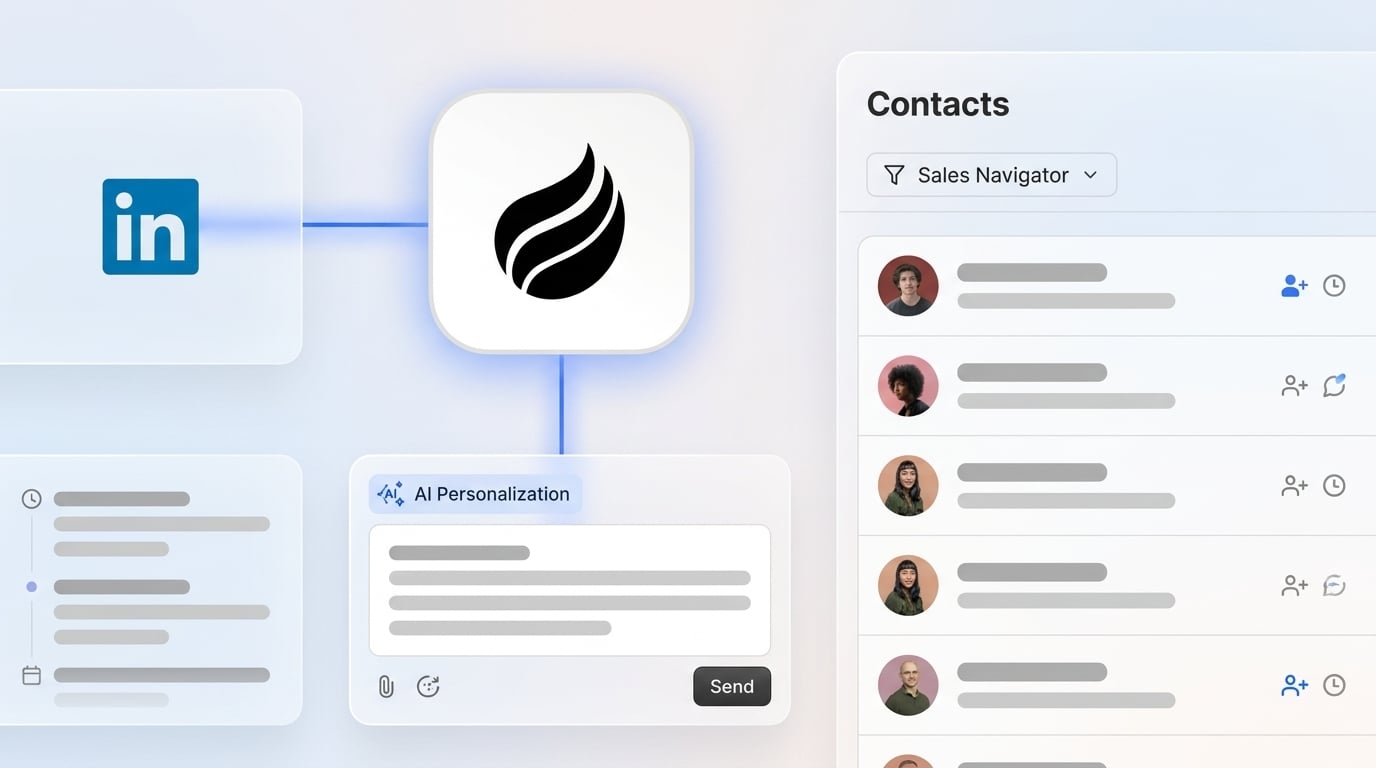
- Scale with Coffee’s AI for visitor-to-prospect conversion and precise ICP lists. Start your free Coffee trial today to grow outreach without triggering spam filters.
Why Legacy LinkedIn Prospecting Breaks in 2026
Legacy prospecting methods now trigger LinkedIn’s enhanced spam detection systems. 87% of connection requests lack personalization, which leads to poor acceptance rates and account restrictions. The platform’s reputation-based limits restrict requests for new and flagged accounts.
Modern prospecting depends on intelligence instead of raw volume. You need to focus on people who already know your brand or have visited your site. Coffee’s Visitor Identification converts anonymous website traffic into named LinkedIn prospects with full enrichment, including job titles, company details, and LinkedIn profiles. This shift replaces cold outreach with warm engagement aimed at visitors who already show interest in your solution.
Coffee’s List Builder then turns that intelligence into action. You describe your ideal prospects in natural language, such as “Find VPs of Sales at $10M+ funded companies using Salesforce.” The system returns qualified leads that match your criteria, which removes manual research and keeps your outreach within LinkedIn’s limits.

Build a Trust-First LinkedIn Profile
A trust-focused profile directly improves prospecting results. Professional headshots generate 14x more profile views, and optimized profiles reach 40%+ connection acceptance rates.
Essential elements include a professional photo with clear face visibility and a keyword-rich headline that states your value proposition, such as “Helping SMBs scale sales with AI-powered CRM solutions.” Add a concise summary that highlights client results and keep recent activity visible to show industry expertise. Together, these elements create a cohesive professional presence that acts as social proof before prospects accept connection requests or respond to messages.
Use the 5-3-2 Engagement Rule to Stay Out of Spam
The 5-3-2 rule structures outreach so prospects see value instead of spam. For every 10 touchpoints, share 5 curated pieces of content that help your audience, publish 3 original insights that build your authority, and reserve only 2 touches to advance the sale. This balance keeps your feed helpful and improves reply rates compared to pitch-heavy sequences.
Execution starts before you send a connection request. Engage with prospects’ content by liking posts, sharing relevant articles, and commenting with specific, thoughtful insights. This warm-up period builds familiarity and raises connection acceptance rates. Coffee’s List Builder finds prospects who match your ICP, so you spend this engagement time on decision-makers at companies already in your target market.

Hyper-Personalized Message Templates That Actually Get Replies
Personalization drives response rates when it feels specific and relevant. Personalized connection requests achieve 45% acceptance rates versus 15% for generic templates. As noted earlier, personalization delivers this lift when it references concrete profile details, recent posts, or mutual connections within LinkedIn’s 200-character limit.
Connection Request Templates:
These examples show three angles you can use based on what you know about the prospect.
“Saw your post about hitting 127% of quota, impressive results. I am curious about the process changes you made.”
“Noticed you are expanding the sales team at [Company]. We have helped similar SaaS companies scale efficiently.”
“Fellow Salesforce user here. Your insights on pipeline management resonated with me, would love to connect.”
First Message Templates:
Use these once the connection is accepted to continue the same thread of relevance.
“Thanks for connecting. Your recent post about sales automation challenges caught my attention. We solved similar issues for [similar company], happy to share what worked.”
“Appreciate the connection. Saw [Company] just raised Series A, exciting time for growth. We specialize in helping funded startups scale their sales operations.”
Follow-up Templates:
Follow-ups should build on earlier value instead of repeating the same ask.
“I am following up on our conversation about CRM adoption challenges. Here is a case study showing how [similar company] improved data quality by 85%.”
“Quick update. That automation strategy we discussed is now live. We are seeing 40% time savings in prospecting and thought you would find it interesting.”
Coffee’s AI agent reviews prospect profiles and recent activity to suggest personalized talking points. This keeps each message authentic while still allowing you to scale outreach across many prospects.
Scale Sales Navigator with AI and CRM Automation
Sales Navigator offers powerful filters and lead recommendations, yet manual workflows cap your output. AI-powered tools compress prospect research from 5–10 minutes to 30–60 seconds per prospect, which lets SDRs handle far more prospects each week than manual research allows.
Coffee’s Companion App connects to existing Salesforce or HubSpot instances and automatically logs LinkedIn activities while enriching prospect data. This connection removes manual CRM updates and still preserves complete activity history. Once prospects convert to meetings, the platform’s meeting agent takes over, prepares briefings before calls, and generates summaries afterward so no follow-up opportunity slips through.

Try Coffee’s automation features to handle prospect enrichment and activity logging without changing your current workflow.
3-3-3 Follow-Up Framework That Maintains Interest
The 3-3-3 rule structures follow-up sequences so you stay present without feeling pushy. This cadence spaces outreach over several weeks, keeps each touch value-focused, and reduces the risk of message fatigue while still improving response rates.
Week 1: Send a connection request that references their content or company news in a specific way.
Week 2: Share a relevant resource such as a case study, industry report, or tool recommendation with no direct ask.
Week 3: Make a soft ask that ties back to the value you already provided, for example, “Given your interest in sales automation, would a 15-minute conversation about our approach be valuable?”
Coffee’s meeting agent schedules and manages these follow-up sequences automatically. It maintains consistent touchpoints and tracks engagement across all prospects, then recommends optimal timing based on behavior patterns and industry benchmarks.

Avoid Spam in 2026: Compliance Checklist and Tracking
LinkedIn’s 2026 restrictions demand careful tracking of activity and performance. Stay under 100–150 messages per week depending on your account type and keep acceptance rates above 25% to avoid restrictions. Several connected compliance factors work together to protect account health:
- Keep pure pitch content under 20% of total messages so value remains the dominant theme.
- Avoid links in connection requests to reduce spam signals and improve acceptance rates.
- Maintain a personalized, conversational tone that clearly references the prospect.
- Spread requests throughout the week instead of sending them in large batches.
- Monitor pending requests and withdraw those older than 2–3 weeks.
- Track acceptance and response rates weekly to spot negative trends early.
Coffee’s Pipeline Compare feature visualizes week-over-week prospecting performance. It highlights response rates, meeting bookings, and potential compliance issues so you can adjust before LinkedIn applies restrictions.
Frequently Asked Questions
What is the 5 3 2 rule on LinkedIn?
The 5-3-2 rule structures your outreach cadence to build trust before selling. The specific breakdown, 5 value shares, 3 insights, and 2 sales advances, works because it mirrors how people naturally build professional relationships on LinkedIn. Most salespeople invert this ratio and lead with pitches, then wonder why they get ignored. By leading with value 80% of the time, you establish credibility that makes prospects more receptive when you finally make an ask.
What is the 3 3 3 rule in sales?
The 3-3-3 rule organizes follow-up sequences so you provide value across three touches instead of repeating the same pitch. The first touch usually involves a personalized connection request. The second touch, about a week later, shares a useful resource with no sales pressure. The third touch, after another week, introduces a soft request for a conversation that references the earlier value. This structure works because it demonstrates genuine interest in the prospect’s challenges while spacing messages enough to avoid fatigue.
How does Coffee prevent spam in LinkedIn prospecting?
Coffee reduces spam by focusing on qualified, interested leads instead of mass outreach. The platform’s Visitor Identification feature turns anonymous website traffic into named LinkedIn prospects, so you contact people who already showed interest in your solution. The List Builder uses natural language processing to create targeted prospect lists based on criteria such as company size, technology stack, and role, which keeps outreach relevant.
Coffee’s AI agent then analyzes prospect profiles and recent activity to suggest personalized talking points that make each message feel authentic. The platform also tracks engagement metrics and compliance indicators and alerts users before they approach LinkedIn’s limits. This quality-first approach improves response rates and avoids spam flags.
What are LinkedIn’s connection limits in 2026?
LinkedIn’s 2026 connection limits follow a reputation-based system instead of fixed numbers. Most established accounts can send about 100 connection requests per week, although limits vary for new accounts and those with weaker performance. High-performing accounts with strong Social Selling Index scores may send more requests.
The limits reset on a rolling seven-day basis from the first request sent, not on calendar weeks. LinkedIn also caps total first-degree connections at 30,000 and monitors pending requests, so keeping them under 500 supports account health. The algorithm weighs acceptance rates, account age, activity patterns, and engagement quality when setting individual limits.
What are average LinkedIn response rates in 2026?
Average LinkedIn response rates depend heavily on personalization and targeting quality. Generic connection requests reach only 10.3% response rates, while personalized approaches can reach 25–40%. InMail messages average 6.38% responses, but hyper-targeted, highly personalized LinkedIn InMail campaigns by high-performing senders achieve the 18–25% reply rate range that LinkedIn boasts. Post-connection LinkedIn message response rates average 16.86% for messenger campaigns targeting first-degree connections, with strong performance over 20% and top tier above 30%.
Industry-specific rates vary. For example, Healthcare and Pharma average LinkedIn InMail reply rate is 16–22%. Role-based rates also differ, as HR professionals, product managers, and C-level executives respond at different levels. AI-crafted messages show a 61% improvement over non-AI approaches, achieving 4.19% versus 2.60% reply rates for cold outreach.
Transform Your LinkedIn Prospecting with AI
LinkedIn prospecting in 2026 rewards a strategic, value-first approach that favors quality over quantity. When you combine a trust-building profile, engagement frameworks like 5-3-2, personalized messaging, and AI-powered scaling, you create a sustainable system for generating qualified leads without spam flags. Coffee’s AI agent removes the manual research bottleneck while keeping every outreach relevant.
The platform’s Visitor Identification and List Builder features supply the intelligence needed for ethical prospecting at scale. They turn anonymous traffic into qualified prospects and build targeted lists through simple natural language commands. Start your free trial to implement spam-free LinkedIn prospecting that delivers significantly higher results with far less manual effort.