
Key Takeaways for RevOps and Sales Leaders
- Up to 98% of B2B website traffic stays anonymous, which creates major revenue leaks for sales teams.
- A focused 5-step process can turn roughly 30–40% of anonymous visitors into qualified CRM leads.
- Cookieless methods like IP tracking, digital fingerprinting, and person-level pixels keep you compliant in 2026.
- Coffee stands out with person-level ID, Suggested Leads that match your buyer persona, and full CRM automation.
- Start identifying high-fit visitors instantly with Coffee’s automated RevOps solution.
Why Visitor Identification Matters in 2026
Visitor identification now sits at the center of modern B2B revenue strategy. Privacy regulations and browser changes have reshaped how tracking works across the web.
Browser defaults block most third-party cookies. Safari and Firefox already enforce this, and Chrome’s phase-out of third-party cookies, planned for early 2025 (subject to addressing any remaining competition concerns from the UK’s Competition & Markets Authority), removes the last major holdout.
Modern B2B teams need cookieless tracking that respects GDPR and CCPA while still delivering data sales teams can act on. AI fingerprinting and enhanced identification technologies now support accurate visitor matching without legacy tracking methods.
RevOps and sales leaders who deploy visitor identification systems report clear pipeline gains. Some teams see 20–30% increases in qualified leads through consistent conversion of anonymous visitors into named prospects.
To achieve similar results, you need the right foundation in place before you roll out any tool.
Readiness Check for Your Team and Stack
Confirm these basics before implementing visitor identification on your site:
- Website admin access so you can add tracking scripts
- An active CRM system such as Salesforce, HubSpot, or a similar platform
- A defined ideal customer profile and clear buyer personas
- Google Workspace or Microsoft 365 for email and calendar integration
Expect a 15-minute setup process. Once fully implemented, most B2B sites reach the identification rates mentioned above, which means roughly one in three anonymous visitors becomes a named lead.
Core Methods to Identify Website Visitors
Several technical approaches help you identify anonymous visitors. Each method offers different strengths and tradeoffs.
IP Tracking: Matches visitor IP addresses to company databases and returns company-level identification. This method works best for office-based traffic but struggles with VPNs and remote work setups.

Digital Fingerprinting: Uses browser characteristics, screen resolution, and device properties to create unique visitor profiles. This approach handles IP changes better, although accuracy can vary by environment.
Reverse IP Lookup: Cross-references IP addresses with business databases to identify visiting companies. Many B2B tools rely on this as a standard baseline for company identification.
Person-Level Pixel Tracking: Uses first-party data and behavioral signals to match individual visitors to professional profiles. This approach offers the highest value for B2B sales because it enables direct outreach to specific decision-makers. It also requires careful compliance management because the data is personal and often sensitive.

The strongest B2B setups combine several of these methods. Person-level identification usually delivers the greatest sales impact when configured and governed correctly.
Top Visitor Identification Tools Compared
When you evaluate visitor identification platforms, focus on how deeply they identify visitors and how well they connect to your CRM. The table below compares leading tools on identification depth, integration strength, and standout features.
| Tool | Identification Level | CRM Integration | Key Differentiator |
|---|---|---|---|
| RB2B | Person-level (US only) | Basic integrations | $100/month, LinkedIn profiles |
| Leadinfo | Company-level | Native CRM sync | GDPR compliant |
| Warmly | Company + basic people | CRM workflows | Real-time chat integration |
| Coffee | Person-level + Suggested Leads | Full CRM automation | Persona-matched recommendations, Slack alerts |
Coffee differentiates itself by providing Suggested Leads. These are specific recommendations for the 2–3 decision-makers within each visiting company who best match your buyer persona, complete with LinkedIn profiles for immediate outreach.
5-Step Process to Identify Anonymous Website Visitors
Step 1: Define Your Ideal Customer Profile
Document your target company size, industry, and key decision-maker roles. This clarity helps your identification system highlight high-value visitors instead of flooding your team with generic traffic.
Step 2: Install a Visitor Identification Pixel
Add your chosen tool’s tracking script to your website’s <head> section. Most platforms provide a simple JavaScript snippet that starts collecting visitor data as soon as you deploy it.
Step 3: Verify Installation and Data Flow
Use your tool’s verification system to test the pixel. Confirm that visitor data appears in your dashboard and that records sync correctly into your CRM.
Step 4: Monitor the Dashboard and Configure Alerts
Set up real-time Slack notifications for high-fit visitors. Create alerts based on company size, industry, or high-intent pages such as pricing, demo, or comparison content.
Step 5: Automate Follow-up Workflows
Connect identified visitors to your outbound sequences and nurture programs. Teams using integrated workflows can transform anonymous visitors into fully researched leads in about 60 seconds.
Troubleshooting: VPNs and private browsing reduce identification rates, so expect some gaps. Focus on patterns across multiple sessions, and confirm that your pixel tracks visitors across key touchpoints in the buyer journey.
Coffee’s Visitor ID Workflow in Practice
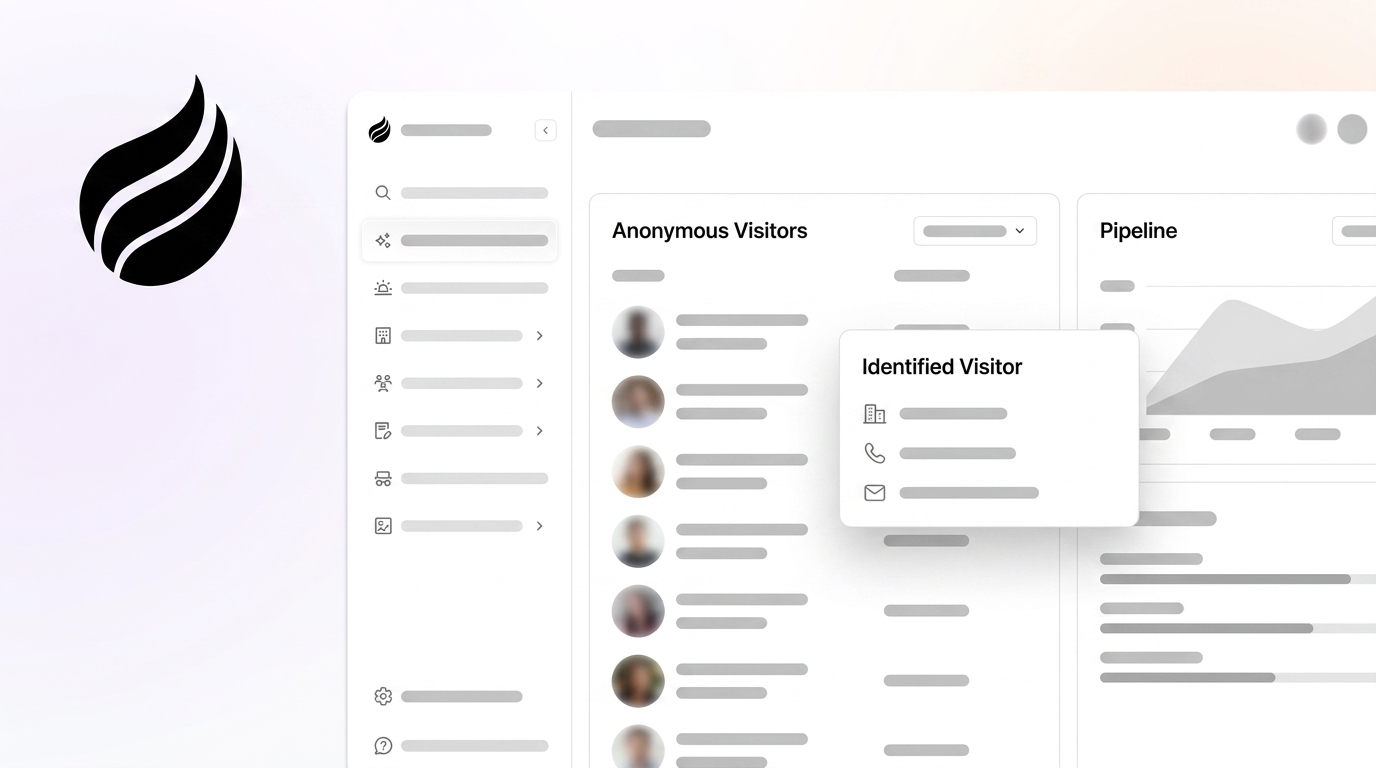
Coffee’s visitor identification system combines real-time identification with intelligent lead prioritization for B2B teams. The pixel captures visitor identity such as name, title, email, and LinkedIn profile, along with company information and behavioral data like pages viewed and time on site.
The Suggested Leads feature sets Coffee apart from competitors. Instead of showing raw company data or long, undifferentiated contact lists, Coffee compares visiting companies to your buyer persona and recommends the 2–3 most relevant decision-makers for outreach.
Real-time Slack notifications surface high-fit visitors as they browse. With one click, prospects move into Coffee with full enrichment, ready for LinkedIn outreach, email campaigns, or automatic enrollment in nurture sequences. Coffee’s pixel-to-CRM integration delivers the speed described above, capturing visitor identity and enriching records automatically so no qualified visitor goes unnoticed.
Start automating your visitor-to-lead workflow.
Common Pitfalls and Compliance Requirements
Free visitor identification tools often deliver lower identification rates and limited data quality. VPNs, ad blockers, and private browsing modes further reduce accuracy, which makes careful tool selection essential for reliable results.
Compliance in 2026 centers on cookieless tracking and transparent data practices. For GDPR compliance in visitor identification, company-level identification (resolving IP to business names) can rely on legitimate interest without consent, while person-level identification requires consent for EU visitors. Person-level identification requires transparent privacy policies and compliant tools for GDPR and CCPA markets.
Choose a platform that maintains SOC 2 certification, supports cookieless tracking, and offers clear data processing agreements that your legal team can review.
Validation and Scaling Your Program
Track a small set of core metrics to validate your visitor identification system. Aim for 30–40% identification rates and measure pipeline impact from identified visitors over time.
Successful implementations typically show the pipeline improvements mentioned earlier within 60 days, which makes visitor identification a fast-payback investment for most B2B teams.
Scale your program by rolling out tracking to additional websites, adding advanced scoring models, and integrating with marketing automation platforms. Coffee’s Companion App supports scaling across existing Salesforce or HubSpot instances without disrupting current workflows.
FAQ
How can I identify anonymous website visitors for free?
Completely free solutions remain limited, but Coffee offers a free trial with full person-level identification capabilities. Free tools such as Google Analytics provide basic company-level data through reverse IP lookup, yet they lack the enrichment and CRM integration needed for effective B2B follow-up. Most professional visitor identification platforms include trial periods so you can test identification rates and data quality before you commit.
What is the best RB2B alternative for B2B visitor identification?
Coffee provides a comprehensive RB2B alternative with stronger features for B2B teams. RB2B focuses on basic person-level identification for US traffic, while Coffee adds Suggested Leads aligned with your buyer persona, full CRM automation, and global coverage. Coffee’s agent-driven approach removes manual data entry and gives sales richer context for outreach, which suits RevOps teams that want complete workflow automation.
Do website visitor identification tools actually work?
Modern visitor identification tools deliver reliable results when configured correctly. Company-level identification often reaches 35–40% accuracy, while person-level performance varies by region and data partners. Success depends on strong data partnerships, correct pixel implementation, and realistic expectations about coverage. The real value comes from workflow automation and lead quality rather than chasing 100% identification.
Are website visitor tracking tools compliant with privacy regulations?
Compliant visitor identification tools meet GDPR, CCPA, and similar regulations through careful design and implementation. Company-level identification that uses IP addresses can operate under legitimate business interest, while person-level tracking requires transparent privacy policies and consent mechanisms. Select tools with ISO 27001 certification, EU data hosting options, and built-in compliance features, and have your legal team review data processing agreements before rollout.
How quickly can I implement visitor identification on my website?
Most visitor identification tools can be installed within 15–30 minutes by adding a JavaScript tracking pixel to your website header. CRM integrations usually need some extra configuration but often finish within a few hours. Thorough testing and verification should happen before your sales team relies on the data. Coffee’s implementation includes guided setup and verification so you reach strong performance from day one.
Conclusion: Turn Anonymous Traffic into Qualified Pipeline
Identifying anonymous website visitors turns wasted traffic into qualified sales opportunities through a clear, repeatable process. The 5-step framework above, from ICP definition through automated follow-up, helps B2B teams convert roughly 30–40% of previously anonymous visitors into named prospects.
Coffee’s visitor identification pixel offers an advanced solution for RevOps and sales teams by combining person-level identification, intelligent lead prioritization, and tight CRM integration. The Suggested Leads feature keeps your outreach focused on the most relevant decision-makers within each visiting company.
Start converting anonymous traffic into qualified pipeline today.