
Key Takeaways for Choosing Coffee, Demandbase, or Warmly
- Demandbase delivers enterprise ABM orchestration but requires months of setup and $68,000+ median annual costs, which creates overkill for most mid-market SaaS teams.
- Warmly offers quick visitor identification starting at $15,000 per year but does not provide deep CRM automation or orchestration.
- Coffee unifies visitor ID at the person and persona level with AI-driven CRM automation, removing manual data entry that currently wastes 71% of sales reps’ time.
- Coffee deploys instantly through Google authentication with seat-based pricing, so mid-market teams see ROI faster than with Demandbase’s complex rollout or Warmly’s narrower scope.
- Choose Coffee’s unified platform to get the best of both worlds without enterprise bloat or fragmented tools.
How Coffee, Demandbase, and Warmly Really Compare
Demandbase and Warmly overlap in sales engagement but play different primary roles. Demandbase provides full ABM orchestration including intent data, advertising, and account scoring for enterprise teams. Warmly focuses on real-time website visitor identification to convert anonymous traffic into named prospects. Coffee’s agent bridges this gap by combining Warmly-level visitor identification with Demandbase-style orchestration while also automating CRM data entry that both competitors still leave to humans. This unified approach reflects the broader 2026 shift toward AI agents that replace fragmented point solutions.
Evaluation Criteria for Mid-Market SaaS Teams
Mid-market SaaS teams evaluating ABM and visitor ID tools need to know whether a platform will accelerate pipeline or become another manual burden. That outcome depends on eight factors. Setup time and implementation costs determine how quickly you see value. Person-level visitor insights quality affects outreach precision. Data automation and CRM integration depth remove manual work. Salesforce and HubSpot compatibility protects existing investments. Transparent pricing models prevent budget surprises. ROI timelines justify the spend. Mid-market scalability without enterprise bloat ensures the tool grows with you. User adoption rates determine whether your team actually uses the platform.
Side-by-Side Comparison of Coffee, Demandbase, and Warmly
The table below highlights four factors that shape most mid-market buying decisions: how quickly you can deploy each tool, the depth of visitor identification, annual cost structure, and the complexity of CRM integration your team must manage.
| Platform | Setup Time | Visitor ID Capability | Annual Pricing | CRM Integration |
|---|---|---|---|---|
| Demandbase | Weeks to months | Demandbase identifies both companies and employees browsing websites via visitor ID | $68,000 median | Complex bidirectional sync |
| Warmly | Deploys in days | Person + company level | Starts at $15,000 per year | Basic integrations |
| Coffee | Via Google auth | Person + persona suggestions | Seat-based pricing | AI-driven automation |
Experience this unified approach firsthand with Coffee’s free trial and see how visitor ID and CRM automation work together in one platform.
Deeper Comparison by Category
Setup Speed and Time to ROI
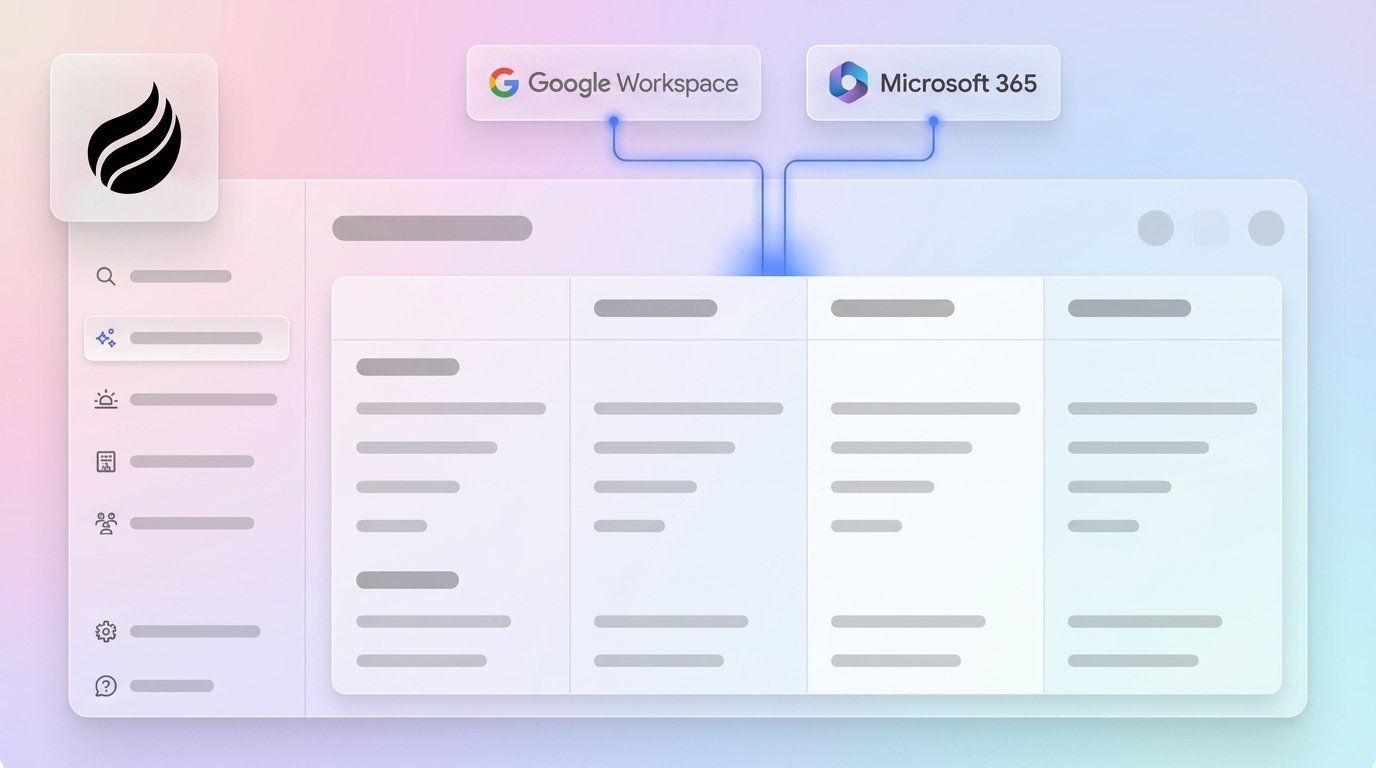
Demandbase implementations require 3–6 months plus 2–3 months ramp time before teams reach full capacity. The platform also demands dedicated ABM operations staff and onboarding fees for mid-market buyers. Coffee’s agent connects through Google Workspace authentication and immediately starts capturing email and calendar data, so teams avoid complex configuration and see value quickly.

Depth of Visitor Identification
Warmly excels at person-level visitor identification, revealing individual contacts with LinkedIn profiles and email addresses. Coffee builds on this strength by adding persona-based lead suggestions. The platform identifies not only who visited but also which specific contacts within that company match your buyer profile. Sales teams no longer guess which person to target for LinkedIn outreach.

Data Automation and CRM Health
Both Demandbase and Warmly require manual CRM data entry for meeting notes, follow-ups, and activity logging, which increases admin work for sales teams. Coffee’s agent removes this manual burden by automatically creating contacts, enriching company data, logging interactions, and generating meeting summaries. This approach addresses the data entry burden mentioned earlier and frees reps to focus on actual selling activities.

Orchestration and Pipeline Intelligence
Demandbase provides comprehensive ABM orchestration but still forces teams into spreadsheet-based pipeline reviews. That manual process often loses historical context every time data changes. Coffee’s Compare feature solves both issues. It visualizes week-over-week pipeline changes automatically, highlighting progressed deals and stalled opportunities without manual exports. The underlying agent data warehouse preserves historical context that legacy CRMs lose when fields update.
Best-Fit Use Cases by Team Type
The right platform depends on your team’s size, complexity, and integration needs. Enterprise ABM programs with dedicated marketing operations teams and six-figure budgets should choose Demandbase for its comprehensive orchestration suite. Teams that only need quick visitor identification without deep CRM integration can select Warmly for its simplicity. Most mid-market SaaS teams fall between these extremes and need both visitor ID and CRM automation without enterprise complexity. For these teams, Coffee serves as the unified solution, working either as a standalone system for growing companies or as a Salesforce and HubSpot companion that removes manual data entry.
Coffee wins for 80% of mid-market scenarios where teams need both visitor intelligence and automated CRM management without enterprise complexity.
Operational and Long-Term Considerations
Long-term operational costs and effort vary significantly across these platforms. Demandbase requires ongoing change management due to its steep learning curve, and implementation typically takes 4–8 weeks and varies by product complexity and customer timeline. Warmly offers initial simplicity, but that simplicity limits scalability for complex sales processes. Coffee takes a different approach. Its agent architecture evolves with AI improvements without requiring platform re-architecture, which reduces long-term maintenance work. The same agent handles SOC 2 compliance and data security while maintaining integration flexibility through Zapier and native connectors, so operational concerns consolidate into a single system.
Risks, Limitations, and Common Misconceptions
The core risk with both Demandbase and Warmly is misalignment with mid-market needs. Demandbase’s enterprise focus creates functional overkill, and its $68,000+ median annual cost represents budget overkill for many mid-market companies. Warmly avoids the cost problem but introduces a capability gap because it lacks the deep CRM orchestration that scaling teams need. More fundamentally, both platforms miss the shift toward unified AI agents that remove manual workflows across sales tools. Coffee addresses these gaps by delivering unified functionality through an agent architecture, handling integration concerns through Zapier connectivity while maintaining compliance standards that enterprise buyers expect.
Decision Framework Summary Matrix for Coffee vs Demandbase vs Warmly
Use this matrix to quickly match each tool to your team profile. The recommendations reflect company size, primary use case, and the trade-offs each platform requires.
| Team Profile | Recommended Tool | Primary Reason |
|---|---|---|
| Enterprise ABM (500+ employees) | Demandbase | Full orchestration suite |
| Quick visitor ID only | Warmly | Simple implementation |
| Mid-market SaaS (50–500 employees) | Coffee | Unified AI-driven automation |
Verdict: For the 80% of mid-market teams identified above, Coffee delivers the best of both worlds without enterprise bloat or manual data entry.
See how Coffee fits your team profile in a personalized demo of unified ABM and CRM automation.
FAQ
What’s the pricing difference between Demandbase and Warmly?
Demandbase costs significantly more, with median annual contracts of $68,000 plus onboarding fees that can push first-year spend close to $100,000. Warmly annual pricing starts at $15,000 per year with minimal setup costs. Coffee offers transparent seat-based pricing without hidden implementation fees or complex module add-ons, which keeps budgeting straightforward for mid-market teams.
Which Demandbase competitors offer better value for mid-market SaaS?
Coffee delivers strong value for mid-market SaaS by combining visitor identification, CRM automation, and pipeline intelligence in one unified platform. This single system replaces multiple point solutions and avoids Demandbase’s enterprise complexity. As a result, teams see faster time-to-value with less operational overhead.
Is Demandbase worth it for growing SaaS companies?
Demandbase’s enterprise focus and six-figure costs make it excessive for most growing SaaS companies. The platform also requires dedicated ABM operations staff and months of implementation time before teams reach full value. Coffee provides essential ABM capabilities with visitor ID and CRM automation at a fraction of the cost and complexity, which better matches typical growth-stage needs.
What are the best Warmly alternatives for CRM integration?
Coffee stands out as a Warmly alternative when CRM integration matters. Warmly focuses primarily on visitor identification with basic integrations. Coffee’s agent handles complete data entry, meeting management, and pipeline tracking alongside visitor identification. Teams no longer need separate tools to maintain CRM data quality.

How do setup times compare between these ABM tools?
As detailed in the setup comparison above, Demandbase’s lengthy implementation timeline contrasts sharply with Coffee’s instant Google Workspace authentication. Coffee connects in minutes and begins automating data entry and visitor identification without complex configuration or dedicated operations staff.