
Key Takeaways
- US B2B sales reps lose 71% of time to non-selling tasks like manual CRM data entry, with only 35% spent on actual selling.
- Coffee’s autonomous agent removes manual data entry, enrichment, and workflow tasks, so teams spend more time selling than updating records.
- Core evaluation criteria include automation depth, data quality, and integrations, where Coffee delivers the strongest results for SMB to mid-market teams.
- Coffee offers full agent automation with clear seat-based pricing, ideal for 10-200 rep teams that want fast value without complex setup.
- Ready to automate your sales workflows? Start a Coffee trial and see agent-driven efficiency in your own pipeline.
Decision-Stage Overview: Coffee vs Legacy CRMs
The 2026 landscape of sales workflow automation CRMs shows a sharp divide between legacy systems that need constant manual updates and agent-based tools that work on their own. This comparison evaluates four leading platforms: Coffee, Salesforce Sales Cloud, HubSpot Sales Hub, and Zoho CRM across automation depth, data quality, and scalability for US B2B organizations with 10-200 sales representatives.
Coffee leads this comparison through its agent-first philosophy that handles data entry, enrichment, and workflow orchestration automatically. The agent removes the manual CRM upkeep that slows reps and managers. The platform’s recent Intelligence layer and custom meeting briefings show how Coffee keeps expanding autonomous sales assistance for growing teams.

Scope: Sales Automation CRMs for US B2B Teams
This analysis focuses on sales workflow automation CRMs built for US B2B environments. The emphasis stays on automated data entry and enrichment, meeting orchestration, and pipeline management capabilities that reduce admin work for reps.
The comparison distinguishes between standalone solutions like Coffee and Zoho, companion applications that enhance existing CRMs, and legacy platforms that still rely on heavy manual maintenance. Small and mid-market enterprises need agents that process unstructured data from emails, calls, and meetings so they can scale without adoption barriers. AI sales agents compress admin tasks from hours to minutes, enabling reps to focus on revenue-generating conversations.
Core Evaluation Criteria for This Comparison
Three critical criteria define this comparison:
- Automation Depth: Extent of automated data entry and workflow execution
- Data Quality: Ability to process unstructured data and maintain accuracy
- Integrations: Native connections with Google Workspace, Microsoft 365, and business tools
These dimensions most directly affect the manual workload that determines whether a CRM supports or slows sales productivity. Coffee excels across these areas through its agent-first architecture and continuous feature evolution.
Sales Workflow Automation CRM Comparison Table 2026
Coffee’s agent-first architecture creates practical advantages when you compare real automation, pricing, and fit by team size. The table below shows that Coffee is the only solution offering full agent automation at a price point accessible to SMB and mid-market teams, while legacy platforms either limit automation or push teams toward enterprise-level budgets.
| Tool | Automation Level | Starting Price | Best For |
|---|---|---|---|
| Coffee | Full agent automation | Seat-based, agent included | SMB to mid-market B2B |
| Salesforce Sales Cloud | Manual-heavy workflows | $25/user/month | Enterprise (100+ reps) |
| HubSpot Sales Hub | Basic automation | $15/user/month | Small businesses (1-25 reps) |
| Zoho CRM | Workflow automation | ₹420/user/month (Starter) | Cost-conscious mid-size |
See how Coffee compares for US B2B teams — review Coffee plans and pricing to match your team size and automation needs.
How Coffee Wins Category by Category
Automation Depth: Agents vs Legacy Workflows
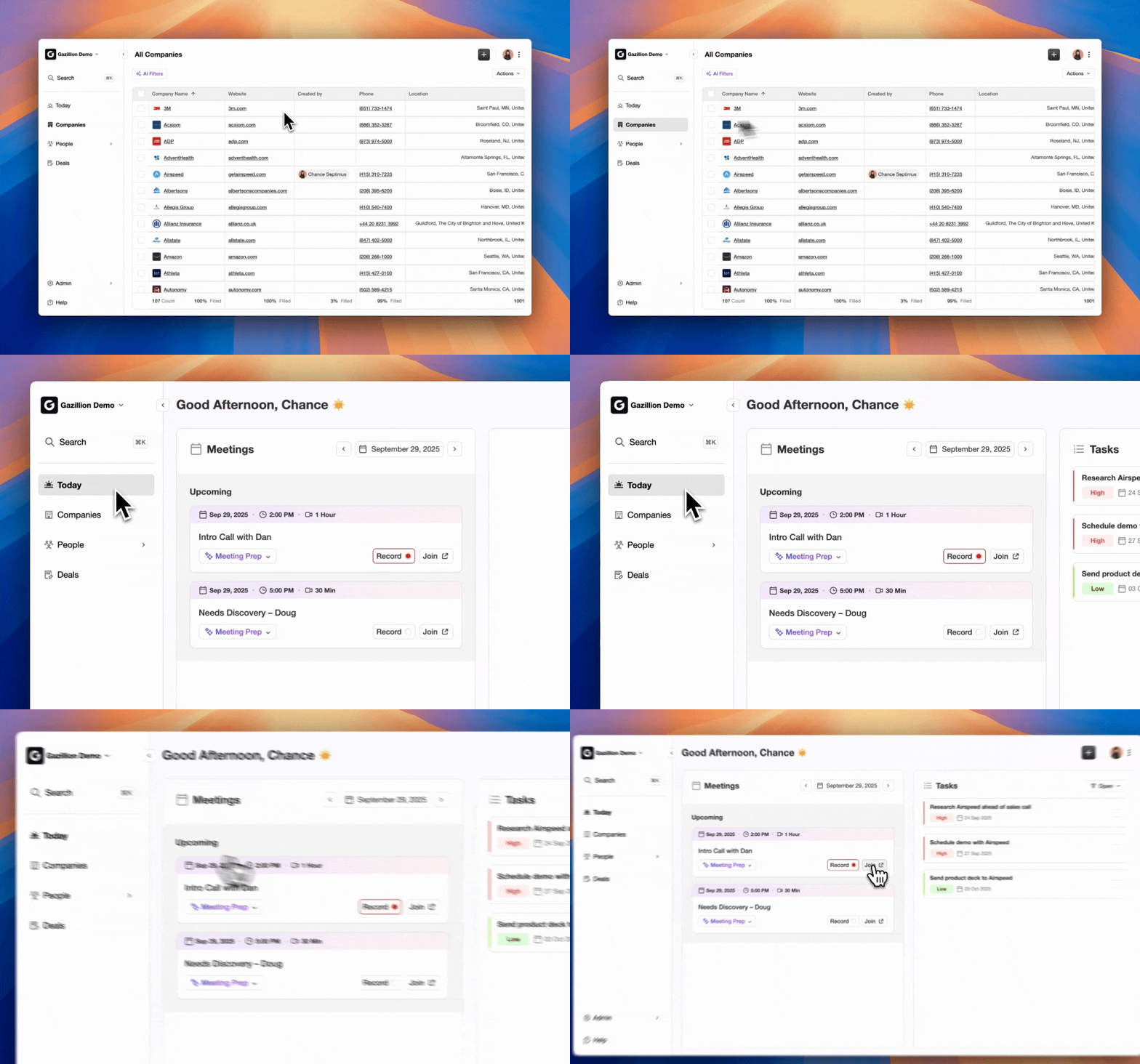
Coffee’s agent logs interactions, enriches contact data, and orchestrates meeting workflows without human intervention. Unlike basic sales automation that follows static rules, AI sales agents learn from what works and adjust approaches dynamically. Salesforce still relies on manual data entry for most activities, while HubSpot offers limited workflow automation that continues to need significant human oversight.

Data Quality and Pipeline Intelligence
Coffee’s built-in data warehouse preserves historical context that legacy relational databases lose when fields update. This persistent history supports more accurate reporting and coaching. The platform’s 2026 List Builder feature enables natural language prospect targeting, while Pipeline Compare surfaces week-over-week changes automatically. HubSpot and Salesforce depend on manual reporting and external enrichment tools, which often leads to gaps and stale records.

Integrations and Setup Speed
Coffee connects through simple authentication with Google Workspace, Microsoft 365, Stripe, and QuickBooks, so data starts flowing quickly. Zoho CRM requires more configuration before teams see value, and Salesforce often demands complex customization. Coffee’s agent begins working as soon as it connects, which removes lengthy implementation cycles and shortens time to value.
Best-Fit Use Cases by Team Type
Early-stage SMBs with 1-20 representatives gain the most from Coffee’s Standalone CRM, which replaces spreadsheets and manual processes with intelligent automation. These teams get a single system that captures activity, maintains clean data, and guides next steps without hiring admins.
Mid-market organizations already committed to Salesforce or HubSpot can use Coffee as a Companion App that upgrades existing investments with agent-driven data quality. Coffee enriches records, tracks activity, and manages workflows around the legacy CRM, so teams keep their system of record while gaining automation.
Teams that prioritize adoption and efficiency should avoid legacy platforms because their manual workflows create friction that kills CRM usage. This makes Coffee especially attractive to tech-savvy leaders moving from tools like Notion or Airtable who value automation and simplicity over complex enterprise feature sets. The same pattern appears at higher revenue levels, where one company generating tens of millions chose Coffee over Salesforce and HubSpot because removing manual data entry mattered more than stacking more legacy features.
Operational and Long-Term Factors to Weigh
Coffee maintains SOC 2 Type 2 and GDPR compliance while consolidating multiple tools into a single agent-driven platform. This consolidation reduces stack complexity and licensing costs compared with running separate products for enrichment, recording, and forecasting.
Lower complexity and fewer vendors also support smoother operations over time. Coffee’s modern architecture scales with headcount and deal volume without the legacy constraints that often force expensive replatforming projects.
Ready to see this in practice? Book a Coffee demo and watch autonomous sales workflow management in action.
Risks, Limitations, and Common Misconceptions
Legacy CRM risks include constant manual maintenance, shadow CRM tools that appear when reps avoid the system, and revenue loss from dirty or missing data. Coffee does not fit heavily regulated industries that require deep custom compliance reviews or very large enterprises with highly bespoke workflows.
A common misconception claims Coffee’s built-in enrichment trails dedicated providers. In practice, Coffee’s agent delivers data roughly on par with ZoomInfo for most use cases while removing integration overhead through its unified agent model.
Decision Framework Summary
Teams should score their needs across automation requirements, data quality priorities, and scalability demands. Coffee consistently wins for automation-first B2B teams that want agent-driven efficiency instead of manual CRM upkeep. The platform reflects the future of sales workflow automation where software supports users rather than asking for constant feeding.
FAQ
What’s the best CRM automation for B2B SME?
Coffee leads B2B SME automation through its autonomous agent that handles data entry, enrichment, and workflow orchestration without manual work. Unlike legacy platforms that need constant human maintenance, Coffee’s agent runs continuously to protect data quality and pipeline accuracy. The platform scales from small teams to mid-market organizations while staying simple enough that reps actually use it.
How does Coffee compare to Salesforce for sales workflows?
Coffee’s agent automates tasks that Salesforce still expects humans to perform. Coffee removes the manual data capture burden through autonomous logging and enrichment. Its modern architecture processes unstructured data from emails and calls, while Salesforce’s legacy relational database loses historical context when fields change. Coffee also supports both standalone and companion deployments, which gives teams flexibility that Salesforce cannot match.
What are the 2026 pricing differences?
Coffee uses straightforward seat-based pricing where you pay for human users and the agent’s unlimited labor comes included. Salesforce starts at $25 per user monthly with extra charges for AI features, while HubSpot starts at $15 per user monthly. Coffee’s transparent pricing avoids complex metering on AI usage or process automation, which keeps budget planning simple for growing B2B teams.
Can you provide CRM automation examples?
Coffee’s agent shows its value through automatic contact creation from email signatures, meeting briefing preparation with attendee context, post-call summary generation with action items, and pipeline change tracking without manual updates. The List Builder feature also executes natural language commands like “Find VPs of Sales at $10M+ funded companies using Salesforce” on its own. These examples highlight true automation instead of the manual workflows that legacy platforms still require.

What’s the best CRM for small B2B teams?
Coffee suits small B2B teams through its agent-first approach that removes the manual maintenance burden common in traditional CRMs. Small teams rarely have spare headcount for ongoing data entry and system administration, so Coffee’s autonomous operation becomes a practical requirement for efficient growth. The platform delivers enterprise-grade intelligence and automation at pricing that fits small teams, while many legacy options either lack depth or demand more manual work than small teams can support.
Try Coffee free for 14 days and experience intelligent agent assistance across your sales workflows.