

Key Takeaways
- Lead Forensics costs $17K+ annually and only identifies companies, while modern alternatives reveal specific people with names, emails, and LinkedIn profiles.
- Coffee uses AI agents to handle CRM sync and lead suggestions, which removes 8-12 hours of weekly manual work for sales teams.
- Top alternatives like Leadpipe reach 40%+ person-level match rates, but they do not match Coffee’s unified automation or native CRM integrations.
- Strong 2026 options deliver at least 70% accuracy, under $500/month SMB pricing, under 1-hour setup, and GDPR compliance.
- Switch to Coffee’s unified platform for a complete visitor-to-pipeline solution that outperforms Lead Forensics.
How We Evaluated Lead Forensics Alternatives for 2026
Before reviewing specific tools, we defined four baseline thresholds that any serious Lead Forensics alternative should meet in 2026. The table below outlines these criteria, how we measure them, and the performance benchmarks that modern teams now expect.
| Criteria | Must-Have Threshold | Success Metric | 2026 Benchmark |
|---|---|---|---|
| Person-Level Accuracy | 70%+ name match | Individual identification rate | The top performer in the 2026 NIST FRTE 1:N Identification benchmark achieved a 0.06% authentication error rate (99.94% identification rate) on still images of 12 million people |
| SMB Pricing | Under $500/month | Cost per 10k visitors | Varies by provider and usage |
| CRM Integration | Native sync | Salesforce/HubSpot direct | Bidirectional data flow |
| Setup Time | Under 1 hour | Pixel to alerts | JavaScript snippet install |
The 2026 shift toward agent-driven automation favors tools that convert visitor data into pipeline-ready insights instead of static identification lists.

Top 10 Lead Forensics Alternatives Ranked for Real-World Use
1. Coffee – AI Agent for Unified Visitor ID and CRM Automation
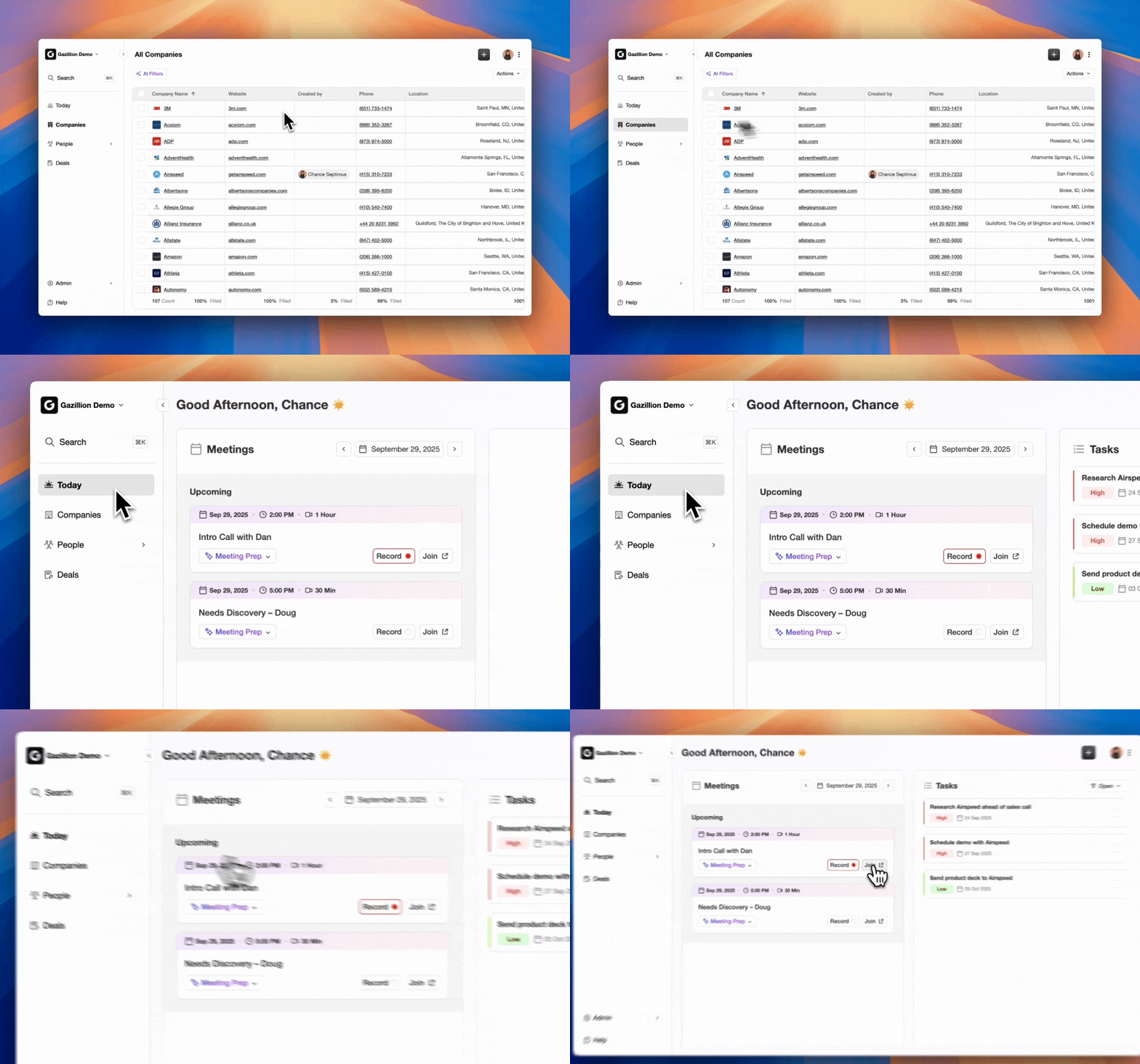
Coffee’s pixel identifies visitors by name, title, email, LinkedIn profile, and pages viewed. The AI Suggested Leads feature then recommends persona-matched prospects, such as VPs of Sales, inside visiting companies. The agent enriches CRM records automatically and removes the need for manual data entry.

Pros:
- AI agent fixes data quality issues and saves 8-12 hours per week
- Visitor identification, CRM sync, and lead suggestions in one platform
- Person-level data paired with AI prospect recommendations
- Native Salesforce and HubSpot integrations
Cons:
- Newer platform with an evolving feature set
- Some integrations still depend on Zapier
- Seat-based pricing may not fit every team structure
Pricing: Seat-based
G2 Projection: 4.8/5 rating
Best For: SMB RevOps teams that want an AI agent to manage visitor data and CRM workflows
2. Leadpipe – High-Match Person-Level Identification
Leadpipe delivers 40%+ match rates for identifying anonymous US website visitors with individual names, job titles, emails, phone numbers, and LinkedIn profiles. The platform blends IP addresses, cookies, device fingerprints, and proprietary identity graphs to reach these match levels.
Pros:
- High person-level match rates across US traffic
- Rich individual data, including phone numbers
- Strong coverage for US-based audiences
- Transparent credit-based pricing
Cons:
- Limited AI automation for follow-up
- Manual lead qualification remains necessary
- Higher cost for each identified visitor
Pricing: $98/month for 100 visitors
Best For: Teams that care most about raw person-level match rates
3. Dealfront/Leadfeeder – GDPR-First Company Identification
Dealfront’s Leadfeeder focuses on company-level visitor identification with strong European compliance. Paid plans start at €99/month and include unlimited visit data storage plus more than 40 CRM integrations.
Pros:
- Robust GDPR compliance and EU hosting
- Consistent company-level identification
- Large CRM integration library
- Free tier available
Cons:
- Company-only data, no individual contacts
- Tracking depends on cookies
- Limited automation beyond basic alerts
Best For: European SMBs that treat GDPR compliance as a primary requirement
4. Warmly – Real-Time Visitor Engagement Suite
Warmly supports real-time interventions such as AI-powered chat or live video calls while leads remain active on the site. The platform focuses on engaging visitors in the moment instead of only logging them for later outreach.
Pros:
- Real-time visitor engagement tools
- Waterfall approach across multiple data providers
- Live intervention features for sales teams
- Proven adoption among enterprise customers
Cons:
- Plans start at $15,000 per year (about $1,250 per month)
- Setup and onboarding can be complex
- Often requires a dedicated owner to manage
Best For: Mid-market teams that prioritize real-time engagement over simple tracking
5. 6sense – Enterprise ABM and Intent Platform
6sense offers company-level identification inside a broad ABM platform, with pricing that typically starts around $50,000+ annually for enterprise accounts. The tool fits organizations that already run mature account-based programs.
Pros:
- End-to-end ABM capabilities
- Advanced intent data and scoring
- Enterprise-grade security and compliance
Cons:
- Enterprise pricing excludes most SMBs
- Implementation requires significant time and resources
- Too heavy for teams that only need visitor identification
Best For: Large enterprises with complex ABM strategies
6. RB2B – Budget-Friendly Person-Level Data
RB2B focuses on identifying specific visitors and offers Starter plans at $79/month plus real-time Slack notifications. The product targets teams that want individual contacts without a large price tag.
Pros:
- Accessible pricing for person-level data
- Simple pixel-based installation
- Instant Slack alerts for new visitors
- Free tier available
Cons:
- Limited CRM automation beyond basic syncs
- Basic tools for lead qualification
- Coverage centered on US traffic
Best For: Budget-conscious teams that still want individual contact details
7. Visitor Queue – Entry-Level SMB Tracking
Visitor Queue offers basic company-level identification at starter pricing that fits small businesses. The product focuses on simple deployment and essential reporting.
Pros:
- Very low entry pricing
- Straightforward setup
- Basic CRM integrations
Cons:
- Company-only identification
- Data accuracy can be inconsistent
- Minimal automation beyond notifications
Best For: Very small businesses with simple tracking needs
8. Whoisvisiting – Traditional IP-Based Company Tracking
Whoisvisiting relies on standard IP-based company identification and offers basic alert functionality. The platform reflects an earlier generation of visitor tracking tools.
Pros:
- Long-standing, familiar platform
- Simple company identification workflow
- Several pricing tiers for different volumes
Cons:
- Older technology approach that misses many remote visitors
- No individual contact identification
- Limited integrations with modern stacks
Best For: Teams that are comfortable with legacy IP-based tracking
9. Leadinfo – Compliance-Focused European Coverage
Leadinfo identifies B2B companies in the EU and offers pricing starting at €49/month. The platform emphasizes data security and regional compliance.
Pros:
- Strong performance across European markets
- Robust data security and compliance posture
- More than 70 native integrations
- Cookieless tracking option
Cons:
- Company-level identification without individual contacts
- Limited reach in the US
- No AI-driven automation features
Best For: European SMBs that prioritize compliance and regional hosting
10. Leadberry – Basic Visitor Tracking Capabilities
Leadberry delivers standard visitor identification features that align with many generic tracking tools. The platform focuses on core functionality rather than innovation.
Pros:
- Familiar, standard feature set
- Several integration options
- Competitive pricing for basic needs
Cons:
- Little differentiation from similar tools
- Limited product innovation
- Only basic automation support
Best For: Teams that only need foundational visitor tracking
Quick Comparison Table
The table below highlights the main differences across the top four alternatives. It focuses on whether they identify individuals, connect natively to CRMs, how they price access, and whether they include AI-driven lead suggestions.
| Tool | Person ID | CRM Native | Pricing | AI Suggests |
|---|---|---|---|---|
| Coffee | Yes | Yes | Seat-based | Yes |
| Leadpipe | Yes | Zapier | $98/month | No |
| Dealfront | No | Yes | €99/month | No |
| RB2B | Yes | Zapier | $79/month | No |
Try Coffee’s AI-powered platform to access the only solution that combines person-level identification with automated lead suggestions and native CRM sync.

Buyer Guide and Use Cases by Team Type
Team size and tech stack maturity should guide which alternative you choose. SMBs with 1-20 reps gain the most from Coffee’s standalone platform because smaller teams cannot afford tool sprawl and need one system for visitor identification and CRM automation. Mid-market teams already invested in HubSpot or Salesforce benefit from Coffee’s Companion App, which enhances existing systems instead of replacing them. Enterprise organizations often need 6sense’s full ABM capabilities when they run complex account-based programs across regions and product lines.
Data depth, budget, and compliance requirements should shape your approach to identification. Person-focused tools provide more actionable contact details for immediate outreach than company-only tools, but that advantage matters only when your budget and compliance framework support individual data use. Budget-conscious teams should emphasize GDPR compliance with tools like Leadinfo and accept company-level identification as a tradeoff for lower cost and regulatory safety. Growth-focused teams gain more from Coffee’s agent-driven automation because it converts rich individual data into pipeline velocity without constant manual follow-up.
Why Coffee Wins in 2026 for Visitor-to-Pipeline Workflows
Coffee’s AI agent turns anonymous visitors into outbound leads and pipeline intelligence without manual data entry. The platform increases conversion by syncing data into the CRM automatically and surfacing AI-powered lead suggestions that match your buyer personas. Coffee also closes the loop from first anonymous visit to qualified prospect, while many competitors stop at raw identification data.

Implementation Risks and Practical Considerations
Visitor identification performance depends heavily on your traffic mix, so results vary across industries and regions. Remote work has lowered IP-based match rates compared with pre-2020 office traffic, which makes modern identity graphs and pixels more important. Clean pixel installation and correct CRM configuration matter for every tool, because misconfigurations create gaps that no vendor can fix later. Most modern platforms support straightforward migration from Lead Forensics, which keeps disruption to existing workflows relatively low.
Frequently Asked Questions
What is the best free Lead Forensics alternative?
Coffee offers the most complete free trial among Lead Forensics alternatives, with full access to person-level identification, AI lead suggestions, and CRM automation. RB2B and Dealfront also provide free tiers, but they include fewer features than Coffee’s agent-driven approach.
How does Leadpipe compare to Coffee for visitor identification?
Leadpipe focuses on raw person-level identification with strong match rates, while Coffee layers AI agents on top for automated lead qualification and unified CRM management. Coffee supports a complete workflow from visitor identification through pipeline management, whereas Leadpipe concentrates on identification accuracy alone. Teams that want automation and CRM orchestration should choose Coffee, while teams that only care about maximum match rates may prefer Leadpipe.
Are visitor tracking tools GDPR compliant?
Coffee maintains SOC2 and GDPR compliance through consent management and strict data processing controls. European-focused tools such as Leadinfo and Dealfront offer deeper regional compliance features for EU customers. US-based tools like RB2B and Leadpipe provide varying levels of GDPR support, so your legal team should review each vendor before implementation.
What person-level identification accuracy should I expect?
Realistic person-level identification rates vary by tool and traffic source, and enrichment quality for identified visitors matters more than headline percentages. Company-level tools usually reach higher raw identification rates, but they deliver less actionable data for sales outreach. Focus on enrichment depth and automation capabilities instead of chasing the highest possible match rate alone.
How does Coffee pricing compare to Lead Forensics?
Coffee’s seat-based pricing starts well below the $17K+ annual Lead Forensics fees mentioned earlier, and most SMBs save 60-80% by switching. Coffee includes person-level identification, AI automation, and native CRM integrations in its base pricing, while Lead Forensics often charges extra for advanced features.
Conclusion: Choosing Coffee for an Automation-First Future
Coffee leads modern Lead Forensics alternatives in 2026 by pairing person-level visitor identification with AI automation and native CRM integration. The platform removes manual data entry and surfaces actionable lead suggestions that traditional identification tools cannot provide. SMB sales and RevOps teams that want a single system to turn anonymous traffic into qualified pipeline will find that Coffee delivers strong value and efficiency.
Experience Coffee’s automation-first approach to visitor identification and CRM sync.