
Key Takeaways
- Coffee ranks as the leading AI lead management platform with autonomous agents for data entry, meeting AI, and pipeline intelligence.
- Most sales reps spend hours on manual data entry, and AI tools like Coffee return that time to selling and higher close rates.
- Top platforms share core capabilities such as predictive scoring, auto-enrichment, visitor identification, and natural language list building.
- Coffee fits SMB and mid-market teams, connects with Salesforce and HubSpot, and can also function as a standalone CRM.
- You can transform daily sales work by deploying Coffee’s AI agent for faster workflows and cleaner data.
Core Capabilities of Modern AI Lead Management Platforms
Great AI lead management software behaves like an autonomous teammate, not a simple rules engine. These systems manage lead capture, enrichment, scoring, nurturing, and visitor identification with minimal human input.
Key AI Features to Prioritize
- Predictive Scoring: Machine learning models that increase close rates by analyzing historical deals and real-time behavioral signals.
- Auto-enrichment and Unification: Intelligent consolidation of contact and account data from multiple sources, without manual research.
- Meeting Automation: AI-generated briefings, summaries, and follow-ups that keep deals moving after every call.
- Visitor Identification: Conversion of anonymous website traffic into named leads with persona and account matching.
- Natural Language List Building: Conversational prospect research and targeting through simple prompts.
These features only deliver consistent value when they sit on top of strong data infrastructure. Leading platforms use data warehouse architectures to preserve historical context across all AI actions, which translates into measurable ROI and many hours saved each week for every rep.

Top 10 AI-Powered Lead Management Tools for Sales Teams
1. Coffee
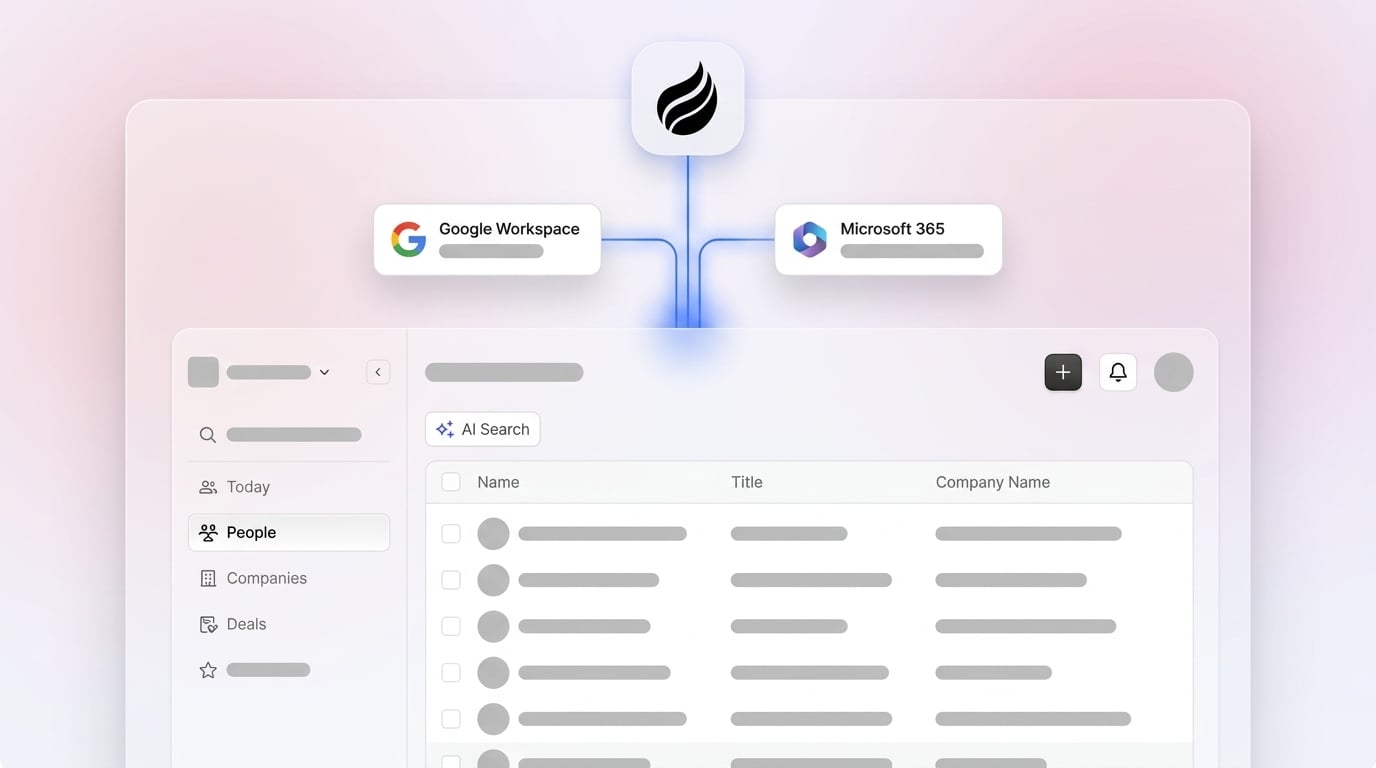
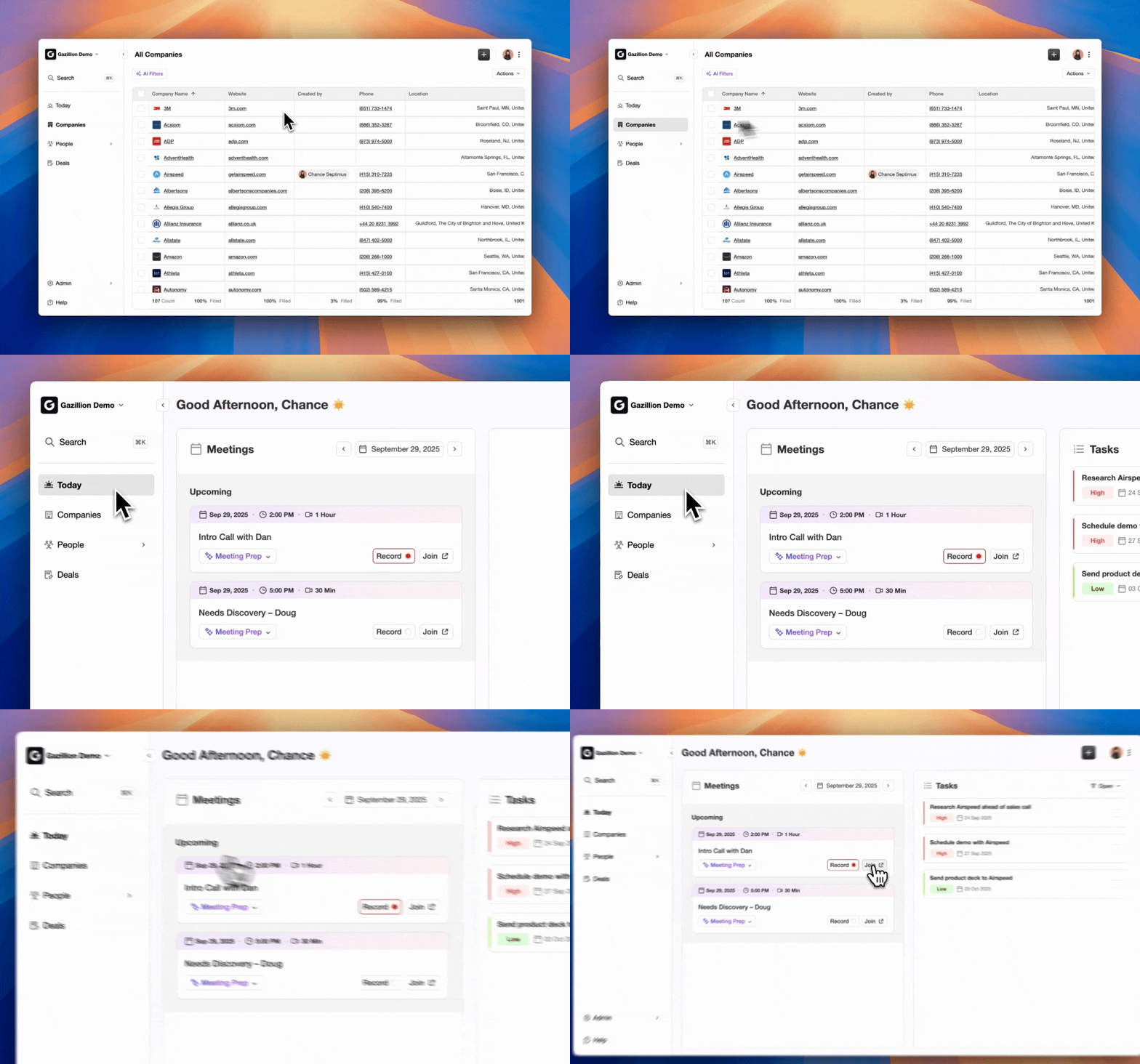
Coffee’s AI agent works as both a standalone CRM and a companion app for Salesforce or HubSpot. The platform automates data entry from Gmail and Office 365, generates AI meeting briefings and summaries, delivers pipeline intelligence through a warehouse-style data layer, and identifies visitors with suggested leads. Coffee’s natural language list builder supports conversational prospect research. Pros include autonomous agents that solve legacy CRM adoption problems and enterprise-grade security with SOC2 compliance. The main limitation is reliance on Zapier-based integrations today, with deeper native connections in active development. Coffee suits SMB and mid-market teams with 1 to 100 reps that want major time savings from intelligent automation.

2. HubSpot
HubSpot includes predictive lead scoring, automated email sequences, and workflow automation across sales and marketing. The platform offers AI prospecting assistance and integrated chatbots for lead qualification. It still depends heavily on manual data entry and does not provide the autonomous agent behavior that Coffee delivers. HubSpot fits teams that want an all-in-one marketing and sales hub with moderate AI support.
3. monday CRM
monday CRM embeds intelligent lead scoring and AI-powered lead enrichment using Crunchbase data directly inside customizable workflows. The platform automates lead capture and tracks engagement across channels. It lacks advanced meeting AI and visitor identification features. monday CRM works well for teams that need flexible pipeline workflows with straightforward AI enhancements.
4. Apollo.io
Apollo focuses on B2B prospecting with AI-driven lead scoring, contact enrichment, and natural language search. The platform excels at finding decision-makers and building targeted lists but does not offer full CRM depth or meeting intelligence. Apollo fits outbound and prospecting teams that already rely on a separate CRM.
5. Gong
Gong specializes in conversation intelligence with AI call analysis, deal risk detection, and coaching insights. It shines for call review and coaching but does not handle lead capture or enrichment. Gong suits teams that want to improve sales conversations while using other tools for lead management.
6. ZoomInfo
ZoomInfo provides extensive B2B data and intent signals with AI-powered account prioritization through Copilot AI. The platform offers strong enrichment but needs a connected CRM to run workflows. ZoomInfo fits enterprise teams that depend on large, accurate contact databases.
7. Clari
Clari focuses on AI-driven revenue forecasting and pipeline management with predictive analytics for deal outcomes. It delivers strong forecast accuracy but offers limited lead capture and enrichment. Clari works best for revenue operations teams that prioritize pipeline visibility and forecast reliability.
8. Day.ai
Day.ai ingests unstructured data from emails and documents and extracts sales insights automatically. The product brings innovation in data processing but does not cover full lead management workflows. Day.ai fits teams that handle heavy volumes of unstructured sales communication.
9. Pipedrive AI
Pipedrive’s AI features include pattern recognition for likely-to-close deals, automated email drafting, and Smart Contact Data enrichment. The platform offers solid basic AI but lacks deeper autonomous agent behavior. Pipedrive AI suits small teams that want simple, AI-assisted pipeline management.
10. Salesforce Einstein
Salesforce Einstein delivers predictive analytics, lead scoring, and automated task recommendations inside Salesforce. The system remains passive automation that needs significant configuration and ongoing admin work. Einstein fits large enterprises with dedicated Salesforce operations teams.
Coffee’s agent-led approach sets it apart from these more passive tools by autonomously running end-to-end workflows instead of waiting for manual triggers. See how Coffee’s autonomous agent compares to your current CRM’s manual processes and rules-based automations.

AI Lead Management Software Comparison for 2026
The feature gaps between platforms become clear when you compare how they handle data entry, meetings, pipeline intelligence, and visitor identification. Notice that Coffee is the only platform combining agent-led data entry with warehouse-based pipeline intelligence and persona-level visitor identification, which reflects a true autonomous agent rather than simple automation.
| Tool | Auto Data Entry | Meeting AI | Pipeline Intelligence | Visitor ID |
|---|---|---|---|---|
| Coffee | Agent-led (Gmail/365) | Briefings/summaries | Compare (warehouse) | Persona-suggested |
| HubSpot | Partial | AI emails | Predictive | Basic |
| monday CRM | Workflows | N/A | AI blocks | N/A |
| Apollo | Enrichment | N/A | Scoring | N/A |
These feature differences matter most when you match them to your team size and your existing tech stack.
Best AI Lead Management for Small Teams (1–20 Reps)
Small sales teams gain the most from AI because it multiplies capacity without new hires. Coffee leads this segment by acting as a simple standalone system that replaces spreadsheets or as a companion that upgrades existing tools. AI lead scoring and automated data entry let small teams handle far more lead volume while keeping follow-up consistent. Pipedrive AI offers a lighter alternative for teams that only need basic pipeline management with some AI assistance.

Best AI Lead Management for Mid-Market Teams (20–100 Reps)
Mid-market teams usually already run Salesforce or HubSpot. Coffee’s Companion App fits this reality by adding autonomous agents on top of those systems without disrupting current workflows. The earlier warehouse architecture enables Coffee to maintain historical context across Salesforce or HubSpot data, which improves pipeline intelligence and forecast accuracy. Apollo paired with HubSpot can work for teams that care more about prospecting scale than full-funnel automation.
Why Coffee’s AI Agent Stands Out for Sales Teams
Coffee’s “Good Data In, Good Data Out” philosophy tackles the core weakness of legacy CRMs, which depend on manual data entry that rarely happens consistently. This agent-led approach allowed one AI solutions firm to abandon spreadsheets and automate their sales reviews. The same warehouse architecture described earlier preserves historical context that traditional relational databases often lose and supports autonomous data quality checks that bolt-on AI tools cannot match. This infrastructure also supports SOC2 compliance while the team expands native integrations beyond the current Zapier connections.
Practical Steps to Implement AI Lead Management
Teams see the fastest results when they start with a clear rollout plan. First, document current data entry pain points and where reps spend the most time. Next, connect workspace tools like Gmail or Office 365 and any existing CRM, then deploy a visitor tracking pixel. Finally, train teams on how to review and act on AI-generated notes, lists, and recommendations.
Vendor-delivered AI agents reach time-to-first-value in about 38 days on average. Coffee’s no-setup agent model reduces change management risk compared with large legacy CRM overhauls. Explore Coffee’s agent in your own environment to see how quickly it can remove manual data entry from your team’s day.
FAQ
What’s the best free AI lead tool?
Coffee provides a full-featured free trial that automates data entry and lead management workflows for immediate time savings. Most platforms limit free tiers, while Coffee’s trial includes meeting AI, pipeline intelligence, and visitor identification that can save several hours per rep each week.
What’s the best AI CRM for Salesforce users?
Coffee’s Companion App acts as an AI agent layer on top of Salesforce. It automates data entry from emails and meetings and adds autonomous workflows, visitor identification, and pipeline intelligence without migration or heavy configuration.
Does AI actually fix CRM adoption issues?
AI agents like Coffee remove the manual data entry burden that drives low CRM adoption. When the agent handles busywork automatically, reps can focus on selling instead of updating records. The CRM then becomes a helpful co-pilot that reps trust and use daily.
How does Coffee compare to HubSpot’s AI features?
Coffee operates as an autonomous agent that proactively manages workflows, while HubSpot’s AI tools remain passive and require human triggers. Coffee’s warehouse architecture preserves long-term context and supports stronger pipeline intelligence than HubSpot’s relational database setup.
What ROI can teams expect from AI lead management?
AI lead management often pays back within a few months. Teams usually see higher close rates, many hours saved per week per rep, and sharp reductions in manual data entry. Coffee’s agent-led model delivers these gains while improving data quality and pipeline visibility.
Conclusion: Coffee as the Future of Lead Management
Manual data entry and scattered sales tools limit revenue potential in 2026. Coffee’s AI agent delivers autonomous automation that turns lead management from a chore into a competitive edge. While legacy platforms like Salesforce and HubSpot still rely on constant human maintenance, Coffee keeps accurate data flowing in automatically so reliable insights and forecasts flow out. For sales teams that want to escape the data entry grind and focus on closing deals, Coffee offers a clear path forward. Get started with Coffee and see how an autonomous agent changes your daily workflow.