
Key Takeaways
- Sales reps spend 71% of their time on non-selling tasks, and AI automation gives them back meaningful time for revenue work.
- AI agents unify data across tools, coordinate meetings, and provide predictive forecasting with significant accuracy gains.
- Coffee outperforms Salesforce and HubSpot through end-to-end agentic workflows, high-quality data capture, and simple seat-based pricing.
- Teams can move quickly with Coffee by connecting their workspace, enabling auto-entry, deploying the meeting bot, and unlocking insights within days.
- Real-world customers save more than 160 hours each month, and you can start a Coffee trial to experience agent-led CRM transformation.
How AI-Powered Sales Workflow Automation Delivers Predictive Insights
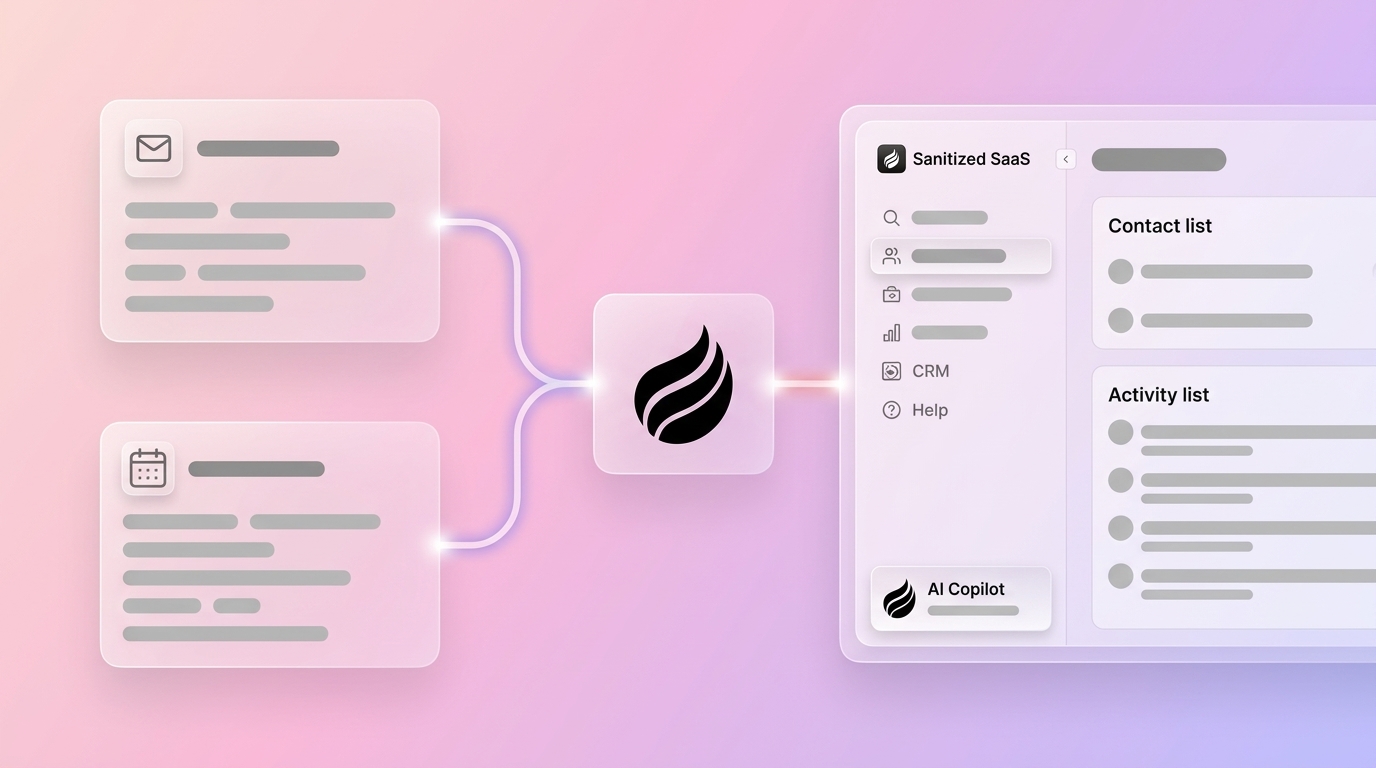
AI-powered sales workflow automation with predictive insights uses autonomous agents to handle data capture, enrichment, meeting orchestration, and pipeline tracking. These agents support accurate forecasting while removing most manual data entry.

Key components include:
- Automated Data Unification: Agents capture data from emails, calendars, and calls, including both database fields and conversational content.
- Intelligent Meeting Orchestration: AI bots join calls, generate summaries, and draft follow-ups.
- Predictive Pipeline Intelligence: Real-time deal health monitoring with risk scoring.
- Workflow Automation: End-to-end process management from lead identification to close.
Benefits include 30-40% forecast accuracy improvements, higher CRM adoption rates, and leaner tech stacks. This agentic approach overcomes legacy CRM limitations such as outdated user experiences and weak handling of unstructured data.

Ready to eliminate manual data entry? Start your free Coffee trial and experience true sales automation.
Core Benefits and Components Deep-Dive
These automation capabilities translate into concrete productivity gains when teams implement them correctly. Modern AI sales automation delivers measurable results through intelligent workflow orchestration:
- Lead Scoring & Qualification: AI predictive lead scoring can improve conversion rates through firmographic analysis, behavioral signals, and intent indicators.
- Predictive Forecasting: Phoenix Strategy Group reports 30-40% forecast accuracy improvements compared to manual methods.
- Workflow Orchestration: Autonomous agents coordinate multi-step processes across channels and systems.
- Data Quality Management: AI-driven data quality programs can significantly improve CRM accuracy.
Coffee’s Pipeline Compare feature exemplifies this “good data in, good data out” philosophy by automatically tracking pipeline changes. Teams complete reviews much faster and avoid manual spreadsheet exports. This same data quality foundation powers the List Builder, which supports natural language prospecting commands like “Find VPs at $10M+ funded firms using Salesforce” and delivers targeted results without the manual research that usually hurts data accuracy.

Top 2026 AI Sales Automation Tools Comparison
| Platform | Data Quality | Automation Depth | Predictive Power | Pricing Model |
|---|---|---|---|---|
| Coffee | Structured + unstructured data handling | End-to-end agentic workflows | Real-time pipeline intelligence | Simple seat-based, standalone/companion |
| Salesforce | Improved forecast accuracy | Rule-based automation | Basic reporting dashboards | Complex licensing, enterprise-focused |
| HubSpot | Marketing-first architecture | Template-driven workflows | Limited predictive capabilities | Tiered pricing with feature restrictions |
| Gong/Outreach | Conversation intelligence only | Single-function automation | Call analysis insights | Point solution pricing |
Coffee stands out through true agentic automation that handles both structured CRM data and unstructured content such as email text and call transcripts. Unlike legacy systems where 70% of revenue leaders lack confidence in data quality, Coffee’s autonomous agent captures accurate data from day one. The platform provides SOC2 Type 2 compliance and GDPR adherence and connects smoothly through Zapier with existing tech stacks.
See how Coffee’s intelligent automation reshapes your sales process by exploring pricing options today.
Hands-On Implementation with Coffee
Coffee’s implementation follows a streamlined four-step process that delivers fast productivity gains:
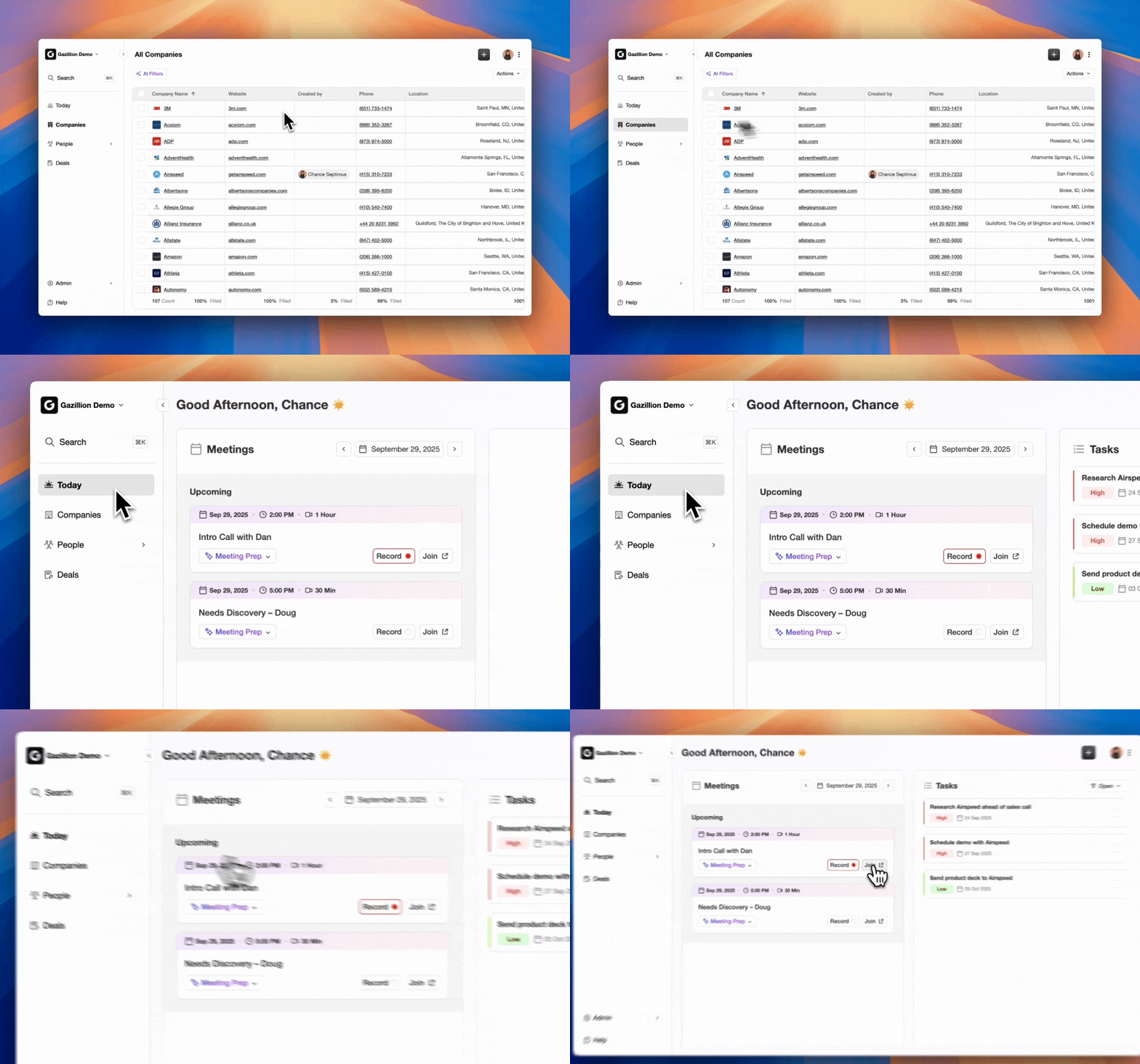
- Connect Workspace: Authenticate Google Workspace or Microsoft 365 for automatic email and calendar integration.
- Enable Auto-Entry: The agent immediately begins creating contacts and companies from existing communications.
- Deploy Meeting Bot: AI joins Zoom, Teams, or Meet calls for recording and transcription.
- Unlock Insights: Access Pipeline Compare and List Builder for strategic decision-making.
For teams with 1-20 reps, Coffee operates as a standalone CRM replacement. Larger organizations can run Coffee as a companion app that feeds Salesforce or HubSpot instances. Sales reps typically save 8-12 hours per week that previously went to manual data entry, and they can immediately shift that time to revenue-generating activities.
ROI pilots show measurable impact within 30-60 days. Teams remove shadow CRMs such as spreadsheets and Notion while still following qualification frameworks like BANT, MEDDIC, or SPICED.
Real-World Examples and Case Studies
Coffee’s agentic workflows deliver tangible business outcomes across a wide range of sales teams. A $10M ARR company building custom AI solutions replaced manual spreadsheet management with Coffee’s automated pipeline tracking. The Pipeline Compare feature removed weekly spreadsheet compilation, saving about 160 hours each month and improving forecast accuracy.
Agent-driven prospecting commands highlight the platform’s natural language strengths. Users run complex searches such as “Find VPs of Sales in North America at companies with $10M+ funding using Salesforce” through a simple conversational interface. This approach removes manual research across multiple tools and still delivers enriched prospect data.

Coffee’s 2026 feature releases add deeper AI intelligence layers that store business context, competitor information, and ICP definitions for tailored insights. The platform’s AI search answers natural language questions such as “Which deals are stuck in negotiation?” or “What’s closing this month?” and provides instant pipeline visibility.
Best-Fit Use Cases and Buying Considerations
Coffee works especially well for small to mid-market companies with 1-100 reps and tech-savvy leadership that want a modern alternative to legacy CRM maintenance. Ideal scenarios include:
- Teams outgrowing spreadsheets but finding Salesforce or HubSpot too manual.
- Organizations with fragmented tech stacks that need consolidation.
- Revenue leaders who lack confidence in current CRM data quality.
- Companies that prioritize agent-led automation instead of passive databases.
Coffee may not fit large enterprises that require highly complex custom workflows or heavily regulated industries that need lengthy security reviews. The platform’s SOC2 compliance and no-lock-in philosophy still provide flexibility for teams with evolving needs.
Frequently Asked Questions
What integrations does Coffee support?
Coffee integrates natively with Google Workspace and Microsoft 365 for email and calendar data. Additional integrations are available through Zapier, and deeper native connections are planned for 2026. The platform also connects with popular meeting tools such as Zoom, Teams, and Google Meet for automated call recording and transcription.
How secure is Coffee’s AI agent?
Coffee maintains SOC 2 Type 2 certification and GDPR compliance. Customer data does not train public AI models, which protects privacy and confidentiality. The platform uses enterprise-grade security measures, including encrypted data transmission and secure cloud infrastructure.
How does Coffee’s data quality compare to tools like ZoomInfo?
Coffee provides data enrichment roughly on par with dedicated data providers for most use cases. The main advantage is built-in integration, since Coffee’s agent automatically enriches records without separate tools or manual exports. This approach removes the complexity and cost of maintaining multiple point solutions.
What is Coffee’s pricing model?
Coffee uses simple seat-based pricing where you pay for human users, and the AI agent’s unlimited labor is included. There are no complex metering systems for AI usage or hidden fees. The platform supports both standalone CRM and companion app setups to match different organizational needs.
Can Coffee work alongside existing Salesforce or HubSpot instances?
Coffee operates as a companion app that feeds clean, enriched data into existing Salesforce or HubSpot systems. The agent handles the “data in” process while your current system remains the system of record. This approach improves data quality without forcing a platform migration.
Join teams already using Coffee to reclaim 8-12 hours weekly by viewing plans and pricing today.