
Key Takeaways for Small Sales Teams
- Small sales teams lose 71% of time to non-selling tasks. Affordable automation tools under $50 per month can restore 8–12 hours weekly for selling.
- Coffee’s AI agent captures data directly from Google Workspace and Microsoft 365, which removes the need for manual CRM entry.
- Pipedrive ($14 per seat), Close ($49 per seat), and Zapier ($20 per month) support pipeline automation but still rely on more manual input than Coffee.
- Evaluate tools by pricing, setup time, automation depth, and integrations. Coffee scores 10/10 across key criteria for teams with 1–20 reps.
- If you want to automate your sales workflow, review Coffee’s pricing and start a trial to see agent-led efficiency in action.
Why Small Sales Teams Feel Stretched Thin
Small sales teams struggle with fragmented tool stacks, low CRM adoption, and losing around 27% of their time to bad data. Reps often toggle between HubSpot for records, ZoomInfo for enrichment, and separate tools for outreach, which slows every deal. Agent-led automation unifies these data streams, orchestrates meeting workflows, and delivers pipeline intelligence without technical expertise or coding skills.

How to Evaluate Sales Automation for Small Teams
Start with tools under $50 per seat monthly that offer quick setup, because small teams need impact without heavy overhead. Within that budget, focus on automation depth that covers data entry, lead routing, and email sequences, since these tasks consume most rep time. The tool should also work smoothly for teams of 1–20 reps through intuitive interfaces and strong integrations with Google Workspace, Microsoft 365, and Zapier. Measure ROI through hours saved each week and improved data quality so you can confirm that automation reduces busywork instead of adding another system to manage.
The table below shows how Coffee scores against these core criteria for small teams.
| Criteria | Why It Matters | Coffee Score |
|---|---|---|
| Pricing | Affordable for bootstrapped teams | 10/10 |
| Setup Time | Quick deployment without IT | 10/10 |
| Automation Depth | Eliminates manual data entry | 10/10 |
| Integration Coverage | Works with existing tools | 9/10 |
Top Sales Automation Tools Overview
With the evaluation framework in place, you can compare leading tools on price, automation focus, and time savings. The table below highlights four widely used options that often appear on shortlists for small sales teams.
| Tool | Starting Price (2026) | Key Automations | Hours Saved/Week |
|---|---|---|---|
| Coffee | $49/month for 1–25 active users | Auto-data capture, meeting orchestration, pipeline intelligence | 8–12 |
| Pipedrive | US$14 per seat per month, billed annually | Pipeline automation, workflow triggers | Varies |
| Close | $49/seat/month | Calling automation, email sequences | Varies |
| Zapier | $19.99/month (billed annually) | No-code workflow connections | Varies |
Next, explore how each tool works in practice so you can match capabilities to your team’s daily workflow.
1. Coffee: AI CRM Agent for Small Teams
Coffee works as both a standalone CRM and a companion app for existing Salesforce or HubSpot instances. The platform’s AI agent automatically enriches contacts from Google Workspace and Microsoft 365, joins meetings to generate briefings and summaries, and provides Pipeline Compare functionality for week-over-week deal tracking.
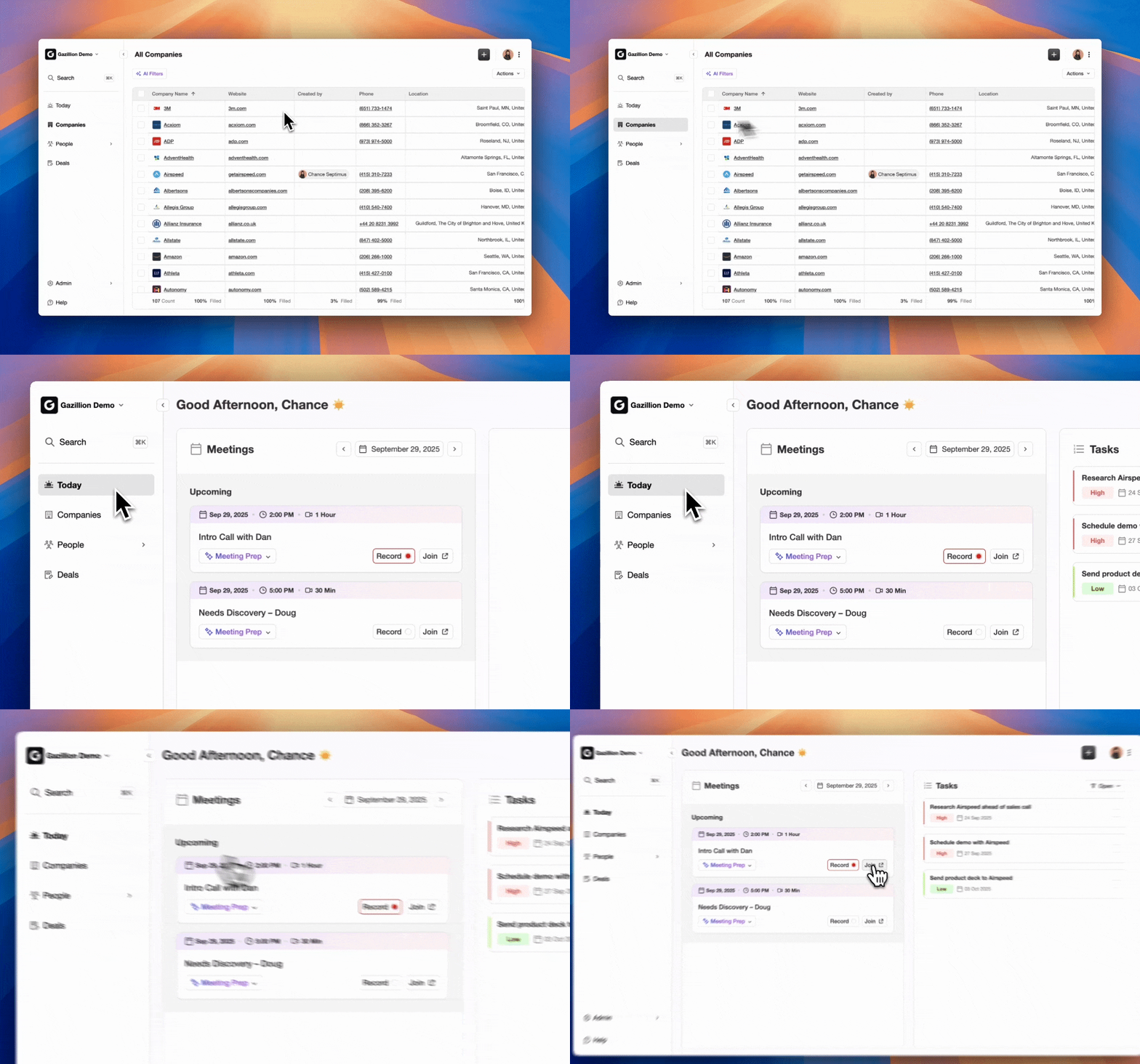
Key features include automatic contact creation from email signatures, an AI meeting bot with follow-up drafting, and List Builder for natural language prospecting. These features connect because the agent handles unstructured data from calls and emails while maintaining structured CRM records, so reps avoid translating conversations into database fields. This level of automation is possible because setup uses OAuth authentication with existing productivity suites, which keeps configuration simple and fast.

| Feature | Coffee | Average Competitor | Why Coffee Wins |
|---|---|---|---|
| Data Entry | 100% Automated | Manual Required | Agent autonomy |
| Meeting Intelligence | Auto-briefings + summaries | Recording only | Pre and post meeting automation |
| Pipeline Tracking | Automatic changes | Manual updates | Historical warehouse |
| Setup Time | Minutes | 1–2 weeks | OAuth integration |
ROI calculation uses the earlier time savings range, which at $50 per hour equals $1,600–$2,400 in monthly value per rep and far exceeds the subscription cost. One customer generating tens of millions in revenue replaced spreadsheet management entirely and now runs automated pipeline reviews with API-driven custom briefings. Start a free Coffee trial to see how the AI agent removes manual CRM work.

2. Pipedrive: Visual Pipeline Automation
Pipedrive’s starting price is US$14 per seat per month, billed annually. The platform focuses on visual pipeline management with basic workflow automation that supports deal progression tracking and activity reminders. Teams still handle contact enrichment and many updates manually, which suits groups that value pipeline visibility more than autonomous data capture.
3. Close: Calling-Focused Automation
Close offers built-in calling with email sequence automation at $49 per seat per month. The platform automates follow-up cadences and call logging, which helps phone-heavy teams stay consistent. It lacks Coffee’s autonomous contact creation and meeting intelligence, so it fits organizations that prioritize calling efficiency over full workflow automation.
4. Zapier: No-Code Workflow Connector
Zapier’s Starter plan at $19.99 per month (billed annually) connects more than 6,000 apps through trigger-based automation. The tool excels at linking existing systems, yet it requires manual workflow design and does not provide native CRM intelligence. Teams often need technical knowledge to build complex multi-step automations, while Coffee’s agent handles many of these tasks automatically.
5. HubSpot Sales Hub: Free CRM Foundation
HubSpot’s free tier provides basic CRM functionality with paid plans starting at $20 per user monthly. The platform offers workflow automation and email sequences but still depends on manual contact creation and data entry. Its limited autonomous capabilities make it less efficient than agent-led solutions for teams that want hands-off data capture.
Budget Picker and ROI Calculator for Small Teams
Budget under $20 points you toward Pipedrive or HubSpot Free, which both deliver solid pipeline management at a low cost. If your team spends most of its time on manual data entry, that strict budget may cost more in lost selling time than it saves in software fees, so Coffee becomes the stronger choice. This tradeoff shows a broader rule: prioritize tools that save the most hours each week through deeper automation rather than focusing only on the lowest upfront price.
The table below compares three popular options at different price points so you can see how Coffee’s higher time savings support its mid-range pricing.
| Tool | Cost/Seat | Hours Saved/Week | Monthly ROI |
|---|---|---|---|
| Coffee | $49 | 8–12 | $1,600–$2,400 |
| Pipedrive | $14 (billed annually) | Varies | Varies |
| HubSpot | $20 | Varies | Varies |
2026 Trend: Shift to AI Sales Agents
Gartner predicts 40% of enterprise applications will include task-specific AI agents by end of 2026, up from less than 5% in 2025. Coffee leads this shift with autonomous data handling and stack consolidation that reduce the need for separate enrichment and logging tools. The platform outperforms task-specific tools like Day.ai on integration breadth, while many companies increase automation budgets and favor agent-led solutions over manual processes.
Replacing Enterprise CRMs with Leaner Options
Small teams that want alternatives to expensive Salesforce or complex HubSpot implementations should focus on autonomous data capture instead of long feature lists. Coffee removes manual entry through SOC 2 compliant agent workflows and needs only email and calendar connections to deliver full automation. A simple implementation checklist includes connecting your productivity suite, testing automatic logging, and reviewing pipeline intelligence output.
Decision Matrix for Picking the Right Tool
Coffee works best for small to mid-market teams that want autonomous workflows, while larger enterprises may still need heavy customization. Consider team size, budget constraints, and automation needs as you narrow your options. Use the matrix below to match common scenarios with a recommended tool.
| Team Size | Budget | Primary Pain | Best Tool |
|---|---|---|---|
| 1–5 reps | Under $20 | Basic pipeline | Pipedrive |
| 5–20 reps | Under $50 | Manual data entry | Coffee |
| 20+ reps | $50+ | Complex workflows | HubSpot Pro |
Frequently Asked Questions
What is the best sales automation tool under $20 for 5 reps?
Pipedrive at $14 per user monthly offers solid pipeline automation and visual deal tracking for small teams. HubSpot’s free tier provides basic CRM functionality with upgrade paths as your needs grow. Both tools require manual data entry but still deliver useful workflow automation on tight budgets.
How does Coffee compare to Pipedrive for small teams?
Coffee’s AI agent captures and enriches data from email and calendar sources without manual work, while Pipedrive relies on reps to create and update contacts. Coffee builds on the time savings mentioned earlier through autonomous workflows, whereas Pipedrive focuses mainly on pipeline automation.
How long does setup take for sales automation tools?
Coffee takes only a few minutes to connect through OAuth integration with Google Workspace or Microsoft 365. Traditional CRMs like HubSpot or Salesforce typically take 1–2 weeks to fully configure for specific processes and get teams actively using them, including data migration and onboarding.
Are these tools secure for sensitive sales data?
Coffee maintains SOC 2 Type 2 and GDPR compliance with enterprise-grade encryption for customer data. Most reputable sales automation platforms offer similar security certifications, so confirm that each tool meets your company’s compliance requirements before rollout.
Can these tools scale from 5 to 50 reps?
Coffee scales effectively as both a standalone CRM and a companion app for existing Salesforce or HubSpot instances. The agent-led approach maintains data quality as headcount grows, while traditional tools often face adoption challenges during rapid expansion.
If you want to eliminate manual data entry and return selling time to your team, see Coffee’s pricing and start your trial to experience autonomous sales workflow automation built for growing businesses.