Written by: Doug Camplejohn, CEO & Co-Founder, Coffee | Last updated: December 30, 2025
Key Takeaways
- Traditional CRMs slow sales teams with manual data entry, scattered information, and low user adoption.
- AI revenue agents improve data quality by automatically capturing emails, meetings, and call details into a single system of record.
- The seven tools in this guide cover use cases from autonomous CRM and pipeline intelligence to voice agents and cross-app workflow automation.
- Coffee stands out for end-to-end automation of data entry, meeting orchestration, and pipeline analysis, while still working alongside Salesforce and HubSpot.
- Teams that want an AI agent to maintain their CRM and surface insights can start quickly with Coffee; explore plans and options at Coffee pricing and signup.
The Problem: Why Your CRM Is Drowning Your Sales Team
Most CRMs depend on busy reps to keep data clean, which does not scale. Reps report spending too much time on data entry and not enough time selling, so the CRM turns into an obligation instead of a sales asset.
Sales teams often juggle several tools for records, enrichment, outreach, and call recording. This patchwork setup scatters customer data across systems and makes reporting slow and incomplete.
Older platforms carry technical debt and struggle with unstructured data, such as email text or call transcripts. When reps overwrite fields, historical context disappears, and leaders lose visibility into why deals move.
Poor user experience drives low adoption. When the CRM feels like extra work, reps move to shadow systems like spreadsheets, which worsens data quality and weakens forecasting.
The Solution: AI Agents That Maintain Your CRM For You
Modern AI shifts CRMs from passive databases into active agents that keep records accurate. These agents pull in ground-truth data from email, calendars, and calls, then enrich and structure it without relying on manual updates.
Clean, complete data leads to better reports and more trustworthy forecasts. When the system captures activities directly from daily workflows, leaders gain a reliable view of pipeline health and mitigate risk.
AI agents also remove administrative friction for reps. They prepare meetings, log outcomes, and draft follow-up actions so teams can focus on discovery, negotiation, and relationship building.
Coffee applies this model with an autonomous CRM agent that connects to your existing tools, logs every customer touchpoint, and surfaces insights. Teams can start quickly by exploring plans at Coffee pricing.
7 Best AI Revenue Agents Transforming Sales in 2026
1. Coffee: Autonomous CRM Agent For Clean Data And Better Insights
Coffee acts as an always-on CRM agent. It connects to Google Workspace or Microsoft 365, creates and enriches contacts and companies, and logs activities from emails, calendars, and call transcripts. Many teams recover 8–12 hours per rep each week that used to go to manual updates.
The system unifies structured data, such as fields and stages, with unstructured data from conversations. Coffee keeps records consistent without extra clicks from reps.

Coffee also handles meeting orchestration. The agent prepares briefings, joins calls to record and transcribe, and generates summaries, action items, and follow-up drafts. Qualification data can map to frameworks such as BANT, MEDDIC, or SPICED for consistent deal evaluation.
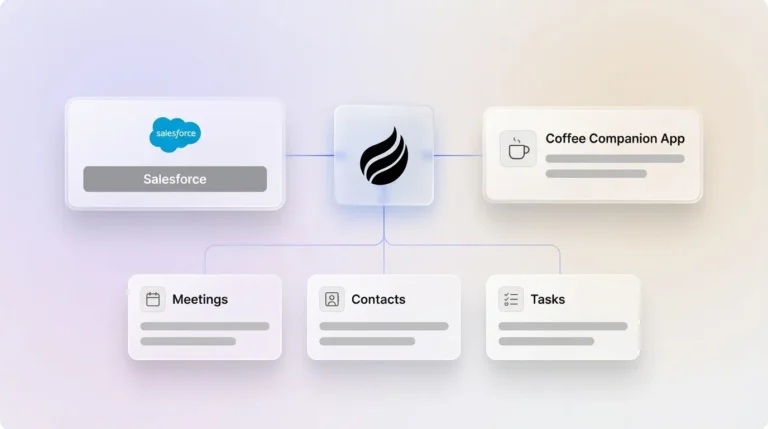
Pipeline Compare highlights week-over-week changes with no spreadsheet work. Teams can use Coffee as a standalone AI-first CRM or as a companion that enhances existing Salesforce or HubSpot deployments.
2. Salesforce Agentforce: AI Agents For Complex Enterprise Workflows
Salesforce Agentforce enables the creation and deployment of assistive AI agents natively across sales, service, and marketing functions. Teams can chat with agents, automate processes, and tailor behavior to enterprise rules.
Setup typically includes enabling Einstein, configuring Agentforce, and connecting data sources. This approach supports deep customization but often leads to longer implementation timelines. Agentforce offers both pre-built and customizable AI agents suited to organizations that value control and already standardize on Salesforce.
3. HubSpot Breeze AI Suite And ChatSpot: Embedded AI Inside HubSpot
HubSpot embeds AI agents directly into its CRM, providing quick deployment and context-aware assistance across workflows. Breeze Studio helps admins configure agent access and behavior using existing CRM permissions.
The Breeze AI Suite syncs activities to contacts, companies, and deals so teams can stay inside the HubSpot interface. ChatSpot serves as a conversational assistant for tasks like drafting emails or updating records, which can simplify adoption for current HubSpot customers.
4. Cubeo AI: Automated Lead Management Across Salesforce And HubSpot
Cubeo AI integrates with Salesforce and HubSpot for automated lead enrichment, scoring, syncing, meeting note logging, and follow-up task management. The focus centers on keeping lead data current and aligned across sales and marketing.
Cubeo offers a unified dashboard for visibility into lead progress and automates scoring to prioritize outreach. Automated follow-up tasks help teams prevent qualified leads from stalling.
5. Bardeen AI: No-Code Automation Between CRMs
Bardeen AI automates HubSpot–Salesforce workflows using natural language prompts for tasks like contact syncing, activity syncing, and field mapping. Non-technical users can design automations without writing code.
Teams can sync only the segments they care about, such as specific lifecycle stages or regions. Bardeen is effective for bridging gaps between CRMs and standardizing data in organizations that run multiple systems.
6. Retell AI: Voice Agents With Real-Time CRM Updates
Retell AI provides native integrations with Salesforce, HubSpot, and Zendesk for AI voice agents, enabling real-time CRM sync, call outcome logging, and workflow triggers. Standard APIs handle connections without custom middleware.
Retell agents update leads and contacts as calls happen, then trigger follow-ups based on outcomes. This voice-first approach fits teams that run large volumes of outbound or support calls and need every conversation reflected in the CRM.
7. Lindy.ai: Cross-App Workflow Orchestration
Lindy.ai enables AI-powered workflows integrating HubSpot and Salesforce for streamlining lead management, automating marketing campaigns, synchronizing contact information, and providing comprehensive analytics. It supports flexible trigger and action combinations across several tools.
Lindy.ai extends beyond CRMs into apps such as Google Calendar, Slack, and Airtable. Teams can set up workflows like sending deal briefings to Slack or turning project emails into structured records, which helps coordinate work across departments.
Comparison: AI Agents For Revenue Generation – Coffee vs. The Rest
|
Feature |
Coffee |
Salesforce Agentforce |
HubSpot Breeze AI |
|
Autonomous Data Entry |
Automation from emails, calendars, and transcripts |
Configurable automation with setup requirements |
Native CRM integration with guided automation |
|
Meeting Orchestration |
Prep, recording, summaries, and follow-up |
Customizable with configuration |
Core meeting assistance features |
|
Pipeline Intelligence |
Automatic week-over-week comparison |
Analytics with tailored setup |
Predictive insights within HubSpot |
|
Integration Model |
Standalone CRM or Companion App |
Native Salesforce extension |
Embedded in the HubSpot platform |
Coffee focuses on fully autonomous operation. Once connected to work email and calendar, the agent captures interactions, enriches records, and highlights pipeline changes without extra configuration. Enterprise-focused tools such as Agentforce and Breeze AI offer deeper platform-specific customization but often require more administration.
Teams interested in seeing this workflow can review options or start a trial at Coffee pricing.
How Coffee’s Agent Empowers Your Sales Team
1. The Agent Handles Data Entry So Reps Can Sell
Coffee connects to Google Workspace or Microsoft 365 and automatically creates contacts and companies. The agent enriches records with details such as job titles, funding data, and LinkedIn profiles, then logs email and calendar activity to the right records.
Reps spend less time updating fields and more time on discovery calls, demos, and negotiations, while managers gain a more accurate view of active deals.
2. The Agent Orchestrates Meetings From Prep To Follow-Up
Coffee provides a daily briefing view that outlines upcoming meetings, attendee roles, and past touchpoints. During calls, the agent joins as a bot to record and transcribe conversations across Zoom, Teams, and Google Meet.

After the meeting, Coffee drafts summaries, action items, and follow-up emails in Gmail for quick review. Qualification notes follow structured frameworks so leadership can compare deals with consistent criteria.
3. The Agent Delivers Pipeline Intelligence Without Spreadsheets
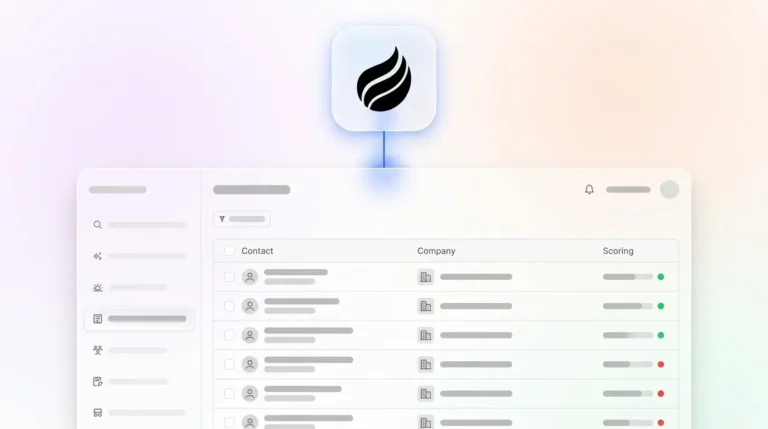
Pipeline Compare visualizes how pipeline changes week over week and flags deals that progress, stall, or shrink. Leaders can turn forecast reviews into focused discussions on specific risks and next steps.

The List Builder feature accepts natural language prompts such as “Find VPs of Sales in North America at companies with recent funding” and returns targeted accounts and contacts, using integrated enrichment to reduce manual research.
4. A CRM Reps Actually Use
Coffee reduces the tradeoff between data quality and rep workload. The system does the logging and enrichment work, while reps receive better preparation, cleaner records, and clearer next steps.
Higher adoption leads to more reliable reporting, which improves forecasting and planning for revenue teams.
Conclusion: Moving To An Agent-Led Revenue Stack
AI revenue agents mark a shift from static CRMs to systems that maintain themselves and support daily decision-making. Teams that adopt these tools gain cleaner data, more productive reps, and clearer pipeline visibility.
Coffee offers an autonomous approach that covers data entry, meeting orchestration, and pipeline analysis in one agent. Sales teams can keep using familiar tools while Coffee keeps the CRM up to date in the background.
Teams ready to test an agent-led workflow can review plans or get started at Coffee pricing.
Frequently Asked Questions (FAQ)
How do AI revenue agents handle data security and privacy?
AI revenue agents typically use encryption, granular access controls, and regular security reviews. Coffee maintains SOC 2 Type 2 and GDPR compliance and does not use customer data to train public models, which helps protect sensitive sales and customer information.
Can these AI agents integrate with existing CRMs like Salesforce or HubSpot?
Most AI agents support direct integrations with major CRMs. Coffee offers a Companion App that connects with Salesforce and HubSpot as an intelligent input and enrichment layer, and tools such as Bardeen and Cubeo also integrate with these platforms. Some products can operate as standalone CRMs if teams prefer a new system of record.
What is the main difference between a passive CRM and an AI agent-driven CRM?
Passive CRMs rely on manual updates, which often lead to gaps and outdated records. AI agent-driven CRMs such as Coffee automatically ingest and enrich data from real interactions, so the system stays accurate and supports better forecasting and coaching.
How do AI agents support more accurate sales forecasting?
AI agents improve forecasts by keeping deal data complete and current. When every email, call, and meeting syncs into the CRM, pipeline, and stage changes reflect real activity. Coffee’s Pipeline Compare feature then visualizes those changes to support data-based forecast discussions.
What is a typical implementation timeline for AI revenue agents?
Timelines vary by tool and complexity. Coffee can start ingesting data soon after connecting to Google Workspace or Microsoft 365, so teams see value quickly. Enterprise platforms such as Salesforce Agentforce often require more planning and configuration, but can match intricate processes once live.