Written by: Doug Camplejohn, CEO & Co-Founder, Coffee
Key Takeaways
- Granola works as a passive notes layer that syncs meeting content to HubSpot’s activity timeline. Coffee acts as an autonomous agent that writes structured data directly to HubSpot fields.
- Granola needs manual review or Zapier configuration for deeper automation. Coffee removes all post-call data entry without human triggers or extra tools.
- Teams using Coffee can save 8–12 hours per rep per week by removing manual CRM updates after every call.
- Granola suits teams that prefer reviewing notes before CRM entry or have low call volumes. Coffee fits high-volume teams that need accurate HubSpot data without ongoing manual work.
- RevOps leaders who want to eliminate post-call admin entirely can see how Coffee removes CRM data entry.
How This Comparison Between Granola and Coffee Is Scoped
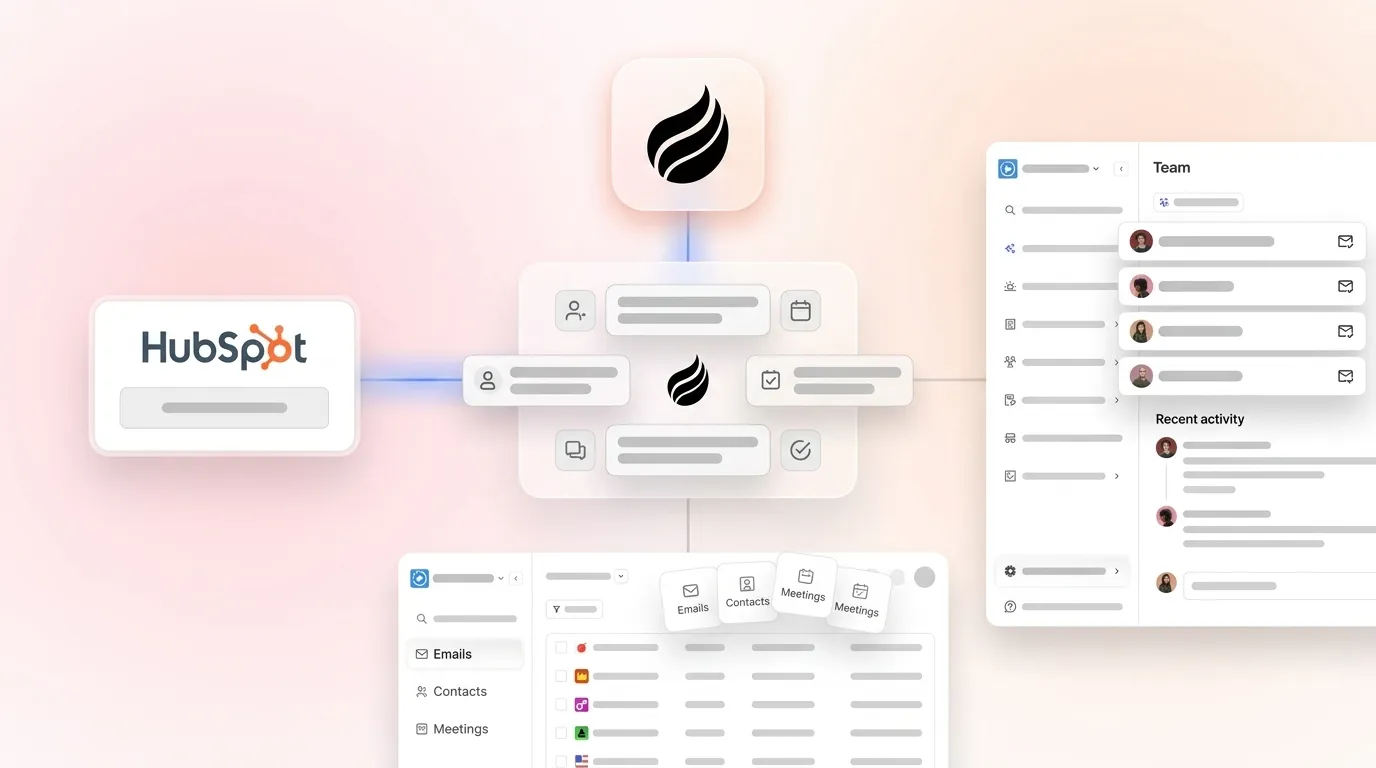
This comparison focuses on two different product types. Granola is an AI meeting note-taker with a HubSpot integration. Coffee is a CRM agent companion that operates autonomously on top of HubSpot. The scope covers post-call data entry, HubSpot field population, contact creation, and ongoing administrative burden for sales teams already committed to HubSpot as their system of record.

The core decision centers on which approach keeps HubSpot accurate without turning a rep into a data entry clerk after every call.
Evaluation Criteria for HubSpot-Focused Sales Teams
Six criteria determine fitness for a HubSpot-centric sales team: data quality written to HubSpot, automation depth, workflow fit for active pipelines, integration effort, measurable time savings, and ongoing manual burden. Each criterion maps directly to the operational cost of running a sales team on imperfect CRM data.
B2B sales reps spend an average of 11.5 hours per week on CRM data entry, representing 28% of a full working week. Only 35% of a sales rep’s time is spent on actual selling activity, with the rest consumed by admin, meetings, and searching for information. These figures set the baseline for judging any automation tool.
Side-by-Side Comparison of Granola and Coffee
The table below shows how Granola and Coffee differ across the six criteria above. Pay particular attention to whether each tool updates HubSpot’s activity timeline or its structured CRM fields, because that difference drives real-world time savings and data quality.
| Criterion | Granola (Native HubSpot Integration) | Coffee (HubSpot Companion Agent) | Notes |
|---|---|---|---|
| Data Quality in HubSpot | Syncs enhanced meeting notes and action items to existing Contact activity timeline | Writes structured fields (BANT, MEDDIC, SPICED), next steps, and enriched contact data directly to HubSpot records | Granola populates the activity timeline, while Coffee populates structured CRM fields |
| Automation Depth | Can automatically sync meeting notes to HubSpot using folders or Zapier without manual per-note action | Runs a fully autonomous post-call sync, with no human trigger required | Granola supports automatic sync via folders or Zapier |
| Workflow Fit | Suited to teams that want to review notes before CRM entry | Suited to teams that want HubSpot updated immediately and accurately after every call | These reflect different design philosophies, not defects |
| Integration Effort | OAuth setup via Settings > Integrations; Business plan required at $14/user/month; Zapier needed for automation and custom field mapping | Simple authentication connects Coffee Agent to the existing HubSpot instance, with no Zapier dependency for core workflows | Granola’s advanced routing relies on a separate Zapier subscription |
| Time Savings | Reduces note-writing time | Saves 8–12 hours per rep per week by eliminating all post-call data entry | See workflow examples below |
| Ongoing Manual Burden | With automatic sync, reduces per-note action, though new contacts may require extra setup | Removes ongoing manual burden for data entry; the agent handles contact creation and enrichment autonomously | Granola’s options provide flexibility for different teams |
How Granola’s HubSpot Integration Behaves Day to Day
Granola’s native HubSpot integration is available only on Business and Enterprise plans and is configured through Settings > Integrations using OAuth authorization. Once connected, the integration syncs AI-enhanced notes to existing HubSpot Contact records on the activity timeline.
The critical operational detail is that Granola can automatically sync meeting notes to HubSpot using folders or Zapier without manual per-note action after each meeting. Teams can still choose a manual option if they want to review notes before syncing, but automatic syncing remains available.
Granola’s CRM Capabilities and Gaps in HubSpot
Granola’s native HubSpot integration does not automatically populate structured CRM fields such as next steps, deal stage, or budget figures. It adds the verified note body to the contact’s activity timeline. Custom HubSpot objects and custom field mapping require Zapier. New prospects not already in HubSpot as Contact records cannot be created by the native integration, so a Zapier “find or create contact” step is required.
Granola acts as an AI CRM companion that assists a human who manages the CRM, rather than managing the CRM on the human’s behalf.
Granola and Coffee in Practice: Full Post-Call Workflows
Workflow Example A — Granola (current state): A rep runs five discovery calls per day. After each call, they open Granola, review the AI-enhanced note, click Share, select HubSpot, confirm the Contact match, and push the note. They then enter structured fields such as deal stage, next steps, and BANT data manually. Given the 11.5-hour weekly baseline mentioned earlier, a five-rep team loses nearly 58 hours weekly to this process.
Workflow Example B — Coffee Agent (target state): The same rep runs five discovery calls. Coffee’s agent joins each call, transcribes it, structures the output against MEDDIC, writes the relevant fields to HubSpot, creates any new Contact records, and logs the activity before the rep opens their next browser tab. Post-call manual entry drops to zero hours. The Coffee Agent saves 8–12 hours per rep per week, reducing a five-rep team’s weekly admin from roughly 58 hours to zero hours of data entry.

Why Granola Does Not Replace HubSpot Data Entry
Granola explicitly states that the user chooses which notes go to HubSpot and when, preserving the human-in-the-loop workflow. The tool reduces the time spent writing notes from scratch, but a human still owns the task of getting structured data into HubSpot fields. Granola’s native integration is limited to adding the verified note to a contact record and does not automatically populate structured CRM fields.
Coffee’s agent is designed specifically to remove that remaining manual step. HubSpot’s 2026 AI Agents Unleashed playbook recommends a graduated autonomy approach: begin with transparency and approval gates, then increase autonomy as reliability improves. Coffee’s agent follows this framework while keeping HubSpot as the verified system of record.

Best-Fit Use Cases for Granola and Coffee
Granola fits teams that prefer reviewing AI-generated notes before anything enters the CRM, run low call volumes where per-note manual sharing is not a bottleneck, or already use the Business plan and are willing to configure Zapier for automation edge cases.
Coffee fits teams that are already committed to HubSpot, run high call volumes across a growing rep team, have a RevOps leader who needs HubSpot data to be accurate without policing rep behavior, and want to eliminate post-call admin entirely rather than simply reduce it. Research has shown that properly integrating CRM with existing tools can improve productivity, which requires data to reach structured CRM fields, not just the activity timeline.
Operational and Long-Term Considerations for RevOps
Change management: Granola adds a step to the post-call workflow, because reps must review and share notes after each call. Coffee removes steps by handling data entry autonomously. Because adoption rises when tools reduce friction instead of adding new rituals, Coffee’s approach usually faces less resistance during rollout.
Data hygiene: Granola matches notes to HubSpot Contacts using attendee email addresses and requires the same work email in both systems for the OAuth connection to succeed. Any mismatch silently breaks the sync. Coffee’s agent handles contact creation and matching autonomously, which reduces the surface area for hygiene failures.
Scalability: A Granola-based workflow scales linearly with headcount and call volume, because more reps mean more manual share steps. Coffee’s agent workload does not increase with human headcount, since the agent handles additional calls without extra human effort.
Risks, Limitations, and Common Misconceptions
Misconception: Granola automates HubSpot updates. Granola can automatically sync meeting notes to HubSpot using folders or Zapier without requiring manual per-note action after each meeting. However, the structured field limitation described earlier means key fields remain empty without additional configuration. Teams that expect Granola to keep HubSpot current for structured data will still see gaps.
Misconception: Any AI note-taker is a CRM agent. Passive AI tools record information without acting on it, while an autonomous agent operates in a Plan-Act-Observe-Adjust loop that lets it complete multi-step goals dynamically. Note summarization and CRM field population are separate operations.
Limitation of Coffee: Coffee is not designed for large enterprises with complex custom workflows or heavily regulated industries that require multi-year security reviews. Coffee is SOC 2 Type 2 and GDPR compliant, and data is not used to train public models.
Limitation of Granola: Custom HubSpot objects and custom field mapping are not supported natively and require a separate Zapier configuration. Teams with complex HubSpot architectures must maintain that Zapier layer over time.
Decision Framework for Choosing Between Granola and Coffee
Use this checklist to identify the right fit:
- Reps currently spend more than 5 hours per week on post-call CRM updates → Coffee
- HubSpot field accuracy is a prerequisite for pipeline forecasting → Coffee
- New Contact records must be created automatically from call attendees → Coffee
- Custom HubSpot field mapping is required without maintaining a Zapier workflow → Coffee
- A human must review and approve every note before it enters the CRM → Granola
- Call volume is low enough that per-note manual sharing is not a bottleneck → Granola
For RevOps leaders at 10–50 person companies where HubSpot is the system of record and data quality drives forecast accuracy, this checklist points consistently toward an autonomous agent. HubSpot’s 2024 State of Sales data found that sales reps spend only 28% of their time actually selling, and that figure does not improve by adding a better note-taking layer on top of a manual sync workflow.
Frequently Asked Questions
How long does it take to set up Coffee as a HubSpot companion?
Setup uses a single authentication step that connects the Coffee Agent to your existing HubSpot instance via your Google Workspace or Microsoft 365 account. Most teams are operational within one business day. There is no Zapier configuration required for core workflows, and no custom field mapping needs to be built from scratch. The agent begins logging activities, creating contacts, and populating structured fields immediately after authentication.
Why is Zapier not enough to automate Granola’s HubSpot sync?
Zapier can automate the note-push step that Granola’s native integration leaves manual, but it adds a separate dependency that must be maintained, monitored, and updated when either Granola or HubSpot changes its API. More importantly, Zapier workflows move unstructured note text into HubSpot but do not interpret that text into structured CRM fields such as deal stage, BANT qualification data, or next steps. The result is a more automated version of the same notes-on-the-timeline outcome, not a structured data entry replacement. Coffee’s agent interprets call content and writes to the correct structured fields natively, without a middleware layer.
How does Coffee handle data security when processing call recordings?
Coffee is SOC 2 Type 2 certified and GDPR compliant. Call recordings and transcripts processed by the Coffee Agent are not used to train public AI models. Data handling follows enterprise-grade security standards appropriate for sales teams at small to mid-market companies. Teams in heavily regulated industries such as healthcare or finance that require multi-year security review processes fall outside Coffee’s current ideal customer profile.
What happens to existing HubSpot data when Coffee is connected?
Coffee’s agent writes new data to HubSpot and does not overwrite or delete existing records. The agent enriches existing Contact and Company records with updated job titles, funding data, and LinkedIn profiles via licensed data partners, and logs new activities going forward. Historical HubSpot data remains intact. No migration is required, because Coffee operates as an additive layer on top of the HubSpot instance your team already uses.
Does Coffee work if some reps use Granola and others do not?
Yes. Coffee operates at the system level, not the individual rep level. It joins calls via its AI meeting bot regardless of what other tools individual reps use, and it writes to HubSpot autonomously after each call. Reps who also use Granola for personal note review can continue to do so, while Coffee’s agent handles the HubSpot data entry independently. This setup keeps Coffee compatible with mixed-tool environments and removes the dependency on rep behavior for CRM data quality.