Written by: Doug Camplejohn, CEO & Co-Founder, Coffee
Key Takeaways for Revenue Leaders
- Gong and Fireflies both depend on CRM data quality, which remains compromised by manual rep entry and inconsistent updates.
- Neither platform fixes the root cause of forecast inaccuracy: the absence of an autonomous agent that continuously maintains clean CRM records.
- Gong offers deal-health scoring and pipeline visibility, yet its outputs degrade when underlying CRM fields are incomplete or outdated.
- Fireflies provides transcription, meeting notes, and timeline estimation tools, but lacks robust deal-health scoring and deep forecasting capabilities.
- Teams ready to eliminate manual data entry and improve forecast reliability can see Coffee’s pricing and automation capabilities.
Comparison Table: Forecasting Capabilities Across Six Criteria
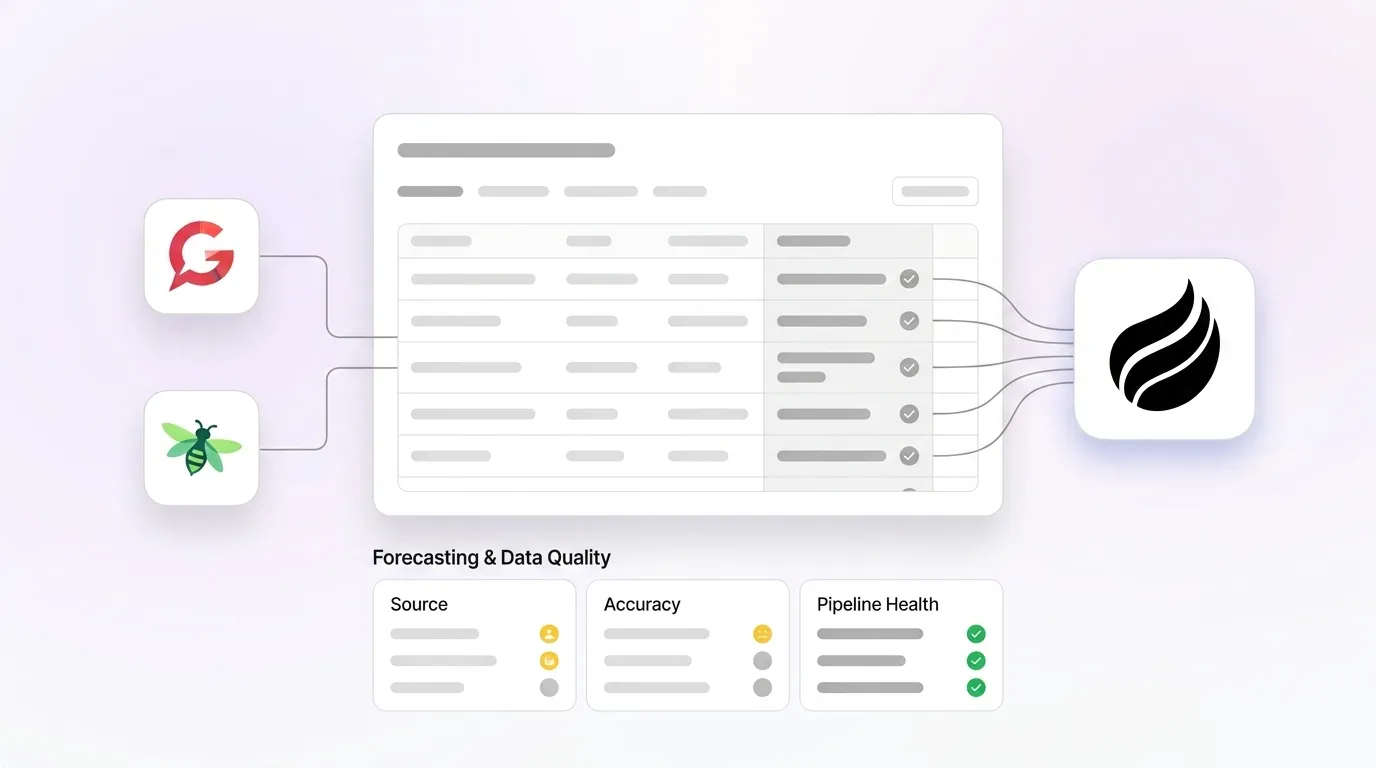
The table below highlights a consistent pattern: Gong and Fireflies enrich conversations, while Coffee focuses on automating the data foundation that forecasts rely on.
| Criterion | Gong | Fireflies | Coffee |
|---|---|---|---|
| Data Capture Automation | Gong provides automatic capture of calls, emails, meetings and other interactions, plus AI-powered automatic updates to CRM fields without requiring manual rep entry | Auto-populates CRM with meeting notes, summaries, action items, transcripts | Coffee’s agent captures details from emails and meetings into CRM automatically |
| Pipeline Visibility | Gong offers comprehensive deal boards and pipeline views pulling CRM data plus AI enrichments, though accuracy depends on data updates | Fireflies provides pipeline visibility and intelligence via CRM deal syncing, meeting notes attached to deals, and structured conversation analytics | Week-over-week pipeline changes tracked automatically in built-in data warehouse |
| Deal-Health Scoring | Risk alerts and deal scores present, relies on third-party CRM data quality | None | Coffee pulls HubSpot Deal data and snapshots pipeline changes to ensure complete history and suggest updates, but does not generate deal-health scores |
| CRM Integration Depth | Gong performs bidirectional sync with Salesforce and writes back enriched records such as AI summaries, deal risk scores, and transcripts autonomously | Fireflies CRM integrations automatically sync notes, summaries, action items, tasks, and insights to records in supported CRMs (e.g., Salesforce, Dynamics 365) and can auto-create contacts or leads | Coffee integrates with Salesforce and HubSpot to automate data entry |
| Total Cost of Ownership | $1,300–$3,000/user/year plus $5,000–$50,000 platform fee | Freemium base, limited revenue intelligence modules | Seat-based pricing including AI agent capabilities |
| Forecast Accuracy | Traditional methods: <20% of teams exceed 75% accuracy, AI approaches substantially higher | Fireflies offers AI skills such as the Timeline Estimator for forecasting deal closure dates | Coffee’s agent automates data foundation to support improved forecast accuracy |
See how Coffee’s agent automates your data foundation
Data Capture Automation: Reducing Manual Entry at the Source
Data capture automation shows how much of the deal record fills in without human effort. Manual errors, duplicate records, and inconsistent stage definitions distort pipeline visibility and reduce forecast accuracy. Many sales professionals still spend significant time on manual data entry, which introduces exactly those errors.
Gong captures call and email signals, yet this data often sits apart from the CRM fields that forecasting models read. Those fields still require manual rep updates. Fireflies integrations with multiple CRMs automatically populate records with meeting notes, summaries, action items, and transcripts, which improves context but not every structured field.
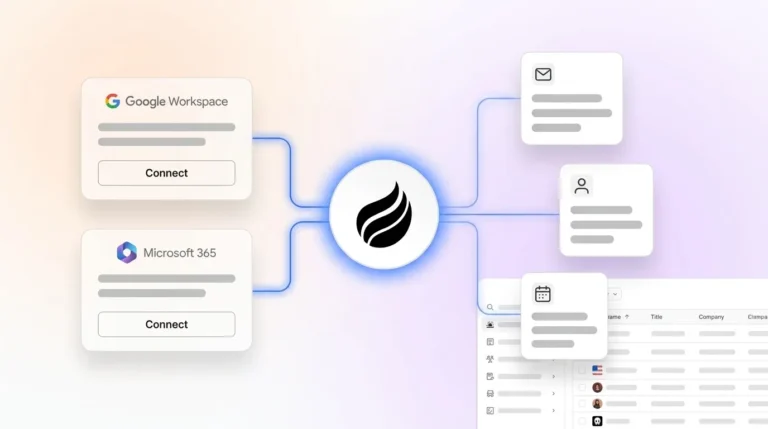
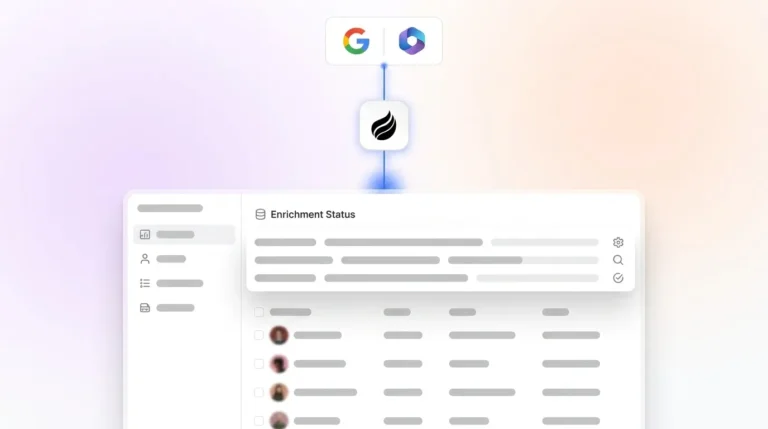
Coffee’s agent connects to Google Workspace or Microsoft 365 and immediately begins logging details from emails and meetings, creating and enriching contact and company records without any rep action. The CRM then reflects ground-truth deal state in real time.

Pipeline Visibility: Turning Clean Data into Clear Views
Accurate data capture only matters when revenue leaders can see that data while making decisions. Pipeline visibility measures whether a leader can view accurate, current deal status across the entire funnel without manual preparation.
Incomplete CRM records force sales reps to spend 20–30% of their selling hours reconstructing deal history. Gong’s pipeline views combine CRM data and AI insights, yet these views degrade when rep updates are inconsistent. Fireflies provides pipeline visibility and intelligence via CRM deal syncing, meeting notes attached to deals, and structured conversation analytics, which helps teams review activity but still depends on CRM structure.
Coffee’s agent maintains a built-in data warehouse that tracks week-over-week pipeline changes automatically. Leaders see progressed deals, stalled opportunities, and new additions without CSV exports or manual pipeline review sessions.

Deal-Health Scoring: Interpreting Risk Signals Reliably
Deal-health scoring reflects how trustworthy opportunity risk signals are. Gong’s deal risk alerts trigger when engagement drops or risk signals appear in conversations, yet those alerts only perform as well as the underlying CRM data. Only 45% of sales leaders are confident in their pipeline forecast accuracy, largely because that data is manually maintained.
Fireflies offers AI skills for risk identification such as churn and general risks, which can flag concerning patterns in conversations. Coffee pulls HubSpot Deal data and snapshots pipeline changes to preserve complete history and suggest updates, but it does not generate deal-health scores. Instead, it focuses on ensuring the data that any scoring model reads is complete and current.
CRM Integration Depth: Keeping the System of Record Current
CRM integration depth shows whether a tool writes enriched, structured data back to the system of record or only reads from it. Gong performs bidirectional sync with Salesforce and writes back enriched records such as AI summaries, deal risk scores, and transcripts autonomously, which keeps its insights close to the CRM.
Fireflies CRM integrations automatically sync notes, summaries, action items, tasks, and insights to records in supported CRMs and can auto-create contacts or leads. Coffee operates as a companion agent that automates data entry and writes records back to Salesforce or HubSpot, ensuring the system of record stays current.

This bidirectional integration matters because standalone AI platforms create data silos outside the CRM that require manual reconciliation by sales reps, leading to incomplete records that undermine reliable revenue forecasting.
Total Cost of Ownership: Pricing, Overhead, and Hidden Costs
Total cost of ownership extends beyond the per-seat license into implementation, maintenance, and add-ons. Gong’s bundled packages reach $2,880–$3,000 per user per year plus a platform fee of $5,000–$50,000, pushing year-one costs to $28K–$170K+ depending on team size. These figures sit before internal RevOps time and change management.
Hidden TCO drivers include implementation fees, data overages, premium feature gating, and contract renewal escalation clauses. Fireflies carries a lower entry price but offers limited revenue intelligence and forecasting capabilities, so teams often layer additional tools for advanced analytics.
Coffee uses seat-based pricing with its AI agent included, which reduces surprise platform fees and extra modules. Teams pay for users and gain automated data capture and enrichment as part of that license.
View transparent seat-based pricing with no platform fees
Forecast Accuracy: Fixing Inputs Before Tuning Models
Forecast accuracy determines whether any of these capabilities translate into reliable revenue plans. Traditional/manual pipeline methods allow only 20% of sales teams to forecast above 75% accuracy, with AI approaches yielding substantially higher results. McKinsey research confirms that data quality is the single most consistent differentiator between AI high performers and the rest.
Gong’s forecasting module is sophisticated, yet it inherits whatever data quality reps provide. Platforms relying only on CRM fields miss critical context from customer calls, emails, and meetings, and Gong cannot force reps to update those fields. Fireflies offers AI skills such as the Timeline Estimator for forecasting deal closure dates, which helps with timing but not full-pipeline accuracy.
Coffee is the only option in this comparison that addresses the root cause. Its agent automates the data input so the forecasting output becomes trustworthy.
Scenario-Based Guidance: Matching Tools to Team Profiles
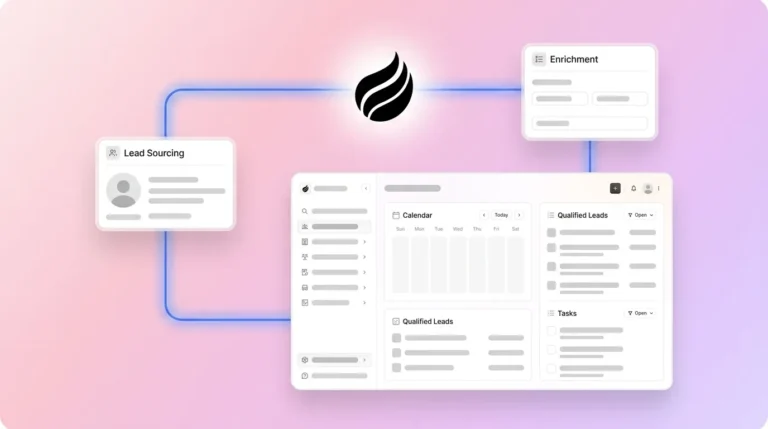
Early-stage teams replacing spreadsheets. Teams that have outgrown Notion or Excel but find Salesforce too maintenance-heavy fit well with Coffee’s Standalone CRM. The agent handles all data entry from day one, so leaders avoid a separate “CRM adoption” project.
Mid-market teams committed to Salesforce or HubSpot. Organizations already running Salesforce or HubSpot with low CRM adoption and unreliable forecasts should deploy Coffee as a Companion App. The agent writes enriched records back to the existing system of record and improves data quality without a platform migration.
Organizations evaluating Gong alternatives. Teams paying $1,300–$3,000 per user per year for Gong and still missing forecasts should examine whether the real issue is scoring sophistication or data quality. Gartner research confirms that AI activity intelligence can log buyer interactions from email, calendars, and meeting platforms without human intervention. Coffee delivers that capability at a materially lower total cost of ownership.
Decision Checklist: Quick Tool Selection Guide
Use this checklist to match your current situation with the tool that best fits your team’s size, stack, and forecasting needs.
| Situation | Recommended Tool |
|---|---|
| 1–20 employees, no CRM yet, want zero manual entry | Coffee Standalone CRM |
| 20–100 employees, Salesforce or HubSpot in place, low adoption | Coffee Companion App |
| Need transcription only, no forecasting requirement | Fireflies |
| Large enterprise (100+ reps), conversation coaching is primary need, budget for $28K–$170K+/year | Gong |
| Require 80–90% forecast accuracy without adding RevOps headcount | Coffee |
Frequently Asked Questions
How long does Coffee implementation take compared with Gong?
Coffee’s agent activates through a simple authentication with Google Workspace or Microsoft 365 and begins capturing data immediately. For the Companion App, a single authentication connects the agent to an existing Salesforce or HubSpot instance, and enriched records start writing back without a lengthy configuration project. Gong implementations, by contrast, require active manager involvement, process discipline, and ongoing RevOps investment to maintain data quality and realize full value, which Coffee’s autonomous agent removes by design.
What migration effort is required when moving from Fireflies or Gong?
Moving from Fireflies is straightforward because Fireflies holds only transcripts and basic meeting notes, with no revenue data model or forecasting history to migrate. Moving from Gong requires exporting conversation data and deal intelligence, yet Gong’s forecasting outputs depend on CRM data that already lives in Salesforce or HubSpot. The primary migration task becomes connecting Coffee’s agent to that existing CRM.
Coffee’s deep understanding of Salesforce and HubSpot integrations, including quotas, forecasting modules, and required fields, allows the agent to begin enriching and writing back records without a custom implementation engagement.
How does Coffee guarantee data quality for forecasting?
Coffee’s approach is architectural rather than procedural. Instead of relying on reps to update fields correctly, the agent ingests emails, calendar events, and call transcripts directly and structures that unstructured data into the CRM automatically. Every contact, company, activity log, next step, and close date is populated by the agent, not by a human.
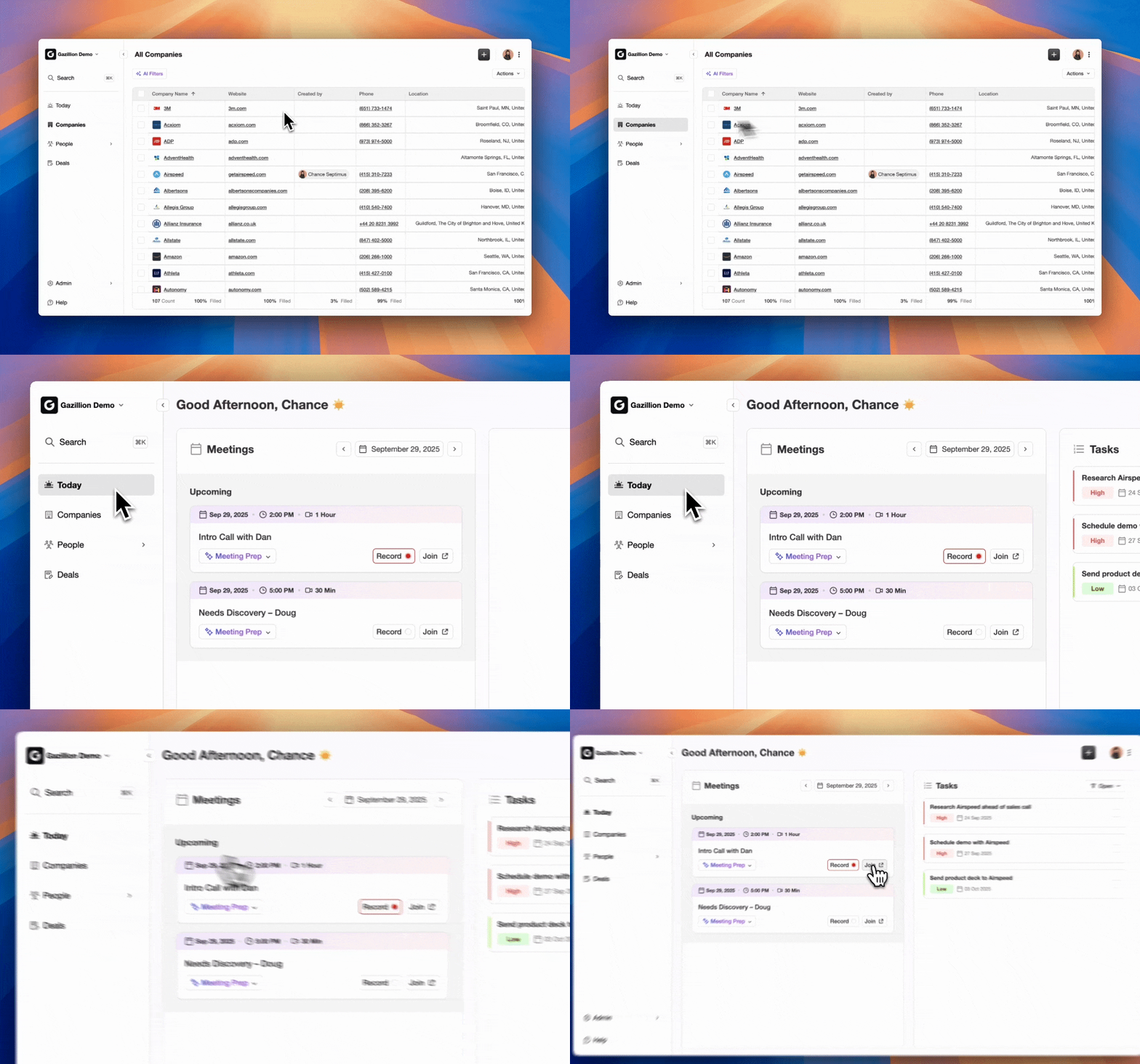
Because the data warehouse retains historical context rather than overwriting it, pipeline comparisons reflect actual deal progression. The result is a ground-truth data foundation that forecasting models can read with confidence, without CRM audits, data cleanup sprints, or RevOps enforcement.
How does Coffee compare with Gong on forecasting depth?
Gong’s forecasting module is feature-rich, with rep-level and team-level roll-ups, deal risk alerts, and conversation pattern analysis. Coffee’s forecasting advantage does not come from a more complex scoring model. It comes from the reliability of the inputs.
A sophisticated model that reads manually entered CRM data still produces the 45–60% accuracy range that characterizes many mid-market forecasts today. Coffee’s agent keeps inputs complete and current, which moves forecast accuracy into the 80–90% range. For teams whose main problem is missed quarters caused by dirty pipeline data rather than insufficient scoring algorithms, Coffee addresses the root cause that Gong cannot.
Conclusion: Choose the Agent That Maintains Your Data Foundation
Across all six criteria, the pattern stays consistent. Gong provides sophisticated scoring and visibility but cannot solve the manual data entry problem that undermines those outputs. Fireflies provides transcription and meeting notes along with AI skills for deal timeline estimation, forecasting, and risk identification.
Neither platform addresses why 79% of sales organizations miss their forecast by 10% or more. The root cause is not the scoring algorithm. It is the absence of an autonomous agent maintaining the data foundation those algorithms depend on.
Coffee’s agent automates that foundation, writing clean, enriched, continuously updated records into Salesforce, HubSpot, or its own Standalone CRM. This approach delivers the pipeline accuracy that mid-market revenue teams need to stop missing quarters.