Written by: Doug Camplejohn, CEO & Co-Founder, Coffee
Key Takeaways for GDPR-Focused Sales Teams
- The EU Data Act and tighter oversight of US vendors now demand verifiable deletion workflows and regional data controls from B2B data tools.
- This guide evaluates Coffee, Cognism, ZoomInfo, Lusha, and Apollo on deletion auditability, phone verification, certifications, DPA availability, and CRM integration depth.
- ZoomInfo and Lusha leave gaps in publicly documented erasure SLAs and phone verification transparency, which raises regulatory risk for EU-focused teams.
- Cognism leads for phone-verified EU mobile data, while Coffee stands out for its autonomous CRM agent that writes compliant enrichment directly into Salesforce or HubSpot.
- Teams seeking a unified, GDPR-first solution should see Coffee’s transparent seat-based pricing for access without credit metering or hidden compliance risks.
GDPR Compliance Scorecard
The following scorecard compares each platform on the three dimensions that most directly affect regulatory exposure: deletion auditability, phone verification transparency, and security or privacy certifications.
| Tool | Deletion Auditability | Phone Verification | SOC 2 / ISO Status |
|---|---|---|---|
| Coffee | Full erasure workflow; no soft-delete records permitted | Verified via licensed data partners | SOC 2 Type 2 + GDPR certified |
| Cognism | Built-in right-to-erasure workflows | Cognism claims 98% accuracy for its Diamond Data phone-verified mobile numbers | GDPR, CCPA, SOC 2, ISO 27001 |
| ZoomInfo | Opt-out portal; Article 17 deletion SLA not publicly documented | In-house human expertise alongside automation for data validation | SOC 2 Type II, ISO 27001, ISO 27701, GDPR, TRUSTe |
| Lusha | Compliance filter available; erasure SLA not publicly confirmed | Contact-level verification; EU coverage limited | Lusha declares having a database of 21 million GDPR-compliant European contacts |
| Apollo | GDPR compliant; deletion workflow documentation limited | Hybrid: contributor data, web crawling, third-party providers | ISO 27001, SOC 2 |
Lusha’s GDPR Position: Strengths and Gaps
Lusha presents itself as a self-service prospecting tool with a compliance filter that restricts results to GDPR-eligible records. Lusha declares having a database of 21 million GDPR-compliant European contacts. The six-criteria framework highlights how its strengths and gaps connect.
- Deletion auditability: A compliance filter exists, but a publicly documented 30-day erasure confirmation workflow, as required under GDPR’s right-to-erasure standard, is not confirmed in public documentation.
- Phone verification proof: This gap is compounded by limited phone verification transparency. Contact-level verification is available, but EU mobile accuracy benchmarks comparable to Cognism’s Diamond Data are not published.
- Intent data sourcing transparency: Intent data sourcing adds another layer of uncertainty, since Lusha does not offer a native intent data layer and instead relies on third-party integrations.
- SOC 2 / ISO status: On the certification front, SOC 2 compliance is referenced, yet Type 2 attestation details are not prominently disclosed.
- DPA availability: The DPA requirement is met, with a DPA available under Article 28, satisfying the baseline requirement for any enrichment tool handling personal data, even if operational gaps remain.
- CRM integration depth: Finally, CRM integration depth remains limited. Browser extension and CRM connectors exist, but there is no autonomous write-back agent.
ZoomInfo GDPR Lawsuit Update 2026
ZoomInfo continues to face regulatory scrutiny in Europe. Its opt-out portal addresses surface-level compliance, yet the EDPB’s 2025 coordinated enforcement action on the right to erasure penalized organizations lacking functional deletion workflows, which raised expectations for practical compliance. Against the six criteria, several issues emerge.
- Deletion auditability: An opt-out mechanism exists, but a verifiable, auditable confirmation that all associated data, including profiles, engagement logs, and backup tables, has been permanently removed is not publicly documented per the no-soft-delete standard.
- Phone verification proof: In-house human expertise is used for record validation, yet approximately 15%+ bounce rates have been reported in user testing, which raises questions about data freshness.
- Intent data sourcing transparency: ZoomInfo’s intent layer sources remain proprietary, and third-party Bombora data is not included by default.
- SOC 2 / ISO status: SOC 2 Type II, ISO 27001, ISO 27701, GDPR, CCPA, and TRUSTe certifications are maintained, which supports security assurances.
- DPA availability: Enterprise DPAs are available, while free-tier users lack contractual safeguards per standard enterprise AI tool practice.
- CRM integration depth: Deep native integrations with Salesforce and HubSpot exist, but enrichment remains a separate contract and manual workflow layer.
Cognism, Apollo, and Dealfront Compared
Cognism is the strongest standalone GDPR-first alternative for EMEA-focused outbound. Its Diamond Verified Data, the 98% accuracy layer noted in the scorecard above, uses a multi-step process to phone-verify EU mobile numbers with deeper coverage in the UK, France, and Germany. It checks against 13 DNC lists globally and includes built-in consent tracking and right-to-erasure workflows. The main drawback is cost, since flat-rate pricing starts at $15,000+/year, and there is no autonomous CRM agent to write enriched data back into Salesforce or HubSpot without manual steps.
Apollo.io suits teams that want flexible data sources but must watch long-term costs and documentation depth. It uses a hybrid data collection approach combining contributor data, email engagement signals, web crawling, and third-party providers, and holds ISO 27001 and SOC 2 certifications. Its credit-based pricing is accessible at low volume but can run 2–3x the base subscription at scale. Deletion workflow documentation is limited compared to Cognism, and EU mobile verification depth is lower.
Dealfront focuses on GDPR-native data collection for EMEA teams. It employs GDPR-native data collection with all data processed and stored in Europe, covering 398M+ contacts, and is purpose-built for EMEA intent data via first-party website visit signals. It works best for EU-only teams but lacks the agentic CRM layer that mid-market US teams need.
Budget Versus Compliance for Data Tools
The feature differences above translate directly into cost structures that vary by an order of magnitude. Pricing complexity is a recurring complaint across sales and RevOps communities evaluating these tools. Enterprise deployments combining ZoomInfo with engagement and deliverability tools can reach $110,000–$170,000 per year for a 25-user team, while equivalent Cognism stacks require substantial investment. Credit-based tools like Apollo and Lusha appear affordable at the outset, but real costs in complex workflows frequently run 2–3x the base subscription.
Hidden costs compound the compliance risk in three ways. Each additional vendor contract introduces a separate DPA that must be negotiated and maintained. That DPA in turn requires a separate deletion SLA to audit, and as the ZoomInfo and Lusha evaluations show, many vendors cannot provide verifiable erasure workflows. Finally, each vendor adds a separate sub-processor chain to document under Article 28(4)’s sub-processor obligations. For mid-market teams, these three layers of fragmentation mean the real cost of a multi-vendor stack is not just the invoice, but the legal exposure from vendors whose deletion workflows cannot be independently verified.
Coffee’s seat-based pricing removes per-enrichment credit metering entirely. The agent’s enrichment labor is included, which consolidates what would otherwise be separate contracts for CRM, enrichment, recording, and forecasting into a single, auditable system. View pricing and start your implementation.
CRM Integration That Reduces GDPR Risk
CRM integration becomes the bridge between budget control and compliance. Most enrichment tools stop at the data layer, which means they surface a contact record in a browser extension or CSV export and leave the writing, mapping, and logging to a human. That manual handoff is where GDPR risk accumulates through unlogged transfers, untracked field updates, and missing audit trails that connect the enriched record to its lawful basis.
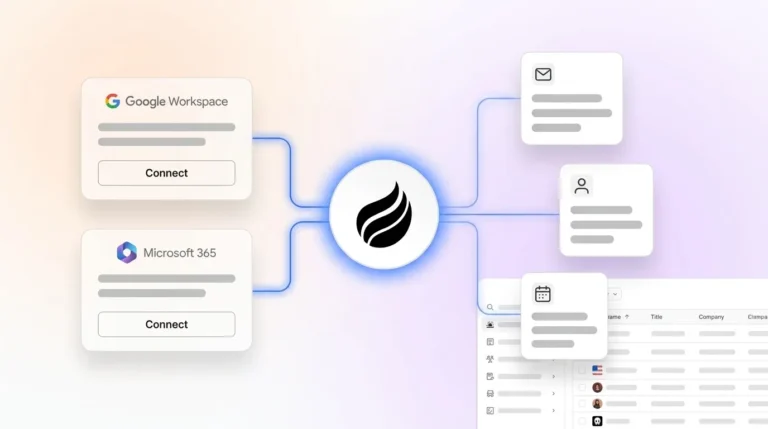
Coffee’s Companion App closes that gap. A simple authentication connects the Coffee Agent to an existing Salesforce or HubSpot instance. The agent then:

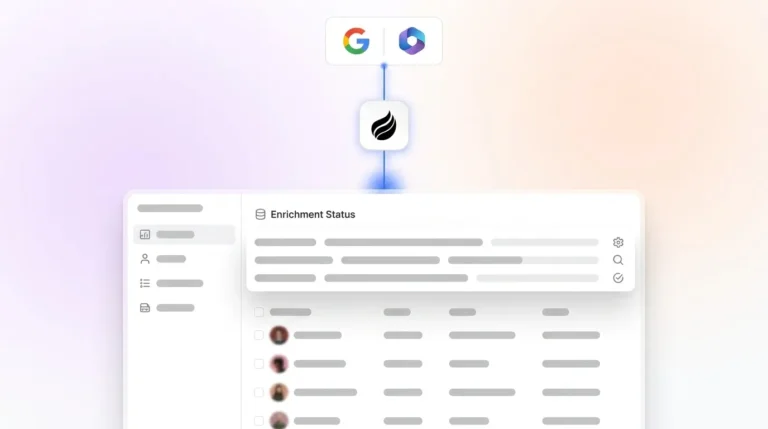
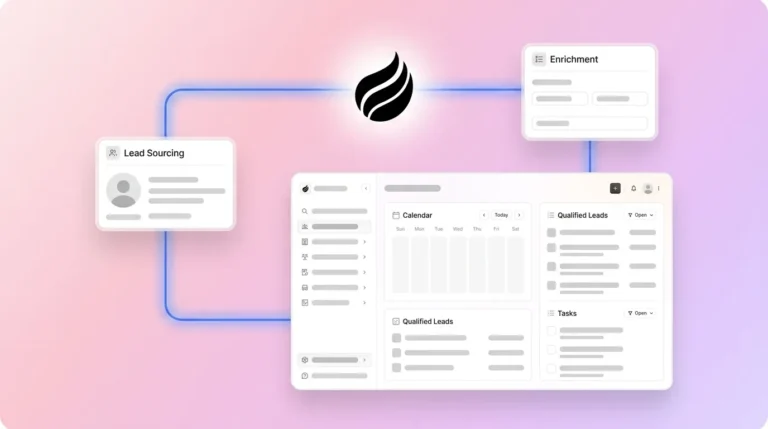
- Auto-creates and enriches contacts and companies from emails, calendars, and call transcripts, so manual data entry disappears.
- Writes enriched records, activity logs, and meeting summaries directly back into the CRM with full field mapping, including required fields, quotas, and forecasting objects that newer CRM tools frequently miss.
- Processes both structured data, such as job titles, funding, and firmographics, and unstructured data, such as email text and call transcripts, into a single coherent record, a capability standard relational databases cannot handle without losing historical context.
- Operates under Coffee’s SOC 2 Type 2 and GDPR certification, with data never used to train public models.
The result is a verifiable, agent-maintained data trail inside your existing system of record, not a separate vendor database that needs its own deletion workflow.

Matching Tools to Your Team’s Situation
US-headquartered teams selling into the EU need a tool with a documented DPA, a verifiable 30-day erasure SLA, and phone-verified EU mobile coverage. Cognism is the strongest standalone enrichment choice here. Coffee adds the agentic layer that writes compliant data directly into Salesforce or HubSpot, which removes the manual transfer risk that standalone enrichment tools leave unaddressed.
Early-stage teams wanting a standalone agent CRM should evaluate Coffee’s Standalone CRM, which replaces the entire fragmented stack, including CRM, enrichment, recording, and forecasting, under a single certified system. ZoomInfo and Cognism are not viable here, because their pricing floors exceed early-stage budgets and neither functions as a system of record.
Mid-market teams already committed to Salesforce or HubSpot face the highest risk from incomplete phone verification and lack of agentic orchestration. Apollo’s credit model becomes unpredictable at scale. ZoomInfo’s deletion auditability gaps create legal exposure as EDPB enforcement on erasure workflows intensifies. Coffee’s Companion App is the only option that enriches, logs, and writes compliant data autonomously inside the existing instance without adding a separate vendor contract.
Decision Matrix: Company Size and Region to Best Tool
The tool evaluations above can be distilled into a simple decision framework based on two variables: company size and primary selling region. The following matrix maps each profile to the platform that best fits its risk profile and budget.
| Company Size | Primary Region | Best Fit |
|---|---|---|
| 1–20 employees | US selling into EU | Coffee Standalone CRM — single GDPR-certified agent replaces fragmented stack |
| Mid-market (20–500 employees) on Salesforce/HubSpot | US selling into EU | Coffee Companion App — autonomous enrichment written directly into existing CRM under SOC 2 Type 2 + GDPR |
| Mid-market, EMEA-primary outbound | EU / UK | Cognism — strongest phone-verified EU mobile coverage with built-in erasure workflows |
| Mid-market, high-volume US outbound | US only | ZoomInfo — largest database, but budget for $34,995+/yr minimum and document deletion SLAs independently |
Compare Coffee’s pricing to your current stack cost — most mid-market teams save 40–60% while eliminating compliance gaps.
Frequently Asked Questions
How long does it take to implement Coffee as a Salesforce or HubSpot Companion App?
Implementation uses a single authentication step that connects the Coffee Agent to your existing Salesforce or HubSpot instance. The agent begins scanning emails and calendars to auto-create contacts, enrich records, and log activities immediately after connection. There is no lengthy onboarding, custom field mapping project, or professional services engagement required for standard deployments. Teams can typically be operational shortly after setup.

What is Coffee’s data deletion SLA, and how does it satisfy GDPR’s right-to-erasure requirement?
Coffee processes right-to-erasure requests with deletion of associated personal data in line with GDPR requirements. Coffee’s SOC 2 Type 2 and GDPR certification provides an independently audited basis for demonstrating compliance to legal and finance stakeholders.
How does Coffee ensure “good data in, good data out” while remaining GDPR compliant?
Coffee’s agent ingests ground-truth data from first-party sources such as emails, calendars, call transcripts, and meeting recordings, rather than relying on third-party database scrapes that carry uncertain lawful basis. Enrichment is augmented via licensed data partners, with the agent writing structured and unstructured data directly into the CRM record. Because the agent handles the entire data-in process autonomously, there is no manual transfer step where data can be mishandled or logged without an audit trail. The result is a CRM where every record has a documented, agent-maintained provenance, which forms the foundation of defensible GDPR compliance.

How does Coffee compare to Cognism for teams that need both EU phone verification and CRM automation?
Cognism is the market leader for phone-verified EU mobile numbers, with its Diamond Data process delivering strong accuracy across the UK, France, and Germany. It is the right choice when the primary need is a verified contact database with built-in DNC screening. Coffee addresses a different and complementary problem, since it is the autonomous agent that takes verified data, whether sourced from Cognism, licensed partners, or first-party signals, and writes it compliantly into Salesforce or HubSpot without manual effort. For mid-market teams selling into Europe, the strongest architecture combines Cognism’s verified EU data with Coffee’s agentic enrichment and write-back layer, which removes both the data quality gap and the manual transfer risk.
Does Coffee’s pricing model include hidden per-enrichment fees?
No. Coffee uses seat-based pricing where the agent’s enrichment labor, including contact creation, record enrichment, activity logging, meeting summaries, and pipeline intelligence, is included in the seat cost. There are no credit meters, per-enrichment charges, or usage-based overages. As noted in the budget analysis above, complex workflows can drive real costs to two to three times the base subscription with credit-based tools, for example a $500/month Apollo plan can exceed $1,500/month once enrichment, export, and API usage are factored in. Flat-rate enterprise tools like ZoomInfo and Cognism also require separate annual contracts starting at $15,000 or more before any CRM automation is included.
Conclusion and Next Step
The six criteria that matter for GDPR-compliant B2B enrichment in 2026, including deletion-request auditability, phone verification proof, intent data sourcing transparency, SOC 2 / ISO status, DPA availability, and CRM integration depth, expose a clear gap in the market. Standalone databases create hidden regulatory exposure through unverifiable deletion workflows and manual transfer steps. Fragmented stacks multiply sub-processor obligations under Article 28, and no legacy enrichment tool writes compliant, agent-maintained data autonomously into Salesforce or HubSpot.
Coffee is the only platform that closes all six gaps simultaneously, with a certified autonomous agent that enriches, logs, and writes verified data directly into your existing CRM, or replaces it entirely, without manual data entry, extra contracts, or credit-based pricing surprises. Start your Coffee implementation and close the six compliance gaps identified above.