Written by: Doug Camplejohn, CEO & Co-Founder, Coffee | Last updated: July 25, 2026
Key Takeaways for RevOps Teams Comparing ZoomInfo and Coffee
- ZoomInfo delivers strong B2B data depth but typically costs $25,000–$75,000 per year for mid-market teams, with additional hidden costs that raise total cost of ownership.
- RevOps teams spend significant time on manual activity logging, field mapping, and signal triage when they rely on point solutions like ZoomInfo, which drags down quota attainment.
- Coffee runs as an autonomous agent that handles enrichment, activity logging, meeting intelligence, and pipeline tracking directly inside Salesforce or HubSpot with a single authentication and no credit metering.
- Setup time usually drops from weeks or months with ZoomInfo to just days with Coffee, which removes ongoing RevOps maintenance and integration debt.
- Teams consolidating their 2026 RevOps stack can replace multiple point solutions with one Coffee agent, and can explore Coffee’s pricing and setup process.
ZoomInfo Cost and Overhead: What RevOps Leaders See on Reddit
Community discussions about ZoomInfo on forums like Reddit consistently surface two themes. Data quality is strong, and the cost is hard to justify at scale. These concerns match broader 2026 market data. Real-world mid-market ZoomInfo contracts for 8–25 seats typically land between $25,000 and $75,000 annually, and that figure excludes hidden costs.
Hidden costs for sales intelligence platforms add substantially to the sticker price. These include implementation fees that can range from $5,000 to $25,000 or more, with some enterprise options reaching $75,000+, credit overages that often cost $0.20–$0.33 per additional contact, and automatic renewal price increases.
The frustration extends beyond price. Revenue teams spend considerable time each week per representative triaging signal notifications across platforms. No evidence supports a Gartner finding that teams spending more than 15% of time on signal management see 23% lower quota attainment; the only Gartner citation notes reps using AI tools are 3.7x more likely to hit quota. For already stretched RevOps leaders, adding ZoomInfo as another point solution often compounds operational overhead instead of reducing it.
See how Coffee eliminates manual RevOps overhead.
Point Solution vs Agent Model: Why Coffee Emerged as a ZoomInfo Alternative
The core difference between ZoomInfo and Coffee is architecture, not a checklist of features. ZoomInfo operates as a point solution. It enriches records and surfaces intent signals, while humans or additional tools handle logging, routing, forecasting, and CRM hygiene.
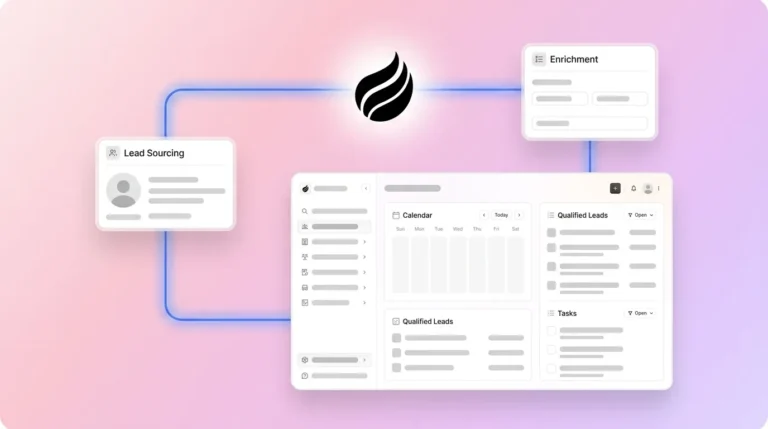
Coffee operates as an autonomous agent that performs enrichment, activity logging, meeting intelligence, pipeline tracking, and visitor identification inside a single system connected to Salesforce or HubSpot. This architectural shift from point solution to agent reflects a broader market trend.
A 2026 SyncGTM survey of B2B companies found that many RevOps leaders plan to reduce their tool count in 2026, with standalone enrichment tools among the categories most likely to be cut. A February 2026 Databar analysis confirms that AI agents are moving from experimental features to core operational infrastructure for data enrichment. In that model, the agent decides which records need attention, selects data sources, validates results, and routes exceptions to humans only when necessary.
For mid-market teams committed to Salesforce or HubSpot, Coffee deploys as a Companion App. A single authentication lets the agent sync, enrich, and write insights back to the existing CRM without replacing it. This approach removes much of the integration overhead that makes ZoomInfo expensive to maintain at scale.
Salesforce and HubSpot Integration: ZoomInfo Effort vs Coffee Agent Setup
ZoomInfo provides native Salesforce and HubSpot connectors, yet native connectivity does not guarantee low maintenance. Common CRM integration challenges include duplicate records from multiple systems, field-mapping mismatches, sync delays from batch processing, and one-way sync limitations that prevent activity data from flowing back into the CRM. RevOps teams must diagnose and repair each of these failure modes.
Account intelligence tools with strong CRM integration usually achieve better deployment success rates than tools with weak integration. The difference is meaningful, but even strong integrations require ongoing governance. RevOps teams must maintain explicit data contracts for each integration that define field ownership, sync direction, conflict resolution, refresh timing, and escalation contacts. Without that structure, CRM stability suffers.
Coffee’s approach is different by design. The agent authenticates once and writes back to Salesforce or HubSpot automatically. It updates contacts, companies, activities, meeting summaries, and pipeline changes without field-mapping projects or batch sync delays. Agentic AI systems can automate CRM updates, lead qualification and routing, account research, opportunity management workflows, and follow-up coordination. This automation reduces the manual administrative overhead that usually accompanies traditional sales intelligence platform integrations.
ZoomInfo Pricing for RevOps: Total Cost of Ownership in 2026
The integration complexity described above translates directly into cost. ZoomInfo contracts are annual with auto-renewal, and enterprise deployments exceeding 100 seats can surpass $140,000 per year. For mid-market teams, the math still feels punishing.
ZoomInfo’s median annual contract value is $33,500 according to Vendr purchase data, and that figure excludes the surrounding stack. Mid-sized teams paying for an Outreach + ZoomInfo + Gong stack alone often spend $4,000 to $8,000 or more per month.
The per-seat model adds further pressure. Per-seat models can create seat bloat when organizations over-buy to accommodate new hires. Credit-based models create unpredictable overage costs during usage spikes. A typical mid-market B2B team’s GTM stack can cost hundreds of thousands of dollars per year in tooling alone, plus the expense of RevOps engineers.
Coffee’s pricing model is seat-based, with the agent’s labor included. There is no credit metering, no overage charge, and no separate module for meeting intelligence or pipeline tracking. For teams currently paying ZoomInfo rates plus adjacent point solutions, consolidation with Coffee often produces meaningful savings.
Calculate your stack consolidation savings with Coffee.
ZoomInfo vs Coffee by Category: Enrichment, Intent, Logging, Forecasting, and Meetings
The comparison below breaks down the functional differences across five categories: enrichment, intent, activity logging, forecasting, and meeting intelligence. Each category shows how architecture shapes day-to-day operations.
Enrichment: ZoomInfo’s database is deep and well-regarded, which leads many teams to assume it is categorically superior. Coffee enriches records through licensed data partners and does so automatically when a contact is created, with no manual lookup and no credit consumption. For most mid-market use cases, coverage is comparable despite the architectural difference. Single-source data providers achieve 50–70% coverage rates on average, which applies to any single-vendor enrichment approach, including ZoomInfo.

Intent: ZoomInfo sells intent signals as an add-on. Coffee’s Visitor Identification feature identifies named individuals browsing your website, not just the company, and surfaces Suggested Leads that match your buyer persona. High-precision first-party intent signals, such as pricing-page visits from ICP accounts, deserve fast follow-up because delays reduce conversion rates. Coffee routes these signals in real time through Slack.
Activity Logging: ZoomInfo does not log activities autonomously. Coffee’s agent logs every email, call, and meeting automatically. Deal state stays current without rep input.
Forecasting: ZoomInfo surfaces data, while forecasting depends on Salesforce or HubSpot plus additional configuration. Coffee’s Pipeline Compare feature visualizes week-over-week changes automatically and replaces manual CSV exports.
Meeting Intelligence: ZoomInfo acquired Chorus for conversation intelligence. Coffee includes a native AI meeting bot that joins calls, transcribes, generates summaries, identifies next steps, and drafts follow-up emails. All of this runs inside the same agent at no additional module cost.

Setup, Maintenance, and Scalability: What RevOps Teams Experience
Setup time directly affects how quickly a platform delivers ROI. Many B2B organizations begin to see measurable ROI from sales intelligence platforms within several months of full deployment. ZoomInfo’s onboarding timeline reflects that range. Field mapping, CRM configuration, user training, and data governance setup all come before value realization. Integration work, data preparation, and training often exceed initial licensing costs, and 69% of developers say they lack resources to build and deploy AI agents.
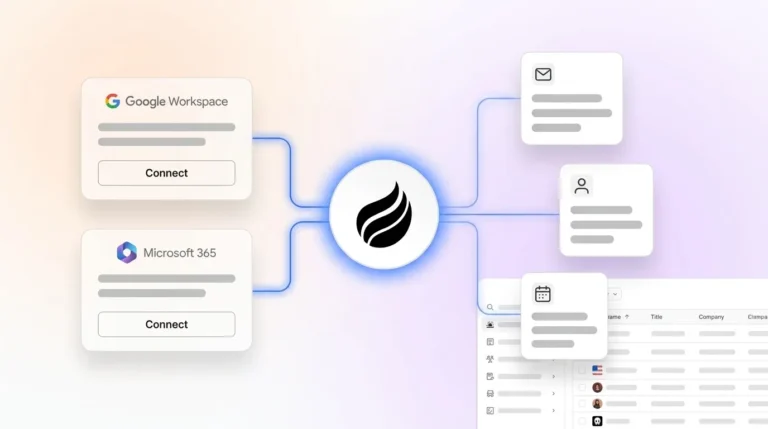
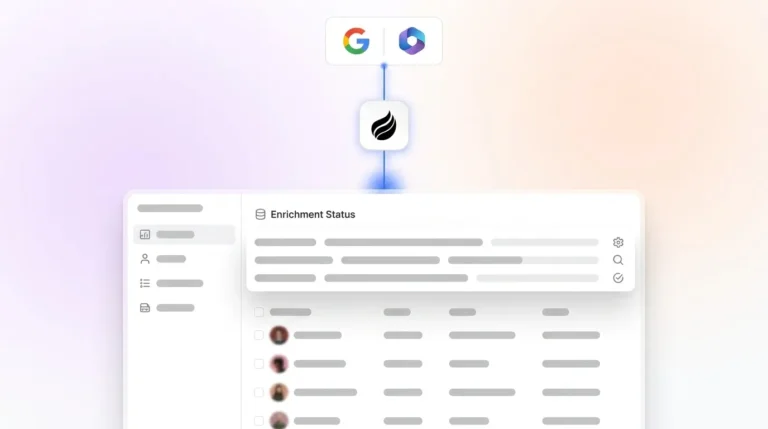
Coffee’s setup involves a single authentication to Google Workspace or Microsoft 365 plus a CRM connection. The agent begins creating contacts, logging activities, and enriching records immediately. For Salesforce or HubSpot teams, the Companion App model avoids migration. The existing system of record remains in place, and Coffee manages the data-in layer on top of it.
Scalability also differs. ZoomInfo’s per-seat pricing means cost scales linearly with headcount. Coffee’s seat-based model includes unlimited agent labor, so adding reps does not trigger proportional increases in enrichment credits or module fees.
Best-Fit Scenarios for ZoomInfo and Coffee
ZoomInfo fits large enterprise teams that have dedicated RevOps engineers, mature data governance, and budgets that absorb $75,000 or more in annual contracts without friction. Its database depth and brand recognition help in procurement reviews at that scale.
Coffee fits three specific scenarios particularly well.
- Growing mid-market teams (50–500 employees) that need enrichment, logging, and pipeline intelligence without hiring a RevOps engineer to maintain integrations between several point solutions.
- Salesforce or HubSpot-committed teams with low CRM adoption and messy data that need an agent to manage the data-in layer while keeping their current system of record.
- Teams focused on stack consolidation that currently pay separately for enrichment, meeting intelligence, and pipeline tracking and want to combine those costs into one agent.
Risks, Limitations, and Misconceptions to Consider
ZoomInfo’s primary risk for mid-market teams is TCO creep. The base contract is only the starting point. Intent data, Chorus, and renewal escalations push the real number significantly higher. Sales intelligence contracts often include automatic renewal price increases that compound over multi-year commitments.
Coffee’s primary limitation appears at very large enterprise scale. Organizations with complex custom Salesforce workflows, multi-territory hierarchies, and heavily regulated data environments may find Coffee’s current feature set too narrow. Coffee also does not suit teams that want a static database with thousands of filter options and no automation. The agent model assumes you trust the system to handle data autonomously.
A frequent misconception claims that ZoomInfo’s data quality is categorically superior to agent-based enrichment. B2B contact data decays at 30–40% per year in high-turnover industries like tech startups, so any static database degrades quickly without continuous re-enrichment. Coffee’s agent monitors records and re-enriches them automatically, which addresses the decay problem that leaves point-solution databases stale between manual refresh cycles.
Decision Framework: Matching ZoomInfo or Coffee to Your Constraints
The criteria below help match each platform to common RevOps constraints.
- Budget under $50,000 per year for the full intelligence stack: Coffee usually fits better. ZoomInfo’s mid-market contracts alone approach or exceed this threshold before adjacent tools.
- Dedicated RevOps engineer available for integration maintenance: ZoomInfo becomes more viable. Without that resource, integration debt builds quickly.
- CRM adoption below 70% with dirty data: Coffee fits better. The agent fixes the data-in problem at the source, while ZoomInfo enriches records that reps still need to log manually.
- Need for meeting intelligence and pipeline tracking in addition to enrichment: Coffee consolidates all three. ZoomInfo requires Chorus plus CRM configuration for similar coverage.
- Enterprise procurement with legal, security, and compliance review cycles: ZoomInfo’s established vendor status helps. Coffee is SOC 2 Type 2 and GDPR compliant, yet newer in enterprise procurement processes.
- Stack consolidation as a 2026 priority: Teams that consolidate their GTM stack often achieve significant savings in tooling costs. Coffee is built for that consolidated layer.
Compare Coffee’s agent model to your current ZoomInfo spend.
Frequently Asked Questions
How long does it take to set up Coffee compared to ZoomInfo?
Coffee’s Companion App for Salesforce or HubSpot is usually operational within days. A single authentication to Google Workspace or Microsoft 365 and a CRM connection unlocks the agent, which then begins creating contacts, logging activities, and enriching records. ZoomInfo implementations typically require field mapping, CRM configuration, user training, and data governance setup, which extend the timeline to several weeks or months before full value appears.
Does Coffee require internal technical expertise to maintain?
No. Coffee serves teams that lack dedicated RevOps engineers. The agent handles enrichment, deduplication, activity logging, and CRM writes autonomously. ZoomInfo integrations, by contrast, need ongoing maintenance of field mappings, sync configurations, and data contracts to protect CRM stability. That work usually falls to RevOps or a Salesforce administrator.
Can Coffee replace ZoomInfo entirely, or does it complement it?
For most mid-market teams, Coffee replaces ZoomInfo’s core functions. These include contact enrichment, activity capture, intent identification through Visitor ID, and pipeline intelligence. Teams with very specific needs, such as deep technographic filtering across millions of accounts or ZoomInfo’s proprietary intent network, may still find ZoomInfo useful as a supplementary source. For the majority of mid-market RevOps workflows, Coffee’s agent covers the same ground at a lower total cost.

How does Coffee handle data quality and CRM hygiene over time?
Coffee’s agent monitors records continuously and re-enriches them automatically when data goes stale. As noted earlier, contact data in high-turnover industries can degrade rapidly, often by 30–40% annually. Coffee addresses this at the infrastructure level. The agent detects stale records and triggers re-enrichment without manual scheduling, which keeps the CRM accurate as a baseline instead of as a periodic cleanup project.
Is Coffee secure enough for mid-market B2B companies?
Yes. Coffee is SOC 2 Type 2 and GDPR compliant, and data ingested by the agent does not train public models. For most mid-market B2B companies without multi-year security review requirements, Coffee’s compliance posture is sufficient. Teams in heavily regulated industries such as healthcare or finance, which often have extended procurement cycles, should compare Coffee’s current certifications with their specific compliance requirements before committing.
Conclusion: Choosing the Right RevOps Stack Path
ZoomInfo remains a capable platform for teams with the budget, technical resources, and scale to justify its premium. Its database depth and established integrations are real strengths. For mid-market B2B teams in 2026, where stack consolidation, reduced manual overhead, and reliable data quality matter most, ZoomInfo’s point-solution model often creates as many problems as it solves.
Coffee’s autonomous agent model addresses the root cause of CRM issues. Humans make unreliable data entry clerks, so the CRM ends up with bad data. By automating enrichment, activity logging, meeting intelligence, and pipeline tracking inside Salesforce or HubSpot, Coffee removes much of the overhead that makes ZoomInfo expensive to operate and difficult to renew.
Teams ready to evaluate the agent model against their current ZoomInfo spend can follow a simple process. Add up your full ZoomInfo TCO, including contract, overages, adjacent tools, and RevOps maintenance time. Then compare that figure to what a single Coffee agent can automate for your Salesforce or HubSpot instance.