Written by: Doug Camplejohn, CEO & Co-Founder, Coffee
Key Takeaways for Mid-Market CRM Decisions
-
Salesforce’s legacy architecture forces manual data entry, which drives poor data quality and high admin costs for mid-market teams.
-
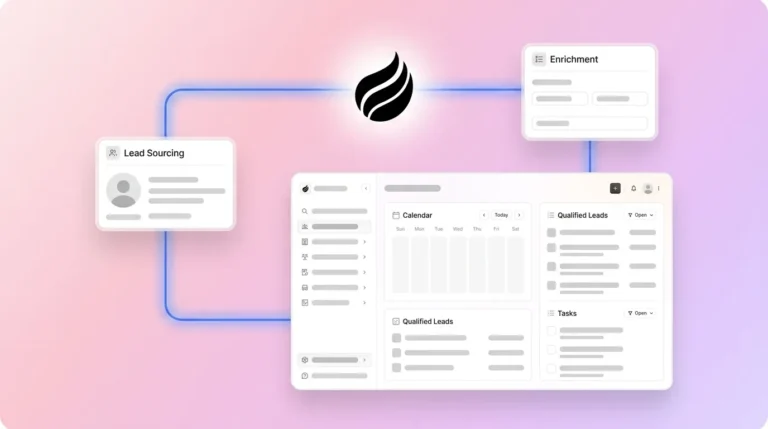
Modern agent-based CRMs like Coffee automate data capture from emails, calls, and calendars so reps can spend more time selling.
-
Coffee offers flexible deployment with both a standalone AI-first CRM and a companion agent that runs on top of existing Salesforce instances.
-
Teams switching to Coffee typically see faster implementation, lower total cost of ownership, and higher user adoption than traditional Salesforce deployments.
-
Explore Coffee’s pricing and deployment options to eliminate data-entry burdens and modernize your CRM.
Why Teams Are Re-Evaluating Salesforce Now
The 2026 AI-native shift has made the architectural gap between legacy and modern CRM impossible to ignore. That gap shows up first in rep productivity: sales reps dedicate only 29% of their workweek to actual selling, and CRM data entry represents the single largest category of non-selling work. This manual entry burden directly drives data quality problems: 76% of CRM users say less than half of their organization’s CRM data is accurate and complete. The financial impact is severe, with poor CRM data quality costing the average company up to $15 million per year.
The total cost of ownership picture has also sharpened. For a 50-user Salesforce Enterprise deployment, realistic all-in annual TCO sits far above license costs alone once admin time, consulting, and training are included. Salesforce raised Enterprise and Unlimited edition prices by an average of 6% in August 2025, which further compresses margins for mid-market teams already stretched on admin overhead.
Legacy CRM architectures also struggle with modern AI demands. They are weaker at interpreting conversations, understanding signals, acting in real time, and supporting autonomous agents because they were designed around a different software paradigm. The shift is structural, not cosmetic, and it affects every part of the go-to-market stack.
Comparison Scope: Salesforce vs Agent-First Platforms
This comparison focuses on three deployment models that matter most for mid-market and SMB teams in 2026.
Salesforce (Legacy): A relational database with bolted-on AI features. It requires dedicated administrators, AppExchange add-ons, and continuous human data entry to function.
Standalone Modern CRM: An AI-native platform built from the ground up where an agent handles all data capture. It is designed for teams of 1–100 that want to replace legacy systems entirely.
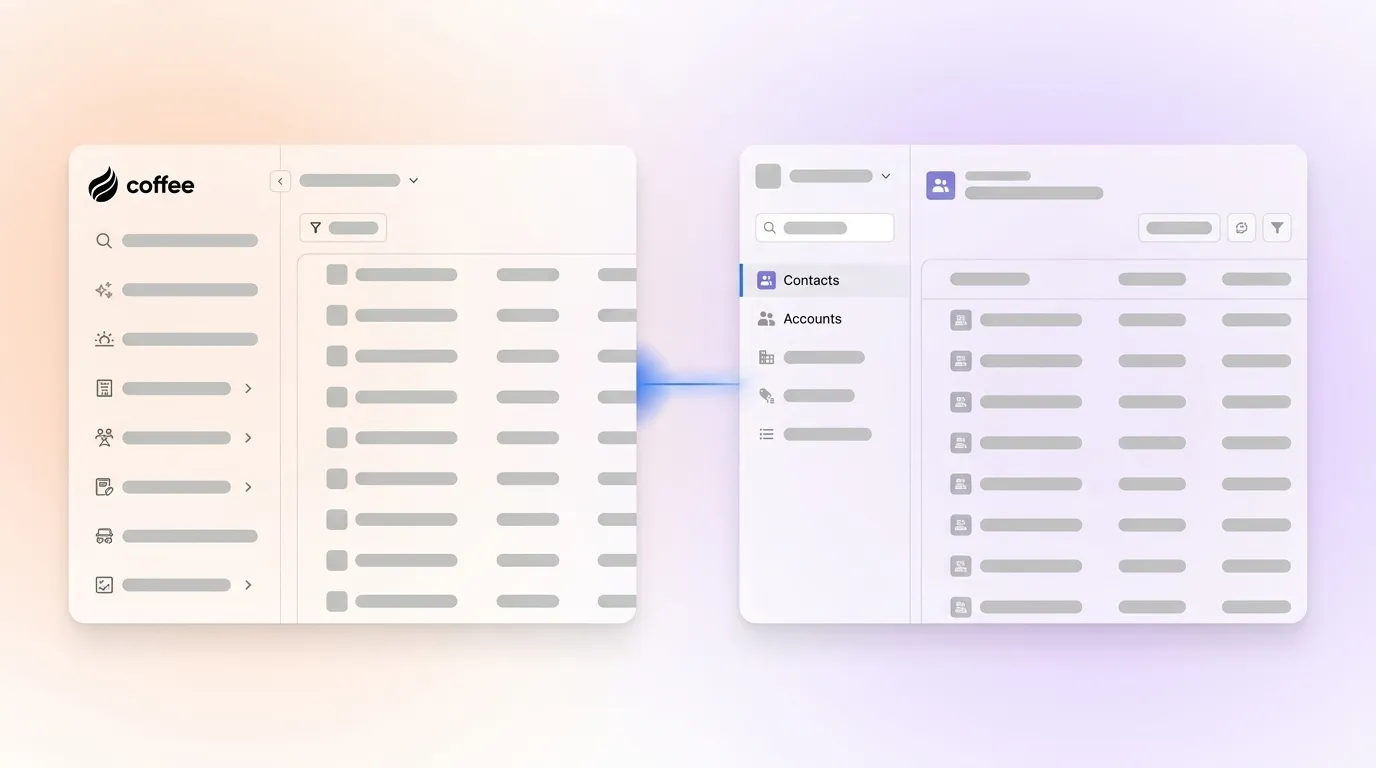
Companion Agent (Coffee on Salesforce): The Coffee Agent deployed as an intelligent layer on top of an existing Salesforce instance. The system of record stays intact, and the agent removes the data-entry burden without a migration.
Coffee is the only platform offering both the standalone and companion paths, so teams do not have to choose between modernizing and protecting their existing Salesforce investment.
Compare standalone and companion pricing to find your fit.
To determine which of these three deployment models fits a given team, we evaluate each across seven operational and financial dimensions.
Evaluation Criteria for CRM Architecture
Seven criteria determine which architecture wins for a given team.
1. Data Quality: The percentage of CRM records that are accurate, complete, and current, which forms the foundation of reliable forecasting.
2. Implementation Speed: Time from contract to a live, productive system that reps actually use.
3. User Adoption: The rate at which reps consistently use the system without coercion or extra incentives.
4. Admin Burden: Ongoing headcount and cost required to maintain the platform.
5. Total Cost of Ownership (TCO): All-in annual cost including licensing, administration, integrations, and training.
6. AI Depth: Whether AI sits as a bolt-on feature or as the core operating layer that handles data capture, enrichment, and pipeline intelligence autonomously.
7. Flexibility: The ability to deploy as a standalone system, a companion layer, or both, without re-platforming.
The following table compares how Salesforce Enterprise, Coffee Standalone CRM, and Coffee Companion perform across the most operationally significant dimensions, including setup time, ongoing admin burden, and data automation.
Side-by-Side Comparison Table
|
Criterion |
Salesforce (Enterprise) |
Coffee Standalone CRM |
Coffee Companion on Salesforce |
|---|---|---|---|
|
Setup Time |
Salesforce implementation for mid-market typically takes 3-6 months for standard projects. |
Days to 2 weeks |
Hours (OAuth connection) |
|
Ongoing Admin |
Agent-managed, minimal human admin |
Existing Salesforce admin retained, Coffee layer is self-managing |
|
|
Data-Entry Automation |
Fully automated via agent (email, calendar, calls) |
Fully automated, agent writes enriched data back to Salesforce |
|
|
AI Depth |
Bolt-on (Einstein), not built for autonomous agent operation |
Agent-native, structured and unstructured data on a data warehouse |
Agent-native layer, Salesforce records enriched in real time |
|
Annual License Cost (50 users) |
Seat-based, contact Coffee for current pricing |
Salesforce license retained plus Coffee seat fee |
|
|
Best-Fit Company Size |
Enterprise (500+ users with dedicated ops team) |
SMB to mid-market (1–150 employees) |
SMB to mid-market committed to Salesforce |
Category-by-Category Analysis of CRM Tradeoffs
Data Quality. The “garbage in, garbage out” problem is structural in Salesforce. 37% of sales reps admit to fabricating CRM data when facing too many required fields during manual entry. B2B CRM contact data decays at a rate of approximately 30% per year due to natural changes such as job transitions and company acquisitions. Coffee’s agent ingests emails, calendar events, and call transcripts to auto-create contacts, log activities, and enrich records, which removes the human failure point entirely.

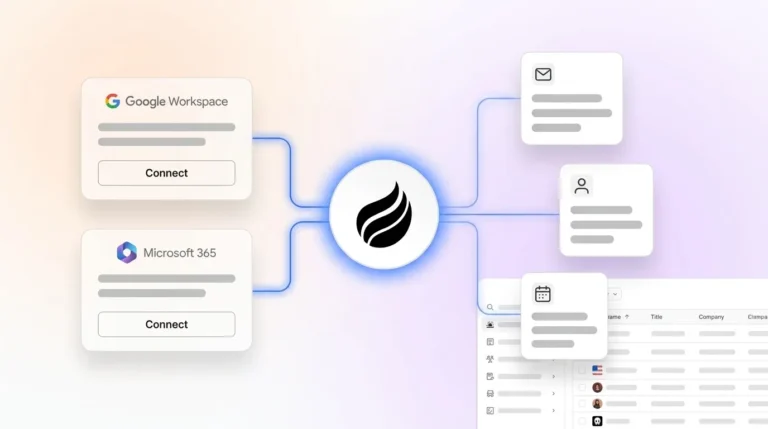
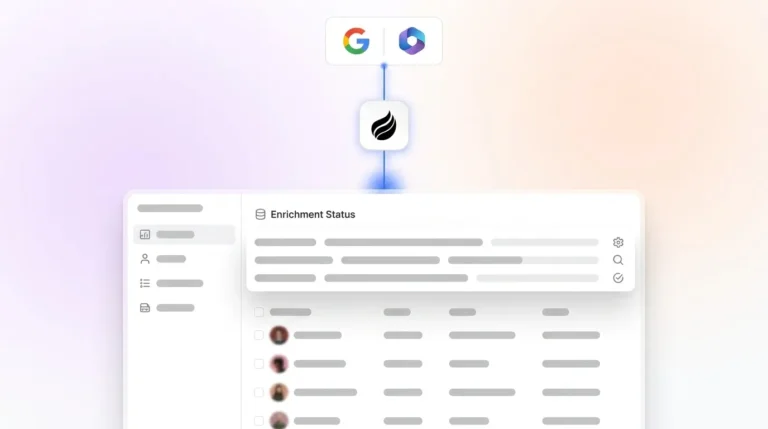
Implementation Speed. Enterprise CRM implementation commonly takes 6 to 12 months. Mid-sized or mid-market business CRM deployments typically run 3 to 5 months. Coffee’s Standalone CRM connects to Google Workspace or Microsoft 365 and becomes operational within days. The Companion App requires only an OAuth authentication before it begins writing data back to Salesforce.
User Adoption. According to Johnny Grow’s 2025 CRM Failure Report, 55% of CRM implementations fail to meet their planned objectives, and slow user adoption is the top cause among people-related failures. Shadow CRMs such as spreadsheets, Notion docs, and personal notes appear when reps feel forced to serve the system. Coffee inverts this relationship: the agent does the work, and reps interact with a co-pilot that surfaces briefings, summaries, and next steps.

Admin Burden. The 1:50 admin-to-user ratio shown in the comparison table translates into real budget impact. At $70,000–$110,000 annually in salary per administrator, a 100-user Salesforce deployment carries $140,000–$220,000 in admin costs before benefits or contractor fees. Coffee’s agent-managed architecture removes this overhead category entirely for SMB and mid-market teams.
TCO. Salesforce implementation costs vary widely, and licensing represents only a slice of the total deployment and maintenance budget. Organizations migrating from Salesforce to Zoho reduced their total cost of ownership by 68 percent on average in documented case studies. For teams not ready to migrate, Coffee’s Companion App captures many of the same efficiency gains without triggering a re-platforming project.
AI Depth. Adding AI features to an existing CRM platform is not equivalent to building an AI-native architecture from the ground up. Salesforce Einstein operates on top of a relational database that was never designed to ingest unstructured data like call transcripts or email threads. Coffee runs on a data warehouse that retains full historical context, which enables pipeline intelligence that Salesforce’s bolt-on AI cannot match.
Flexibility. No other platform in 2026 offers both a standalone replacement and a companion agent on the same underlying technology. Teams can start with the Companion App to prove ROI on their existing Salesforce investment. They can then migrate to the Standalone CRM when the time is right, without switching vendors.
Size-Based Decision Tree for Coffee vs Salesforce
For the smallest teams, Coffee Standalone CRM usually makes the most sense. 1–50 employees, no existing CRM or on spreadsheets: choose Coffee Standalone CRM. Setup finishes in days, the agent handles all data entry, seat-based pricing scales cleanly, and no admin hire is required.
As teams grow to the 50–200 employee range, the decision splits based on existing infrastructure. 50–200 employees, committed to Salesforce, low adoption and dirty data: choose Coffee Companion App. Authenticate once, and the agent begins enriching records and logging activities immediately, with no migration and no disruption to existing workflows or quotas.
Some mid-market teams in this range want a clean break from Salesforce. 50–200 employees, evaluating a full Salesforce replacement: choose Coffee Standalone CRM. This path avoids the substantially higher all-in annual TCO of a 50-user Salesforce Enterprise deployment and removes the admin headcount requirement.
Larger enterprises face a different reality. 500+ employees, complex multi-cloud Salesforce with custom ERP integrations: Salesforce remains the defensible choice. Coffee is not designed for organizations with deeply custom workflows, regulated data environments, or enterprise procurement requirements.
Find the right deployment model for your team size.
Operational and Long-Term Considerations for CRM Change
Change management is the hidden cost in any CRM decision. Industry surveys consistently report that lack of training or CRM expertise ranks as a major barrier to successful CRM implementation, especially when systems demand heavy manual data entry. Coffee’s agent-first design reduces the training surface area because reps do not need to learn new data-entry workflows. The learning curve focuses on reviewing agent outputs such as briefings, summaries, and pipeline changes instead of operating a complex system.
Data hygiene compounds over time. Because Coffee’s agent captures interactions at the source rather than relying on rep input, the data warehouse accumulates clean, structured history from day one. This historical context powers accurate pipeline intelligence, which Salesforce’s relational database architecture cannot easily match without expensive third-party data warehousing add-ons.
The 2026 trend toward agentic go-to-market systems favors the companion-layer model. Teams that deploy Coffee on top of Salesforce today build the data foundation that makes future AI-driven forecasting and autonomous outreach possible, regardless of whether they eventually migrate off Salesforce.
Risks and Limitations of Coffee and Salesforce
Salesforce retains genuine advantages for large enterprises. Its AppExchange ecosystem, multi-cloud architecture, and enterprise security certifications remain unmatched for organizations with 500+ users, complex approval hierarchies, or regulated industry requirements. Enterprise CRM platforms are often deployed on-premises to ensure better data security, which rules out most modern SaaS alternatives.
Modern agent-based platforms, including Coffee, require integration work for teams with existing ERP, billing, or data warehouse connections. Coffee currently integrates with third-party tools via Zapier, and deeper native integrations sit on the roadmap. Teams with complex integration requirements should evaluate this gap carefully before committing.
Modern AI-native systems do not yet match the industrial-strength depth and enterprise-grade configuration capabilities of legacy platforms such as Salesforce. For mid-market teams, this trade-off is usually favorable. The configuration depth they pay for in Salesforce is rarely used, while the admin burden it creates shows up on the budget every month.
Practical Decision Framework by Scenario
|
Your Situation |
Recommended Path |
|---|---|
|
On spreadsheets, 1–50 employees, want automation from day one |
Coffee Standalone CRM |
|
On Salesforce, low adoption, dirty data, no migration appetite |
Coffee Companion App |
|
On Salesforce, evaluating full replacement, 50–200 employees |
Coffee Standalone CRM (migrate) or Companion App (bridge) |
|
Enterprise, 500+ users, complex custom workflows, regulated industry |
Salesforce (Coffee is not the right fit) |
|
On HubSpot, same adoption and data-quality problems |
Coffee Companion App (supports HubSpot instances) |
Frequently Asked Questions
How long does it take to implement Coffee compared to Salesforce?
Coffee’s Standalone CRM connects to Google Workspace or Microsoft 365 and becomes operational within days. The Companion App for Salesforce requires only an OAuth authentication and begins enriching records within hours. As noted in the comparison table, mid-market Salesforce deployments typically run 3 to 5 months at minimum, and enterprise rollouts with heavy customization and integrations commonly extend to 6 to 12 months.
How does the Coffee Companion App work on top of Salesforce without disrupting existing workflows?
The Coffee Agent authenticates with your Salesforce instance through a simple OAuth connection. It then reads emails, calendar events, and call transcripts to auto-create contacts, log activities, and enrich records, writing clean, structured data back to Salesforce automatically. Existing fields, required fields, quotas, forecasting configurations, and approval workflows remain untouched. Reps continue working in Salesforce and simply stop doing the data entry themselves.

Is Coffee’s data quality comparable to dedicated enrichment tools like ZoomInfo?
Coffee’s built-in enrichment, including job titles, funding data, and LinkedIn profiles via licensed data partners, is on par with ZoomInfo for most mid-market use cases. For teams currently paying separately for enrichment, recording, and forecasting tools, Coffee consolidates those functions into a single seat-based price. Teams with highly specialized enrichment requirements for enterprise accounts may still benefit from a dedicated enrichment provider alongside Coffee.
Is Coffee secure enough for a mid-market sales team?
Coffee is SOC 2 Type 2 and GDPR compliant. Customer data is not used to train public AI models. For mid-market teams, this coverage satisfies standard security review requirements. Large enterprises in healthcare or financial services with multi-year security review cycles or on-premises deployment requirements fall outside Coffee’s current target profile.
What happens to historical Salesforce data if a team eventually migrates to Coffee Standalone?
Teams using the Coffee Companion App on Salesforce build a clean data history inside Coffee’s data warehouse from the moment the agent activates. If a team later decides to migrate fully to Coffee Standalone, that enriched history migrates with them. The Companion App functions as a low-risk bridge that delivers immediate ROI on the existing Salesforce investment while building the data foundation for a future standalone deployment when the team is ready.
Conclusion: Choosing the Path That Eliminates the Data-Entry Burden
The architectural difference between Salesforce and modern agent-based CRM platforms reflects a paradigm gap, not a simple feature gap. Salesforce was built to store data that humans enter. Coffee was built to capture data so humans never have to. For mid-market and SMB teams where the annual cost of misallocated rep time reaches approximately $25,000 per rep and companies lose revenue due to poor CRM data quality, the status quo carries a clear cost.
The decision framework stays straightforward. Teams ready to replace Salesforce get a standalone AI-first CRM where the agent runs the system of record. Teams committed to Salesforce get a companion agent that removes the data-entry grind without a migration. Both paths lead to the same outcome: good data in, accurate insights out, and reps who sell instead of serving the system.
Put the data-entry burden behind you and explore Coffee’s pricing.