Written by: Doug Camplejohn, CEO & Co-Founder, Coffee
Key Takeaways for Choosing a Pipedrive Alternative
- AI-powered CRMs remove manual data entry by capturing emails, calendars, and calls automatically, so reps spend more time selling.
- Legacy platforms like Pipedrive depend on constant human input, which creates incomplete records, unreliable forecasts, and hundreds of wasted hours each year.
- US outbound teams should focus on automation depth, fast implementation, native Google Workspace or Microsoft 365 integrations, user adoption, and transparent total cost of ownership.
- Coffee offers a Standalone CRM for small teams and a Companion App that sits on top of Salesforce or HubSpot, delivering complete data capture and pipeline intelligence without migration or retraining.
- Teams that remove manual entry from day one can get started with Coffee and reclaim the hours currently lost to admin work.
Why US Sales Teams Are Moving Beyond Pipedrive
Pipedrive built its reputation on a clean visual pipeline, but that pipeline still depends on humans to fill it. Salesforce’s 2026 State of Sales report, drawn from over 4,000 sales professionals, found that reps spend 60% of their time on non-selling tasks, such as manually entering customer notes, hunting for materials, and chasing approvals. 32% of salespeople spend over an hour per day on manual data entry, equating to more than 250 hours per year per rep that could be spent selling.
For a 15-rep outbound team, that arithmetic is damaging. Incomplete records produce unreliable forecasts, and unreliable forecasts make pipeline reviews a guessing game. Reps lose roughly 546 hours per year searching for or correcting incomplete contact information. The root cause is architectural. Pipedrive, like every legacy CRM, assumes humans will reliably input data. They do not.
Get started with Coffee and eliminate manual entry from day one.
How to Evaluate AI-Native CRMs for 5–50 Rep Teams
The following criteria fall into three groups: operational efficiency, workflow compatibility, and financial sustainability. Start with automation depth and implementation effort, then confirm workflow fit and integrations, and finally validate TCO and scalability.
- Automation depth: Does the system capture emails, calendar events, and call transcripts without rep input?
- Implementation effort: How long before the first rep is productive?
- Workflow fit for US outbound teams: Native Google Workspace and Microsoft 365 sync, US telephony support, and visitor identification.
- User adoption: Will reps use it, or will shadow CRMs such as spreadsheets and Notion persist?
- Native integrations: Email, calendar, dialers, and enrichment without a patchwork of add-ons.
- Reporting visibility: Automated pipeline change tracking instead of manual CSV exports.
- Total cost of ownership (TCO): License fee plus admin time, integration costs, and onboarding overhead.
- Scalability for 5–50 rep teams: Can the platform support a 5-person seed team and a 50-rep growth team without a platform swap?
The following table compares how each platform performs against these criteria, with particular focus on automation depth and total cost of ownership. These two factors most directly determine whether reps spend their time selling or updating records.
Side-by-Side Comparison of AI-Powered Pipedrive Alternatives
| Platform | Automation Depth | Implementation Time | TCO Notes |
|---|---|---|---|
| Pipedrive | Rule-based workflow automation, AI Sales Assistant identifies patterns and recommends next actions, but does not auto-log interactions | 4–6 weeks | From $14/seat/mo, native dialer requires third-party add-ons (Aircall, JustCall, Twilio), which increases TCO |
| Salesforce / HubSpot | Salesforce offers limited native auto-capture that requires add-ons, while HubSpot provides partial email tracking without full calendar sync | Salesforce: 6–18 months, HubSpot: 4–8 weeks | Salesforce all-in runs $5,000–$7,000/user/year, HubSpot Professional at 50 users exceeds $60,000/year before add-ons |
| Attio / Close / Clarify / Day.ai | Clarify autonomously captures meetings and enriches contacts, and Day.ai focuses on unstructured productivity data. Attio and Close use passive pipeline logic | Close: 2–3 weeks, Clarify and Day.ai vary | Newer tools lack deep Salesforce and HubSpot integration for teams with existing stacks, and per-seat pricing varies |
| Coffee | Autonomous agent logs every email, calendar event, and call transcript, auto-creates and enriches contacts, and requires no rep input | Connects to Google Workspace or Microsoft 365 on authentication and becomes productive within days | Simple seat-based pricing with unlimited agent labor that replaces enrichment tools (Apollo or ZoomInfo), recording tools (Gong or Fathom), and forecasting add-ons |
The comparison above highlights a core divide. Some platforms automate workflows around manual data entry, while others remove the entry itself. That difference determines whether your team saves minutes per day or hours per week.
Automatic Data Capture vs. Manual Entry
As the data above shows, manual entry consumes hours that could be spent selling. The difference between platforms comes down to who owns that burden, the rep or the system.
Pipedrive, Salesforce, and HubSpot require reps to log calls, update deal stages, and note next steps. HubSpot provides partial email tracking but lacks full firmwide calendar sync and native relationship intelligence. Even when automation rules exist, a human must trigger the initial record or update the field.
Clarify’s Ambient Intelligence architecture autonomously captures, enriches, and acts on data in the background, recording meetings and extracting goals, pain points, and stakeholders. That approach represents a meaningful step forward, yet Clarify lacks the deep Salesforce and HubSpot integration that established teams require.
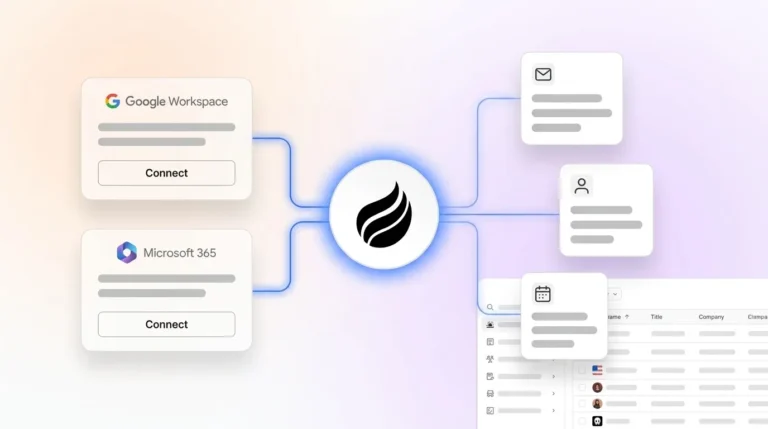
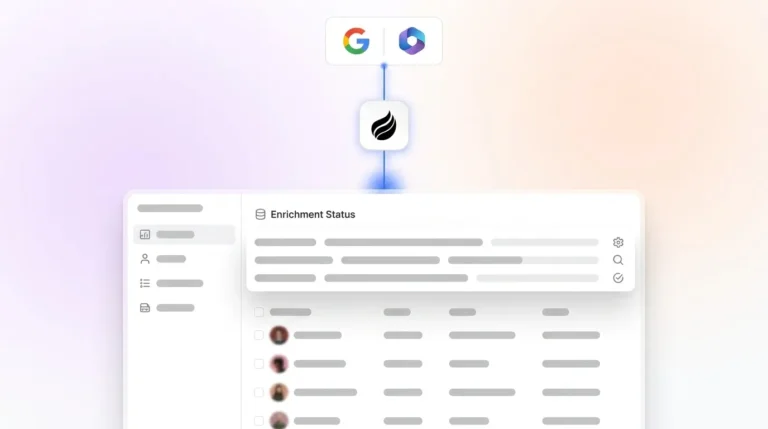
Coffee’s agent connects to Google Workspace or Microsoft 365 on first authentication and immediately scans emails and calendars to auto-create contacts, companies, and activity logs. The agent joins calls via Zoom, Teams, or Meet, transcribes them, generates summaries, identifies next steps, and drafts follow-up emails, all without rep input. Deep CRM automation can reclaim a significant portion of a sales team’s time by reducing manual data entry and automating follow-ups. Coffee targets 8–12 hours saved per rep per week.

Implementation Effort and Change Management for 5–50 Rep Teams
CRM migrations for teams of 10–50 users typically take 4–12 weeks, with 63–73% of projects exceeding original timelines by an average of 30–50%. The hidden cost usually comes from configuration, data hygiene, and change management rather than licenses.
Successful AI CRM deployments require clean data foundations before activation, because skipping CRM data hygiene leads to degraded enrichment quality, and big-bang deployments increase adoption friction. A phased approach works best. Days 1–30 focus on data quality and light-touch AI features, Days 31–60 pilot one or two high-impact use cases, and Days 61–90 refine and expand.
Coffee’s Companion App model removes the rip-and-replace risk entirely. Teams already on Salesforce or HubSpot authenticate Coffee once, and the agent begins writing enriched data back to the existing system of record. No migration and no retraining on a new interface. Data hygiene improves automatically as the agent fills gaps.
Workflow Fit for US Outbound Teams
US outbound teams rely on Google Workspace or Microsoft 365, US-based dialers, and increasingly on website visitor intelligence. Coffee connects natively to both productivity suites on day one. The agent’s visitor identification feature drops a single tracking pixel into a site’s <head> tag and begins resolving anonymous traffic into named prospects, including name, title, email, LinkedIn profile, pages visited, and time on site, with real-time Slack alerts for high-fit visitors.
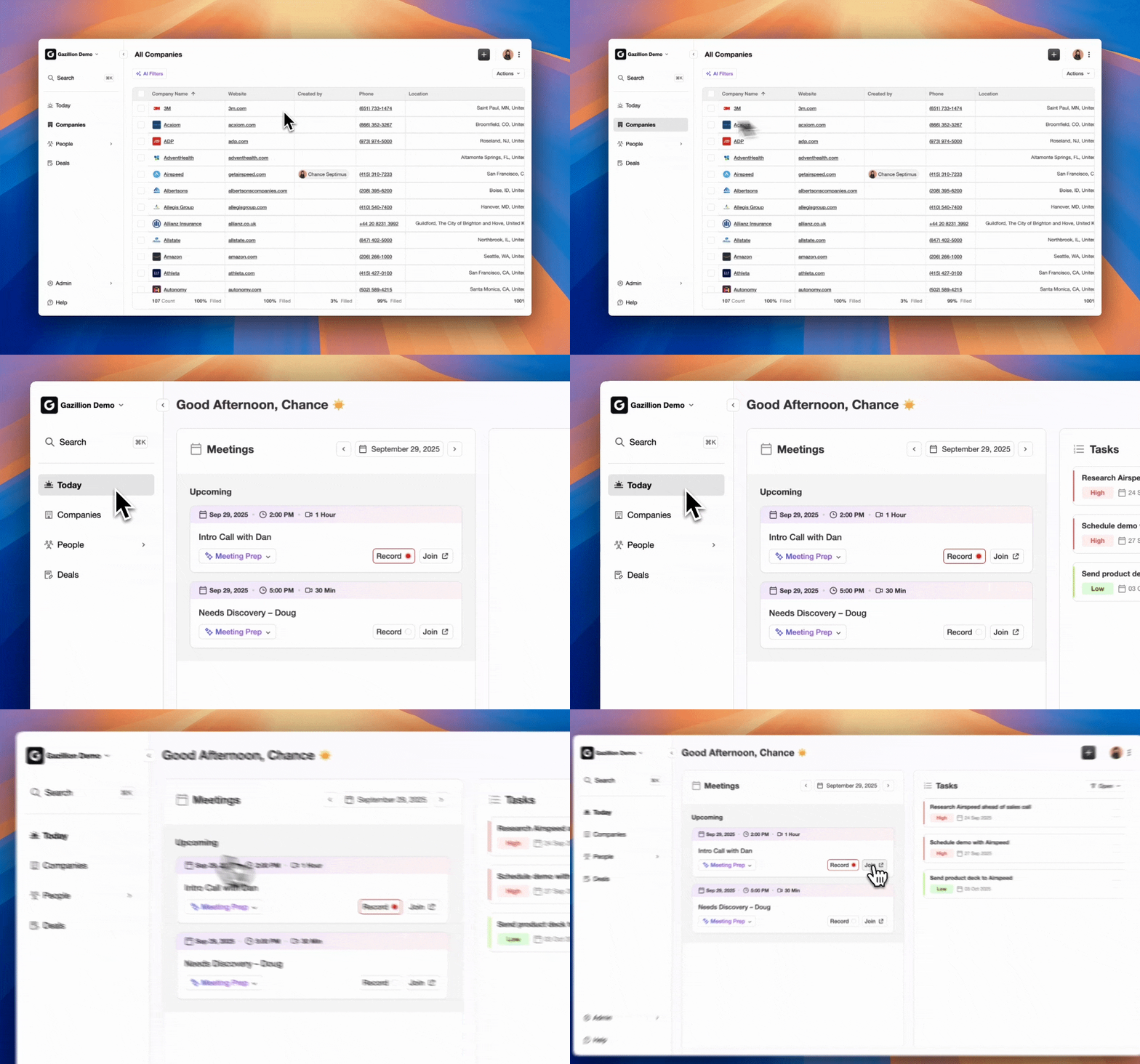
Standalone visitor identification tools usually surface only a company name or an undifferentiated people list. Coffee’s Suggested Leads feature instead applies the team’s buyer persona to recommend the two or three specific individuals inside a visiting company most worth contacting, with LinkedIn profiles ready for immediate outreach or auto-enrollment in a drip campaign.

This complete capture, described above, directly improves forecasting accuracy by eliminating the data gaps that weaken manual systems. Coffee’s Pipeline Compare feature then visualizes week-over-week changes such as progressed deals, stalled opportunities, and new additions, without a single spreadsheet export.
Get started with Coffee and turn your pipeline reviews into strategic discussions.
Best-Fit Scenarios by Team Size
Early-stage teams (1–20 employees): Founders and early sales hires have outgrown spreadsheets but find Pipedrive and HubSpot to be expensive manual chores. Coffee’s Standalone CRM deploys in days, auto-populates every contact from existing email history, and gives a small team enterprise-grade pipeline intelligence without a dedicated admin.
Growing outbound teams (10–30 reps): These teams need forecasting accuracy, consistent qualification data such as BANT, MEDDIC, or SPICED, and stack consolidation. Coffee’s agent handles enrichment, recording, and forecasting in one seat-based price, replacing Apollo, Gong, and Fathom at the same time.
Mid-market teams committed to Salesforce or HubSpot (up to 50 reps): A full platform migration is not viable for these teams. Coffee’s Companion App deploys as an intelligent layer on top of the existing system of record, solving the data quality problem without disrupting established workflows, quotas, or required fields.
Before committing to any platform, teams should also examine the realistic risks and limitations that apply across the category, including Coffee.
Risks and Limitations of AI-Powered CRMs
Every AI CRM evaluation should account for a consistent set of risks that affect cost, effectiveness, and long-term fit.
- Hidden maintenance: The real CRM cost is often 3–5 times the license fee once admin, integrations, and training are included. Teams should verify what is included in the seat price before signing.
- Incomplete automation: Many platforms market AI features that still require rep-initiated triggers. Buyers should confirm that contact creation, activity logging, and deal updates operate autonomously rather than only providing assistance.
- Integration gaps: Coffee’s current third-party integrations run via Zapier, with deeper native integrations on the roadmap. Teams with complex custom Salesforce workflows should validate specific field mappings before committing.
- Overbuying: Salesforce implementations can require 6–18 months and significant IT investment, which makes them unsuitable for quick deployment by 5–50 rep teams. Platform complexity should match actual team size and workflow needs.
- Data quality before AI activation: AI tools amplify existing data quality, and enrichment output degrades rapidly without prior hygiene. Teams should audit existing CRM data before migration.
After reviewing these risks, teams can use a structured checklist to map their situation to the right platform category.
Decision Checklist for Selecting a Pipedrive Alternative
Use the following checklist to determine which platform category best fits your team’s current situation. Each question connects to the evaluation criteria above and points toward a specific solution type.
- ☐ Do reps currently spend more than 30 minutes per day on manual CRM updates? → Prioritize autonomous data capture.
- ☐ Is the team already on Salesforce or HubSpot with established workflows? → Evaluate Coffee Companion App over a full migration.
- ☐ Is the team under 20 people without a dedicated CRM admin? → Salesforce is likely overkill, and Coffee Standalone or Pipedrive are more appropriate.
- ☐ Does forecast accuracy matter for board reporting or commission calculations? → Require automated pipeline change tracking, not manual CSV exports.
- ☐ Does the team run outbound prospecting from website traffic? → Require named visitor identification with persona-matched lead suggestions.
- ☐ Is stack consolidation a priority? → Calculate the combined cost of current CRM plus enrichment tool plus call recording plus forecasting add-on versus a single agent platform.
- ☐ Is SOC 2 Type 2 and GDPR compliance required? → Coffee is certified, and teams should confirm the same for any shortlisted alternative.
Once these questions are answered, a few common concerns usually remain, which the following FAQs address directly.
Frequently Asked Questions
How long does it take to migrate from Pipedrive to Coffee?
As noted in the implementation section, Coffee is operational within days for most teams under 30 reps. For teams migrating from Pipedrive, a structured data migration of existing deals and contacts via CSV typically adds one to two days of configuration. Teams choosing the Companion App model skip migration entirely, because Coffee layers on top of the existing system of record without displacing it.
What internal expertise is required to run Coffee?
Coffee is designed for sales leaders and RevOps professionals rather than IT administrators. The agent handles data unification, enrichment, and logging autonomously. There is no custom object configuration, no Apex code, and no certified administrator requirement. A Head of Sales or RevOps manager can own the implementation without engineering support. For teams using the Companion App on Salesforce or HubSpot, a single authentication connects Coffee to the existing instance, and standard field mappings require no additional developer work.
Is Coffee SOC 2 Type 2 and GDPR compliant?
Yes. Coffee is SOC 2 Type 2 certified and GDPR compliant. Customer data is not used to train public AI models. For teams in regulated-adjacent industries or those handling EU customer data, Coffee’s compliance posture meets the baseline requirements for most B2B SaaS sales organizations. Teams in heavily regulated industries such as healthcare or finance with multi-year security review requirements fall outside Coffee’s current ideal customer profile.
Does Coffee support native US telephony?
Coffee’s AI Meeting Bot joins calls on Zoom, Microsoft Teams, and Google Meet to record, transcribe, and generate summaries automatically. For outbound dialing, Coffee currently integrates with telephony tools via Zapier, with deeper native dialer integrations on the product roadmap. Teams that run high-volume outbound call sequences should validate their specific dialer compatibility during a trial before committing.
How does Coffee handle forecasting accuracy compared to Pipedrive?
Pipedrive’s forecasting relies on stage-based revenue projections using historical close rates, a model that depends entirely on reps keeping deal stages current. Because Coffee’s agent logs every interaction and tracks all pipeline changes automatically, the underlying data feeding the forecast remains complete and current without rep intervention. The Pipeline Compare feature surfaces week-over-week deal movement, including progressed, stalled, and new opportunities, so pipeline reviews reflect reality rather than whatever a rep last typed. Organizations that move from manual to automated data capture typically see forecast variance shrink significantly within the first few months as the AI model trains on clean, complete historical data.
Conclusion: Matching Your Team to the Right AI-Powered Pipedrive Alternative
The evaluation criteria are clear. Teams should assess automation depth, implementation effort, workflow fit, user adoption, integration breadth, reporting visibility, TCO, and scalability. Pipedrive serves teams that need a simple visual pipeline and are willing to maintain it manually. Salesforce and HubSpot serve enterprises that can absorb the administrative overhead. Newer tools like Clarify and Day.ai move toward autonomous capture but lack the integration depth for teams with established Salesforce or HubSpot stacks.
Organizations using AI and ML-assisted forecasting achieve a 15–25% improvement in forecast variance compared to traditional rep roll-up methods. After AI CRM adoption, morning pipeline review time drops as reps focus on validating recommendations and adding personal context. Those gains only appear when the underlying data is complete, and complete data requires an agent rather than a human clerk.
Coffee is the only platform in this comparison that removes manual entry entirely across both deployment models. It operates as a Standalone CRM for teams of 1–20 employees and as a Companion App for teams already committed to Salesforce or HubSpot. The agent captures structured and unstructured data, consolidates the stack, and delivers pipeline intelligence that scales from a 5-rep seed team to a 50-rep growth organization without a dedicated CRM administrator.
Get started with Coffee and let the agent handle the busywork.