Written by: Doug Camplejohn, CEO & Co-Founder, Coffee | Last updated: July 30, 2026
Key Takeaways for SMB Sales Leaders
- Agent-led automation replaces manual data entry by continuously capturing and structuring contact data from emails, calendars, and call transcripts without human input.
- Legacy CRMs fail SMB teams because they rely on human discipline for data entry, which degrades data quality, wastes selling time, and depresses adoption.
- Agent-based automation delivers measurable accuracy and conversion gains by reasoning across multiple data sources instead of following static if/then rules.
- Coffee connects natively to Gmail and Outlook, auto-creates contacts, enriches records, and logs activity without rep effort, so separate enrichment tools are no longer necessary.
- Teams ready to eliminate manual CRM upkeep can start a free Coffee trial today.
Six Factors That Matter Most When Choosing Automated Contact Management
SMB sales leaders evaluating contact management tools in 2026 should weigh these six factors before committing to a platform.
- Automation depth: Determine whether the system only reacts to simple triggers or whether an agent reasons across data sources to drive outcomes.
- Data quality without human entry: Confirm that the platform can maintain accurate records without depending on rep discipline.
- Gmail/Outlook fit: Check whether the tool captures activity natively from the inbox and calendar instead of requiring manual logging.
- Team-size scalability: Look for a product designed for 1–20 person teams that avoids unnecessary enterprise overhead.
- Pricing transparency: Prefer predictable seat-based pricing instead of metered AI usage and stacked add-ons.
- Companion-app flexibility: Verify that the tool can run as a standalone CRM or layer onto an existing Salesforce or HubSpot instance.
Why Legacy CRMs Fail SMB Sales Teams
Legacy CRMs fail small teams because their core design assumes reliable human data entry. That assumption rarely holds in real sales environments.
Salesforce reports indicate that the average sales rep spends a significant portion of their working hours on manual CRM data entry. The Salesforce State of Sales 2026 report puts pure selling time at 28% of working time, so a 40-hour-per-week rep loses about 29 hours to non-selling tasks before a single deal moves forward. For a five-person team, that equals approximately 145 hours per week of lost selling capacity (29 hours per rep) that could otherwise go to pipeline-building conversations.
Data quality compounds the problem. CRM databases degrade at 30% per year, with manual entry generating duplicate records at a rate of 10–25% of total entries. HubSpot’s 2025 State of Sales report does not report a 4.1% error rate from manual entry, yet even modest error rates cascade into forecasting misses and dropped follow-ups. Validity’s 2025 State of CRM Data Management survey found that 76% of CRM users report more than half of their organization's CRM data is inaccurate or incomplete, and 37% report losing revenue directly as a result.
Adoption collapses under this weight. CRM adoption rates often range between 40% and 70%. Centric Consulting articles identify low user adoption and data governance issues as key CRM failure drivers but provide no specific percentages such as 38% for adoption or 23% for manual data entry. The result is a shadow CRM: spreadsheets and Notion documents become the real workspace while the paid platform sits idle. These failures stem from a fundamental architectural mismatch between how legacy CRMs were designed and how modern sales teams actually work.
Agent-Led vs. Manual CRM in 2026
The operational difference between agent-led and manual CRM is architectural, not incremental. Traditional CRM automation follows predefined if/then rules limited to data already inside the system, while AI agents reason across multiple external data sources to pursue outcomes without constant rule updates.
The accuracy gap is measurable and material. Promotional case studies and reports cite potential 80% reductions in manual data entry hours for SMBs along with error reductions of 90–96%, but provide no aggregated data from 3,200 implementations or confirmation of a 4.1% to 0.4% error-rate shift. Even without perfect aggregation, reports on organizations deploying AI agents consistently highlight higher productivity, faster workflows, and lower operating costs.
Conversion performance shows the same pattern. In a controlled test of 500 inbound leads, the conversion rate difference was stark: CRM-native HubSpot workflows achieved a 3.2% conversion rate, standalone enrichment tools reached 4.8%, and agent-based automation reached 11.4%. The agent’s advantage comes from real-time reasoning across buying signals such as funding announcements, hiring activity, and technology adoption, instead of simply filling static fields.
Automated Contact Management for Gmail-Centric Teams
Gmail-focused sales teams get the most value from tools that live directly in their existing workspace. The integration model matters as much as the feature set.
A well-integrated CRM for Gmail should auto-create contacts from emails, live-sync calendar meetings, enrich contacts from signatures, log every interaction automatically, and send personalized sequences without leaving the inbox. Coffee connects directly to Google Workspace and immediately scans emails and calendars to populate contact and company records. The agent logs last activity and next activity on its own, drafts post-meeting follow-ups in Gmail for rep review, and enriches records with job titles, funding data, and LinkedIn profiles via licensed data partners.

This approach removes the need for separate tools like Apollo or ZoomInfo for many SMB teams. Auto-capturing activity via Google Workspace integration reduces the cost of logging to near zero and keeps data accurate without manual intervention. That combination directly addresses the week-six adoption collapse that many SMB CRM deployments experience.
Pipedrive Compared to Coffee for SMB Sales Teams
Pipedrive is a widely used SMB CRM known for visual pipeline management and simplicity. It offers drag-and-drop deal stages, activity tracking, automated reminders, and email integration suited for teams that prioritize simplicity over deep customization. However, Pipedrive operates as a passive database that stores data humans enter and then triggers rules based on that data.
Pipedrive's Pulse feature focuses on intelligent prioritization through an AI engagement score and deal summaries rather than fully autonomous agents, so reps still carry the data-entry burden. Coffee removes that burden. The agent auto-creates contacts, enriches records, logs activities, joins calls to transcribe and summarize, and runs multi-step email sequences natively, all under a single seat-based subscription without metered AI usage.

For a 1–20 person Gmail team that has outgrown spreadsheets but finds Pipedrive’s manual upkeep unsustainable, Coffee’s standalone model functions as a direct alternative. For teams already on Pipedrive or HubSpot, Coffee’s companion model layers the agent on top of the existing system of record and feeds it clean, enriched data.
Side-by-Side Comparison: Pipedrive, HubSpot, Freshsales, and Coffee
This comparison table applies the six selection factors above so you can see how each platform supports small sales teams in practice.
| Factor | Coffee | HubSpot Sales Hub | Pipedrive | Freshsales |
|---|---|---|---|---|
| Automation depth | Agent reasons across emails, calendars, transcripts, and external signals to pursue outcomes autonomously. | Breeze Agents reduce repetitive CRM tasks by 40% and speed lead response by 25% for early adopters, but cannot fix a messy CRM, so adding agents to inconsistent data automates the chaos faster. | Pulse delivers AI engagement scores and deal summaries, not fully autonomous execution. | Rule-based workflow automation with AI features limited to scoring and suggestions. |
| Data quality without human entry | Agent auto-creates contacts, enriches records, and logs all activity from Google Workspace or Microsoft 365 with no rep input; SOC 2 Type 2 compliant. | Provides 7 of 10 core email integration features but does not auto-create contacts or offer relationship strength scoring. | Strong native Gmail/Outlook integration yet still relies on manual stage advancement and note entry. | AI-assisted data entry that requires human confirmation for most record updates. |
| Gmail/Outlook fit | Native Google Workspace and Microsoft 365 connection; agent captures all email and calendar activity server-side. | Native Gmail integration supports manual one-click logging by default, while automatic server-side capture requires additional configuration. | Native Gmail and Outlook plugins with activity logging that still needs manual confirmation. | Gmail and Outlook integration available, with auto-logging depth that varies by plan. |
| Team-size scalability | Standalone CRM optimized for 1–20 person teams, while the companion model scales to mid-market Salesforce or HubSpot instances. | Free CRM tier lowers the barrier for small teams; Breeze Prospecting Agent requires Professional or Enterprise plus per-lead credits at $1 per qualified lead. | Designed for SMB to mid-market and expands through add-ons. | Designed for SMB, with the Growth plan covering most small-team needs. |
| Pricing transparency | Seat-based pricing that includes the agent’s unlimited labor with no metered LLM usage fees. | Outcome-based pricing effective April 2026: $0.50 per resolved conversation for Customer Agent and $1 per qualified lead for Prospecting Agent. | Seat-based tiers with AI features bundled at higher levels. | Seat-based tiers where AI features require the Growth plan or above. |
| Companion-app flexibility | Operates as a standalone CRM or as a companion that writes enriched data back to Salesforce or HubSpot. | Standalone only and does not write enriched data back to a competing CRM. | Standalone only, with Salesforce integration available through third-party connectors. | Standalone only, with Salesforce integration via third-party connectors. |
See Coffee's pricing options and remove manual data entry from your sales workflow.
Choosing Between Standalone and Companion Models by Team Profile
| Team Profile | Current Stack | Recommended Coffee Model | Primary Benefit |
|---|---|---|---|
| 1–20 reps, Gmail / Google Workspace | Spreadsheets, Notion, or a manual CRM like Pipedrive | Coffee Standalone CRM | Agent replaces the entire manual stack and removes data-entry overhead from day one. |
| 1–20 reps, Outlook / Microsoft 365 | Spreadsheets or a manual CRM | Coffee Standalone CRM | Native Microsoft 365 connection with automatic capture of inbox and calendar activity. |
| 5–50 reps, Gmail or Outlook | Salesforce (committed, with quotas and forecasting) | Coffee Companion App | Agent writes clean, enriched data back to Salesforce so no migration is required. |
| 5–50 reps, Gmail or Outlook | HubSpot (committed, with workflows and reporting) | Coffee Companion App | Agent addresses low adoption and dirty data while preserving the existing system of record. |
Will CRM Be Replaced by AI in 2026?
CRM as a passive database is fading, while CRM as an agent-powered system of record is accelerating. Projections for the AI-enhanced CRM market vary by source, with one estimating growth from $14.9 billion in 2023 at a 23.8% CAGR through 2031. Gartner predicts that by 2028, 33% of enterprise software applications will embed agentic AI, up from less than 1% in 2024.
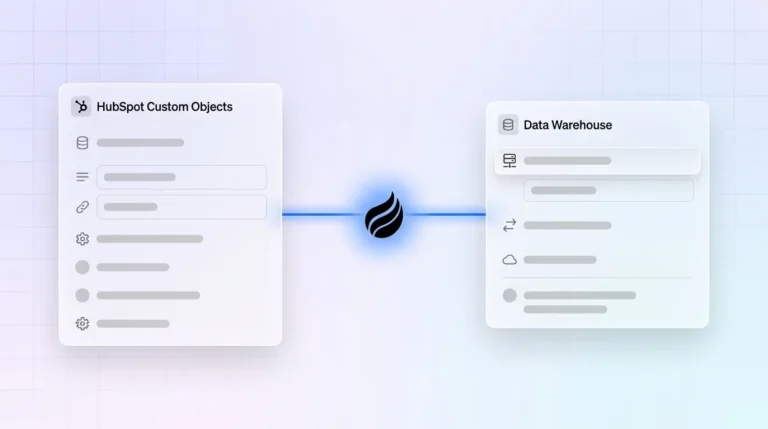
Legacy vendors are responding with agent features. Salesforce’s Agentforce has reported strong ARR growth. However, retrofitting a 25-year-old relational database for agentic AI faces the same architectural constraints described earlier. Legacy CRM APIs with rate limits designed for human workflows cause throttling failures when autonomous agents execute multi-step qualification processes. AI-first CRMs built on data warehouses, such as Coffee, avoid this constraint because the architecture supports machine-speed read and write access from the start.
Why an Agent-Led CRM Still Matters in 2026
Sales teams do not just need a CRM; they need one that works without constant human maintenance. 91% of businesses with 10 or more employees use a CRM, yet most are underutilizing it. Gartner studies estimated that 50–70% of CRM projects fail to meet expectations or deliver ROI, often due to poor executive decisions or implementation issues. The core issue lies in architecture, not in the idea of CRM itself.
Bad CRM data costs companies an average of 12% of annual revenue; for a $5M business, that equals $600,000 lost annually. Businesses implementing systematic contact enrichment achieve up to 66% higher conversion rates and 25% revenue lift compared to those with poor data quality. In 2026, an agent-led CRM has become the baseline requirement for a system of record that reflects reality.
Practical Decision Checklist for Coffee Deployment
Use the following criteria to identify the right Coffee deployment model for your team, moving from your current tools to your compliance needs.
- You are on spreadsheets or Notion and have outgrown manual tracking, so the Coffee standalone model replaces your entire workflow.
- You pay for Pipedrive or a similar manual CRM and reps are not logging activity, which makes the standalone model a way to remove that adoption barrier.
- You are on Salesforce with low adoption and dirty pipeline data, so the companion model cleans and enriches data inside your existing instance.
- You are on HubSpot and spending on ZoomInfo, Gong, or Salesloft separately, which makes the companion model a way to consolidate that stack.
- Your team is 1–20 people on Gmail and you want minimal setup overhead, so the standalone model with Google Workspace connection fits best.
- You need SOC 2 Type 2 compliance and GDPR-safe data handling, and both Coffee models meet that requirement.
Compare Coffee's deployment models and choose the option that fits your current stack.
Frequently Asked Questions
Review these common questions before your first conversation with the Coffee team.
How long does it take to implement Coffee?
Standalone implementation begins the moment you authenticate your Google Workspace or Microsoft 365 account. The Coffee agent immediately scans emails and calendars to auto-create contacts and companies, so the system fills with real data within hours. There is no lengthy onboarding, no required admin configuration, and no heavy training burden for reps.
The companion model for Salesforce or HubSpot requires a simple authentication step that allows the agent to read from and write back to your existing instance. Most teams go live within a single business day.
How difficult is it to migrate existing contact data into Coffee?
For teams moving to the standalone model, Coffee’s agent starts building a clean contact database from your live email and calendar history immediately after connection. Many teams skip a formal migration entirely. If you have an existing CRM export you want to preserve, Coffee supports standard CSV imports.
For the companion model, no migration is required. Coffee layers on top of your existing Salesforce or HubSpot data and begins enriching and correcting records in place instead of replacing them.
Is Coffee secure, and what compliance certifications does it hold?
Coffee is SOC 2 Type 2 and GDPR compliant, and your data is not used to train public AI models. For SMB sales teams handling prospect and customer contact data, Coffee meets the security baseline required by most enterprise procurement reviews without the multi-year audit process that heavily regulated industries face. If your organization has specific compliance questions, the Coffee team can share documentation directly.
How does the Coffee agent handle unstructured data like call transcripts and email threads?
Legacy CRMs store structured data such as fields, stages, and dates while discarding or ignoring unstructured content like email bodies or call transcripts. Coffee’s agent runs on a data warehouse architecture that ingests both structured and unstructured data and keeps historical context permanently.
When the agent joins a Zoom, Teams, or Google Meet call, it records and transcribes the conversation, then generates a structured summary, identifies next steps, and drafts a follow-up email. All of this writes back to the contact record automatically. The agent can format its notes according to BANT, MEDDIC, or SPICED frameworks so consistent qualification data enters the pipeline without rep effort.

Does Coffee integrate with the other tools my team already uses?
Coffee currently supports integrations with external tools through Zapier, and deeper native integrations are on the product roadmap. Within Coffee itself, the agent consolidates capabilities that most SMB sales teams currently buy as separate subscriptions. CRM, contact enrichment, website visitor identification, prospecting database, email sequencing, and meeting intelligence all live in one platform.
For teams on Salesforce or HubSpot, the companion model writes enriched data directly back to those systems and preserves existing workflows, including quotas, forecasting, and required fields.
Conclusion: Turning CRM from a Chore into an Always-On Agent
Manual data entry reflects an architecture problem, not a discipline problem. Legacy CRMs were built for a world where humans sat at the center of every workflow. In 2026, that assumption costs SMB sales teams hundreds of hours per year in lost selling time, produces pipelines that fail to match reality, and drives the adoption collapse that turns a paid CRM into an expensive spreadsheet.
Agent-led automation addresses the root cause by handling the data coming in so the team can trust the intelligence going out. Coffee delivers this through two deployment models: a standalone CRM for teams ready to replace their manual stack and a companion app for teams committed to Salesforce or HubSpot that need an agent to fix what the platform cannot fix on its own.
Both models use seat-based pricing without metered AI fees, meet SOC 2 Type 2 standards, and run on a data warehouse architecture built for machine-speed access from day one. Start a Coffee trial and put an agent to work on your pipeline.