Written by: Doug Camplejohn, CEO & Co-Founder, Coffee
Key Takeaways for Replacing LeadPost and Leadfeeder
- Legacy visitor identification tools like LeadPost and Leadfeeder usually reach only 5–20% realistic person-level match rates and push 8–12 hours of weekly manual data entry onto each rep.
- Coffee ranks #1 among 2026 alternatives by pairing AI-agent automation with bidirectional CRM sync, turning anonymous traffic into pipeline activity automatically.
- Modern AI platforms close integration gaps and remove workflow friction that slow traditional tools, delivering real-time alerts and unified data orchestration without extra clicks.
- Teams save time and reduce tool sprawl with Coffee’s unified platform, which scales across SMB and mid-market environments while preserving existing CRM investments.
- See the full impact of automated visitor-to-pipeline conversion with Coffee, and get started today.
Why Sales and RevOps Teams Are Replacing LeadPost and Leadfeeder
Three core limitations in legacy visitor identification platforms drive most replacement decisions. First, accuracy constraints limit impact. Realistic person-level match rates for B2B website visitor identification tools typically range from 5–20% of traffic, though some vendors claim 30–40% or higher. A large share of B2B traffic now comes from home or mobile networks, which further weakens IP-based identification.
Second, integration gaps create daily workflow friction. Traditional tools usually push data one way into CRMs without bidirectional sync, field-level mapping, or detailed activity logging. Sales teams then spend time enriching records and tracking engagement across disconnected systems.
Third, manual overhead erodes ROI. Sales representatives spend roughly 25% of their time on data entry instead of selling, while up to 98% of B2B website visitors leave without filling out a form. Legacy platforms surface visitors but still rely on humans to turn those insights into pipeline.

Modern alternatives close these gaps with AI-agent automation, real-time CRM sync, and unified workflow orchestration. Start your free Coffee trial to experience automated visitor-to-pipeline conversion that saves 8–12 hours per rep each week.
Top 10 Leadfeeder Alternatives 2026 Ranked by Named-Person Accuracy and Automation
This ranking compares ten platforms on named-person accuracy, CRM automation depth, and workflow integration quality. The goal is to highlight which tools actually solve the limitations above instead of repackaging the same constraints.
- Coffee – AI-agent platform delivering named-person identification with automated CRM sync and pipeline intelligence
- RB2B – Person-level LinkedIn identification for U.S. visitors using identity graph technology
- Warmly – AI-powered visitor engagement with automated outreach capabilities
- Leadpipe – Transparent credit-based pricing with person-level identification and unlimited seats
- 6sense – Enterprise ABM platform with predictive intent data and account orchestration
- ZoomInfo WebSights – Individual and company-level identification with intent signal detection
- Demandbase – Account-based marketing platform with visitor identification and attribution
- Salespanel – B2B visitor tracking with lead scoring and behavioral analytics
- Visitor Queue – Entry-level company identification with basic CRM integrations
- Dealfront (Leadfeeder) – GDPR-compliant company-level identification with a European focus
The table below compares pricing and technical capabilities across the top five platforms. Focus on how Coffee’s bidirectional sync and full automation differ from competitors that mainly offer basic CRM push or real-time alerts.
| Platform | Starting Price | Person-Level Accuracy | CRM Integration | Automation Level |
|---|---|---|---|---|
| Coffee | Contact for pricing | AI-agent enhanced | Bidirectional sync | Full workflow automation |
| RB2B | Begins at $79 per month, with Startup plan for 10,000 website visitors at $700 per month | U.S. LinkedIn matching | Basic CRM push | Real-time alerts |
| Warmly | $700/month | AI-enhanced identification | CRM integrations | Automated outreach |
| Leadpipe | $147/month | 30–40%+ U.S. traffic | 260+ integrations | Workflow automation |
| 6sense | $55,000/year | Account-level focus | Enterprise CRM sync | ABM orchestration |
RB2B vs Leadfeeder: Accuracy and Integration Trade-offs
RB2B and Leadfeeder follow different identification models, which creates clear trade-offs for sales teams. RB2B identifies individual website visitors by matching device signals, browser information, and email identifiers against third-party identity graphs, so it delivers person-level data mainly for U.S. traffic.
Leadfeeder uses a company-centric approach. Leadfeeder identifies companies rather than individuals by mapping IP addresses to organizations and enriching with firmographic and behavioral data. This approach supports GDPR compliance but sacrifices individual-level insight.

The accuracy gap between these models is meaningful. RB2B uses identity graph technology to match U.S. website visitors to individual LinkedIn profiles, while Leadfeeder’s IP-based method stops at company identification. Sales teams then need to research decision-makers inside those accounts.
Integration capabilities also diverge. RB2B pricing begins at $79 per month, with a Startup plan for 10,000 website visitors at $700 per month, while Leadfeeder offers a free Lite plan that identifies up to 100 companies per month. Neither platform, however, provides the kind of bidirectional CRM sync and automated workflow orchestration that modern sales teams now expect.
Best Leadfeeder Alternative for HubSpot Teams
HubSpot users choosing a Leadfeeder alternative should focus on tools with native or companion integrations that remove manual data transfer. HubSpot Breeze Intelligence uses credit-based pricing and requires an active HubSpot subscription, which can create platform lock-in.
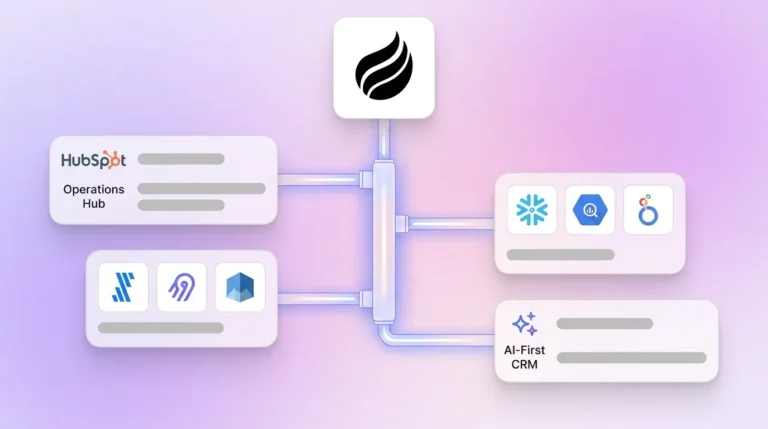
Coffee’s Companion App model solves this problem by deploying an AI agent on top of existing HubSpot instances. The agent manages bidirectional data sync, automated activity logging, and enrichment without forcing a platform migration.
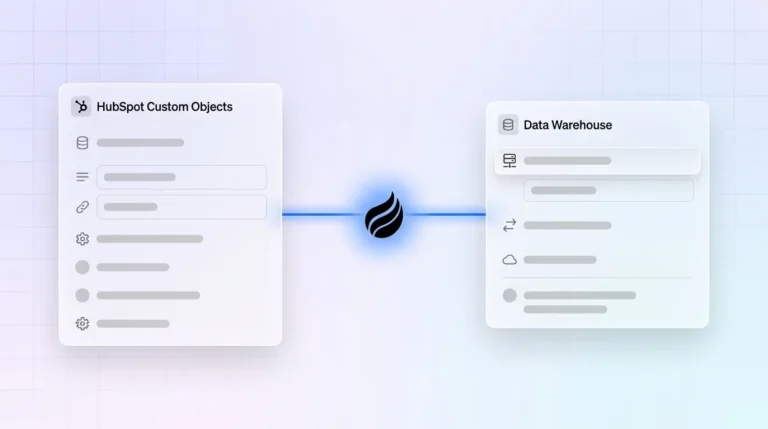
This approach delivers the automation benefits of an AI-first CRM while preserving current HubSpot investments and workflows. Bi-directional CRM sync with HubSpot prevents duplicate records and keeps pipeline data clean, which makes it a key evaluation factor. Coffee’s agent automatically creates contacts, logs activities, and updates deal stages based on visitor behavior and engagement.
Setup Effort, Data Quality, User Adoption, and Scalability Across Alternatives
Setup Effort: Implementation time varies widely across platforms and creates a trade-off between speed and enterprise complexity. Leadpipe setup requires about 2 minutes using a single JavaScript pixel, which sits at the fastest end of the spectrum.
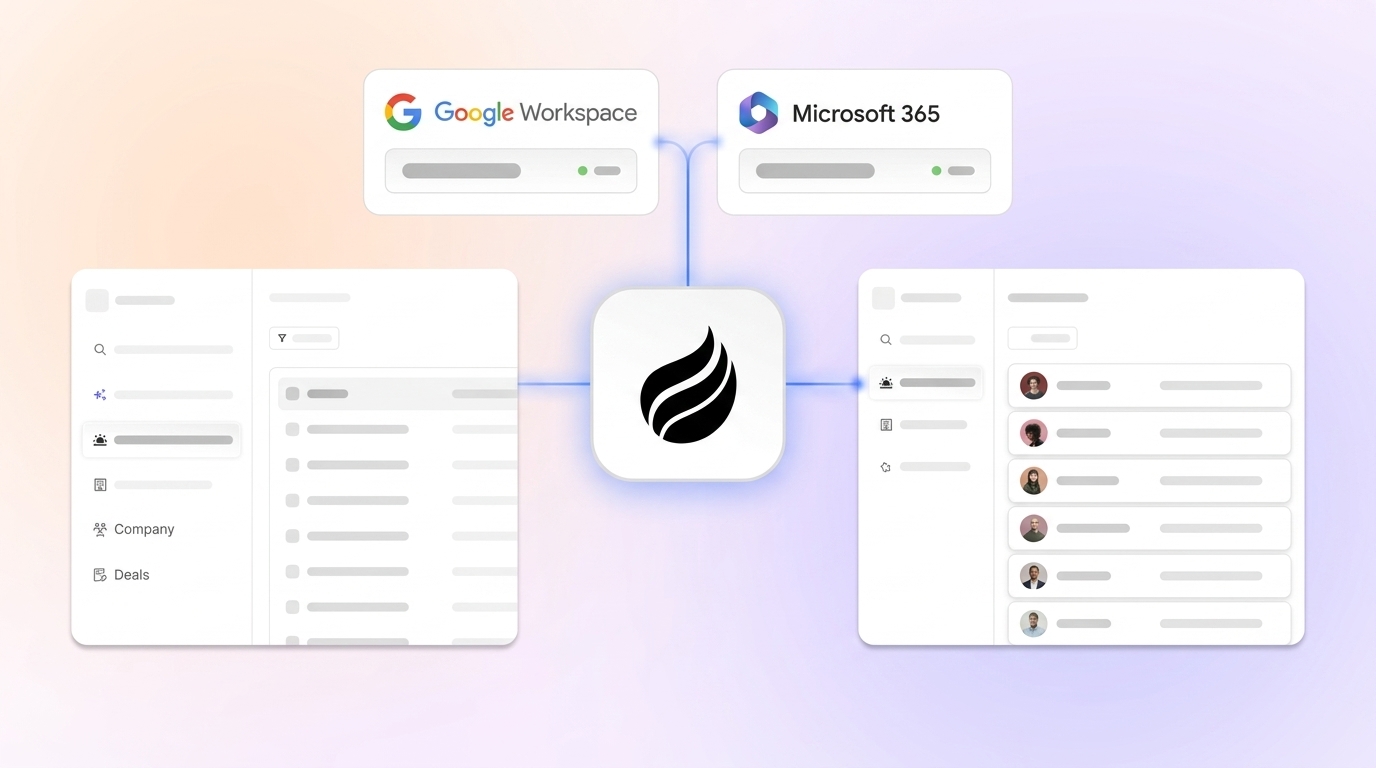
Enterprise platforms like 6sense usually need 1–3 months for implementation because of complex integrations and custom configuration. Coffee’s agent lands in the middle, deploying in days by connecting to Google Workspace or Microsoft 365 and starting automated data capture without custom development.
Data Quality: Match rate accuracy drives real value. Realistic person-level match rates for B2B website visitor identification tools typically range from 5–20% of traffic, and vendors claiming 40%+ person-level match rates often blur the line between company-level and person-level statistics. Coffee’s AI agent improves effective coverage through behavioral analysis and enrichment workflows.
User Adoption: Automation depth strongly influences adoption. A 10-person sales team using automated CRM data enrichment saves about 5 hours per rep each week, which encourages adoption through clear time savings. Coffee removes manual data entry, so reps gain the benefit without extra steps.
Scalability: Pricing structure shapes long-term viability. Teams often assemble multi-tool visitor ID workflows costing $500–2,000+ per month per SDR when they combine separate solutions. Coffee’s unified platform reduces this tool sprawl while still scaling with growth.
Best-Fit Guidance for SMBs, Mid-Market, and Enterprise Teams
Platform fit depends on team size, current tech stack, and automation needs. Early-stage SMBs with 1–20 employees benefit from Coffee’s Standalone AI-First CRM, which delivers full automation without legacy system baggage.
These smaller teams usually outgrow spreadsheets but find manual CRMs both expensive and time-consuming. Coffee gives them automation without a heavy admin burden.
Mid-market teams that already use Salesforce or HubSpot should look closely at Coffee’s Companion App model. This model preserves existing CRM investments while adding AI-agent automation for data entry, enrichment, and pipeline intelligence. By 2026, effective lead tools must deliver native CRM integrations and workflow automation to avoid data silos and low adoption.
Enterprise teams that need complex ABM orchestration may still choose platforms like 6sense or Demandbase. However, enterprise ABM platforms often carry annual contract prices of $60,000–$120,000 per year. Coffee offers enterprise-grade automation at mid-market pricing through its agent-first architecture.
Operational Considerations and Hidden Maintenance Costs
Ongoing maintenance, training, and integration work often exceed the initial platform fee. Legacy visitor identification tools demand manual data hygiene, frequent enrichment updates, and custom workflow development.
Companies that adopt automated data enrichment usually see stronger ROI than those that rely on manual processes, which highlights the real cost of ongoing maintenance. These savings compound as teams grow.
Change management adds another layer of cost, especially when automation replaces familiar tasks. Sales representatives typically spend 30–45 minutes manually researching a single prospect, and many view that time as part of their selling process.
When automated enrichment completes the same work in seconds, teams need training and executive support to trust the new workflow instead of double-checking everything by hand. That change effort should factor into any evaluation.
Data governance and compliance also increase complexity for global teams. Remote work has weakened match rates for IP-based tools, and GDPR plus CCPA regulations restrict person-level identification outside the U.S.
See how Coffee eliminates these maintenance costs through automated data governance and compliance management.
Risks and Limitations of Visitor-Identification Tools in 2026
Even advanced visitor identification platforms come with structural limits that sales teams need to recognize. Privacy regulations keep tightening data collection, especially for person-level identification in Europe.
B2B companies usually identify only a portion of their traffic with these tools, so gaps in visitor intelligence remain. Teams should plan strategy around these constraints instead of assuming full coverage.
Technical factors also reduce accuracy. Only 2–4% of visitors from standard B2B LinkedIn landing-page ad campaigns self-identify via forms, while native Lead Gen Forms reach 5–15% conversion. Cookie deprecation and browser privacy updates further limit identification.
Integration complexity can introduce new problems. Poor CRM sync creates duplicate records, data conflicts, and workflow confusion. Weak integration between lead generation platforms and CRMs creates data silos and hurts user adoption, so integration quality often matters more than raw feature count.
Decision Framework: Matching Tools to Team Size, Tech Stack, and ROI Goals
This framework helps teams evaluate visitor identification platforms against their own needs.
Team Size Considerations: Teams under 20 employees gain from unified platforms like Coffee that remove tool sprawl. Mid-market teams with 20–200 employees should focus on CRM integration depth, while enterprise teams may need advanced ABM features.
Tech Stack Integration: Review current CRM investments, data sources, and workflow requirements. Native integrations built by the vendor are usually more reliable than third-party connectors for data quality and workflow consistency.
ROI Measurement: Measure time savings, conversion lift, and total cost of ownership. A 10-person sales team using automated CRM data enrichment saves about 5 hours per rep weekly, adding 50 hours of selling capacity.
Accuracy Requirements: Decide whether company-level or person-level identification better fits your sales motion. Person-level identification attempts to name specific individuals using cookies, device fingerprints, or identity graphs, while company-level methods focus on firmographic data.
Coffee Case Study: 8–12 Hours Saved Weekly Through Automated Visitor-to-Pipeline Conversion
A fast-growing company generating tens of millions in revenue managed sales in spreadsheets before adopting Coffee’s AI agent. The team had rejected Salesforce and HubSpot because of heavy manual data entry and wanted a system that could scale without extra admin work.
Coffee’s agent began automated data capture from Google Workspace as soon as it connected. It created contacts and companies from email threads and calendar meetings, then kept those records updated.

The Pipeline Compare feature automated weekly pipeline reviews and removed the need for manual CSV exports and spreadsheet maintenance. Reps gained back the 8–12 hours of weekly admin time mentioned earlier through automated data entry and real-time pipeline intelligence.
API access supported custom briefings and deeper integrations, so the agent felt like an extension of the team instead of another tool to manage. This case study shows how Coffee delivers enterprise-grade automation for growing companies without the cost and complexity of traditional CRM rollouts.
Frequently Asked Questions
How long does Coffee implementation take compared to legacy visitor identification tools?
Coffee usually deploys in a few days through simple authentication with Google Workspace or Microsoft 365. The AI agent then starts automated data capture, contact creation, and activity logging without complex setup or long training cycles. Many enterprise platforms still require 1–3 months of implementation and heavy configuration.
What is involved in migrating from Leadfeeder or LeadPost to Coffee?
Migration starts by connecting Coffee’s agent to your existing email and calendar systems. The agent then begins identifying visitors and enriching contact data automatically. You can import historical visitor data, and the agent will enhance those records with behavioral insights and engagement tracking while preserving existing CRM data.
What security and compliance certifications does Coffee maintain?
Coffee is SOC 2 Type 2 and GDPR compliant, which provides enterprise-grade security for customer data. The platform does not use customer data to train public AI models, and all processing follows best practices for encryption, access controls, and audit logging.
How do I evaluate whether Coffee fits my traffic volume and CRM requirements?
Coffee’s agent-based architecture scales across traffic volumes without strict per-visitor pricing limits. The platform supports both standalone CRM and companion app models, so it can match your current tech stack. Evaluation should focus on automation depth, CRM integration needs, and team size rather than raw traffic volume.
What makes Coffee’s visitor identification more accurate than traditional tools?
Coffee combines visitor identification with behavioral analysis, email integration, and AI-powered enrichment to build richer prospect profiles than IP-based tools alone. The agent keeps contact records current with interaction data, meeting notes, and engagement patterns, which adds context beyond basic visitor logs.
Conclusion: Choosing the Right LeadPost and Leadfeeder Alternative in 2026
Coffee ranks #1 among LeadPost and Leadfeeder alternatives based on named-person accuracy, automated CRM integration, and workflow orchestration. Legacy platforms operate within the 5–20% match-rate baseline discussed earlier and still depend on manual data entry.
Coffee’s AI agent unifies visitor tracking, enrichment, and pipeline intelligence to deliver the 8–12 hours of weekly time savings per rep referenced above. The evaluation criteria of accuracy, automation, integration depth, pricing transparency, scalability, and total cost of ownership consistently favor this agent-first approach.
Teams that want to remove manual data entry while improving lead quality should prioritize platforms with bidirectional CRM sync and strong automation. Transform your anonymous traffic into pipeline opportunities by exploring Coffee’s pricing and plans.