Written by: Doug Camplejohn, CEO & Co-Founder, Coffee
Key Takeaways for Technographic Outbound
- Technographic data lifts outbound reply rates to 15–25%, a 5x improvement over traditional firmographic targeting at 3–5%.
- Unlike static firmographics, technographics reveal real-time tech stacks for hyper-personalized outreach and stronger MQL-to-SQL conversions.
- Use the 5-step playbook: collect data, build lists, identify gaps, personalize messages, and automate execution to grow pipeline.
- Coffee’s Agent automates technographic enrichment from emails and calendars, which removes manual data entry and reduces tool sprawl.
- Implement this 2026 playbook with Coffee’s pricing plans to achieve higher response rates and scale outbound success.
Why Technographics Matter for Outbound in 2026
SMB and mid-market RevOps teams win more deals when they personalize beyond basic firmographics. Static firmographic-only targeting underperforms because it cannot detect real-time account changes like tool switches or aggressive hiring. This limitation hides buying signals that should guide your outbound efforts.
Teams that rely on disconnected tools such as ZoomInfo plus Apollo often create expensive sprawl with little integration between data sources. As a result, reps spend more time reconciling systems than talking to prospects. Organizations replacing static MQL scoring with intent-driven, signal-based qualification report 30–40% improvements in MQL-to-SQL conversion rates. AI forecasting then turns these richer signals into practical guidance for outbound, but only when the underlying data is accurate and current.
These trends make technographic data a core input for modern outbound. Once you understand why it matters, the next step is to define what technographic data includes and how it changes your targeting.
What Technographic Data Covers in Outbound Campaigns
Technographic data captures the technology stack, software versions, and adoption patterns within target accounts. Firmographics describe company characteristics such as size, industry, and revenue. Technographics instead reveal the specific tools and systems prospects use every day.
Effective outbound examples include targeting “Salesforce users without Gong” for conversation intelligence upsells, or “HubSpot users under 50 employees” for SMB-focused solutions. These precise filters support relevant messaging that speaks to real workflows and pain points. The performance gap between firmographic and technographic targeting becomes clear when you compare how each shapes your audience.
| Attribute | Firmographic Example | Technographic Example |
|---|---|---|
| Company Size | 50–200 employees | Salesforce plus 5 sales tools |
Firmographics tell you who to contact at a high level. Technographics tell you what those contacts already use, which unlocks specific, credible offers and sharper segmentation.
Readiness Check: What You Need Before Technographic Outbound
Before implementing the technographic outbound playbook described below, confirm that your team has a basic foundation in place. Teams need Google Workspace or Microsoft 365 access, clearly defined buyer personas, and a functioning CRM. Coffee’s Agent completes setup in about one hour and then enriches contacts automatically from existing email and calendar data.
This readiness step prevents stalled projects. With core systems connected and personas aligned, you can move into the playbook and see results faster.
The 5-Step Technographic Outbound Playbook
1. Collect Technographics from Reliable Sources
Strong technographic outbound starts with accurate data collection. Multiple methods support this work. Web crawling tracks frontend technologies, job posting analysis reveals backend tools, and intent signals capture research behavior that indicates upcoming purchases.
When you evaluate technographic providers, compare their coverage, refresh rates, and cost structures. These factors determine how complete and current your view of each account will be.
| Provider | Coverage | Refresh Rate | Starting Cost |
|---|---|---|---|
| Apollo | 230M+ verified contacts | Apollo provides real-time data refresh through continuous data collection and verification from multiple sources | Varies by plan |
| ZoomInfo | Extensive technographic coverage | ZoomInfo updates its data daily | $15,000/year |
| Coffee | Auto-enriched | Continuous | Seat-based |
Coffee differentiates by enriching technographic data directly from emails, calendars, and partner integrations. This approach reduces stale list problems that often affect traditional static providers.
Once you have a dependable technographic data source, you can turn that raw information into targeted prospect lists.
2. Build Targeted Lists with Technographic Filters
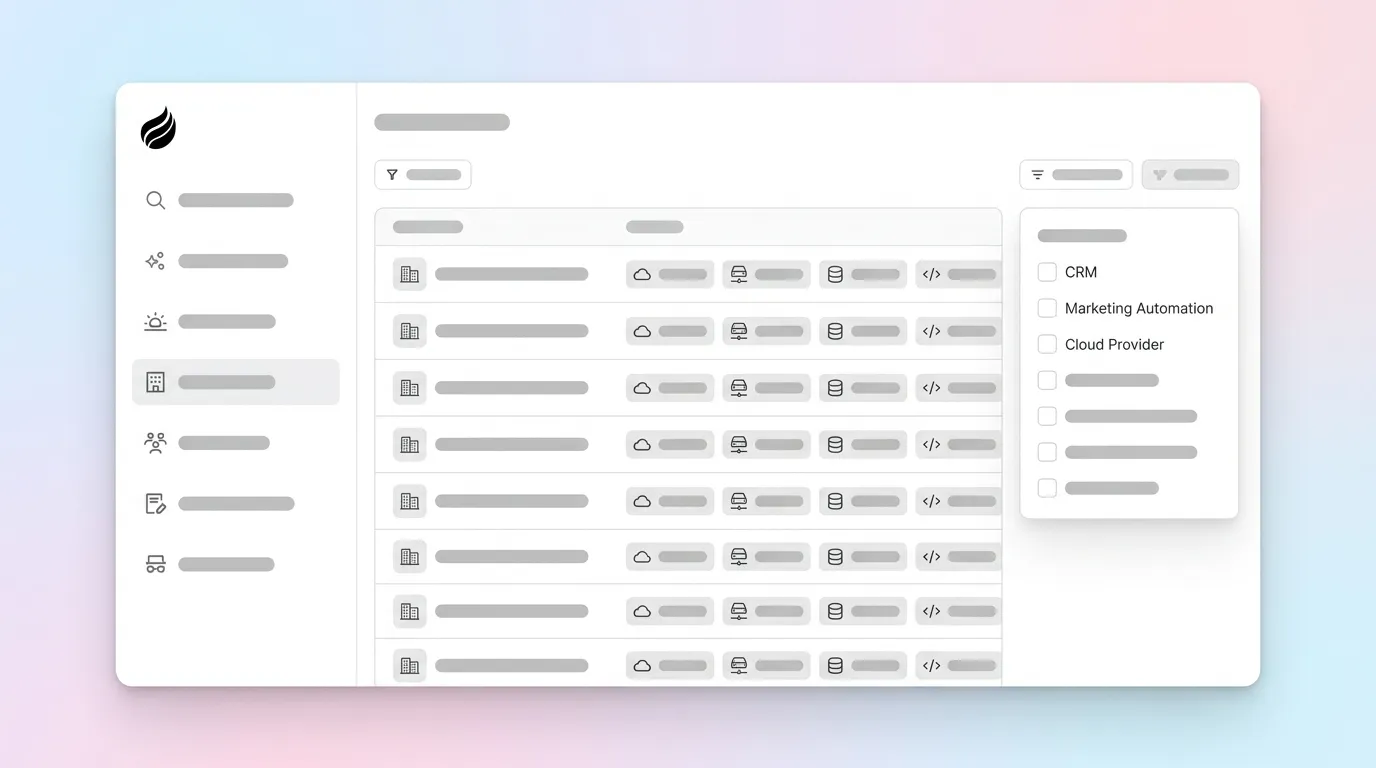
Targeted lists convert technographic data into focused outreach. Coffee’s List Builder accepts natural language queries such as “VPs of Sales in North America at $10M+ funding companies using Salesforce.” The Agent then returns enriched LinkedIn profiles and verified email addresses.

This workflow compresses list creation from hours to minutes. Reps spend less time searching for contacts and more time engaging qualified prospects who match both firmographic and technographic criteria.

3. Identify Technology Gaps and Buying Triggers
Technology mismatches create clear outbound opportunities. For example, companies using Pipedrive may need agent-driven CRM upgrades, and 2026 AI shifts create natural conversation starters around modernization. These gaps signal where your product can replace or extend existing tools.
Rather than manually analyzing each prospect’s stack, Coffee’s Pipeline Compare feature surfaces these gaps automatically. The tool highlights accounts with outdated tools, missing integrations, or overlapping subscriptions that your solution can address.
4. Personalize Outreach with Stack-Aware Messaging
Personalized outreach converts technographic insight into replies. Reference specific technology stacks in your messaging so prospects see that you understand their environment. Templates like “Noticed you use HubSpot, and Coffee automates the data entry that usually slows down sales teams” outperform generic approaches.
Coffee’s Agent drafts personalized messages based on detected technology patterns. Reps can then review, adjust tone, and send at scale while keeping each email relevant to the recipient’s tools.

5. Execute and Automate Technographic Campaigns
Consistent execution turns one-off wins into a repeatable outbound engine. Coffee’s Visitor ID feature identifies website visitors, suggests qualified leads based on technographic fit, and triggers automated drip campaigns. These flows connect anonymous traffic to named accounts with clear stack context.
This setup creates a continuous loop from first visit to qualified pipeline with minimal manual intervention. Reps focus on live conversations while the system handles detection, routing, and follow-up.
Metrics and Validation for Technographic Outbound
Teams that adopt technographic outbound reclaim hours each week per rep from manual research and list building. At the same time, they achieve the 2–3x response rate improvements described earlier when compared with generic prospecting. These gains come from better targeting and more relevant messaging.
To maintain these improvements over time, Coffee’s Pipeline Compare tracks week-over-week progress and adoption. Leaders see which segments respond, which reps follow the playbook, and where to adjust messaging. This systematic approach has helped technology firms move away from spreadsheet-based sales management after implementing AI sales agents.
Scaling Technographic Outbound for SMB and Mid-Market Teams
SMB teams often benefit from Coffee’s Standalone CRM, which delivers complete automation in a single system. Mid-market organizations usually prefer the Companion App that runs on existing Salesforce or HubSpot instances. This option keeps current workflows intact while adding technographic intelligence and AI assistance.
Advanced implementations layer on ABM persona targeting and Zapier integrations for custom workflows. These setups support multi-channel plays, routing rules, and reporting tailored to each go-to-market motion. Explore Coffee’s SMB and mid-market solutions to match your team’s infrastructure.
Conclusion: Put the 2026 Technographic Playbook into Action
The five-step technographic outbound playbook of collect, build, identify, personalize, and execute improves reply rates when supported by reliable data automation. Coffee’s Agent strengthens data input, which leads to more accurate targeting and better outbound results without extra tool complexity.
FAQ: Technographic Data Outbound Essentials
What are the best technographic data providers in 2026?
Leading providers include Coffee’s Agent for automated enrichment, Apollo for SMB workflows, ZoomInfo for enterprise coverage, and BuiltWith for web technology tracking. Coffee focuses on agent-driven automation that removes manual list building and keeps data fresh through continuous enrichment from email and calendar sources.
How does technographic data differ from firmographic data for outbound?
Firmographic data describes company characteristics such as size, industry, and revenue. Technographic data reveals specific technology usage, software versions, and stack configurations. Technographic targeting supports much higher reply rates because messaging references tools prospects already use, which creates immediate relevance and natural conversation starters that firmographics alone cannot provide.
What are the most effective technographic data collection methods?
Web crawling tracks frontend technologies through pixels and meta tags. Job posting analysis reveals backend tool requirements and upcoming projects. Intent signals capture research behavior that points to future purchases. As detailed in the collection methods above, Coffee’s Agent handles ongoing technographic enrichment through your existing email and calendar systems, so teams avoid separate data providers and manual research workflows.
What technographic signals generate the highest outbound response rates?
Technology stack changes, new tool adoptions, and competitor software switches create the strongest outbound triggers. Companies that recently install Salesforce often need integration partners, while HubSpot users under 50 employees frequently require automation solutions. Coffee’s Agent identifies these patterns automatically and suggests personalized messaging angles that match each trigger.
How can teams implement technographic outbound without increasing tool complexity?
Integrated platforms such as Coffee remove the need for separate enrichment, list building, and outreach tools. The Agent manages data collection, gap identification, and personalization inside a single interface. This approach lowers costs compared with tool sprawl, maintains data quality, and enables sophisticated technographic targeting for SMB and mid-market teams.