Written by: Doug Camplejohn, CEO & Co-Founder, Coffee
Key Takeaways
- 71% of sales reps waste time on data entry; Coffee automates this work and frees 8 to 12 hours weekly per rep for selling.
- Coffee leads as the top agentic AI CRM with automatic data entry, visitor identification, AI meeting summaries, and pipeline intelligence.
- Competitors like Apollo, Seamless.AI, Gong, and HubSpot AI lack full autonomy and still depend on manual work or extra integrations.
- Coffee’s pixel converts anonymous traffic to named prospects with contact recommendations, closing the gap between marketing and sales.
- Implement Coffee’s autonomous lead management today and explore pricing and deployment options to reach 97.4% pipeline accuracy and rapid ROI.
Key Features Comparison Matrix
The table below shows how Coffee’s agentic architecture delivers capabilities that competitors either lack or only support through manual effort. Focus on the combination of visitor identification with suggested leads and fully autonomous data entry, which only Coffee provides in a single platform.

| Feature | Coffee | Apollo | Seamless.AI | Gong | HubSpot AI |
|---|---|---|---|---|---|
| Auto Data Entry/Enrich | ✅ Agent | ✅ | ✅ | ❌ | ❌ Manual |
| Visitor ID w/ Suggested Leads | ✅ Pixel | ❌ | ❌ | ❌ | ❌ |
| AI Meeting Summaries/Follow-up | ✅ BANT | ❌ | ❌ | ✅ | ❌ |
| Pipeline Intel/NL Lists | ✅ Compare | ✅ | ❌ | ✅ | ✅ |
Coffee’s agentic approach replaces separate manual ZoomInfo subscriptions by enriching leads through integrated data partners. At the same time, its visitor identification converts anonymous traffic into named prospects with suggested contacts, so reps always know who to reach out to next.
1. Coffee: Best Overall AI Agent for B2B Teams
Best for: SMB to mid-market B2B teams (1 to 100 reps) that want autonomous lead management
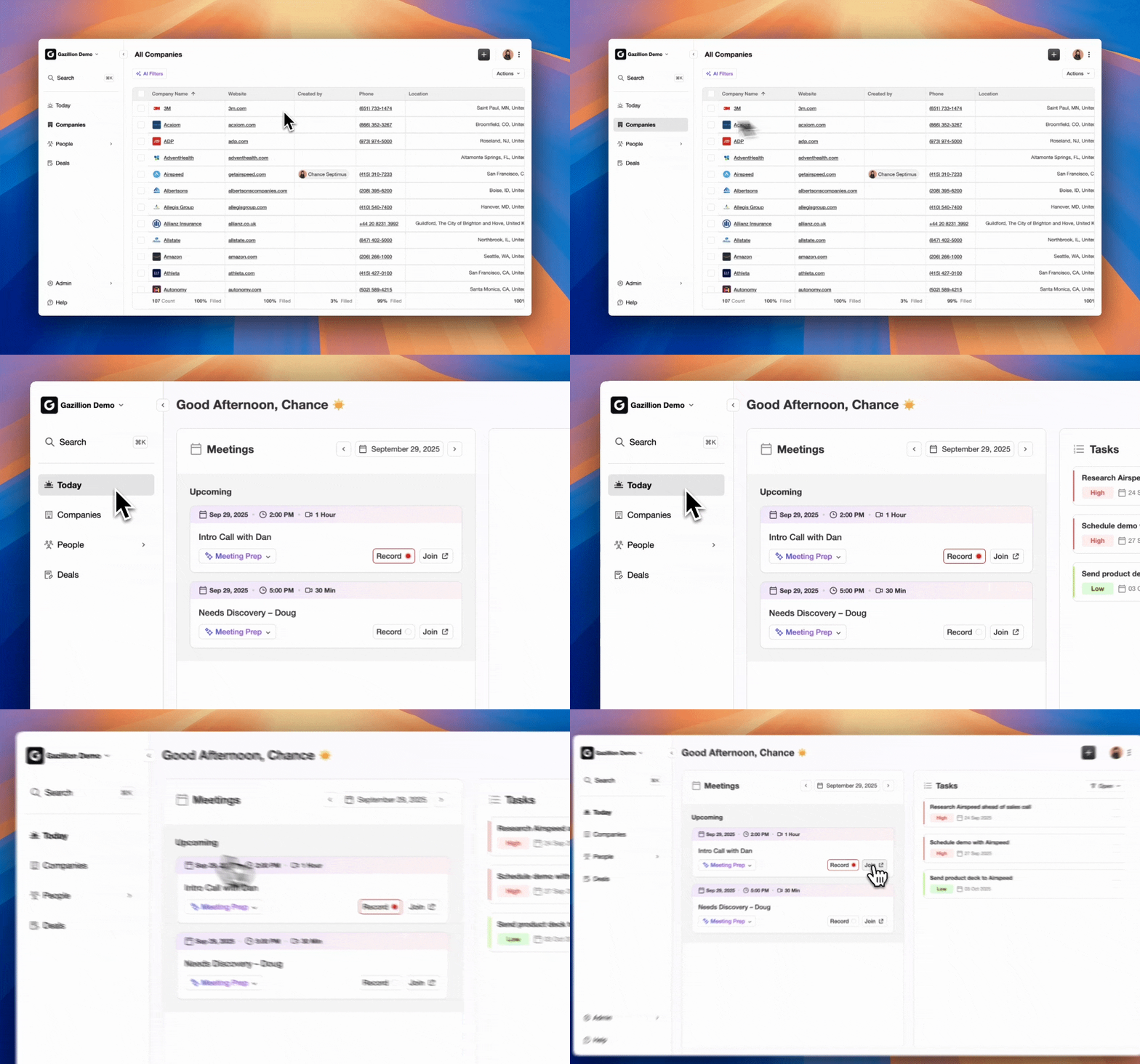
Coffee operates as a true agentic AI CRM that behaves like an autonomous teammate instead of passive software. The platform captures and enriches contacts from Google Workspace, logs every interaction, and surfaces pipeline intelligence without human data entry.
Key Features:
- Automatic data entry from emails and calendars
- AI meeting bot with BANT and MEDDIC summaries
- Pipeline Compare for week-over-week analysis
- Visitor identification with suggested leads
- Natural language list building
Coffee’s visitor identification feature converts anonymous website traffic into named prospects and includes specific contact recommendations based on buyer personas. By delivering contact-level intelligence instead of only company names, this capability closes the gap between marketing traffic and sales-ready leads, so marketing sees who visited and sales knows exactly whom to contact.

Pricing: Seat-based pricing with unlimited agent labor included
Integrations: Native Google Workspace and Microsoft 365, Salesforce and HubSpot companion mode, plus Zapier for additional tools
Coffee supports companies that move from spreadsheets to a scalable CRM by automating data capture and enrichment. These deployments show real-world ROI at enterprise scale and prove that autonomous data management can replace manual CRM upkeep.

2. Apollo: Best for High-Volume Outreach
Best for: Sales teams focused on prospecting and email sequences
Apollo provides access to over 230 million verified contacts with validated email addresses and connects natively with Salesforce and HubSpot. Teams use it to build prospect lists and manage outbound campaigns at scale.
Limitations: Apollo does not include visitor identification or autonomous data entry, so teams still handle CRM updates and lead routing manually.
3. Seamless.AI: Best for Contact Data Discovery
Best for: Teams that need broad contact database coverage
Seamless.AI specializes in contact discovery and email finding across many industries. Users still update CRM records by hand, and the platform does not provide the autonomous behavior found in agentic AI systems like Coffee.
4. Gong: Best for Conversation Intelligence and Coaching
Best for: Enterprise sales teams with complex deal cycles
Gong analyzes sales conversations and delivers coaching insights that help reps improve calls and demos. It does not manage data entry or lead enrichment, so teams rely on other tools and integrations for complete lead management.
5. HubSpot AI: Best Enhancement for Existing HubSpot CRMs
Best for: Existing HubSpot users who want AI features
HubSpot’s Breeze AI includes automated data enrichment and cleaning but still depends on significant manual input compared with autonomous agents like Coffee. Teams gain helpful assistance yet continue to spend time on data entry and maintenance.
After reviewing these tools, the next step is to look closely at how Coffee’s architecture differs from legacy CRMs and why that difference matters for long-term data quality.
Coffee vs. Legacy CRMs: The Agentic Advantage
Coffee’s agent architecture addresses the core “bad data in, bad data out” problem that affects traditional CRMs. Salesforce and HubSpot need constant human maintenance, while Coffee’s agent captures, enriches, and analyzes data automatically. The following metrics quantify this difference across the three dimensions that most affect sales team productivity.
| Metric | Coffee | Salesforce/HubSpot |
|---|---|---|
| Data Entry | Agent (0 human time) | Manual (requires rep data entry) |
| Pipeline Accuracy | 97.4% | Varies |
| Architecture | Unified Agent | Fragmented Tools |
Organizations that adopt AI-powered pipeline management often see higher revenue growth, and Coffee’s agentic design delivers the highest level of automation in this group. These architectural advantages only matter when teams can put them into practice, so the next section explains how different organizations can roll out Coffee effectively.
Implementation Paths and ROI Benchmarks for Coffee
Standalone Implementation: This model works best for 1 to 20 rep teams moving from spreadsheets. Coffee connects to Google Workspace and starts automatic data capture within days, which makes it the fastest route to CRM adoption for teams without existing infrastructure.
Companion Mode: Mid-market teams already using Salesforce or HubSpot can deploy Coffee alongside these platforms instead of replacing them. The agent handles data quality while current workflows stay intact, so teams gain autonomous capabilities without migration risk.
Both deployment models deliver rapid ROI through immediate data automation. Coffee’s autonomous approach removes the long configuration and training periods that often delay value in traditional CRM projects.
View Coffee’s implementation plans to add agentic AI lead management to your sales process and choose the rollout path that fits your team.
Decision Framework for Choosing Coffee and Other Tools
Teams facing low CRM adoption, poor data quality, or heavy manual work should prioritize agentic AI platforms such as Coffee. These teams benefit most from automatic capture, enrichment, and pipeline analysis because they currently lose time and accuracy to manual updates.
Traditional tools remain useful for narrower needs, such as pure outreach databases, call coaching, or basic CRM record keeping. In these cases, teams may accept manual data work in exchange for specific features or lower complexity.
Key success metrics include better lead scoring accuracy and a 14% relative increase (87% vs. 76%) in lead qualification accuracy from AI versus human when teams implement autonomous lead qualification systems. Leaders can use these benchmarks to compare current performance with expected gains from Coffee.
Conclusion: Why Coffee Leads the AI Lead Management Market
Coffee stands as a clear leader in AI lead management for B2B sales teams because it delivers a truly agentic solution that removes manual data entry and adds deep pipeline intelligence. Its visitor identification and autonomous enrichment capabilities show how sales technology is shifting from static databases to active systems that manage work for reps.
Teams that want to move from passive CRMs to active AI agents can treat Coffee as a central system for modern B2B sales operations. See how Coffee fits your team size and budget to evaluate pricing, deployment options, and the level of automation available for your pipeline.
Frequently Asked Questions
What makes Coffee different from traditional CRM software?
Coffee functions as an autonomous agent that actively manages your sales data instead of a passive database that needs manual input. The platform captures contacts from emails and calendars, enriches records with relevant data, logs interactions, and provides pipeline intelligence without human intervention. This approach removes the data entry burden described earlier and lets reps focus fully on selling activities.

How does visitor identification work in Coffee’s lead management system?
Coffee’s visitor identification uses a tracking pixel to recognize anonymous website visitors and convert them into named prospects. Unlike tools that only show company-level data, Coffee analyzes visitor behavior and recommends specific individuals within visiting companies who match your buyer persona. The system surfaces LinkedIn profiles, contact information, and suggested outreach strategies, which creates a direct path from website traffic to sales-ready leads.
Can Coffee integrate with existing Salesforce or HubSpot installations?
Yes, Coffee offers a Companion App mode that works alongside existing Salesforce or HubSpot instances. In this setup, Coffee’s agent manages data capture, enrichment, and intelligence while syncing information back to your primary CRM. Teams keep their current workflows and investments and still gain the benefits of autonomous data management and pipeline insights.
What ROI can teams expect from implementing Coffee’s AI lead management?
Teams usually see immediate productivity gains of 8 to 12 hours per week per sales rep through automated data entry and enrichment. Coffee’s autonomous approach cuts administrative work, delivers the pipeline accuracy detailed in the comparison above, and improves lead quality. Many companies report strong ROI within the first year, with meaningful incremental revenue driven by better sales efficiency and cleaner data.
How does Coffee ensure data security and compliance?
Coffee maintains SOC 2 Type 2 certification and GDPR compliance for all data processing activities. The platform uses enterprise-grade security controls and does not use customer data to train public AI models. All visitor identification operates under legitimate business interest provisions and processes only business-level data without personal tracking cookies, which keeps lead generation effective while meeting privacy regulations.