Written by: Doug Camplejohn, CEO & Co-Founder, Coffee
Key Takeaways
- Web analytics tools such as Google Analytics 4 track aggregate anonymous behavior, while visitor identification reveals the companies and people behind B2B traffic.
- Roughly 70–80% of B2B buyers complete most of their journey before talking to sales, so identifying direct and unattributed traffic enables earlier engagement.
- Visitor identification platforms in regions like Benelux and DACH can identify a meaningful share of B2B traffic, which supports automated CRM enrichment and sales outreach instead of manual analytics workflows.
- Coffee’s AI agent connects analytics and visitor identification through a single pixel, then adds persona scoring, Slack alerts, and real-time lead creation in Salesforce or HubSpot.
- Coffee turns anonymous traffic into measurable pipeline growth with a compliant, high-ROI setup — explore Coffee pricing and plans.
How This Comparison Helps B2B Teams
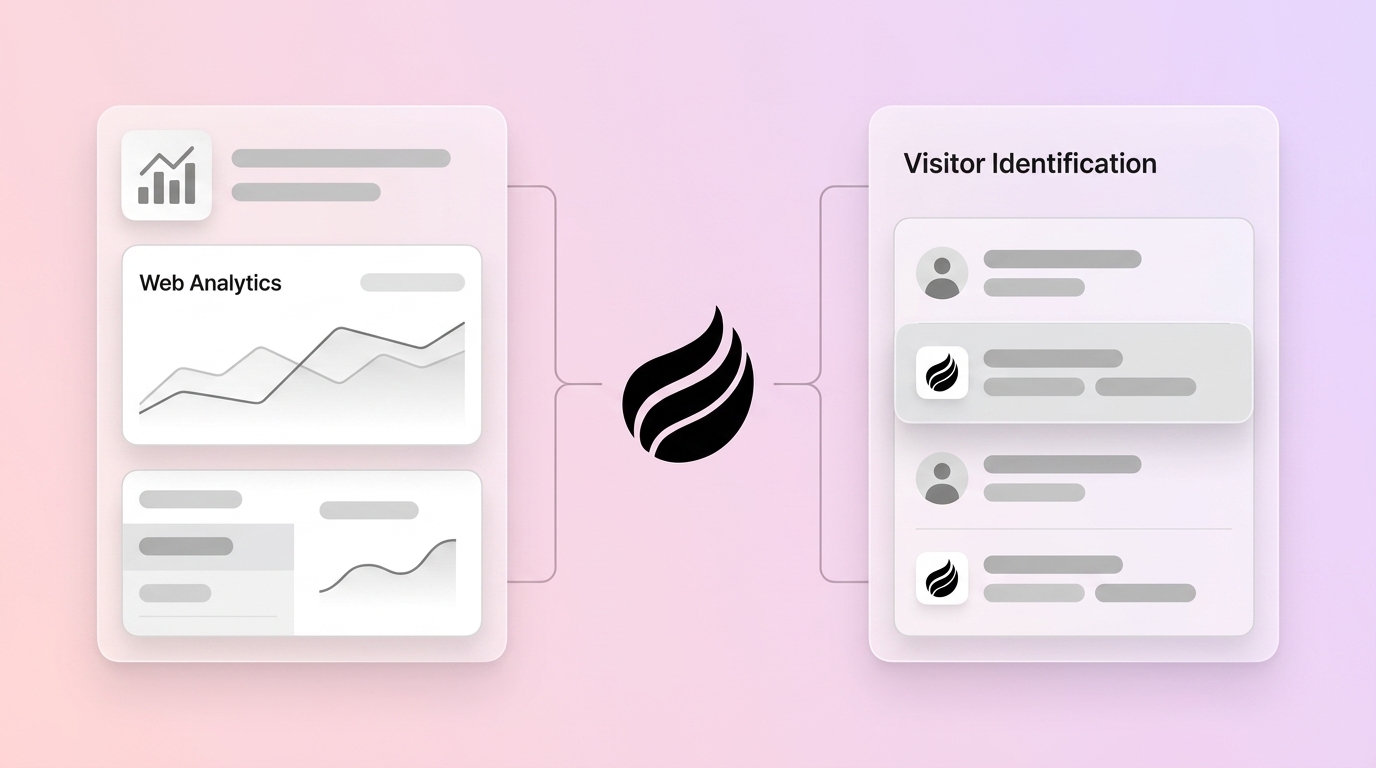
Web analytics platforms such as Google Analytics 4 and Hotjar capture aggregate behavioral data like page views, session duration, and bounce rates, without identifying individual visitors. Visitor identification tools reveal the companies and people behind website traffic using IP address mapping and digital fingerprinting. This distinction matters for B2B teams because direct traffic accounts for a substantial portion of visits to major B2B platforms like Gong and HubSpot, representing massive anonymous audiences that traditional analytics cannot convert into sales opportunities. Understanding these fundamental differences requires examining how each approach handles data, privacy, and business outcomes.

Visitor Identification vs Web Analytics: Key Differences
The following table highlights six core areas where web analytics and visitor identification diverge, so you can see how each supports different goals in a B2B marketing and sales stack.
| Feature | Web Analytics | Visitor Identification |
|---|---|---|
| Data Type | Aggregate, anonymized behavioral data | In regions like Benelux and DACH, leading visitor identification platforms can reliably identify a significant share of B2B website traffic as named companies |
| Primary Use Case | Website performance analysis and conversion improvements | Lead generation and targeted sales outreach |
| Tools | Google Analytics 4, Hotjar, Adobe Analytics | Coffee, RB2B, Warmly, Lead Forensics |
| Privacy Approach | Cookie-based tracking with consent requirements | IP-based company identification under legitimate interest |
| CRM Integration | Manual export and import processes | Automated lead enrichment and pipeline creation |
| ROI Measurement | Conversion rate and funnel performance | Measured pipeline growth from more precise targeting |
The core difference lies in actionability. Google Analytics 4 provides aggregate behavioral analytics but deliberately anonymizes visitor identities, while visitor identification tools convert anonymous traffic into named prospects for immediate outreach. Coffee combines both approaches and adds automation, as its AI agent enriches identified visitors with persona-fit scoring and pushes qualified records into your CRM. See how Coffee’s combined analytics and identification approach works in practice.
Google Analytics vs Visitor Identification in B2B
Roughly 98% of website visitors leave without submitting contact information, which creates a major blind spot for B2B sales teams that rely only on Google Analytics 4. Traditional web analytics excel at measuring aggregate website performance but cannot reveal the decision-makers behind high-intent behaviors such as repeated pricing page visits or case study downloads.
Limits of Traditional Analytics Tools
Google Analytics 4 and similar platforms face structural limits in B2B environments. Standard person-based analytics cannot answer key B2B questions such as “Which accounts are most engaged?” or “How complete are our buying groups?” because they focus on individual sessions instead of account-level intelligence. As a result, marketing and sales teams struggle to connect on-site behavior with specific accounts and buying committees.
What Standalone Visitor Identification Delivers
Standalone tools such as RB2B and Warmly identify visiting companies but offer limited individual-level insight. These platforms typically show company names and basic firmographics, yet they rarely indicate which specific contacts to pursue or handle follow-up workflows. Teams still need to research prospects, build lists, and push data into their CRM by hand.
How Integrated Solutions Change the Workflow
Coffee’s AI agent represents the next evolution by combining visitor identification with automated lead scoring and CRM integration. The platform identifies individual visitors, suggests persona-fit prospects within visiting companies, and enriches leads with contact details and behavioral context. Sales teams then receive immediate alerts through Slack or see new records appear directly in their CRM, which shortens response times and supports timely outreach.

How Visitor Identification Feeds Your CRM
Modern visitor identification platforms extend traditional analytics with a layer of AI-driven lead intelligence. Coffee’s approach uses a single tracking pixel in your website’s head tag, which starts identifying visitors and enriching their profiles with job titles, company information, and behavioral signals as soon as it is live.
The Coffee agent operates with SOC 2 Type 2 and GDPR compliance, which protects data while still supporting effective lead generation. This security foundation enables real-time Slack notifications that surface high-intent visitors as they arrive. Those notifications then connect to automated CRM workflows that populate Salesforce or HubSpot with enriched lead records, remove manual data entry, and help your team follow up while interest remains high. Connect Coffee to your CRM and Slack to automate this loop.
When to Use Each Approach and How ROI Shows Up
Web analytics provide the baseline for understanding website performance and user behavior patterns, while visitor identification tools specialize in turning anonymous traffic into sales-ready opportunities. 6sense’s 2025 Buyer Experience Report found that 80% of B2B deals are won by the vendor the buyer favored before first contact, which underscores the value of early identification and engagement.
Coffee’s integrated approach delivers measurable ROI through automated lead generation and persona-based prospect suggestions. The AI agent analyzes visitor behavior and company fit, then recommends the most promising contacts within visiting organizations. Teams can use those recommendations for targeted LinkedIn outreach and personalized email campaigns that build on clear buying signals.

Risks, Limitations and Privacy Considerations
Traditional web analytics face a “dark funnel” challenge, where 100% of traffic from Slack, Discord, and WhatsApp is misattributed as direct traffic. Visitor identification tools can reach different accuracy levels for B2B traffic, while 2026 privacy regulations in Indiana, Kentucky, and Rhode Island require opt-in consent for sensitive data processing. Teams must balance insight depth with evolving legal requirements.
Coffee addresses these constraints through company-level identification under legitimate interest provisions, which avoids personal data collection while still supporting effective lead generation. This approach helps maintain compliance across regions without sacrificing the quality of sales intelligence.
Decision Framework for Choosing Your Stack
Use web analytics when you need baseline website performance measurement and conversion analysis. Choose visitor identification when your priority is converting anonymous traffic into named leads for sales outreach. Coffee’s integrated solution fits teams that want both capabilities, combining visitor intelligence with automated CRM workflows. The Standalone CRM option suits teams with fewer than 20 employees, while the Companion App enhances existing Salesforce or HubSpot setups.
Frequently Asked Questions
Can websites identify visitors?
Modern visitor identification tools can identify a meaningful portion of B2B website traffic. Coffee’s pixel technology identifies and names individual visitors from companies at a rate that supports consistent sales outreach. The platform also goes beyond basic company identification by suggesting specific contacts within visiting organizations based on buyer persona fit and behavioral signals.
What are the best visitor identification tools?
Coffee leads the market by pairing visitor identification with automated CRM integration and AI-driven prospect suggestions. Unlike standalone tools that only display company names, Coffee’s agent identifies individual visitors, enriches their profiles, and pushes structured lead data into your CRM. Sales teams can then act immediately through Slack notifications or direct outreach.
How does visitor identification ROI compare to Google Analytics?
Google Analytics focuses on conversion rate improvements and website performance, while visitor identification tools generate direct pipeline growth. Coffee’s integrated approach delivers both outcomes by combining analytics for optimization with automated lead generation that turns anonymous traffic into qualified prospects with clear sales impact.
How quickly can visitor identification be implemented?
Coffee’s implementation process finishes in minutes. Add the tracking script to your website’s head tag, authenticate your CRM connection, and configure Slack notifications. The AI agent then starts identifying visitors and enriching leads, and teams usually see real-time prospect notifications within hours of deployment.
Is visitor identification secure and compliant?
Coffee maintains enterprise-grade security with SOC 2 Type 2 certification and GDPR compliance. The platform focuses on company-level identification under legitimate interest provisions, which avoids personal data collection requirements while still supporting effective lead generation. Data is hosted securely and never used to train public AI models.
Conclusion: Turning Analytics Insight into Pipeline
Web analytics and visitor identification play complementary roles in modern B2B marketing. Google Analytics 4 delivers essential website performance insights, while visitor identification tools such as Coffee convert anonymous traffic into sales-ready opportunities. Coffee’s AI agent brings these approaches together, providing the automated workflows and persona-fit scoring discussed throughout this comparison. The platform turns anonymous website visitors into qualified prospects with structured follow-up sequences, which supports measurable pipeline growth beyond what traditional analytics can provide alone. Review Coffee’s plans to see how this approach can support your team.