Written by: Doug Camplejohn, CEO & Co-Founder, Coffee | Last updated: September 8, 2026
Key Takeaways
- Agentic CRMs use AI to capture, enrich, and update records from emails, calendars, and calls, so teams avoid manual data entry that passive systems like Attio still require.
- AI autonomy is the core ranking lens: true agents execute workflows and keep pipelines current without human intervention, while AI-assisted tools still depend on manual oversight.
- Coffee.ai ranks highest among alternatives because it creates contacts, transcribes meetings, drafts follow-ups, and runs pipeline intelligence with minimal user input.
- Traditional CRMs like HubSpot and Salesforce add AI features on top of legacy architectures, so they still depend on human data entry and do not operate as fully autonomous systems.
- Teams that want to remove busywork can use an agentic CRM like Coffee.ai so the agent handles data entry and follow-up from day one.
What Makes A CRM Agentic?
ServiceNow distinguishes AI CRM from autonomous CRM: an AI CRM provides insights and recommendations but relies on teams for execution. An autonomous CRM connects those insights to workflows that execute tasks and move processes forward without manual intervention. Legacy CRMs, including Attio, follow the first model. They act as passive databases that require humans to feed them data. Agentic CRMs reverse that relationship and take on the work.
Forrester’s research finds that AI agents in CRM deliver measurable business value by closing the gap between data, decision, execution, and results. These agents decouple growth from headcount increases and execute at scale with higher quality. Gartner’s Innovation Insight: Agentic AI in CRM report notes that customer demand for AI will become the number one driver for organizations to invest in CRM over the next few years. This confirms that AI autonomy is now a strategic buying criterion, not a nice-to-have.
The criteria that separate a true agent from an AI-assisted tool are specific:
- Automatic data capture from emails and calendars without manual logging
- Meeting transcription, summarization, and structured note-taking against frameworks like BANT or MEDDIC
- Proactive enrichment of job titles, funding rounds, and LinkedIn profiles
- Pipeline updates such as stage changes, stalled deal detection, and week-over-week comparisons without human input
- Execution of downstream workflows, including drafting and sending follow-up emails
A practical test for an AI-native CRM states that if you strip away all AI functionalities and the core CRM still works as intended, AI was added on the periphery. If the system fails to work as intended, AI is embedded in the core infrastructure. Apply that test to every tool below.

The Top Autonomous AI-First CRMs
This ranking orders tools by AI autonomy. Higher-ranked tools require less human intervention to keep the CRM accurate and the pipeline current.

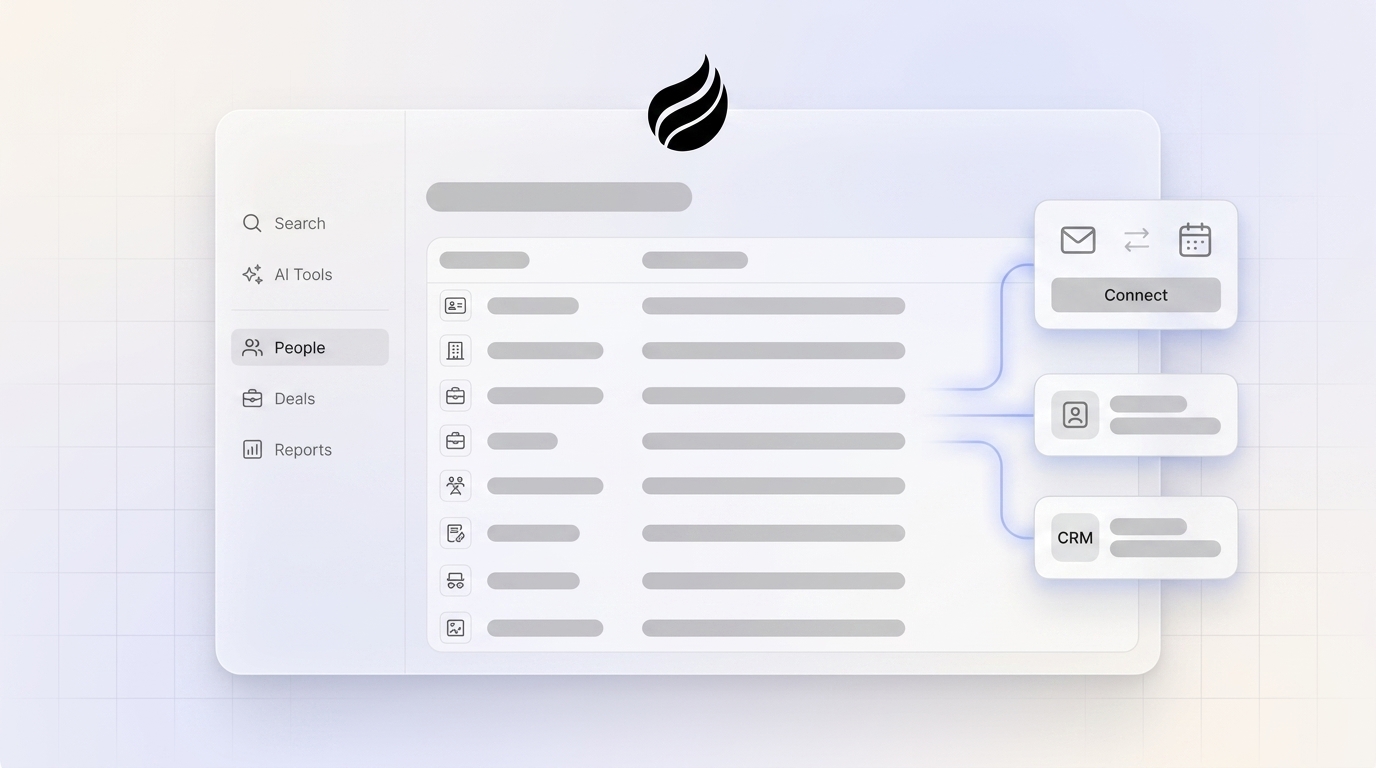
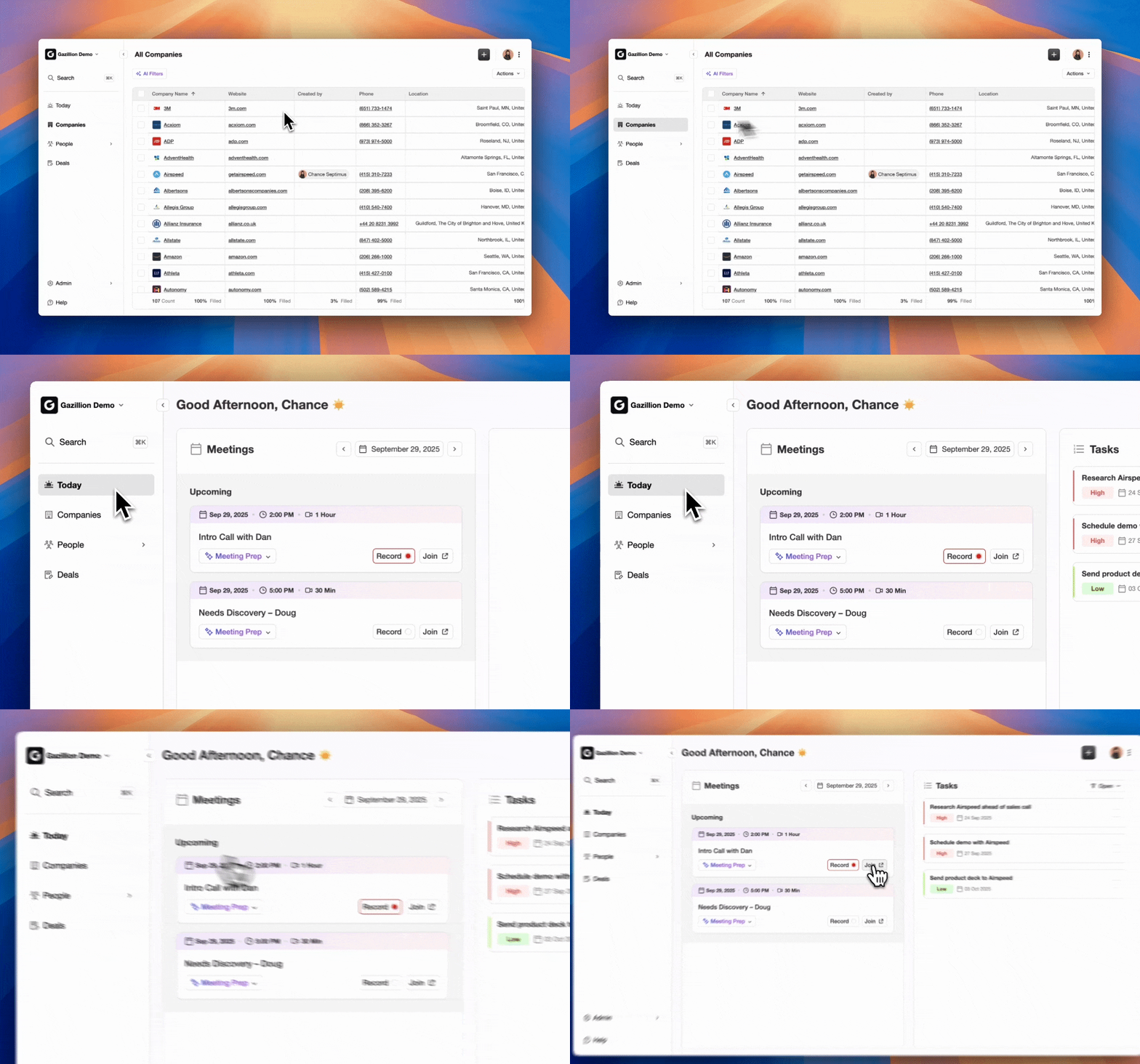
- Coffee.ai – A fully agentic CRM built for both standalone use and as a companion layer on top of Salesforce or HubSpot. After connecting Google Workspace or Microsoft 365, the Coffee Agent scans emails and calendars to auto-create contacts and companies. It enriches records with job titles, funding data, and LinkedIn profiles via licensed data partners and logs every activity autonomously. Its AI meeting bot joins Zoom, Teams, and Meet calls to record, transcribe, and generate structured summaries aligned to BANT, MEDDIC, or SPICED. After each call, the agent drafts follow-up emails directly in Gmail for one-click review and send. Coffee’s AI search on deals, released in January 2026, answers natural-language questions such as “Which deals are stuck in negotiation?” or “What is closing this month?” The Pipeline Compare feature visualizes week-over-week changes automatically, so pipeline reviews focus on strategy instead of status updates. A Stripe integration launched in January 2026 automatically imports customers and companies, enriches them, and adds paid invoices to deals as Closed Won. A QuickBooks integration launched in February 2026 syncs invoices and payment statuses in real time. Coffee also includes a Lead Finder for natural-language prospect list building, a Visitor Identification pixel that surfaces named individuals browsing your site, and a native Campaigns engine for multi-step AI-generated email sequences, all inside one agent. Pricing starts at $10 per user per month.
- Clarify – Clarify’s AI sales agent “Rep” handles data entry with zero manual input, automatically updating fields and deal information by capturing and structuring context from sales emails, calls, and meeting transcripts. It auto-syncs and auto-updates records from connected data sources and includes built-in meeting intelligence. Clarify has native automated email campaigns but offers limited pipelines, no calling features, no LinkedIn or WhatsApp integrations, and a credit-based pricing model that can scale unpredictably with heavy automation use. Its automation workflows also feel harder to configure for non-technical users.
- Lightfield – Lightfield reviews emails, meetings, and Slack messages to surface suggested updates that keep customer records current, which users then review and approve, and it creates follow-up tasks based on commitments mentioned in real conversations. This approach reduces manual data entry substantially. Lightfield self-assembles from connected email and calendar data, captures calls and meetings, keeps records current, and supports natural-language work, with its public site reporting adoption by more than 5,000 companies. It works best for teams that live in meetings and want a recorder-first system.
- Klipy – An AI agent companion that captures deals across multichannel communication including email, calls, WhatsApp, and LinkedIn, and drafts next steps for approval. It suits solopreneurs and very small teams that need multichannel coverage without enterprise complexity.
- Folk – Folk functions as a light sales CRM with limited pipeline management and minimal forecasting, so it complements or replaces lighter setups rather than Salesforce or HubSpot. Its folkX Chrome extension enables one-click contact capture from LinkedIn, and its AI assists with enrichment and email sequences. Folk’s AI has a conversational interface where users text it in plain natural language in channels like iMessage, Telegram, or WhatsApp, and it understands and acts on their requests without manual filter construction. It operates as an assisted tool rather than a fully autonomous system and fits relationship-driven motions at sub-10-person teams.
- Breakcold – Breakcold’s AI features include automatic lead movement through pipelines based on interactions, automatic follow-up task creation, auto-generated engagement scoring, and enrichment of more than 50 data points per contact from a LinkedIn URL. Its multichannel inbox centralizes email, LinkedIn, WhatsApp, and Telegram. Its daily sending limit of around 30 cold emails per day per account makes it unsuitable for high-volume cold email campaigns. This positions it as a relationship-driven outreach tool rather than a volume sequencing platform.
Comparison Table: AI Autonomy At A Glance
| Tool | AI Autonomy | Best For | Pricing |
|---|---|---|---|
| Coffee.ai | True agent that auto-creates contacts, enriches records, logs activities, drafts follow-ups, runs pipeline compare, and executes campaigns without human input | SMBs (1–50 employees) replacing a passive CRM or adding an agent layer to Salesforce or HubSpot | From $10/user/month |
| Clarify | Autonomous agent that handles data entry and auto-syncs records from email, calendar, and calls | Lean GTM teams wanting hands-off data capture with unlimited seats | Credit-based; paid Starter plan costs $50/month and includes 5,000 credits, while the free plan offers 1,000 credits per month |
| Folk | Assisted system that offers enrichment and LinkedIn capture but requires more human-entered data than autonomous systems | Founders, VCs, and agencies managing relationship-driven pipelines | From $24/user/month (billed annually) |
| Breakcold | Assisted-to-autonomous tool that auto-moves leads through pipelines and creates tasks, with partial AI admin reduction | Solopreneurs and small agencies doing social-selling outreach | Base plan costs $59 per month billed monthly, which includes one seat; additional seats cost $10 per month each |
| HubSpot | Assisted system where Breeze AI enhances workflows but users still manage the CRM process manually | Teams needing marketing, sales, and service integration on one platform | Free tier available; Starter is $7/user/month billed annually for the Customer Platform and some hubs, and Marketing Hub Professional requires a $3,000 one-time onboarding fee, while other Professional tiers such as Sales Hub and Service Hub require a $1,500 onboarding fee |
Traditional CRMs With AI Features
HubSpot, Pipedrive, and Zoho have all added AI capabilities in recent years. HubSpot’s Spring 2026 launch introduced the Agentic Engagement Object, Smart Deal Progression, and more than 100 updates embedding AI agents to automate and contextualize sales and marketing workflows. These changes improve usability and automation. They still sit on architectures designed before modern agentic AI.
Salesforce, HubSpot, Pipedrive, and Zoho generally rely on assisted AI patterns rather than fully autonomous CRM operation, with advanced AI features often gated to higher-tier plans: HubSpot’s Breeze AI is included across all plans, but autonomous Breeze Agents such as Customer Agent require Professional or Enterprise, and Pipedrive’s Pulse AI is bundled from the Premium plan. These systems were not designed to ingest unstructured data like email text or call transcripts as a first-class input. They rely on basic relational databases where updated fields overwrite historical context. This architecture keeps them dependent on human data entry, even when AI features exist.
AI Overlay Solutions: When Not To Migrate
Some teams should not replace their CRM. Organizations with deeply customized Salesforce or HubSpot installations, including complex approval chains, territory management, required fields, and quota structures, face significant cost and risk during a full migration. In these cases, deploying an AI agent as a companion layer provides a safer path.
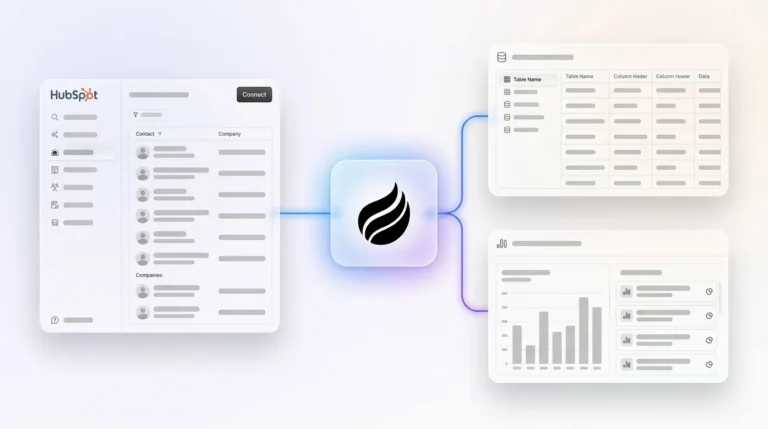
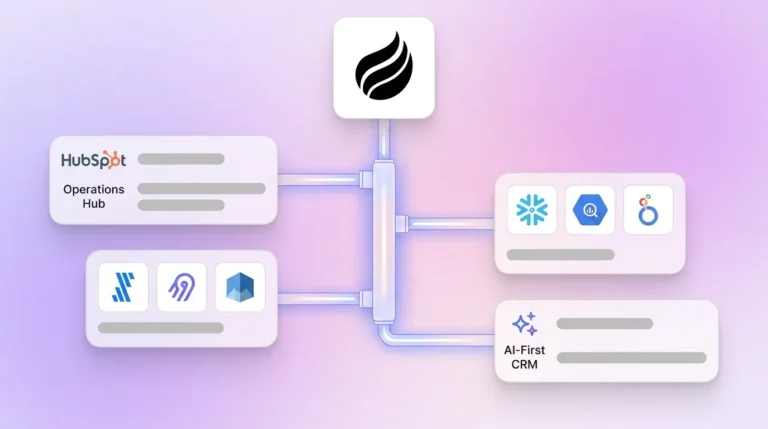
Coffee’s Companion App deploys the Coffee Agent on top of an existing Salesforce or HubSpot instance. The agent handles the data-in process by auto-creating contacts, enriching records, logging call summaries, and writing structured fields back to the primary CRM. The system of record stays accurate without human effort. GPTfy’s decision framework favors augmentation when an organization has significant CRM customization and integration investment, hundreds or thousands of CRM users, or needs AI deployed in weeks rather than years.

For Attio users who like its flexibility but dislike the data entry, an overlay can relieve immediate pain. For long-term efficiency, and for teams under 50 people without deep legacy CRM investment, a true agentic CRM removes the problem at the root instead of patching it.
How To Choose: Replace Vs. Overlay
The decision between replacing a CRM and adding an AI layer rests on four variables. Use this checklist to evaluate your situation, then dig into the reasoning that follows.
- Team Size: 1–20 employees → replace; larger teams → overlay.
- Existing Stack Complexity: Simple stack → replace; heavily customized Salesforce or HubSpot → overlay.
- Budget: Seat-based agentic CRM → single system; overlay → extra subscription on top of current CRM.
- Primary Pain Point: Manual data entry → replace; governance or specific integrations → overlay.
Smaller teams with 1–20 employees rarely carry the legacy complexity that makes migration costly, so replacing with an agentic CRM is straightforward. GPTfy’s framework identifies fewer than 50 CRM users as the threshold where migration usually makes sense. Larger teams with established stacks face higher migration risk, so an overlay often works better as a first step.
Existing stack complexity matters as well. Teams with complex Salesforce or HubSpot setups that include custom objects, validation rules, and integrations protect that investment by using an overlay. Teams currently on Attio, Folk, or spreadsheets can move to an agentic CRM with far less friction.
Budget also plays a role. Agentic CRMs use seat-based pricing with the agent’s labor included. Overlays add a subscription on top of your current CRM license. A sales rep using a traditional CRM can spend significant time on manual data entry, costing thousands of dollars per year per rep in labor, while AI CRM can eliminate a substantial portion of that work and save thousands per rep annually.
Primary pain point should guide the final call. Teams whose main issue is manual data entry benefit most from replacement. Teams that rely on specific integrations or governance controls that only their current CRM provides gain more from an overlay.
Explore Coffee’s Pricing to compare the standalone CRM and Companion App options.
Real-World Trade-Offs And Limitations
Every category in this guide carries trade-offs that shape the replace-versus-overlay decision and explain why tools rank where they do.
AI-first CRMs introduce data migration challenges. Moving from HubSpot or Salesforce requires transferring historical records, custom fields, and pipeline history. This work typically takes one to four weeks and may require cleanup. AI reliability also remains imperfect. Call transcription can mis-attribute speakers, enrichment data has coverage gaps, and natural-language pipeline queries occasionally surface incomplete results. Gartner’s May 2026 survey of 645 B2B buyers found that 69% route AI-generated insights through a sales rep for validation. Human oversight still plays a role, even in the most autonomous systems.
AI overlays improve input quality but do not repair a broken CRM foundation. If the underlying system has poor data hygiene, duplicate records, or low adoption, an agent layer writes good data into a weak structure. The overlay cannot redesign the data model or solve adoption problems caused by a clunky user experience. This limitation matters most for teams that hope an overlay alone will fix long-standing CRM issues.
Traditional CRMs With AI Features carry the largest structural constraint because the AI is additive, not architectural. AI-assisted CRMs often work with synced or cached copies of customer data rather than live data, which creates discrepancies between what the AI sees and the actual system of record. Users on Reddit and G2 consistently report that HubSpot’s AI suggestions require manual confirmation before any field is updated. The human remains in the loop for every change.
Specific tools reflect these broader patterns. Clarify’s automation workflows feel harder to use for non-technical users, which limits how far its agent can run on its own. Folk’s enrichment credits are workspace-wide and plan-limited, so outbound teams can exhaust them mid-month and disrupt workflows. Breakcold users on G2 report integration friction, citing limited native integrations and reliance on Zapier, with a smaller integration footprint than incumbent CRMs like HubSpot. These constraints influence where each product sits in the rankings and whether it fits better as a replacement or an overlay.
With these trade-offs in mind, many teams ask similar questions before they commit to a path.
Frequently Asked Questions
Is CRM Going To Be Replaced By AI?
CRM will evolve rather than disappear. AI now embeds within CRM platforms to enhance decision-making and automate workflows, so the CRM becomes an active agent instead of a passive database. The key distinction is whether the AI is architectural, meaning built into the data model and workflow engine, or additive, meaning bolted onto a pre-existing framework. Architectural AI eliminates most manual data entry. Additive AI still requires humans to serve the software.
Do You Really Need A CRM In 2026?
Teams still need a CRM in 2026, but the type of CRM matters. A passive database drains productivity because it requires constant manual maintenance, produces stale data, and creates a cycle where low adoption leads to bad data, which then leads to bad forecasts and distrust of the system. An agentic CRM reverses this pattern. The agent ensures good data enters the system automatically, so pipeline intelligence, forecasts, and follow-up drafts stay reliable. For teams of 1–50 people, the cost of skipping an agentic CRM shows up in hours of admin per rep each week and in deals that fall through the cracks of a stale pipeline.
What Is The Best AI-Native CRM In 2026?
For most small-to-mid-sized teams, Coffee.ai offers the strongest balance of autonomy and breadth. It handles both structured data such as contacts, companies, and deal stages and unstructured data such as email text, call transcripts, and meeting notes within a single built-in data warehouse. It works as a standalone CRM for teams replacing Attio, HubSpot, or a spreadsheet and as a Companion App for teams committed to Salesforce or HubSpot that want to fix data quality without migrating. Its pricing starts at $10/user/month with the agent’s labor, including data entry, enrichment, meeting management, pipeline intelligence, lead finding, and campaign execution, included at no additional metered cost.
What Are The Best Attio Alternatives For Startups?
Coffee.ai fits startups that want autonomous data entry, pipeline intelligence, and a CRM their team will actually use. Folk works well for very early-stage teams under 10 people whose primary motion is relationship management rather than structured pipeline selling, especially founders, VCs, and agencies. Breakcold suits solopreneurs and small agencies whose primary channel is LinkedIn and whose outreach volume stays low enough that its 30-email-per-day limit does not create a bottleneck. For teams already on Salesforce or HubSpot that plan to stay, Coffee’s Companion App offers a practical way to eliminate manual data entry without a full migration.
Conclusion And Recommendation
The shift from passive databases to active agents defines CRM in 2026. Burley Kawasaki, SVP of Industries at Creatio, notes that the move from AI assistants and copilots to truly autonomous agents marks the transition from systems that support work to systems that actively execute it. Attio remains a well-designed passive database. Teams that have outgrown it, or that never wanted to feed a database manually, can turn to the alternatives ranked above for progressively more autonomy.
Coffee.ai stands out for most small-to-mid-sized teams. It eliminates manual data entry, handles both structured and unstructured data, works as a standalone CRM or a companion layer on top of Salesforce and HubSpot, and includes lead finding, visitor identification, and campaign execution inside a single agent. According to Futurum Group’s 1H 2026 Enterprise Software Decision Maker Survey (n=830), 45.7% of enterprises rank GenAI capabilities as their top software selection criterion, and agentic AI reaches 39.3% when combining first- and second-place priority rankings. The market has already signaled what the next generation of CRM looks like.
Try Coffee.ai so the agent can handle the busywork while your team focuses on selling.