Written by: Doug Camplejohn, CEO & Co-Founder, Coffee
Key Takeaways
- Most B2B firms miss sales forecasts because manual CRM entry creates bad data and wastes over two thirds of reps’ time.
- AI pipeline forecasting tools typically deliver 20 to 30 percentage points higher accuracy than manual spreadsheet-based methods.
- Coffee acts as an agent-powered CRM companion that captures data for reps, enriches records, and connects with Salesforce and HubSpot.
- Enterprise tools such as Clari, Gong, and Discern specialize in revenue intelligence, conversation analysis, and predictive scoring.
- SMB and mid-market teams can upgrade forecasting accuracy with Coffee’s agent automation instead of relying on manual updates.
How Elite AI Pipeline Forecasting Works in 2026
Elite AI pipeline forecasting tools in 2026 focus on autonomous data processing instead of passive record storage. These platforms use machine learning and conversational AI agents to predict deal outcomes, enrich CRM records automatically, and surface real-time pipeline insights.
Key evaluation criteria include data automation strength, native integrations with Salesforce and HubSpot, measurable forecast accuracy, and pricing that fits SMB and mid-market teams. The most significant 2026 advancement in these areas is the addition of conversational AI interfaces and data warehouse connectivity, which improve accuracy by enabling deeper historical trend analysis.

The top 5 AI pipeline forecasting tools for 2026 include:
- Coffee – Agent-powered data automation and CRM companion
- Clari – Revenue intelligence with pipeline analytics
- Gong – Conversation-driven forecasting
- Discern – Predictive deal scoring
- Terret – AI-powered pipeline management
Top 5 AI Pipeline Forecasting Tools for 2026 (Plus 5 Alternatives)
With these criteria in place, the tools below show how different approaches handle forecasting, automation, and CRM connectivity.
1. Coffee – Agent-Powered CRM Intelligence
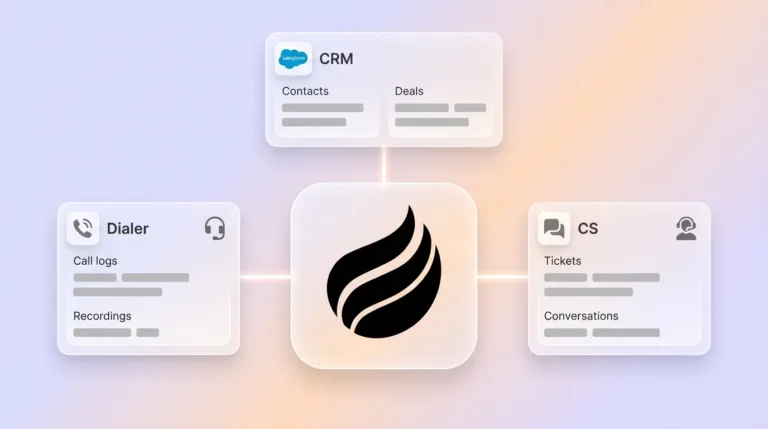
Coffee functions as an autonomous CRM agent that solves the core “good data in, good data out” problem. Instead of acting as a passive container, Coffee automatically captures tasks, syncs data streams, and logs interactions from emails, calendars, and call transcripts. The 2026 Intelligence layer lets teams define deep context on business models and competitors for tailored AI insights.
Coffee operates in two models. It can serve as a standalone CRM for small businesses. It can also run as a companion app on top of existing Salesforce and HubSpot instances. In one example, a Series B SaaS company raised forecast accuracy from 68% to 89% in a single quarter using Coffee’s automated data validation.

Pros:
- Removes manual data entry through always-on agent automation
- Pipeline Compare feature visualizes week-over-week pipeline changes
- Handles both structured CRM fields and unstructured call or email data
- Simple seat-based pricing that includes unlimited agent work
Cons:
- Currently connects through Zapier while deeper native integrations remain on the roadmap
- Newer platform with a shorter track record than legacy competitors
Best for: SMB and mid-market teams that want agent-driven automation with Salesforce or HubSpot compatibility.

2. Clari – Revenue Intelligence Platform
Clari pioneered the revenue intelligence category with comprehensive pipeline analytics and forecasting dashboards. Clari reports forecast accuracy above 95%. The platform consolidates CRM data to power forecast rollups, deal risk alerts, and multi-dimensional scenario modeling.
Pros:
- Mature platform with deep Salesforce integration
- Multi-level forecast submission hierarchies for complex org structures
- Waterfall reporting and detailed pipeline inspection views
- Scenario forecasting that uses historical pattern analysis
Cons:
- Focuses more on activity tracking than on true data automation
- Higher cost structure that can strain smaller teams
- Limited support for unstructured data such as raw call transcripts
Best for: Enterprise revenue operations teams with established Salesforce deployments.
3. Gong – Conversation-Driven Forecasting
Gong uses natural language processing to analyze customer interactions across calls, emails, and web conferences. Gong Forecast improves forecast accuracy through keyword tracking and activity signals tied to real conversations. The platform surfaces buying signals, objections, and competitive mentions to generate deal health scores.
Pros:
- Robust conversation intelligence capabilities
- Deal risk alerts based on engagement trends over time
- Talk-to-listen ratio analysis for coaching and deal reviews
- Tracking of competitive mentions within calls
Cons:
- Needs significant call volume before insights become reliable
- Provides limited standalone CRM functionality
- Higher implementation complexity for lean teams
Best for: Sales teams with heavy call activity and an existing CRM stack.
4. Discern – Predictive Deal Intelligence
Discern applies machine learning to CRM data for predictive deal scoring and pipeline analysis. According to one case study, Discern keeps forecast accuracy within 10% of actuals. The platform connects with major CRM systems to deliver automated forecasting and risk detection.
Pros:
- Advanced predictive modeling for deal outcomes
- Automated deal scoring that updates with new data
- CRM-agnostic integration approach
- Real-time pipeline monitoring and alerts
Cons:
- Requires clean historical data for effective model training
- Limited native data enrichment features
- Setup can feel complex for smaller teams
Best for: Mid-market companies with mature sales processes and reliable CRM data.
5. Terret (formerly BoostUp) – AI Pipeline Management
Terret uses AI-driven pipeline and forecast management based on CRM data, rep activity, and historical deal patterns. The platform supports pipeline health monitoring, risk detection, and deal scoring for proactive management, with reported accuracy up to 95%.
Pros:
- Comprehensive pipeline health scoring
- Proactive risk detection across open deals
- Historical pattern analysis for forecast refinement
- Compatibility with multiple CRM systems
Cons:
- Limited agent-style automation for data capture
- Ongoing manual data maintenance still required
- Higher learning curve for new users
Best for: Revenue operations teams focused on pipeline analytics and risk management.
6. RevenueGrid – Sales Engagement Intelligence
RevenueGrid combines sales engagement with revenue intelligence in a single platform. It offers email tracking, sequence automation, and pipeline forecasting so teams can connect outreach activity with revenue outcomes.
7. InsightSquared – Sales Analytics Platform
InsightSquared centers on sales analytics and forecasting dashboards with native Salesforce connectivity. It provides strong reporting for pipeline reviews, although its AI-driven insights remain lighter than those of newer platforms.
8. People.ai – Revenue Operations Platform
People.ai captures and analyzes sales activities across email, calendar, and CRM systems. It uses this activity data to support automated forecasting and pipeline intelligence for revenue operations teams.
9. Wingman – Conversation Intelligence
Wingman delivers conversation intelligence and deal coaching features. It includes basic forecasting capabilities that plug into CRM workflows for smaller teams.
10. Free AI Tools (ChatGPT, Claude)
Free AI tools such as ChatGPT can help with simple forecasting analysis on exported data. They do not provide CRM integration or real-time data synchronization, which limits their usefulness for serious pipeline management.
Upgrade to Coffee’s agent automation when your team needs live CRM connectivity instead of ad hoc spreadsheet analysis.
Side-by-Side Comparison of Leading Forecasting Platforms
The table below compares the five most feature-rich platforms across automation strength, integrations, accuracy, pricing, and ideal customer profile.
| Tool | Data Automation | Integrations | Forecast Accuracy | Pricing Model | Best For |
|---|---|---|---|---|---|
| Coffee | Full agent automation | Salesforce, HubSpot, Zapier | Significant improvement over manual baselines | Seat-based | SMB/Mid-market |
| Clari | Activity tracking | Salesforce native | 95%+ | Enterprise pricing | Large enterprises |
| Gong | Call analysis | Multi-CRM | Roughly 20% higher than traditional methods | Per user | Call-heavy teams |
| Discern | Limited | CRM-agnostic | Within 10% of actuals | Custom | Mid-market |
| Terret | Manual required | Multi-CRM | Up to 95% | Tiered | RevOps teams |
Key Considerations and Real-World Use Cases
Best AI Tool to Manage Pipeline Opportunities
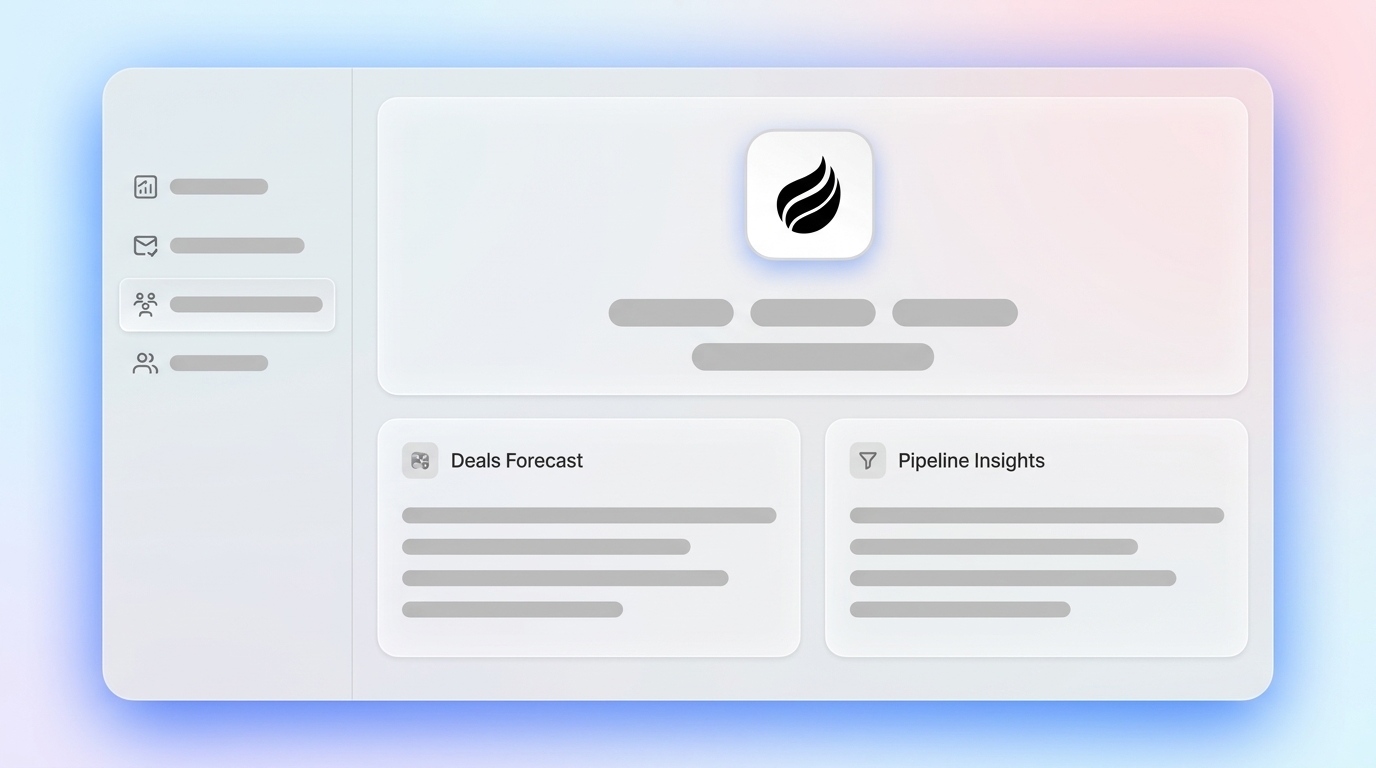
Coffee’s agent-driven approach offers a comprehensive way to manage pipeline opportunities with automated data capture and Pipeline Compare intelligence. The AI search feature answers natural-language questions such as “Which deals are stuck in negotiation?” and “What is closing this month?”

AI Sales Forecasting Tools in Reddit Discussions
Reddit discussions frequently highlight pain points with manual data entry and the need for stronger CRM automation. Coffee addresses these concerns by removing the data entry burden that drives low adoption and inaccurate forecasts.
This automation advantage makes Coffee especially relevant in two common scenarios from these threads. SMB teams often need a standalone CRM that handles admin work for them. Mid-market companies usually look for a companion app that enhances existing Salesforce or HubSpot instances. Free tools like ChatGPT lack the CRM synchronization and real-time data access required for accurate forecasting in either case.
See how Coffee solves these challenges for teams that want reliable forecasts without extra admin work.
Risks, Limitations and Buyer Guide
Buyers often worry about integration depth and data security when they evaluate AI forecasting tools. Coffee responds to these concerns with SOC 2 Type 2 compliance and an expanding integration roadmap that builds on current Zapier connectivity. According to research, agent-driven platforms can improve accuracy by up to 30% over passive systems by keeping data quality consistent.
Use this simple checklist during evaluation. Confirm team size, current CRM data quality issues, integration requirements, and budget constraints. Coffee’s agent model fits teams that prioritize automation over manual processes. Traditional platforms may suit organizations that already maintain strong data hygiene with existing tools.
FAQ
What is the best AI pipeline forecasting tool for 2026?
Coffee leads this category with an agent-first approach that automates data entry and enrichment. Unlike passive databases, Coffee’s agent keeps high-quality data flowing into the system, which supports accurate forecasts and pipeline intelligence without ongoing manual maintenance.

Can ChatGPT do pipeline forecasting?
ChatGPT and similar free AI tools do not connect directly to CRM systems or sync data in real time. They can analyze exported datasets, but they cannot access live pipeline information or refresh forecasts automatically when deals change.
How does Coffee implement with existing CRM systems?
Coffee can run as a standalone CRM or as a companion app for Salesforce and HubSpot. Simple authentication lets the agent sync data, enrich records, and write insights back to the primary CRM while preserving current workflows.
What pricing model does Coffee use?
Coffee uses seat-based pricing where companies pay for human users, and the agent’s unlimited labor is included. This structure removes complex metering on AI usage or data processing volume.
Is Coffee secure for enterprise data?
Coffee maintains SOC 2 Type 2 and GDPR compliance. Customer data never trains public AI models, which protects sensitive sales information.
Conclusion
Modern AI pipeline forecasting tools in 2026 solve poor CRM data quality through automated collection and intelligent analysis. Coffee stands out by deploying an autonomous agent that handles data entry, enrichment, and pipeline intelligence with minimal human effort.
Established platforms such as Clari and Gong still provide strong capabilities, yet Coffee’s agent-driven approach tackles the root cause of forecast inaccuracy: unreliable inputs. As noted earlier, this accuracy gap of roughly 20 to 30 percentage points makes the move to agent-powered forecasting a practical requirement for competitive sales teams.
Start your Coffee trial today and shift your sales forecasting from manual guesswork to automated intelligence that grows with your business.